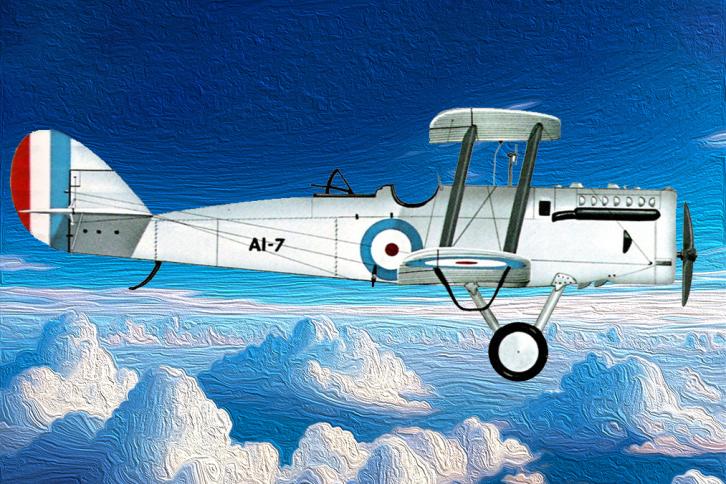
Abstract: For more than a century the Royal Australian Air Force has generated and delivered air and space power in support of Australia’s security, prosperity, and national interests. That record of service has shaped a distinctive institutional character defined by people, technology, and the disciplined application of air power. The Chief of Air Force has emphasised that the Service now operates in a demanding strategic environment where preparedness, integration, and professional mastery are essential. In this environment identity assumes operational significance. Aviators who identify with the lineage of their Service — its achievements, culture, and traditions — better appreciate their role in generating air power as part of the integrated force. Aviators who appreciate the character, qualities, innovation, and resilience demonstrated by those who have served before, strengthen the intellectual and moral foundations upon which capability depends.
Preamble
This CAF Occasional Paper History, Heritage and the Integrated Force affirms the value of understanding ourselves as professional military aviators. It highlights how history and heritage strengthen Air Force capability in the application of air power to national security.
The paper examines the effects that history generates for a modern integrated Air Force. It shows how the capability of the Royal Australian Air Force, the world’s second-oldest independent air service, is optimised by a tradition of excellence now more than a century old. Within an institutional setting, history and heritage underpin our identity as aviators, our professionalism as practitioners, our credibility as allies, and our sense of purpose. Recognising the achievements of those who served before us establishes standards for current and future generations of Air Force personnel.
My intent in commissioning CAF Occasional Papers is to inform decision-makers, policy makers, the Australian Defence Organisation and the interested public about significant air power issues. These papers address both strategic and philosophical themes, with operational discussion included where essential to the argument. Their purpose is to provide context, clarity, and understanding for readers.
CAF Occasional Papers will be produced as required rather than to a fixed schedule. Enquiries concerning this paper and the historical or contemporary application of air power are welcome and should be directed to the History and Heritage Branch – Air Force.
This paper was prepared at my direction and draws out the enduring importance of history and heritage to Air Force capability. Although written from a Royal Australian Air Force perspective, its insights may have broader relevance for other professional air services. I endorse the views presented and commend this paper to you. It is intended to encourage reflection, reinforce institutional continuity, and reinforce the foundations that enable air power to be conceived, generated, and applied with confidence in uncertain times.
SG CHAPPELL DSC CSC OAM
Air Marshal
Chief of Air Force
Air Force Headquarters
5 May 2026
Introduction: Why history matters to the modern, integrated Air Force
For institutions of enduring purpose, everything begins and ends in time. The present and the past illuminate one another, revealing patterns of continuity that shape professional identity and institutional standards.1 Over more than a century of service, the Royal Australian Air Force has developed a distinctive culture forged through operational experience, technological change, and sustained commitment to national defence. Understanding this long trajectory enables the Service to distinguish what is enduring from what is transient, ensuring that adaptation occurs within a coherent narrative of professional purpose.
Since 1921, each generation of the Air Force has faced a recurring temptation: to focus exclusively on what is new — platforms, technologies, and methods of warfighting. In such circumstances, history can appear secondary, even ceremonial. That instinct is understandable, but it is mistaken. History is not merely a record of the past; it underpins how a professional force thinks, decides, and acts. Doctrine, standards, and judgement are products of accumulated experience, often hard won. Without this foundation, institutions lose agility. For a modern, integrated Air Force, history is not a luxury; it is a source of capability.
History informs contemporary best practice by grounding future thinking in accumulated experience. Adaptability, airmindedness, and pragmatic excellence reflect enduring patterns of innovation, technical mastery, and professional judgement. Historical understanding shapes how the Air Force builds fighting depth — integrated, lethal, scalable, and resilient — by linking proven practice with emerging capability.2 History reinforces a culture where expertise, collaboration, and disciplined initiative guide decision-making. History provides the intellectual foundation for effective air power, ensuring future force design and employment remain aligned with enduring principles while responsive to changing circumstances.
Military history provides structured insight into the enduring nature of war and the evolving character of conflict. It offers aviators analytical frameworks through which to interpret uncertainty, assess risk, and make informed decisions under pressure. In doing so, it enhances professional competence and reinforces organisational credibility. Historical understanding also cultivates the habits of mind essential to effective leadership: critical reasoning, intellectual curiosity, and disciplined judgement. These qualities underpin the resilience required to operate in dynamic operational environments.
Within this professional context, institutional memory shapes the qualities expected of modern air power practitioners. Adaptability, ethical leadership, and pragmatic excellence reflect a tradition of innovation grounded in experience. Airmindedness integrates technical mastery with strategic awareness, enabling aviators to contribute effectively within joint, national, and international frameworks.3 Such thinking is not an abstraction. These very attributes sustain fighting depth not only through advanced systems, but through the intellectual and cultural strength of the Service.
These are not generated in isolation; they are cultivated and reinforced by the cumulative lessons of operational experience. By linking historical understanding to contemporary professional practice, the Air Force ensures that the past informs future readiness. History thus becomes a guide to action, enabling the Service to adapt while remaining anchored in its enduring purpose. Indeed, the stories of those who have come before gives one pause not only to reflect, but spurs the modern service onwards. These stories are the foundations upon which confidence and operational effectiveness depend, ensuring that the future Air Force is both informed by its history and heritage, and prepared for future demands.
Aim
This Occasional Paper emphasises the contribution of history, heritage, and identity to capability in the modern integrated Air Force.
Scope. This paper examines the relationship among history, professional practice, and heritage in an Air Force context. It provides a thematic analysis of how institutional memory shapes professional identity, informs organisational culture, and underpins the development of credible air power capability. The paper explores the intellectual, material, and cultural dimensions of heritage, and considers the unique role of the military aviator. The paper considers the influence of history and heritage on the integrated force; and how historical education fosters a strong mindset, professional development, cohesion and innovation. The study concludes by assessing the enduring contribution of history and heritage to capability within a modern integrated Air Force. Contextual historical vignettes are provided throughout the paper.4
Military History
Operational demands often create the impression that reflection on the past must yield to the imperatives of the present. There is a persistent belief that history is a luxury, something to return to when time permits. In a modern Air Force, that understandable belief is not just mistaken, it is dangerous. Modern aviators must master advanced technologies, navigate complex regulatory frameworks, and sustain readiness in a rapidly evolving strategic environment. In such circumstances, historical study can appear arcane and peripheral. Yet, the disciplined accumulation and critical analysis of operational experience form the basis of doctrine, institutional learning, and strategic adaptation.5 History is therefore not an optional intellectual pursuit, but a practical mechanism through which professional competence is sustained.
Military history is the disciplined study of past conflict and the institutions, ideas, and societies shaped by it. It is not a fixed narrative nor a purely scientific inquiry, but a human endeavour grounded in evidence, interpretation, and critical thought. Historians examine events, contexts, and consequences to understand how war influences political, social, and intellectual development. Because conflict recurs in changing forms, military history provides essential frameworks for interpreting uncertainty and assessing strategic choice.6 The study of history enables practitioners to recognise patterns, question assumptions, and avoid repeating past errors. Beyond operational relevance, military history fosters cohesion and identity by connecting individuals to shared experience. Its value lies not in offering prescriptive lessons, but in developing disciplined thinking and informed perspective.
The distillation of operational lessons into tactical and doctrinal practice demonstrates that history is already embedded in everyday military activity.7 What is perceived as administrative record-keeping is, in fact, the foundation of experience. This enables practitioners to infer context, and strengthen the intellectual foundations required for effective professional practice. Without institutional memory, organisations risk repeating past errors, misinterpreting emerging trends, and failing to respond effectively to new challenges. History thus supports informed decision-making, enabling aviators to interpret contemporary problems through the lens of accumulated operational experience.
The Bismarck Sea, 3-4 March 1943: Australian - American Cooperation
In early 1943, control of New Guinea hung in the balance. Following defeat at Guadalcanal, Japanese high command ordered the 51st Division from China to reinforce Lae. Some 6,000 troops embarked in eight transports, escorted by destroyers, moving under tropical storms that masked their approach. For days, intelligence and surveillance shaped the fight. A US B-24 first sighted the convoy, triggering a coordinated response. Crews had rehearsed maritime strike techniques, including low-level attack and skip-bombing. As the weather cleared, Allied aircraft from dispersed bases converged, combining persistence, coordination, and disciplined aggression to generate continuous, scalable effects.
At first light on 3 March, Australian and American aviators pressed home their attacks in tightly integrated waves. RAAF Beaufighters suppressed anti-aircraft fire with devastating low-level strafing runs while RAAF Beauforts and Bostons, and USAAF B-17s and B-25s, struck in sequence from above. Each wave reinforced the last, overwhelming the convoy through coordinated, multi-axis attacks. Throughout, fighter aircraft provided overwatch, while patrolling Catalinas maintained contact. Integration was central to success: fighters, medium and heavy bombers, and maritime patrol aircraft operating as one. By 4 March, all Japanese transports and four destroyers had been sunk. Between 3,000 and 5,000 Japanese troops were killed for the loss of five Allied aircraft. MacArthur described the battle as the most decisive aerial engagement in the South West Pacific. It remains a powerful demonstration of integrated, lethal, scalable, and resilient air power.
Further Reading: Douglas Gillison, Australia in the War of 1939-45, Series 3 Air, Volume 1, Royal Australian Air Force 1939-42, Canberra, 1962, pp. 690-696.
Professional Practice
Engagement with history also cultivates the intellectual habits essential to leadership in the profession of arms. Analytical reasoning, critical evaluation of evidence, and the capacity to synthesise complex information are shared competencies between historiography and operational planning. These skills boost the cognitive foundations upon which effective command depends. Historical methods are the basis of professional practice.
Historical awareness fosters agency, deepens service identity, and highlights the material foundations of air power.8 The study of history also develops the analytical, cognitive, and communication skills essential to effective service in a human-centred profession. 9 In this sense, history is not confined to scholars or archives. It is lived, interpreted, and sustained by aviators themselves, who act as custodians of institutional memory and contributors to its ongoing evolution. Aviators who understand where they come from will look forwards with clarity.
Identity grounded in historical awareness contributes directly to capability. Professional confidence, organisational cohesion, and strategic credibility are enhanced when personnel understand the institutional context in which they operate. By extension, legitimacy is largely derived from demonstrated commitment to the rule of law, professional standards and values. Finally, historical literacy enhances the capacity for innovation. By examining the evolution of air power concepts and technologies, aviators gain insight into the processes through which organisations adapt to change. This understanding mitigates the risk of technological determinism and encourages the development of processes grounded in critical analysis rather than assumption.
Heritage and Institutional Continuity
Heritage represents that which is handed down from the past. For the Air Force, this encompasses both tangible artefacts and intangible traditions that collectively express the accumulated knowledge and experience of generations.10 Aircraft, infrastructure, ceremonial practices, and professional customs all contribute to the cultural identity of the Service, reflecting the distinctive ways in which air power has been conceived, generated, and applied over time. In this sense, heritage is not confined to symbolic representation; it is embedded in the material and cultural foundations of everyday professional practice.
Reinventing Air Force: Post-Conflict Professional Excellence
In the aftermath of the Second World War, the Royal Australian Air Force confronted a central problem: how to preserve hard-won capability while adapting to a rapidly changing technological and strategic environment. Wartime expansion had delivered scale, but not coherence. Reinvention required more than demobilisation; it demanded a deliberate education, training, and professional formation that could sustain a modern air force in peace and war.
Under a new generation of leaders, Air Force embarked on an educational transformation grounded in enduring institutional principles. Drawing on Trenchard’s model, Air Force established an integrated training architecture: a central flying school to maintain standards, technical and apprentice schemes to generate skilled tradesmen, a cadet college to develop future leaders, and a staff college to refine professional judgement. The creation of the of structured training pathways reflected the understanding that Air Force required both practical expertise and intellectual depth; it encompassed both human and technical endeavours.
This system was not without friction. Early curricula struggled to balance technical specialisation with broader professional education, and training pipelines required continual refinement. Yet through adaptation—extending courses, improving selection, and integrating academic and operational instruction—the RAAF forged a model that aligned education with capability. Technical education built depth, staff training enhanced judgement, and flying training evolved to meet operational demands.
By the 1960s, this framework had matured into a coherent professional system, producing technically proficient, adaptable, and strategically minded aviators. Its enduring strength lay in integration: linking training, education, and operational purpose. In doing so, the RAAF established a model that not only addressed the challenges of its time, but continues to inform the development of air power today.
Further Reading: Dr. Alan Stephens, The Royal Australian Air Force: The Australian Centenary History of Defence, Volume II, Melbourne, 2001. pp. 185-201.
This identity provides continuity in an environment characterised by rapid technological change and persistent strategic uncertainty. By situating contemporary activity within a broader institutional narrative, heritage reinforces professional confidence, cohesion, and clarity of purpose.11 Aviators who understand the lineage of their profession are better equipped to interpret their responsibilities and to act with informed judgement. Heritage thus serves as a stabilising influence, linking innovation with experience and ensuring that adaptation occurs within a coherent intellectual and cultural framework.
Air Force infrastructure is a tangible expression of institutional continuity. Aircraft, bases, and operational systems embody traditions of design and employment shaped by decades of experience. These artefacts influence how aviators conceptualise their profession and their contribution to national defence. Engagement with material heritage reinforces the understanding that capability is not solely defined by technological sophistication. It is also shaped by the intellectual and cultural frameworks through which technology is interpreted and applied.
The stewardship of heritage requires deliberate judgement and sustained institutional commitment. Not all elements of the past can or should be preserved, and the significance of heritage is shaped by contemporary values and strategic priorities. The Air Force must accordingly determine what to retain in order to sustain institutional memory while remaining responsive to evolving operational demands.12 The value of cultural heritage is in the significance of what the Air Force attaches to it; it is socially constructed, and it is often manifested in physical objects.13
The continued operation of heritage aircraft in the Air Force exemplifies the dynamic nature of preservation, transforming historical artefacts into living expressions of professional identity. Heritage centres, museums, and commemorative activities provide structured opportunities for reflection, reinforcing the connection between professional identity and operational capability. Through such engagement, heritage becomes a living expression of institutional continuity, supporting both the intellectual cohesion and cultural resilience required for effective service in a modern integrated force.
The Aviator
Air Force capability rests upon the integration of people, technology, and professional air power knowledge, forming a unique culture shaped by responsibility, expertise, and operational purpose. This identity is unique to the profession of arms. Historical awareness fortifies this professional identity by providing continuity and context, linking contemporary responsibilities with the legacy of those who first established the foundations of air power. In this way, the experiences and obligations of military aviators create a distinctive way of being and knowing, characterised by intellectual rigour and operational adaptability.
When an aviator demonstrates an understanding of the historical context of the Air Force institution, that aviator establishes trust with colleagues, at home and abroad, and across society. Trust is built on a foundation of respect for tradition, expertise, and a commitment to upholding and learning from the legacy of those who came before. It goes further. Credibility often derives not only from rank and formal authority, but from demonstrated competence and an appreciation of institutional context.14 Aviators who understand the historical evolution of their profession reinforce confidence among colleagues, allies, and the broader Australian community. Trust is sustained through respect for tradition, mastery of specialist skills, and commitment to the enduring standards of the Service.
An aviator’s identity is shaped by clear links among truth, judgement, and human experience.15 Aviation demands more than technical skill; it requires a steady commitment to what is real — tested in action, informed by evidence, and applied with excellence. Like science, the profession is focused on precision, but it is never neutral: it is guided by duty, responsibility, and consequence. At the same time, aviation is deeply human. It relies on the ability to make sense of uncertainty in fast-moving situations. This balance between the technical and the human has defined aviators since the earliest generation. These attributes have remained consistent. The specialised use of technology in air and space, combined with the demands of operational decision-making, continues to define the profession and ensures aviators remain central to credible and integrated air power.
The Amiens Raid 18 February 1944: Integration, Precision, Human Excellence
In early 1944, as preparations for the invasion of Normandy gathered momentum, Allied planners sought to disrupt German control in occupied France. At Amiens, a prison held members of the French Resistance, many awaiting execution. The decision was made to act with precision and speed.
Codenamed Operation Jericho, an air mission was assigned to the precision strike Dh98 Mosquito fighter-bombers of 180 Wing, comprising 21 Squadron RAF, 464 Squadron RAAF, and 487 Squadron RNZAF, with Typhoon fighter escort. Departing Britain just before 11 am, the Mosquitos flew at low level through severe weather that disrupted formation and navigation. As conditions improved over France the force regrouped north of Amiens, formed into attacking sections, and pressed home the attack.
Using the Amiens – Albert Road as a visual reference, the Mosquitos descended to less than five metres. Timing and precision were critical. 487 Squadron breached the prison walls in two places. 464 Squadron followed immediately, striking internal buildings and guard positions to enable escape. The reserve squadron was not required. Within hours, the aircraft were back in Britain.
The effects were immediate and consequential. Of 712 prisoners, 258 escaped, including key resistance figures such as Raymond Vivant. Four aircraft were lost on the operation and three aircrew killed or captured. Operation Jericho remains a demonstration of precision, integration, and disciplined execution in the application of air power.
Reference: The Amiens Raid, Australian War Memorial, [online] accessed at: Amiens Raid
Listen to the last surviving aircrew member who took part in the raid here: Mosquito pilot Maxwell Sparks: BBC 20 October 2011
Integration
The integrated force necessitates collaboration across services, government agencies, industry, and international partners. For much of its history, the Air Force has operated within coalition frameworks, reflecting Australia’s status as a middle power and shaping a distinctive organisational culture defined by interoperability, adaptability, and professional autonomy. Integration is therefore not a contemporary aspiration but an enduring characteristic of how the Air Force contributes to national power.16
Effective integration depends upon shared understanding and mutual trust as much as upon technical compatibility. The emphasis placed on technical competence and collaborative problem-solving has fostered a professional culture in which authority often derives from expertise rather than hierarchy.17 This dynamic has enabled the Air Force to integrate seamlessly within joint and allied structures, and to employ its unique capabilities to contribute to a force greater than the sum of its parts. Achieving cross-domain and international synergy requires deliberate planning, sustained training, and the development of interoperable technologies that support immediate and credible operational effect. None of this is new.
Historical experience reinforces the intellectual and cultural foundations of such integration. Participation in coalition operations, humanitarian missions, and regional security initiatives has shaped an enduring teamwork ethos grounded in self-discipline, trust, and professional confidence. This culture recognises that effective collaboration is both a technical and human endeavour, requiring personnel to be prepared and empowered to contribute as individuals and as members of integrated teams. In this environment, expertise frequently determines leadership, reflecting a tradition in which technical mastery underpins authority.
Integration is thus intrinsic to the Air Force way of operating. It reflects a legacy of cooperation, adaptability, and strategic awareness forged through decades of operational experience. By understanding this lineage, aviators gain insight into the institutional practices that sustain effective partnership. Integration becomes not only a structural arrangement, but a cultural strength embedded in professional identity, ensuring that the Air Force remains capable of contributing decisively within complex and evolving contexts.
Education and Mindset
Military history performs a critical function within professional education. It challenges myth, exposes flawed assumptions, and encourages a nuanced understanding of strategic dynamics.18 Popular narratives of conflict often simplify complex realities, privileging technological or heroic interpretations over analytical insight. Historical enquiry provides a corrective to such distortions, enabling aviators to develop informed judgement and intellectual resilience.19 These examples are not prescriptive templates for action, but intellectual tools that highlight the enduring characteristics of conflict. In this way, education improves the cognitive foundations upon which effective military practice depends.
A good education offers three things. It offers knowledge based in universally tested facts. It imparts useful skills, not just in the subject matter at hand, but also on demonstrated potential for future development. Finally, it necessitates convention and standards; this is not to say a dogmatic approach to gaining knowledge, but rather to reinforce a pathway tried, tested and true.20 There are no shortcuts in attaining a good education. Seeking professional excellence through education requires dedication. A dedication to good education instils social standards and positive conventions. Every aviator is an historical educator in a professional setting; the Air Force’s history and heritage is replete with examples of such dedication – they are part of the Air Force’s organisational DNA.
Historical awareness is central to excellence. An appreciation of the experiences, values, and traditions that have shaped the Air Force provides a lens through which aviators understand themselves and their professional responsibilities. Through engagement with historical narratives — particularly the stories of individuals who demonstrated courage, adaptability, and innovation — an aviator will develop a mindset characterised by resilience, clarity of purpose, and commitment to service. These narratives connect past achievement with contemporary service, reinforcing professional identity across generations.
Edwards, Newton and Middleton: Adaptable, Air-minded, Pragmatic Excellence
Education in the Air Force terms is not confined to classrooms; it is the disciplined study of those who have embodied its highest standards. The Second World War Victoria Cross recipients — Hughie Edwards, William Newton, and Rawdon Middleton — are enduring examples that set a standard for the modern Air Force. Edwards’ leadership over Bremen showed calm mastery and responsibility in the face of intense opposition. Newton’s repeated low-level attacks in New Guinea, pressed home despite intense fire and diminishing odds, reflected a clear-eyed commitment to mission and an unyielding sense of duty. Middleton’s final act — maintaining control of a stricken aircraft to save his crew — demonstrated moral courage of the highest order.
These aviators were not defined by a single moment, but by habits of thought and character forged through training, experience, and reflection. Their actions illustrate that resilience is not improvised in crisis; it is built over time through education, professional standards, and shared values. For the contemporary Air Force, their example reinforces that identity is both inherited and actively maintained. Understanding the qualities of those who have gone before — discipline, clarity of purpose, and moral resolve — anchors a force in continuity while preparing it for uncertainty. In this way, education becomes a living practice, shaping a mindset that is both resilient and ready for the demands of future air power.
Professional Development
Knowing the past extends beyond the transmission of knowledge. Historical methodology cultivates analytical skills, critical thinking, and disciplined communication, while reinforcing standards of professional conduct. Modern methods of engagement, including multi-modal approaches that integrate visual, textual, and material sources, enhance accessibility and deepen understanding.21 In this context, every aviator contributes to the educational environment through example, mentorship, and the sharing of operational experience.
Historical understanding is essential in these environments because institutions operate within the constraints and legacies of past experience. Effective policymaking and military leadership require engagement with history to interpret contemporary challenges and anticipate future risks. Professional development grounded in historical analysis cultivates the intellectual discipline necessary to navigate uncertainty, reconcile competing perspectives, and make informed decisions. By recognising the enduring influence of institutional memory, practitioners develop strategic awareness and professional confidence.22 In this sense, history is not merely retrospective reflection but a practical instrument of learning, shaping the analytical capacity required for coherent strategy, responsible leadership, and sustained organisational effectiveness.
Professional development informed by historical understanding fosters both innovation and continuity. By examining how previous generations responded to technological and strategic change, aviators gain insight into the processes of adaptation and institutional learning. This connection between past, present, and future sustains organisational coherence and augments capability. Education, therefore, is not simply an individual endeavour but a collective responsibility, ensuring that Air Force remains intellectually prepared, operationally credible, and strategically confident in the face of evolving challenges.
The Avon Sabre: 1950s Pragmatic Excellence and Innovation
Australian innovation in the jet age was defined by adaptation and improvement. The CAC CA-27 Avon Sabre stands as a clear example. By coupling the proven American F-86 Sabre airframe with the more powerful Rolls-Royce Avon engine, Australian engineers undertook a redesign of nearly sixty per cent of the aircraft. The result was not a modified Sabre, but the definitive variant of the type. Greater thrust delivered markedly improved climb and acceleration, while structural changes — larger intakes, increased fuel capacity, and refined aerodynamics — enabled superior operational performance. The replacement of machine guns with 30mm ADEN cannon further enhanced combat effectiveness.
Built and sustained in Australia, with engines produced and overhauled domestically, the Avon Sabre reflected a broader national capacity to integrate technology, industry, and operational need. Its service across Malaya, Southeast Asia, and the early stages of Vietnam demonstrated not only performance, but reliability and adaptability in demanding conditions.
This innovation was not incidental; it reflected a mindset. The willingness to rethink, redesign, and improve upon established systems remains central to Air Force capability. In this way, the Avon Sabre is more than a historical example — it is an enduring expression of how technical ingenuity, aligned with operational purpose, delivers decisive advantage in air power.
Further Reading: Australian War Memorial Artefact: CAC CA-27 Sabre Mk 32 jet fighter, A94-954. Details Online at: CAC CA-27 Sabre
Innovation and Cohesion
Engagement with historical experience has long informed innovative strategic thought. The reflections of classical theorists and modern air power practitioners demonstrate how analysis of past conflicts shapes conceptual frameworks for future action. Debates surrounding strategic bombing, deterrence, and coercion illustrate the enduring relevance of historical enquiry in doctrinal development.23 For the Air Force, participation in coalition operations, humanitarian missions, and regional security initiatives has generated practical experience that continues to inform contemporary policy and planning. Historical awareness ensures that such experience is not merely recorded but critically analysed, enabling doctrine grounded in evidence rather than assumption.
Historical understanding also reinforces cohesion within the Service. Aviators who comprehend the lineage of their profession are better able to engage with colleagues across Defence and beyond with clarity, confidence, and professional credibility. A shared appreciation of institutional history reinforces camaraderie, cultural awareness, and the capacity to collaborate effectively within joint and multinational environments. This cohesion extends into engagement with the broader community, enhancing the Air Force’s ability to communicate its purpose and sustain public trust.24
Enduring Contributions
Institutions endure not simply through structure or technology, but through memory. Since its formation on 31 March 1921, the Air Force has evolved from a fragile organisation, once uncertain of its own survival, into a central instrument of Australian national power. From the Second World War through Korea, Malaya, Konfrontasi, Vietnam, and into the expeditionary operations of the twenty-first century, the Air Force has consistently operated at the leading edge of government defence and foreign policy. In many respects, its history mirrors the development of the Australian Commonwealth itself, reflecting a persistent readiness to generate and apply air and space power in support of national interests, security, and the Australian people.25
That enduring responsibility continues as Australia confronts an increasingly contested and uncertain strategic environment. Intensifying competition between major powers and complex regional dynamics demand that the Air Force contribute credibly to deterrence as part of an integrated and focused force. This requires deep collaboration across joint, whole-of-government, industry, and international partnerships, as well as a coherent narrative that explains how air power delivers national effects.26 Within this context, the future Air Force must draw confidence from its institutional experience while embracing the adaptability necessary to respond to emerging threats and opportunities.
The enduring fundamentals of air power remain strikingly consistent. Technological innovation reshapes the character of warfare, yet the central function of delivering decisive effects in defence of national interests endures. Fulfilling this responsibility demands sustained commitment to people, purpose, and preparedness.27 Institutional history provides the connective tissue linking these elements across time, shaping professional identity, underwriting legitimacy, and offering a reservoir of practical wisdom. Through this lens, the Air Force emphasises that capability ultimately rests on the character of its warfighters: aviators who are intellectually agile, operationally resilient, and grounded in the enduring values of the profession of arms.28
Adaptability is therefore essential. The willingness to experiment, accept risk, learn from failure, and pursue timely, ‘good enough’ solutions enables the Air Force to generate and sustain fighting depth in a rapidly changing environment. Airmindedness binds technical mastery with cultural awareness, ethical leadership, and the capacity to act decisively under pressure. Resilience supports survivability and sustainability, ensuring the ability to endure disruption, persist through uncertainty, and continue to generate combat power at scale. These habits of mind are reinforced by institutional history, which offers examples of courage, innovation, and collective purpose.
Air Force history and identity temper the immediacy of present pressures with the perspective of long institutional experience. Yet, while this is necessary, the sentiment is incomplete. History also sharpens judgement, and offers guidance for aviators on how to think, decide, and act under pressure. Such understanding leads directly to trust: demonstration of institutional experience signals credibility within the Air Force, with partners, and across the nation. This can be trained, but there is more to it than this.
Training enables action, but education sharpens judgement. In conflict, there is little time to deliberate; instinct must be grounded in knowledge deeply understood. Yet, large institutions often favour procedure over reflection, reducing complexity to simple lessons
Malayan Emergency 1948-1959: Integrated Precision and Excellence
The Malayan Emergency demonstrated the enduring value of air power in counter-insurgency operations. The RAAF provided mobility, surveillance, and precision strike in support of ground forces, sustaining pressure against dispersed guerrilla elements operating within dense jungle. Lincoln bombers conducted both pinpoint and area strikes, less to destroy outright than to dislocate, forcing insurgents from concealment into contact with ground forces. Concurrently, Dakotas underpinned the campaign through airlift, resupply, and casualty evacuation, delivering stores into remote clearings with notable accuracy despite weather and terrain.
These operations unfolded within a tightly controlled political framework. Every strike required authorisation to minimise civilian harm, reinforcing the central importance of legitimacy in a conflict fought among the population. Air power was therefore applied with restraint as well as precision, integrated within the Briggs Plan’s civil-military design to separate insurgents from their support base.
While the effectiveness of bombing was debated, air mobility and persistence proved decisive in maintaining operational tempo. Air power enabled reach and responsiveness where ground movement alone was insufficient. Fully integrated across domains under joint Commonwealth authority, this approach combined military pressure with civil measures that secured the population. Under sustained pressure, the insurgency was reduced, enabling Malayan independence and establishing enduring patterns of regional cooperation that continue to underpin stability today.
Further Reading: Dr. Alan Stephens, The Royal Australian Air Force: The Australian Centenary History of Defence, Volume II, Melbourne, 2001. pp. 243-248.
and limiting adaptation. Through study and engagement with history, judgement is refined. Only then does history underpin capability, translating training, judgement, and trust into effective education and operational outcomes.29 By moving forward through an informed understanding of the past, the Air Force clarifies its purpose and how it will endure, making history a living instrument of capability, continuity, and confidence.
Conclusion
An appreciation of ourselves as aviators and as a service contributes directly to Australia’s security.30 Professional identity grounded in historical narrative inspires ongoing excellence, linking individual commitment to institutional purpose. The stories of courage, innovation, and sacrifice that define the Air Force’s past provide enduring sources of motivation and collective pride. By situating contemporary service within a broader lineage of experience, historical awareness fosters responsibility, discipline, and adherence to enduring standards. Tradition, understood as informed continuity rather than uncritical adherence, provides a stable foundation for future innovation, ensuring that progress remains aligned with professional values and operational insight.
At the same time, history and heritage stimulate intellectual curiosity and creative adaptation, encouraging aviators to draw lessons from past achievements while addressing contemporary challenges. Through reflection on experience, institutional memory sharpens professional judgement, reinforces ethical and technical standards, and nurtures resilience in uncertain environments. It connects individual service to collective purpose, sustaining cohesion while enabling informed innovation. In this way, the Air Force’s institutional memory becomes a catalyst for sustained excellence, linking past accomplishment to future capability and ensuring that professional cohesion continues to support innovation, operational effectiveness, and strategic confidence in the evolving application of air power.
Ultimately, the integrated force depends upon the intellectual and cultural strength of its people as much as upon its platforms and systems. Historical understanding, heritage stewardship, and professional education together sustain the foundations of credible air power. By embedding these principles within everyday practice, the Air Force ensures that its institutional memory remains a living instrument of capability. It preserves the continuity necessary to navigate strategic uncertainty while retaining the adaptability required for future operations. The enduring relevance of history and heritage therefore lies in its capacity to inform judgement, underwrite identity, and sustain the professional mastery upon which Australia’s air power advantage was founded. Ultimately, the Air Force history is not about the past. It is about the decisions we (yes, we) are yet to make.
Such is the maxim: Know yourself to understand how you contribute.31
Australian Government: Department of Defence, Royal Australian Air Force, Chief of Air Force Intent, Canberra, Air Force Headquarters, 2013.
Australian Government: Department of Defence, Royal Australian Air Force, Air Force Heritage Aircraft Fleet. [Online] available at: https://www.airforce.gov.au/community/event-participation/air-force-heritage-aircraft-fleet
The Australian War Memorial (AWM), The Amiens Raid. [Online] available at: https://www.awm.gov.au/collection/E84823
The Australian War Memorial (AWM), CAC CA-27 Sabre Mk 32 jet fighter, A94-954. [Online] available at: https://www.awm.gov.au/collection/C1277462
Blackburn, S., Hornsby, J., Wright, C., “Truth” in Bragg, M. (presenter) In Our Time: Philosophy podcast (18 December 2014), [Online] available at: https://podcasts.apple.com/au/podcast/in-our-time philosophy/id463701671?i=1000358229043
Baker, D. (ed.), Key Concepts in Military Ethics, UNSW Press, Sydney, 2015.
British Broadcasting Corporation (BBC): Martin Shaw talks to Maxwell Sparks, Operation Jericho, 20 October 2011. [Online] available at: https://www.bbc.co.uk/programmes/p00l8m9g
Bronowski, J., The Identity of Man, Prometheus Books, New York, 2002.
Cohen, E., ‘The Historical Mind and Military Strategy’, Orbis, Vol. 49, Issue 4, Autumn 2005, Pages 575-588.
Cohen, E., ‘The Historical Profession and Military Education’, in Murray, W. and Sinnreich, R. (eds.), The Past as Prologue: The Importance of History to the Military Profession, Cambridge University Press, Melbourne, 2007.
Coulthard-Clark, C., The Third Brother: The Royal Australian Air Force 1921-39, Allen & Unwin, Sydney, 1991.
de Groot, J., Consuming History: Historians and Heritage in Contemporary Popular Culture, Routledge, New York, 2016.
Finney, N., ‘Integration in Warfare’, The Strategist, Australian Strategic Policy Institute, 11 October 2017, [Online] available at: https://www.aspistrategist.org.au/integration-in-warfare/
Gillison, D., Australia in the War of 1939-45, Series 3 Air, Volume 1, Royal Australian Air Force 1939-42, Australian War Memorial, Canberra, 1962.
Gipps, R. and Lacewing, M., The Oxford Handbook of Philosophy and Psychoanalysis, Oxford University Press, London, 2016.
Gray, C.S. ‘Clauswitz, History and the Future Strategic Woirld’, in Murray, W. and Sinnreich, R. (eds.), The Past as Prologue: The Importance of History to the Military Profession, Cambridge University Press, Melbourne, 2007.
Gray, P.W., ‘Why Study Military History’, Defence Studies, Vol. 5, No. 1, March 2005, pp. 151–164, [Online] available at: https://doi.org/10.1080/14702430500097408
Kainikara, S. Royal Australian Air Force: Air Power Development Centre, Working Paper 18: Air Power in the 21st Century: A Snapshot of Emerging Roles and Future Challenges, Canberra, 2005.
Kalman, H. and Létourneau, Heritage Planning: Principles and Process (2nd Edition), Routledge Publications, New York, 2021.
Kiszely, J. ‘The Importance of History to the Military Profession: A British Perspective’, in Murray, W. and Sinnreich, R. (eds.), The Past as Prologue: The Importance of History to the Military Profession, Cambridge University Press, Melbourne, 2007.
Little, D. (2020). "Philosophy of History", in Zalta, E. (ed.) The Stanford Encyclopedia of Philosophy (Winter 2020 Edition), [Online] available at: https://plato.stanford.edu/archives/win2020/entries/history/
Matthes, E. H., "The Ethics of Cultural Heritage", in Zalta, E. and Nodelman, U. (eds.), The Stanford Encyclopedia of Philosophy (Fall 2023 Edition). [Online] Available at: https://plato.stanford.edu/archives/fall2023/entries/ethics-cultural-heritage/
Mosteller, T., Theories of Truth: An Introduction, Bloomsbury, London, 2014.
Murray, W. and Sinnreich, R. (eds.), The Past as Prologue: The Importance of History to the Military Profession, Cambridge University Press, Melbourne, 2007.
Rahe, P., ‘Thucydides as Educator’, in Murray, W. and Sinnreich, R. (eds.), The Past as Prologue: The Importance of History to the Military Profession, Cambridge University Press, Melbourne, 2007.
Russell, D., The Cambridge Companion to Virtue Ethics, Cambridge University Press, Cambridge, 2013.
Siegel, H., Phillips, D. and Callan, E., "Philosophy of Education", in: Zalta, E. (ed.) The Stanford Encyclopedia of Philosophy (Fall 2018 Edition). [Online] Available at: https://plato.stanford.edu/archives/win2018/entries/education-philosophy/
Siegal, H. (ed.), The Oxford Handbook of Philosophy of Education, Oxford University Press, Melbourne, 2009.
Stephens, A., The Royal Australian Air Force: The Australian Centenary History of Defence, Volume II, Oxford University Press, Melbourne, 2001.
United Nations Educational, Scientific and Cultural Organization (UNESCO), World Heritage Convention, UNESCO House, Paris, 2024. [Online] available at: https://whc.unesco.org/en/convention/
United Nations Educational, Scientific and Cultural Organization (UNESCO), Intangible Cultural Heritage, Safeguarding Without Freezing, UNESCO House, Paris, 2024. [Online] available at: Safeguarding without freezing - intangible heritage - Culture Sector - UNESCO
White, H. ‘The military profession in Australia: crossroads and cross-purposes?’, in M. Evans, R. Parkin and A. Ryan (eds.), Future Armies Future Challenges: Land warfare in the Information Age, Allen & Unwin, Sydney, 2004.
Yerkovich, S., A Practical Guide to Museum Ethics, Rowman and Littlefield, London, 2016.
1 Fernand Braudel, ‘The Longue Durée’, Review, Vol. 32, No. 2, Commemorating The Longue Durée, Fernand Braudel Center: State University of New York, 2009, pp. 171–203.
2 Strategy and Planning – Air Force looks to this circumstances through the Blue Horizon Framework. The principles enshrined in this document shape Air Force’s approach and contribution of air power to an integrated, focused force.
3 Do not lose sight of a correspondent truth: our unique culture is more than a technical mindset. It is also a larger professional culture which takes shape and colour from the ADF values; and also, ideas like grit, honour, chivalry, mercy, tenacity and so on. Further, truth – scientific facts – are intrinsic to the air domain. For a deeper understanding of the philosophy of truth, listen to the following academic interview: S. Blackburn, J. Hornsby, C. Wright, ‘Truth’ in M. Bragg. (presenter) In Our Time: Philosophy podcast (18 December 2014) as listed in the bibliography. It is very interesting.
4 The vignettes for this paper were deliberately selected from a two decade period: 1940-1960. This is indicative of an Air Force story rich in identity: any twenty years could offer similar insights. Dr. Alan Stephens’ volume, The Royal Australian Air Force: The Australian Centenary History of Defence, is an easily accessible history of the first eight decades of the Air Force story. I highly recommend it as a starting point.
5 Peter W. Gray, ‘Why Study Military History?’, Defence Studies, Vol. 5, No. 1, March 2005, p. 152.
6 John Kiszely, ‘The Relevance of History to the Military Profession’, in Murray and Sinnreich (eds.), The Past as Prologue: The Importance of History to the Military Profession, Melbourne, 2006, pp. 23-25, 31-32.
7 Peter W. Gray, ‘Why Study Military History?’, Defence Studies, Vol. 5, No. 1, March 2005, p. 154.
8 D. Little, ‘Philosophy of History’, in E. Zalta (ed.) The Stanford Encyclopedia of Philosophy (Winter 2020 Edition), [Online] accessed 5 June 2024.
9 J. Kiszely, ‘The Importance of History to the Military Profession: A British Perspective’, in Murray and Sinnreich (eds.), The Past as Prologue: The Importance of History to the Military Profession, Melbourne, 2007, p. 27.
10 Kalman and Létourneau, Heritage Planning: Principles and Process (2nd Edition), New York, 2021, pp. 11-15.
11 Richard Hart Sinnreich, ‘Awkward Partners’, in Murray and Sinnreich (eds.), The Past as Prologue: The Importance of History to the Military Profession, Melbourne, 2006, pp. 55-56, 68-70.
12 Kalman and Létourneau, pp. 3-4; and United Nations Educational, Scientific and Cultural Organization (UNESCO), Intangible Cultural Heritage, Safeguarding Without Freezing, UNESCO House, Paris, 2024, [Online] available as listed in the bibliography.
13 This must be viewed in context. The burden of selecting what to retain poses a parallel question: why is the Air Force burdened with the onus of historical preservation? Why not just hand this over to the national museums and the special interest groups? Above all, the first task of the Air Force is air power. History and heritage exist to add to this capability and must be viewed in this way.
14 Eliot A. Cohen, ‘The Historical Mind and Military Strategy’, Orbis, Vol. 49, Issue 4, Autumn 2005, pp. 585-587.
15 Jacob Bronowski, The Identity of Man, New York, 2002, pp. 98-100. Jacob Bronowski had a mind of rare beauty. He combined scientific clarity with human insight, revealing the deep connection between thinking and doing. He showed that excellence in practice is inseparable from a commitment to truth, judgement, and moral responsibility. His work illuminates how institutions are shaped not just by function, but by the values and intellectual habits of their people, human endeavour creates a living identity grounded in both knowledge and purpose.
16 These sentiments are constantly iterated throughout Alan Stephens, The Royal Australian Air Force: The Australian Centenary History of Defence, Volume II, Melbourne, 2001. Stephens’ chapter on the Australian contributions to the Empire Air Training Scheme during the Second World war is particularly insightful.
17 Nathan Finney, ‘Integration in Warfare’, The Strategist, Australian Strategic Policy Institute, 11 October 2017. [Online] available as listed in the bibliography.
18 Peter W. Gray, ‘Why Study Military History’, Defence Studies, Vol. 5, No. 1, March 2005, p. 156.
19 Eliot A. Cohen, ‘The Historical Profession and Military Education’, in Murray and Sinnreich (eds.), The Past as Prologue: The Importance of History to the Military Profession, Melbourne, 2007, pp. 47-50.
20 H. Siegal (ed.), The Oxford Handbook of Philosophy of Education, Melbourne, 2009, pp. 19-22.
21 Jerome de Groot, Consuming History: Historians and Heritage in Contemporary Popular Culture, New York, 2016, pp. 6-7.
22 Eliot A. Cohen, ‘The Historical Mind and Military Strategy’, Orbis, Vol. 49, Issue 4, Autumn 2005, Pages 578.
23 Peter W. Gray, ‘Why Study Military History’, Defence Studies, Vol. 5, No. 1, March 2005, p. 161.
24 Daniel Russell, The Cambridge Companion to Virtue Ethics, Cambridge, 2013, p. 17. This is all the more important given the point where human agency and institutionalised process meet in the profession of arms. Our ethical and virtuous practice as aviators is inherent in the realisation of our everyday duty. Virtue is taken in an Aristotelian sense as the habitual display of behaviours showing high moral standards. A virtue is thus an excellent trait of character. Through habituation, we will achieve excellence.
25 Australian defence and foreign policy have always operated under the aegis of powerful friends, initially in an Imperial framework, and later under the mantle of the ANZUS alliance. The acquisition and integration of air power technology have followed this theme very closely.
26 Chief of Air Force Intent.
27 Chief of Air Force Intent.
28 Royal Australian Air Force, Blue Horizon Framework.
29 Paul Rahe, ‘Thucydides as Educator’, in Murray and Sinnreich (eds.), The Past as Prologue: The Importance of History to the Military Profession, Melbourne, 2007, pp. 97-99.
30 But, very powerful and significant effects are also intangible, and not measurable by quantitative standards. To demonstrate this point, I ask you to question yourself: “Why do I serve as an aviator in the RAAF?” Now I ask you to measure or quantify your response; and offer proof of your reasons.
31 Richard Gipps and Michael Lacewing, The Oxford Handbook of Philosophy and Psychoanalysis, London, 2016, p. 2
Defence Mastery
Technical Mastery
Social Mastery

Dr Lewis Frederickson is the Royal Australian Air Force Historian. He served in the Air Force for 35 years and previously lectured in the history and strategy of air power as the Chief of Air Force Fellow at the University of New South Wales. He has a passion for academic and vocational education in both the air and land domains and how these themes intersect in Australian history.
History, Heritage and the Integrated Force © 2026 by . This work is licensed under CC BY-NC-ND



Please let us know if you have discovered an issue with the content on this page.
Comments
This piece positively highlights how integration and adaptation underpin Air Force strength and resiliance. It shows that strong teamwork, trust, and collaboration enable effective operations, while continuous learning from history supports confident adaptation to new challenges. Together, these qualities reinforce a capable, resilient, and forward-looking force, ready to adapt to what comes next.
Continue the conversation by sharing your thoughts! Please login to comment. If you don't yet have an account registration is quick and easy.



A thoughtful and persuasive paper. It shows that the study of history is not simply an intellectual pursuit, but a practical means of strengthening professional identity, judgement, and capability. It is a timely reminder that understanding where we have come from helps us think more clearly about how we serve, adapt, and contribute to the integrated force.