
Contemporary campaigns increasingly defy conventional definitions of warfare. Rather than focusing on geographically bound or decisive military engagements, modern adversaries pursue strategic effects through unconventional means such as disinformation, cyber disruption, and proxy activity. These campaigns operate across multiple domains and often blur the line between war and peace challenging traditional planning frameworks and leading to a state of ‘constant competition’.
This essay argues that while the Australian Defence Force’s Decision Making and Planning Process (DMPP) provides a robust and structured approach to conventional military operational planning, it is fundamentally misaligned with the demands of unconventional, multi-domain, and geographically unbounded campaigns. Specifically, the DMPP’s geographic bias, kinetic orientation, and limited ability to integrate cyber, space and whole of government elements render it insufficient in today’s environment.
The essay will begin by exploring the definition of unconventional campaigns. It will then analyse the limitations of the DMPP in providing an approach to address unconventional threats. Firstly, by exploring the limitations of the DMPPs self-constraining approach by seeking outputs such as geographically aligned joint areas of operation, rather than thematic frameworks. Secondly exploring the overt focus on kinetic action through the targeting of Centre of Gravity and critical vulnerabilities over catering for nuances such as, economics, narrative and legal ambiguity. Thirdly, this essay will explore how the DMPP lacks doctrinal mechanisms to incorporate or account for non-Defence agency plans and effects, limiting its ability to deliver coherent, whole-of-government outcomes. Finally, it will propose doctrinal and structural adaptations to make the DMPP fit-for-purpose in an era defined by narrative conflict, domain convergence, and persistent competition. Specifically recommending that to improve the DMPP the ADF should adopt two planning doctrines. A DMPP that focuses on the operational level and above integrating cross-government capability, infinite game theory and use of AI to deal with the challenge of unconventional campaigns and another tactical DMPP that focuses on simplified military plans at the tactical level.
Unconventional campaigns represent a form of conflict that diverges from traditional, overt warfare by employing indirect and often ambiguous means to achieve strategic objectives.1 As David Betz observes: ‘There is no reason to expect that it (war) will stay within the boundaries of the labels that we might attach to it: regular, irregular, conventional, unconventional, because history shows us it does not.’2 Understanding the characteristics of unconventional campaigns is essential to assessing the adequacy of existing military planning doctrines like the DMPP, which were developed primarily to address conventional, geographically bounded conflicts. Writers such as Janos (1963) and Ordóñez (2017) acknowledge there is no academic consensus on a precise definition of the term unconventional warfare.3 Kilcullen points out ‘the terms special warfare, guerrilla warfare and unconventional warfare all mean roughly the same thing,’ and goes on to note that through the evolution of the character of the operating environment, the tools and means available to conduct unconventional activity necessarily change.4 Unconventional campaigns can be characterised in that rather than engaging in open combat, they rely on methods such as disinformation, cyber disruption, proxy warfare, and legally grey operations. 5 It is precisely these threats that the Australian government has highlighted it is seeking to counter through its Defence Strategic Review 2023, which emphasises the threat from actions that fall short of kinetic conflict.6 Many of these actions operate in legally grey zones, staying below the threshold of armed conflict to avoid triggering formal responses under international law. 7
These features blur the boundaries of conventional warfare. Geographically, operations can occur globally and may target civilian infrastructure rather than military objectives. Legally, such campaigns complicate attribution and challenge existing legal frameworks, creating uncertainty about when and how states can respond. Furthermore, by converging activity across multiple spheres of competition; cyber, information, economic, and military, unconventional campaigns overwhelm traditional, siloed military planning processes.8 As Kilcullen notes, this form of strategic competition is persistent, ambiguous, and resistant to conventional deterrence logic.9
The DMPP’s emphasis on physical geography hinders its effectiveness as a planning tool for multi-domain operations (MDO) and unconventional campaigns. While geographic definition is essential for conventional military campaigns, the DMPP’s structural reliance on identifying a Joint Force Area of Operations (JFAO) constrains its adaptability in domains that are not spatially bound, such as cyber and space, or the information environment. This geographic bias is most evident during Course of Action (COA) development, where planners are directed to map manoeuvre elements, effects, and sequencing within defined terrain.10 As unconventional campaigns increasingly leverage effects across digital, cognitive, and global domains, planning tools that anchor design to physical space risk overlooking or misrepresenting these elements. Cyber effects may originate externally to the JFAO or operate without clear attribution, yet the DMPP does not provide a doctrinal mechanism for integrating such actions outside traditional battlespace overlays or event templates. This is despite the fact we know from Gady and Stronell: ‘Synchronised kinetic and cyber operations across domains that present ‘multiple dilemmas’ are a fundamental tenet of multi-domain operations.’11 The same spatial framing persists in the DMPP’s wargaming methodology and decision support products, such as event overlays and decision points, which tend to prioritise physical movement and terrain-based synchronisation.12 Consequently, cognitive and informational effects which are central to many grey-zone campaigns can be sidelined, poorly visualised, or even inadvertently omitted during operational planning. As signposted by Miranda Prieb et al in a RAND study on dilemmas for the joint force, this undermines the planning staff’s ability to design truly integrated, multi-domain responses and limits the coherence of effects in unconventional campaign environments.13
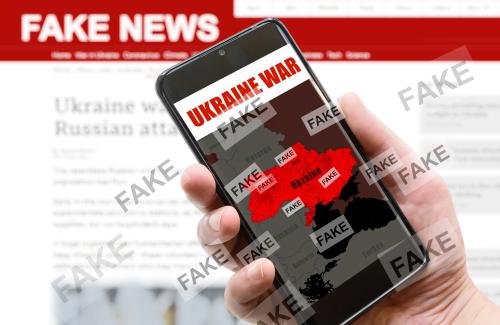
Russia’s 2014 cyber campaign against Ukraine illustrates the limits of spatially anchored planning tools like event overlays and decision points within the DMPP. Prior to the annexation of Crimea, Russian actors conducted a coordinated series of cyber operations targeting government communications, news media, and energy infrastructure to degrade Ukrainian state capacity and shape perceptions domestically and abroad.14 These actions transcended any defined joint force area of operations, occurring simultaneously in cyberspace, social media, and even Ukrainian diaspora communities.15 The DMPP’s spatial planning logic, which privileges terrain-based synchronisation and physical movement, offers no doctrinal mechanism for visualising or sequencing such dispersed, intangible effects. Tools like event overlays are ill-suited to map viral information flows or simultaneous denial-of-service attacks originating outside the theatre. This mismatch underscores a critical flaw in the DMPP’s conventional architecture: its inability to orchestrate non-kinetic, multi-domain effects that operate across borders and cognitive spaces, a defining feature of unconventional campaigns. Without integrated methods that consider, or accommodate domain-transcendent effects, the DMPP will remain misaligned with the demands of contemporary competition, particularly in campaigns defined more by unconventional activity than territory. This shortfall also exposes another area that could be developed in the DMPP, which is its focus on kinetic action.
The DMPP’s emphasis on kinetic effects and traditional force-on-force engagement undermines its suitability for planning unconventional campaigns. While the DMPP incorporates language encouraging multi-domain considerations, its planning outputs, such as centre of gravity (CoG) analysis, lines of operation (LOOs), and decision support tools, are optimised for physical effects like manoeuvre, attrition, and terrain control. These are foundational to conventional warfighting but as Fox and Kopsch highlight, ‘the CoG concept has been rendered ineffective in modern warfare.’16 It is misaligned with the multi-domain effects central to unconventional campaigns, which prioritise cyber, informational, and influence activities over battlefield dominance.
The COG analysis in the DMPP is designed to identify physical nodes or capabilities to target, assuming a direct relationship between destruction and success (particularly at the operational and tactical level).17 Yet in unconventional campaigns, critical capabilities (CC) and vulnerabilities (CV), like disinformation or proxy cyber disruption, are conceptual rather than physical. As Bird highlights, ‘the CoG’s fixation on physical strength runs counter to the imperatives of narrative, influence, and legitimacy operations.’18 In unconventional campaigns objectives and decisive acts may focus on manipulation of perception, degradation of legitimacy, or fragmentation of alliances, none of which can be easily captured through kinetic-centric planning tools. Bartels & Bauer note that conventional campaign models often fail to measure or prioritise intangible outcomes such as narratives or degradation of trust.19 This shortfall is further demonstrated in the DMPP’s wargaming and synchronisation processes, which prioritise physical tempo and movement over intangibles, such as the shaping of information or political environments.
China’s grey-zone campaign in the South China Sea demonstrates how conventional planning tools such as CoG analysis fall short in addressing non-kinetic influence operations. Rather than relying on overt military force, Beijing has employed a mix of legal warfare, information campaigns, and maritime militia patrols to assert territorial claims, often without firing a shot.20 CoG analysis, which seeks physical nodes and force aggregations to target or protect, is poorly suited to identify or counter these narrative-driven strategies.21 Chinese information operations have framed expansion as lawful historical reclamation, warping regional narratives to undermine rivals’ legitimacy.22 These campaigns unfold in diplomatic forums, media platforms, and cyberspace, outside the defined Joint Force Area of Operations, rendering conventional operational tools unsuitable, and unable to articulate critical multi-domain effects. Without doctrinal methods to integrate lawfare, influence operations, and non-military levers of power, the DMPP risks overlooking the subtle yet powerful forces shaping grey-zone competition. This over-reliance on physical effects overlooks the tools central to unconventional competition and the exposes a deeper shortfall in DMPP: its inability to integrate whole-of-government instruments such as, law, finance, and strategic narrative into operational design.
The DMPP’s limited ability to incorporate whole-of-government instruments undermines its effectiveness in addressing complex, unconventional campaigns. These operations often unfold in legal grey zones and rely more on diplomatic signalling, informational effects, and economic leverage than on kinetic action. Effective responses require coordinated input from cross-government agencies. The DIME-FIL framework: diplomatic, informational, military, economic, finance, intelligence and Legal provides a valuable lens for evaluating and integrating these instruments of national power into planning. While the integration of DIME-FIL elements is essential to effective campaign planning, this does not imply that Defence should lead national-level strategy. Rather, the DMPP should be designed to interface with whole-of-government inputs, enabling military planners to incorporate strategic options generated through cyber, informational, economic, or legal levers. Such integration would enhance Defence’s ability to support broader national objectives without overstepping its institutional remit. Yet, within the DMPP, the planning process remains almost entirely focused on military capabilities and objectives, with minimal doctrinal guidance on how to incorporate diplomatic or economic effects, coordinate narrative efforts, or align with broader strategic aims. For example, while the DMPP includes a step for framing the problem and encourages consideration of the human and informational environments, it does not structurally link planning to non-Defence stakeholders such as DFAT, Home Affairs, or Treasury. Nor does it provide mechanisms for synchronising legal, financial, or diplomatic tools alongside military activity.
Furthermore, due to the DMPPs use of military terminology it can feel inaccessible to non-military users.23 Watts et al highlight that campaign models which fail to align military objectives with national-level strategic messaging or economic instruments often fall short of their intended outcomes.24 Similarly, UK doctrine in the Orchestration of Military Strategic Effects explicitly recognises the need for coordinated cross-government campaigning, contrasting with the DMPP’s isolated approach.25 As Oskarsson points out, western militaries are at a disadvantage due to their lack of integration or control of DIME-FIL in their military planning when compared to competitors such as Russia and China.26 Without frameworks or annexes to visualise and integrate DIME-FIL elements, Defence planning risks operating in a silo, unable to mobilise the national levers necessary to succeed in unconventional conflict, particularly at the operational and strategic level.
The DMPP’s geographic bias, kinetic orientation, and limited whole-of-government integration misalign it with unconventional campaigns. Its reliance on spatially defined Joint Force Areas of Operations struggles to address cyber and informational effects, as seen in Russia’s 2014 Ukraine campaign, while its focus on physical centres of gravity fails to counter narrative-driven strategies, like China’s South China Sea operations. Although the DMPP’s problem-framing step acknowledges multi-domain environments (physical, information, human), its COA development and wargaming prioritise kinetic and geographically focused effects, sidelining narrative and legal effects critical to grey-zone conflicts.27 This conceptual-practical gap, coupled with its military-centric logic, limits the ability to use the DMPP to orchestrate national power across diplomatic, informational, military, and economic instruments in the way an unconventional campaign now demands. A reformed DMPP with an operational and strategic focus, embedding systems-thinking, infinite game theory, and the use of AI-driven tools, is essential to integrate multi-domain effects and counter persistent, ambiguous threats in Indo-Pacific grey-zone operations.
To improve its relevance and usability in contemporary campaigns, the DMPP should be restructured into a dual-level planning framework, one tailored for operational and strategic integration, and another streamlined for tactical execution. Current DMPP doctrine attempts to serve strategic operational and tactical levels simultaneously, resulting in conceptual clutter and limited flexibility. By separating the planning process into two complementary streams, Defence can better accommodate the distinct needs of each echelon. The strategic and operational-level framework would focus on campaign design, multi-domain integration, and whole-of-government coordination, while the tactical level would retain kinetic focus and execution tools relevant to force elements ‘on the ground’. This modular approach aligns with international partners. The UK’s Joint Campaign Planning doctrine separates operational design from tactical planning, allowing better incorporation of non-military instruments at higher levels.28 Similarly, Bartels and Bauer’s analysis of campaign design underscores the utility of structuring operational frameworks around strategic influence, rather than terrain and firepower alone.29 By establishing a clear strategic and operational-level planning construct, the ADF could more readily coordinate with civilian agencies, integrate long-term policy goals, and plan for unconventional effects like cyber disruption or diplomatic signalling. Such structural separation would lay the foundation for more accessible, inclusive planning, particularly by creating space for non-Defence partners to contribute meaningfully at the strategic and operational level.
Improving the DMPP’s accessibility through clearer language, inclusive design prompts, and domain-relevant annexes is essential to enabling genuine whole-of-government participation in campaign planning. Defence planning documents often rely on technical jargon, classified terminology, or service-specific shorthand, which can alienate non-Defence partners. For the DMPP to support integrated campaigns, it must adopt plain English and include prompts that explicitly invite input from other departments. This includes not only the ‘what’ of planning but the ‘how’ via guidance that demystifies concepts like information effects, cyber operations, or legitimacy shaping. NATO’s Comprehensive Operations Planning Directive includes plain-language prompts and domain-specific annexes, enabling planners to coordinate with civilian partners without requiring deep familiarity with military doctrine.30 Similarly, UK doctrine on the orchestration of effects encourages the use of accessible operational language to support national-level influence activities.31 Prompts within the DMPP that explicitly ask: “What economic or legal instruments could achieve this effect?” or “What narrative outcome is required here?” would bridge current conceptual gaps and allow for more meaningful WoG contributions. By combining structural separation with clear, inclusive language, the DMPP could evolve into a truly multi-domain, multi-agency planning tool fit for the demands of constant competition. It would also ensure military planners broadened their horizons to generate strategic and operational campaign plans that create multiple dilemmas for adversaries while retaining competitive advantage.
In support of a strategic and operational level DMPP, the concept of infinite game theory should be integrated into the DMPP to help address its geographic bias by reframing planning for persistent, unconventional campaigns rather than finite, terrain-based conflicts. Ordóñez and Carse describe infinite games as ongoing competitions where actors sustain advantage over time, not decisive victories. 32 Unlike the DMPP’s linear Course of Action sequencing, which anchors plans to geographic milestones, infinite game theory supports cyclical, adaptive planning suited to cyber shocks or disinformation waves that transcend physical boundaries seeking to maintain advantage over time rather than through a decisive outcome. 33 For example, China’s South China Sea campaign thrives on persistent narrative shaping, which DMPP’s spatial tools fail to counter. Embedding this approach in DMPP’s problem-framing step enables planners to anticipate evolving threats, ensuring Australia maintains strategic agility in constant competition environments, such as Indo-Pacific grey-zone operations. Embedding infinite game thinking transforms DMPP from a fixed, episodic planning tool into a more dynamic instrument capable of sustaining strategic agility in constant competition environments.
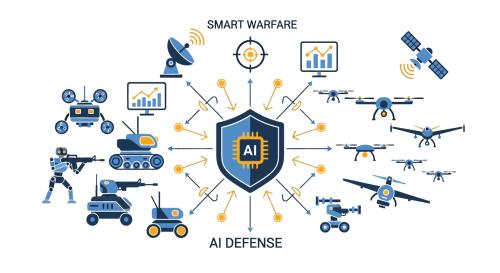
Responding effectively to environments characterised by constant competition and unconventional campaigns could be further enhanced by integrating artificial intelligence (AI) into the DMPP. AI can provide a powerful mechanism to support planning, offering enhanced speed, pattern recognition, and adaptability. The challenge is integrating the tool into secure working environments. Peer-reviewed literature supports AI’s ability to synthesize large volumes of multi-domain data: for example cyber, informational and economic to generate context aware COAs and flag emerging threats that conventional processes might miss.34 Proposed planning tools like COA‑GPT, a neural‑language‑based model, can generate doctrinally-aligned options rapidly.35 In practice, AI could be introduced in specific DMPP steps, such as scoping and framing or COA development. This could be particularly powerful at the operational and strategic level where security-gated use in accredited networks could safeguard sensitive data.36 By integrating AI into targeted planning steps, DMPP can transcend its kinetic bias and become a more agile, multi-domain campaign tool without replacing human judgment.
The enduring relevance of the DMPP as the ADF’s core planning tool is challenged by the evolution of modern conflict toward unconventional, multi-domain campaigns characterised by ambiguity, narrative contest, and dispersed effects. This essay has demonstrated that while the DMPP offers a structured approach for conventional military planning, its rigid geographic framing, kinetic orientation, and military-centric logic render it ill-suited for contemporary unconventional campaigns and ‘constant’ competition. Campaigns defined by cyber disruption, legal ambiguity, proxy warfare, and disinformation require planning processes that can visualise effects across time, domains, and agencies, not just terrain. Furthermore, DMPP’s lack of doctrinal mechanisms to incorporate whole-of-government instruments limits Australia’s ability to coordinate national power effectively in grey-zone contexts. The necessity of bridging military and civilian planning approaches to support integrated campaign design is well recognised in both academic and professional literature.37
Addressing these shortcomings requires more than surface-level adjustments. A reformed DMPP must incorporate a split structure that separates operational-strategic design from tactical execution, enabling tailored inputs, effects planning, and interagency alignment at each level. Planning language must shift from doctrinal exclusivity to shared conceptual clarity, embedding prompts that welcome civilian agency expertise and accommodate contributions from cyber, influence and legal, as central rather than peripheral inputs. This mirrors broader calls within international strategic literature for harmonising interagency planning models to achieve unity of effort across DIME-FIL instruments.38 As demonstrated through comparison with UK and NATO doctrine and supported by RAND and peer-reviewed research, such evolution is not only feasible but necessary to confront adversaries who thrive in the spaces between war and peace.39 To remain credible and competitive, the ADF must move beyond a planning paradigm rooted in conventional warfare logic. An adaptive, inclusive, and strategically integrated DMPP capable of anticipating and orchestrating effects across all instruments of national power offers the clearest path to achieving coherence in an era of persistent, unconventional competition.
Allied Command Operations. Comprehensive Operations Planning Directive (COPD) Interim Version 1.0. Brussels: NATO, December 17, 2010. https://info.publicintelligence.net/NATO-COPD.pdf.
Australian Department of Defence. ADF-I-5 Decision-Making and Planning Processes. Canberra: Defence Publishing Service, 2024.
Australian Department of Defence. Defence Strategic Review 2023. Canberra: Commonwealth of Australia, 2023. https://www.defence.gov.au/about/reviews-inquiries/defence-strategic-review.
Bankov, Borislav. "Hybrid Warfare: How to Escape the Conceptual Gray-Zone." Journal of Strategic Security 17, no. 1 (2024): 1–23. https://doi.org/10.5038/1944-0472.17.1.2118.
Bartels, Elizabeth, and Ryan Bauer. The Role of Information in U.S. Concepts for Strategic Competition. Santa Monica, CA: RAND Corporation, 2022. https://www.rand.org/pubs/research_reports/RRA1256-1.html.
Betz, David. “The Idea of Hybridity.” In Hybrid Conflicts and Information Warfare: New Labels, Old Politics, edited by Ofer Fridman, Vitaly Kabernik, and James C. Pearce, [insert page range]. Boulder, CO: Lynne Rienner Publishers, 2018. https://research.ebsco.com/c/yo5dfu/ebook-viewer/pdf/hai3kwruj5/section/lp_v?location=https%25253A%25252F%25252Fresearch.ebsco.com%25252Fc%25252Fyo5dfu%25252Fsearch%25252Fdetails%25252Fhai3kwruj5%25253Fdb%25253De000xww.
Bird, Tim. "UK Effects-Based Planning and Centre of Gravity Analysis: An Increasingly Dysfunctional Relationship?" RUSI Journal 153, no. 1 (2008): 36–41. https://kclpure.kcl.ac.uk/portal/en/publications/uk-effects-based-planning-and-centre-of-gravity-analysis-an-incre.
Boswinkel, Lotje, Tim Sweijs, and Patrick Bolder. Breaking Patterns: Multi-Domain Operations and Contemporary Warfare. The Hague: The Hague Centre for Strategic Studies, 2023. https://hcss.nl/wp-content/uploads/2023/09/Breaking-Patterns-HCSS-2023.pdf.
Carse, James P. Finite and Infinite Games / James P. Carse. Ballantine Books, 1986.
Chinchilla, Alexandra, Kyle Atwell, Alexis Bradstreet, Catherine Crombe, and Luther Leblanc. "Irregular Warfare in Strategic Competition." Defence Studies 24, no. 1 (2023): 148–58. https://doi.org/10.1080/14702436.2023.2279620.
Derleth, James W. "Fostering a Whole-of-Government Approach to National Security from the Bottom Up." Military Review (Online Exclusive, February 28, 2018). https://www.armyupress.army.mil/Portals/7/Army-Press-Online-Journal/documents/Derleth.pdf.
Fox, Amos, and Thomas Kopsch. "Moving Beyond Mechanical Metaphors: Debunking the Applicability of Centres of Gravity in 21st Century Warfare." The Strategy Bridge, June 2, 2017. https://thestrategybridge.org/the-bridge/2017/6/2/moving-beyond-mechanical-metaphors-debunking-the-applicability-of-centers-of-gravity-in-21st-century-warfare.
Gady, Franz-Stefan, and Alexander Stronell. Cyber Capabilities and Multi-Domain Operations in Future High-Intensity Warfare in 2030. International Institute for Strategic Studies, 2020.
Galeotti, Mark. "Information." In The Weaponisation of Everything: A Field Guide to the New Way of War, 160–75. New Haven, CT: Yale University Press, 2022. https://doi.org/10.2307/j.ctv28bqm27.12.
Janos, Andrew C. "Unconventional Warfare: Framework and Analysis." World Politics 15, no. 4 (1963): 636–646. https://doi.org/10.2307/2009460.
Jasper, Scott. Russian Cyber Operations: Coding the Boundaries of Conflict. Washington, DC: Georgetown University Press, 2020. https://research.ebsco.com/linkprocessor/plink?id=a05f98b2-c42b-384c-a835-b2328284478a.
Kilcullen, David. "The Evolution of Unconventional Warfare." Scandinavian Journal of Military Studies 2, no. 1 (2019): 61–71. https://doi.org/10.31374/sjms.35.
Kofman, Michael, Katya Migacheva, Brian Nichiporuk, Andrew Radin, Olesya Tkacheva, and Jenny Oberholtzer. Lessons from Russia’s Operations in Crimea and Eastern Ukraine. Santa Monica, CA: RAND Corporation, 2017. https://www.rand.org/pubs/research_reports/RR1498.html.
Land Warfare Centre. Planning and Execution Handbook. Warminster: British Ministry of Defence, 2023.
Luo, Shuxian, and Jonathan G. Panter. “China’s Maritime Militia and Fishing Fleets: A Primer for Operational Staffs and Tactical Leaders.” Military Review, January–February 2021. https://www.armyupress.army.mil/Journals/Military-Review/English-Edition-Archives/January-February-2021/Luo-Panter-Maritime-Militia/.
Martínez Ordóñez, Lucía. Military Operational Planning and Strategic Moves. Cham: Springer, 2017.
Mastro, Oriana Skylar. “Harnessing the Power of Information: A Better Approach for Countering China’s Gray Zone Tactics.” Joint Force Quarterly 100 (2nd Quarter 2021): 14–19. https://ndupress.ndu.edu/Portals/68/Documents/jfq/jfq-100/jfq-100_14-19_Stahl.pdf.
McLaughlin, Rob. “The Law of the Sea and PRC Gray Zone Operations in the South China Sea.” American Journal of International Law 116, no. 4 (2022): 751–768. https://doi.org/10.1017/ajil.2022.49.
Ministry of Defence. Allied Joint Publication 5: Allied Joint Doctrine for the Planning of Operations. Ed. A v. 2. London: UK Ministry of Defence/NATO Standardization Office, March 19, 2021. https://www.gov.uk/government/publications/allied-joint-publication-ajp-05a-allied-joint-doctrine-for-the-planning-of-operations.
Ministry of Defence. Joint Doctrine Publication 0 01: UK Defence Doctrine. 6th ed. London: UK Ministry of Defence, November 2022. https://assets.publishing.service.gov.uk/media/63776f4de90e0728553b568b/UK_Defence_Doctrine_Ed6.pdf.
Moore, Charles P., and Michael A. Marra. "The Era of Constant Competition – Purpose and Principles." War Room, U.S. Army War College, March 17, 2021. https://warroom.armywarcollege.edu/articles/purpose-principles.
Oskarsson, Katerina. The Effectiveness of DIMEFIL Instruments of Power in the Gray Zone. Norfolk, VA: NATO Allied Command Transformation, Operational Experimentation Branch, 2017. https://www.academia.edu/32325460/The_Effectiveness_of_DIMEFIL_Instruments_of_Power_in_the_Gray_Zone.
Probasco, Emelia, Helen Toner, Matthew Burtell, and Tim G. J. Rudner. AI for Military Decision-Making. Washington, DC: Center for Security and Emerging Technology, April 2025. https://cset.georgetown.edu/publication/ai-for-military-decision-making/.
Sheppard, Lindsey R., Alice Hunt Friend, Hijab Shah, Asya Akca, Kathleen H. Hicks, and Joseph Federici. By Other Means Part I: Campaigning in the Gray Zone. Washington, DC: Center for Strategic and International Studies, 2019. https://www.csis.org/analysis/other-means-part-i-campaigning-gray-zone.
Szeredy, J. “Spyke.” “Filling the Gap: A Strategy to Harmonize Planning Across Joint and Interagency Environments.” Inter-Agency Journal 6, no. 1 (Winter 2015): 52–66. https://thesimonscenter.org/wp-content/uploads/2015/01/IAJ-6-1Winter-2015-52-66.pdf.
Trost, Ryan, Kristen Cooper, David Frederick, and Jenny Jun. “Offensive Cyber Operations and State Power: Lessons from Russia in Ukraine.” International Journal (2024). https://doi.org/10.1177/00207020241234228.
Watts, Stephen, Bryan Frederick, Nathan Chandler, Mark Toukan, Christian Curriden, Erik E. Mueller, Edward Geist, Ariane M. Tabatabai, Sara Plana, Brandon Corbin, et al. Proxy Warfare in Strategic Competition: Military Implications. Santa Monica, CA: RAND Corporation, 2023. https://www.rand.org/pubs/research_reports/RRA307-3.html.
Watts, Stephen, et al. Assessing the Value of Overseas Military Campaigning in Strategic Competition. Santa Monica, CA: RAND Corporation, 2023. https://www.rand.org/pubs/research_reports/RRA1798-1.html.
176 The Australian War College – Geddes Papers
1 Alexandra Chinchilla, Kyle Atwell, Alexis Bradstreet, Catherine Crombe, and Luther Leblanc. 2023. “Irregular Warfare in Strategic Competition.” Defence Studies 24 (1): 148–58. https://doi.org/10.1080/14702436.2023.2279620
2 David Betz, “The Idea of Hybridity,” in Hybrid Conflicts and Information Warfare: New Labels, Old Politics, ed. Ofer Fridman, Vitaly Kabernik, and James C. Pearce (Boulder, CO: Lynne Rienner Publishers, 2018), p23, https://research.ebsco.com/c/yo5dfu/ebook-viewer/pdf/hai3kwruj5/section/lp_v?location=https%25253A%25252F%25252Fresearch.ebsco.com%25252Fc%25252Fyo5dfu%25252Fsearch%25252Fdetails%25252Fhai3kwruj5%25253Fdb%25253De000xww.
3 Andrew C. Janos, “Unconventional Warfare: Framework and Analysis,” World Politics 15, no. 4 (1963): 636–646, https://doi.org/10.2307/2009460. Lucía Martínez Ordóñez, Military Operational Planning and Strategic Moves (Cham: Springer, 2017), p49-50.
4 David Kilcullen, “The Evolution of Unconventional Warfare,” Scandinavian Journal of Military Studies 2, no. 1 (2019): 61–71, https://doi.org/10.31374/sjms.35
5 Disinformation seeks to manipulate public perception and decision-making by spreading false or misleading narratives. See: Mark Galeotti, “Information.” In The Weaponisation of Everything: A Field Guide to the New Way of War, 160–75. Yale University Press, 2022. https://doi.org/10.2307/j.ctv28bqm27.12. Cyber disruption targets critical information systems, often anonymously, to degrade national resilience, see: Scott Jasper, Russian Cyber Operations: Coding the Boundaries of Conflict (Washington, DC: Georgetown University Press, 2020), https://research.ebsco.com/linkprocessor/plink?id=a05f98b2-c42b-384c-a835-b2328284478a. Proxy warfare involves using non-state or third-party actors to act on behalf of a sponsoring state, providing plausible deniability. See: Stephen Watts et al., Proxy Warfare in Strategic Competition: Military Implications (Santa Monica, CA: RAND Corporation, 2023), https://www.rand.org/pubs/research_reports/RRA307-3.html.
6 Australian Department of Defence, Defence Strategic Review 2023 (Canberra: Commonwealth of Australia, 2023), https://www.defence.gov.au/about/reviews-inquiries/defence-strategic-review.
7 Borislav highlights that there is no consensus on defining grey zone or hybrid activity which exacerbates the challenge for military planners and governments. Borislav Bankov, "Hybrid Warfare: How to Escape the Conceptual Gray-Zone," Journal of Strategic Security 17, no. 1 (2024): 1–23, DOI: https://doi.org/10.5038/1944-0472.17.1.2118
8 This CSIS summary highlights the requirement that to succeed in the ‘Gray zone’ cross-government input to campaign planning is key. Lindsey R. Sheppard et al., By Other Means Part I: Campaigning in the Gray Zone (Washington, DC: Center for Strategic and International Studies, 2019), https://www.csis.org/analysis/other-means-part-i-campaigning-gray-zone.
9 David Kilcullen, “The Evolution of Unconventional Warfare,” Scandinavian Journal of Military Studies 2, no. 1 (2019): 61–71, https://doi.org/10.31374/sjms.35.
10 Australian Department of Defence, ADF-I-5 Decision-Making and Planning Processes (Canberra: Defence Publishing Service, 2024) p169.
11 Franz-Stefan Gady and Alexander Stronell, “Cyber Capabilities and Multi‑Domain Operations in Future High‑Intensity Warfare in 2030,” International Institute for Strategic Studies, 2020. 8-Cyber-Capabilities-and-Multi-Domain-Operations-in-Future-High-Intensity-Warfare-in-2030_ebook.pdf
12 Australian Department of Defence, ADF-I-5 Decision-Making and Planning Processes (Canberra: Defence Publishing Service, 2024) p 192 & 216.
13 Miranda Priebe et al., Multiple Dilemmas for the Joint Force: Joint All‑Domain Command and Control (Santa Monica, CA: RAND Corporation, 2020) Multiple Dilemmas: Challenges and Options for All-Domain Command and Control | RAND
14 Ryan Trost et al., “Offensive Cyber Operations and State Power: Lessons from Russia in Ukraine,” International Journal (2024), https://doi.org/10.1177/00207020241234228.
15 Michael Kofman et al., Lessons from Russia’s Operations in Crimea and Eastern Ukraine (Santa Monica, CA: RAND Corporation, 2017), 12, https://www.rand.org/pubs/research_reports/RR1498.html.
16 Amos Fox and Thomas Kopsch, “Moving Beyond Mechanical Metaphors: Debunking the Applicability of Centres of Gravity in 21st Century Warfare,” The Strategy Bridge, June 2, 2017, https://thestrategybridge.org/the-bridge/2017/6/2/moving-beyond-mechanical-metaphors-debunking-the-applicability-of-centers-of-gravity-in-21st-century-warfare
17 Australian Department of Defence, ADF-I-5 Decision-Making and Planning Processes (Canberra: Defence Publishing Service, 2024) p109.
18 Tim Bird, “UK Effects-Based Planning and Centre of Gravity Analysis: An Increasingly Dysfunctional Relationship?” RUSI Journal 153, no. 1 (2008): 36–41, https://kclpure.kcl.ac.uk/portal/en/publications/uk-effects-based-planning-and-centre-of-gravity-analysis-an-incre.
19 Elizabeth Bartels and Ryan Bauer, The Role of Information in U.S. Concepts for Strategic Competition (Santa Monica, CA: RAND Corporation, 2022), https://www.rand.org/pubs/research_reports/RRA1256-1.html
20 Rob McLaughlin, “The Law of the Sea and PRC Gray‑Zone Operations in the South China Sea,” American Journal of International Law 116, no. 4 (2022): 751–68, DOI: https://doi.org/10.1017/ajil.2022.49
21 Shuxian Luo and Jonathan G. Panter, “China’s Maritime Militia and Fishing Fleets: A Primer for Operational Staffs and Tactical Leaders,” Military Review, January–February 2021 China's Maritime Militia and Fishing Fleets: A Primer for Operational Staffs and Tactical Leaders - EBSCO
22 See: Mark R. Jakobson and Ryan Hass, “Chinese Information Operations in the South China Sea,” Journal of Strategic Studies 44, no. 1 (2021): 1–24. Oriana Skylar Mastro, “Harnessing the Power of Information: A Better Approach for Countering China’s Gray‑Zone Tactics,” Joint Force Quarterly 100 (2nd Quarter 2021): 14–19, https://ndupress.ndu.edu/Portals/68/Documents/jfq/jfq-100/jfq-100_14-19_Stahl.pdf. And Sarjito, Aris. 2024. “China’s Gray Zone Strategy in the South China Sea: Tactics, Objectives, and Regional Implications”. Indonesian Journal of Multidisciplinary Sciences (IJoMS) 3 (2):113-35. https://doi.org/10.59066/ijoms.v3i2.559.
23 Gillian, Gerard. Australian Public Servant, Course Member, ACSC 2025.
24 Stephen Watts et al., Assessing the Value of Overseas Military Campaigning in Strategic Competition (Santa Monica, CA: RAND Corporation, 2023), https://www.rand.org/pubs/research_reports/RRA1798-1.html
25 Ministry of Defence, The Orchestration of Military Strategic Effects (London: UK Ministry of Defence, 2021), https://assets.publishing.service.gov.uk/media/60521238d3bf7f04591df707/20210316-OMSE_new_web-O.pdf.
26 Katerina Oskarsson, The Effectiveness of DIMEFIL Instruments of Power in the Gray Zone, OPEN Publications (Norfolk, VA: NATO Allied Command Transformation, Operational Experimentation Branch, 2017), https://www.academia.edu/32325460/The_Effectiveness_of_DIMEFIL_Instruments_of_Power_in_the_Gray_Zone.
27 In Step 2, planners are directed to understand the operational environment through multiple dimensions: physical, information, and human, providing conceptual space for cyber, influence, and legal considerations to be incorporated into planning logic, see: Australian Department of Defence, ADF-I-5 Decision-Making and Planning Processes (Canberra: Defence Publishing Service, 2024) p66-74.
28 The tactical estimate is used at the tactical level while AJP 5-0 is used for operational planning and above. See: Land Warfare Centre, Planning and Execution Handbook (Warminster: British Ministry of Defence, 2023), chaps. 9–10. Ministry of Defence, Allied Joint Publication 5: Allied Joint Doctrine for the Planning of Operations (Ed. A v. 2) (London: UK Ministry of Defence/NATO Standardization Office, March 19, 2021), https://www.gov.uk/government/publications/allied-joint-publication-ajp-05a-allied-joint-doctrine-for-the-planning-of-operations.
29 Elizabeth Bartels and Ryan Bauer, The Role of Information in U.S. Concepts for Strategic Competition (Santa Monica, CA: RAND Corporation, 2022), https://www.rand.org/pubs/research_reports/RRA1256-1.html
30 While the COPD has been superseded by AJP-5 in doctrinal hierarchy, the COPD is still used and referred to for access to templates and approach to generating documents: Allied Command Operations, Comprehensive Operations Planning Directive (COPD) Interim Version 1.0 (Brussels: NATO, December 17, 2010), https://info.publicintelligence.net/NATO-COPD.pdf
31 Ministry of Defence, Joint Doctrine Publication 0‑01: UK Defence Doctrine, 6th ed. (London: UK Ministry of Defence, November 2022), 14–15, https://assets.publishing.service.gov.uk/media/63776f4de90e0728553b568b/UK_Defence_Doctrine_Ed6.pdf.
32 Infinite game theory refers to a conceptual framework in which actors engage in ongoing, open-ended interaction without a predetermined endpoint, the objective is not to "win" but to sustain strategic advantage. See: James P. Carse, Finite and Infinite Games (New York: Ballantine Books, 1986).
33 Lucía Martínez Ordóñez, Military Operational Planning and Strategic Moves (Cham: Springer, 2017), Ch2&6.
34 Emelia Probasco, Helen Toner, Matthew Burtell, and Tim G. J. Rudner, AI for Military Decision-Making (Center for Security and Emerging Technology, April 2025), https://cset.georgetown.edu/publication/ai-for-military-decision-making/.
35 Vinicius G. Goecks and Nicholas Waytowich, “COA‑GPT: Generative Pre‑trained Transformers for Accelerated Course of Action Development in Military Operations,” arXiv preprint (February 2024), https://doi.org/10.48550/arXiv.2402.01786.
36 Tobias Vestner, From Strategy to Orders: Preparing and Conducting Military Operations with Artificial Intelligence, working paper (Geneva: Geneva Centre for Security Policy, January 2023), https://www.gcsp.ch/sites/default/files/2025-02/military-operations-working-paper-v2.pdf.
37 James W. Derleth, “Fostering a Whole-of-Government Approach to National Security from the Bottom Up,” Military Review (Online Exclusive, February 28, 2018), https://www.armyupress.army.mil/Portals/7/Army-Press-Online-Journal/documents/Derleth.pdf.
38 J. “Spyke” Szeredy, “Filling the Gap: A Strategy to Harmonize Planning across Joint and Interagency Environments,” Inter Agency Journal 6, no. 1 (Winter 2015): 52–66, https://thesimonscenter.org/wp-content/uploads/2015/01/IAJ-6-1Winter-2015-52-66.pdf.
39 Lotje Boswinkel, Tim Sweijs, and Patrick Bolder, Breaking Patterns: Multi-Domain Operations and Contemporary Warfare (The Hague: The Hague Centre for Strategic Studies, 2023), https://hcss.nl/wp-content/uploads/2023/09/Breaking-Patterns-HCSS-2023.pdf.
Defence Mastery

Lieutenant Colonel Alexander Phillips MC is an infantry officer in the British Army, and graduate of the ACSC(MA) class of 2025. He is currently commanding 4 SCOTS, the regional operations battalion for the Middle East based in Cyprus.
The challenges of applying DMPP to campaigns characterised by “unconventional campaigns” © 2026 by . This work is licensed under CC BY-NC-ND



Please let us know if you have discovered an issue with the content on this page.
Comments
Start the conversation by sharing your thoughts! Please login to comment. If you don't yet have an account registration is quick and easy.