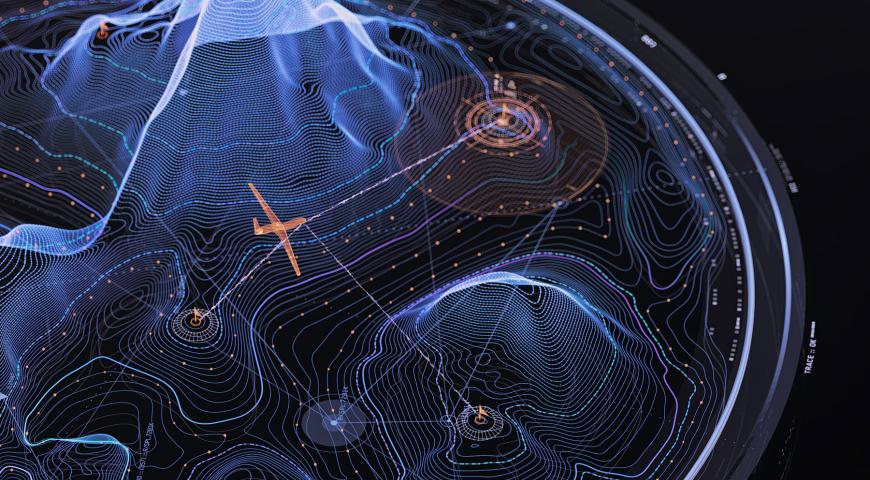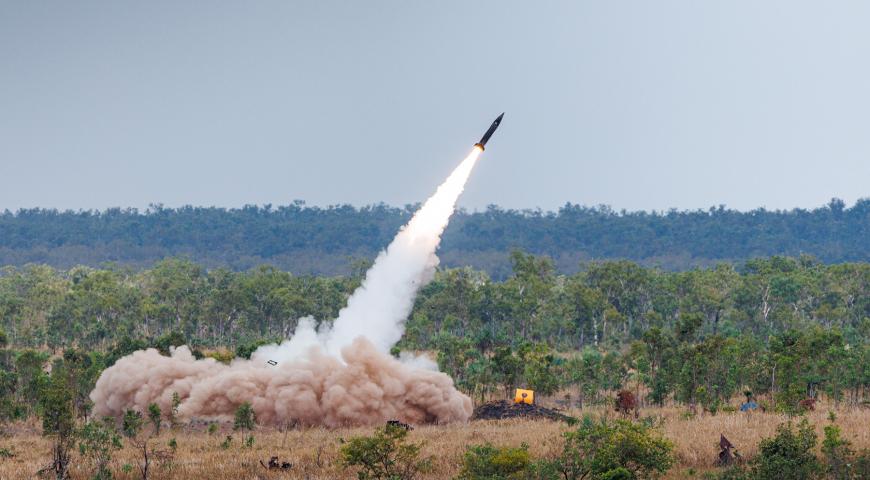
Now that the War with Iran has surpassed six months of operations, it demonstrates how conflict in the contemporary era can be made to look controlled while simultaneously normalising violence. The central concept underpinning this trend is the role of precision warfare. The trends indicate how contemporary warfare can remain protracted while being conducted through precise, calibrated military actions.
The employment of targeted assassinations, calibrated attacks, cyber intrusions, drone operations and missile strikes was executed in various theatres during the combined US and Israeli attacks on Iran that began on 28 February 2026. While these trends are not entirely new and have been observed in the Nagorno-Karabakh conflict, the Russia-Ukraine war, and the Houthis' operations in the Red Sea, their increased visibility may become one of the most consequential legacies of the conflict. The Israeli approach exemplified this precision paradox through systematic, intelligence-led targeted killings, standoff precision munitions, and phased operations, initially concentrated in Gaza and then extending into Lebanon.
The logic of precision strikes is increasingly attractive. It significantly removes the political burden of occupation and mass ground campaigns. It enables states to convey a message, issue a warning, or signal a boundary without intense military action. While the 2026 war has also revealed the limits of a decisive victory through precision warfare, it has shown an easier approach to coercion without intense violence. A state or group can execute targeted assassination, an attack on a radar, a weapon depot, command node, or a proxy network, etc and continue to claim restraint. In accordance with Thomas Schelling’s framework of coercion, each attack or strike serves as a bargaining tool.
An element of ambiguity is also embedded when used in the context of cyberattacks or proxy networks, etc. This aspect enables the leadership to act forcefully without assuming full responsibility and avoiding the associated political cost. In such a process, war becomes more bureaucratised, divided into discrete, repeatable units, and more financially and politically feasible and sustainable for both developing and advanced militaries. For the defending side, the psychological magnitude of the impact weighs heavily, which remains in a latent and perpetual state of vulnerability. Such an approach can become an important behavioural management tool in future, resembling a new language of power.
Associated terminology, such as limited, surgical, and proportionate strikes, transforms violence into an administrative function, thereby making it more acceptable. However, it is important to note that while precise terminology aims to limit the scale of the attack, there will always be room for different political interpretations on the receiving side, which may invite unforeseen responses.
The real danger does not lie in every strike escalating into an all-out war, it lies in the leadership’s assumption that wars can be controlled without necessarily escalating into large-scale disasters via calibrated tactical actions. Hence, the authorisation to use force becomes easier, and militaries may become more comfortable employing this approach. This is inherently problematic, given that a strike being accurate does not necessarily refer to it being controlled. While wars may become brief, they will become more frequent. In addition, technological advancements vis-à-vis AI, cyber and space-based capabilities are likely to further intensify this trend. In this context, there is a likelihood that in the future, states may favour precision warfare over diplomatic engagement. It gives the impression of neither peace nor war, amid claims of strategic control. Every attack is framed as limited, with every retaliation termed as necessary. In the larger picture, escalation is simultaneously practised and denied, leading to an uneasy peace.
The aspect that requires deeper reflection is whether the world is headed towards a situation in which conflicts appear more manageable. In this context, the global contagion becomes one of the ultimate risks. Leadership in crisis-prone regions such as South Asia, the Korean Peninsula, Eastern Europe and the Middle East itself could witness the adoption of this trend. In addition, factors such as the presence of nuclear weapons and compressed decision-making timeframes further exacerbate the associated risks in many cases.
The increasing adoption of this trend can ultimately lead to a permanent state in which critical infrastructure, such as military installations and civilian infrastructure (national power grids, telecommunications networks, ports, airports and data centres), is significantly exposed to attacks and counterattacks. It is important to note that, while the visible destruction from precision strikes may appear less, the destructive impact on civilian life can far more devastating, underscoring its severity.
An important aspect to note in this regard is that a central challenge lies in the assumption that tactical effectiveness via highly advanced precision warfare is being mistaken as strategic success. The achievements of precision warfare do not necessarily translate into achieving the political objectives. This discrepancy might be the reason for the failure to conclude the war despite several offramps. Hence, military operations executed without a clearly defined and coherent strategy fail to deliver results on the battlefield.
Precision warfare doesn’t remove escalation; it simply makes it harder to recognise. It offers punishment without extended engagement. The central lesson is that tactical precision cannot become a substitute for strategy. As conflict demonstrates, the precision capabilities cannot lead to political settlement. Ultimately, there is a pressing need to recognise the gap between tactical precision and strategic outcomes.

Shaza Arif is a Senior Research Associate at the Centre for Aerospace & Security Studies (CASS), Islamabad. She can be reached at cass.thinkers@casstt.com. Ms Arif’s expertise spans Artificial Intelligence, National Security & Strategy, Defence Modernisation, and Nuclear Security.
War in the Middle East: The Precision Paradox © 2026 by . This work is licensed under CC BY-NC-ND



Please let us know if you have discovered an issue with the content on this page.
Comments
Start the conversation by sharing your thoughts! Please login to comment. If you don't yet have an account registration is quick and easy.