Case Study 2 – Has Australia Developed a Distinct Grand Strategy Since 2020?
Australia faces the most challenging strategic circumstances it has seen since the end of the Second World War.1 China's military buildup in the Indo-Pacific and the rapidly deteriorating strategic environment have fundamentally altered Australia's security outlook, requiring a significant strategic transformation. I will demonstrate that Australia has developed a distinct Grand Strategy since 2020, despite claims that it either lacks one or pursues competing approaches. This strategy coordinates deterrence capabilities, regional diplomatic engagement, and economic sovereignty initiatives to maintain a favourable balance of power. It does this while preserving Australia's security, sovereignty, and prosperity in the face of China's regional assertiveness.
To establish this argument, I will develop a clear framework for assessing Grand Strategy and present my conceptualisation of Australia's Grand Strategy. I will then systematically evaluate Australia's strategic development across three pillars: military strategy; diplomatic engagement, and economic resilience measures. Through this structured analysis I will demonstrate how these elements form a coherent organising principle that meets all the criteria for a Grand Strategy, while acknowledging its implicit rather than explicit nature.
Beyond Military Strategy: A Framework for Grand Strategic Assessment
To evaluate the presence of a Grand Strategy, a clear definition and assessment criteria are required, particularly to distinguish it from military or defence strategy. Drawing on foundations laid by Earle in "Makers of Modern Strategy"2 Kennedy states that the key to Grand Strategy lies “in the capacity of the nation's leaders to bring together all of the elements, both military and nonmilitary, for the preservation and enhancement of the nation's long-term (that is, in wartime and peacetime) best interests.” 3 Brands offers a perspective that emphasises the theoretical foundations. He describes Grand Strategy as "the intellectual architecture that lends structure to foreign policy; it is the logic that helps states navigate a complex and dangerous world".4 Nations express Grand Strategy in multiple ways; however, it need not be explicit and available in a publicly accessible ‘plan’. In fact, this would be highly unusual.5 To determine whether a Grand Strategy can be identified, Silove identifies three distinct potential manifestations which it could constitute: a deliberate and detailed plan, an organising principle, or a pattern of behaviour.6 These frameworks provide the essential foundation for any assessment of Australian Grand Strategy.
Answering the question requires robust assessment criteria to differentiate deliberate strategic architecture from reactive decisions, especially amid debates over Australia’s capacity. Building on the analytical foundation of Kennedy, Brands, and Silove, I propose three criteria to evaluate the presence of a Grand Strategy:
- Clear strategic logic: A coherent intellectual framework that articulates how the nation will secure its interests and respond to strategic challenges through integrated approaches.
- Coordinated policy mechanisms for resource allocation: Established institutional processes that align capability investments, diplomatic initiatives, and economic policies with strategic priorities.
- Integration of all tools of statecraft: Deliberate coordination of military, diplomatic, and economic instruments in pursuit of national objectives that extend beyond purely military considerations.
With these criteria established, I will demonstrate that Australia has indeed developed a distinct Grand Strategy since 2020. I characterise this as "Strategic Resilience through Integrated Deterrence," a comprehensive approach that coordinates Australia's national power across three interconnected pillars:
- Military deterrence through denial: Capability investments in long-range strike, nuclear-powered submarines, and integrated air and missile defence, as well as updated force structure and disposition, designed to impose unacceptable costs on potential aggressors targeting Australian interests.
- Regional diplomatic engagement and balancing: Systematic cultivation of partnerships across the Indo-Pacific through enhanced security agreements, strategic dialogues, and coordinated diplomatic responses to regional challenges.
- Economic sovereignty and resilience: Development of secure supply chains, protection of critical infrastructure, enhancement of domestic industrial capabilities, and integration of economic statecraft with security objectives.
These pillars form the organising principle of Australia's Grand Strategy and provide the framework for my analysis of how Australia has systematically fulfilled the criteria above.
Deterrence by Denial: The Military Foundation of Australia's Grand Strategy
Australia's Grand Strategy of "Strategic Resilience through Integrated Deterrence" has emerged as a comprehensive response to the transformation of the region. The Indo-Pacific’s geographic isolation no longer provides the strategic advantages it once did. Babbage clearly articulated this as early as 2016.7 The 2024 National Defence Strategy explicitly acknowledges this, citing China's unprecedented military build-up in our region, and the assessment that Australia no longer enjoys a 10-year strategic warning time.8 This has escalated, with naval provocations, 9 security agreements and regional deployment of police.10 These developments reveal the limitations of previous defence approaches. Rapid regional military modernisation and emerging cyber and space capabilities mean Australia can no longer depend on distance or time for its security and must be able to strike into the near region.11
The Defence Strategic Update (DSU) of 2020 and the subsequent Defence Strategic Review (DSR) of 2023 began proposing actionable solutions to address Australia’s vulnerabilities. They map a clear progression towards the distinct Grand Strategy in place today, and a break with previous thinking. The DSU emphasised the need for “a force structure that can deploy a credible military capability to shape our environment, deter actions against our interests, and respond with force if required,” while introducing the concept of integrated deterrence to counter regional threats.12 Building on this, the DSR advocated for an “enhanced regional focus” and a “capability prioritisation approach,” recommending investments in long-range strike systems and a shift away from outdated platforms to address the immediacy of threats.13 This evolution from the DSU to DSR represents more than policy updates. It shows a coherent strategic framework integrating deterrence, regional engagement, and whole-of-government coordination.
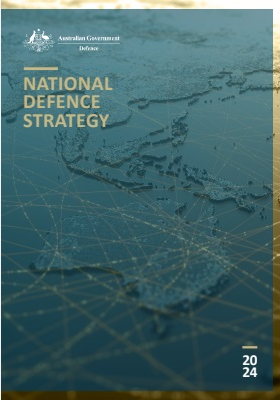
The 2024 National Defence Strategy (NDS) sought to fundamentally transform Australia's strategy, moving beyond both the Forward Defence doctrine of the Cold War era and the Defence of Australia doctrine articulated in Dibb's influential 1986 review.14 At its core is deterrence by denial, a distinct military strategy which seeks to prevent adversaries from achieving their objectives by making potential aggression too costly to succeed. Unlike Forward Defence's reliance on distant allied operations or the Defence of Australia's narrower focus on the air-sea gap,15 the National Defence concept adopts "a coordinated, whole-of-government and whole-of-nation approach" that prioritises deterrence by developing capabilities to "hold potential adversaries' forces at risk from a greater distance".16 Importantly, the NDS acknowledges the requirement to continually adjust along strategic timeframes by establishing a biennial review. The NDS thus fulfills the first essential criterion for assessing the development of an Australian Grand Strategy by establishing a clear strategic logic address contemporary challenges through integrated deterrence by denial.
The capability acquisition approach of the NDS serves as the critical mechanism for resource assignment, fulfilling the second of the criteria for identifying a Grand Strategy. The emphasis on "minimum viable capability" represents a fundamental shift in Australia's acquisition mechanisms while directly supporting the strategy of deterrence by denial.17 It explicitly defines this as "a capability that can be introduced into service successfully, sustained effectively and achieve the directed effect in the required time".18 This approach responds effectively to Australia's long and troubled procurement history.19 The IIP prioritises speed of acquisition over perfection, allowing for iterative improvements over time.
This approach directly supports capabilities that will “complicate the calculus of any potential adversary… by increasing the range and lethality of the ADF".20 The NDS and IIP demonstrate clear alignment between strategic intent and capability investments, allocating substantial funding across critical domains, including $14-18 billion for Northern Bases, $28-35 billion for targeting and long-range strike, $51-69 billion for maritime capabilities, and $28-33 billion for expeditionary air operations.21 These investments fulfill the six capability effects identified in the NDS, and create a system designed to impose unacceptable costs on potential aggressors.22 The IIP explicitly acknowledges this strategic intent, stating that nuclear submarines will "enable us to hold a potential adversary's assets at risk at the greatest distance possible",23 while long-range strike capabilities provide "a greater capacity to hold at risk a potential adversary's forces".24 This capability development framework demonstrates the practical implementation of Australia's Grand Strategy.
While defence capabilities form the foundation of Australia's approach, a comprehensive Grand Strategy must extend beyond military dimensions to incorporate whole-of-government coordination. As Mick Ryan notes, the NDS alone does not do this.25 A comprehensive assessment requires examining how these defence initiatives integrate with diplomatic and economic policies.
Diplomatic Architecture: Australia's Strategic Balancing in the Indo-Pacific
Australia’s diplomatic engagement represents the deliberate integration of non-military tools of statecraft with national objectives, fulfilling the third criterion for identifying a Grand Strategy. This diplomacy pillar is evident in how Australia aligns its foreign policy with its security interests across the Indo-Pacific region. At the Asia Summit in 2024, Foreign Minister Penny Wong articulated this approach and built upon the NDS, stating that Australia must “be active, working with our friends and partners… to prevent conflict, to bring both deterrence and reassurance to bear, and to help shape the region we want,” emphasising a blend of diplomatic, economic, and security efforts.26 She highlighted initiatives like Southeast Asia business exchange missions and visa improvements as part of this integrated statecraft, advancing “shared economic and security interests” beyond traditional defence ties.27 By systematically aligning these elements of national power, Australia meets the threshold of employing a Grand Strategy.
In the Pacific specifically, Australia has implemented this approach through targeted initiatives designed to maintain regional influence and limit the expansion of potential adversaries. The Department of Foreign Affairs and Trade (DFAT) is pursuing a 'Regional Balancing Framework',28 which positions Australia as the partner of choice in the Pacific, directly competing with China's growing presence in the region. Australia supports the Pacific Islands Forum 2050 Strategy for the Blue Pacific Continent, using this to implement programs that advance its strategic interests.29 Recent agreements such as the Falepili Union with Tuvalu and the Nauru-Australia Treaty give Australia effective veto power over these nations' security partnerships with other countries.30 Australia has also leveraged soft power effectively, as demonstrated by the $600 million deal to establish a Papua New Guinean team in the National Rugby League,31 which was followed by a new defence treaty that Defence Minister Marles called "the most significant defence agreement between our two countries since Papua New Guinean independence".32
Australia has constructed a diplomatic architecture across the wider Indo-Pacific that deliberately reinforces its Grand Strategy by creating counterbalances to China's regional influence. The ASEAN-Australia Comprehensive Strategic Partnership established in 2021 represents a coordinated diplomatic effort to strengthen security, economic and people-to-people ties with a critical regional bloc.33 Australia has significantly increased diplomatic engagement with Indonesia, culminating in the 2023 Comprehensive Strategic Partnership that addresses mutual security concerns in the South China Sea while deepening economic ties.34 Similarly, Australia's elevation of its relationship with India to a Comprehensive Strategic Partnership in 2020, followed by the 2022 Economic Cooperation and Trade Agreement, demonstrates the integration of diplomatic and economic tools to counter-balance regional power dynamics.35 These initiatives cultivate partnerships that collectively support the deterrence element of Australia's Grand Strategy while preserving economic engagement with China. This balancing act is consistent with the objective of maintaining a favourable regional power distribution while preserving economic resilience by avoiding provocation of our largest trading partner.
The US alliance forms a cornerstone of Australia's Grand Strategy, explicitly acknowledged in the NDS as "fundamental to our national security and the ADF's capacity."36 The 2021 AUSMIN agreements expanded US-Australia force posture cooperation, including rotational deployments of US aircraft and enhanced maritime logistics, boosting the ADF’s capabilities and regional deterrence.37 These agreements (which preceded the NDS) built on the AUKUS partnership (to be discussed further in the next section) which Dean describes as a "an exponential increase in speed, manoeuvrability, survivability, and endurance” for the ADF, while remaining anchored in the ANZUS Treaty.38 The alliance highlights the challenge of resource assignment and competing goals. Shoebridge notes that recent US political rhetoric has suggested NATO allies should "lift defence spending to 5 percent of GDP—more than double the alliance's existing spending target of 2 percent," creating potential implications for Australia's long-term resource allocation despite not being a NATO member.39 Australia has shifted from a defensive posture to a proactive denial strategy that uses US interoperability to project power and complicate adversary planning, particularly in critical maritime domains. This integration of alliance relationships with sovereign capability development demonstrates a coherent Grand Strategy that meets all three criteria: strategic logic through deterrence, coordinated resource mechanisms, and integration of military, diplomatic, and economic tools.
Economic Sovereignty and National Resilience: Integrating the Third Pillar
Economic and national resilience represent critical pillars in Australia's Grand Strategy, demonstrating both coordinated policy mechanisms and the integration of multiple tools of statecraft. Since 2020, Australia has systematically integrated economic instruments with defence and security objectives, revealing a comprehensive approach to regional influence and national sovereignty. The Australian Infrastructure Financing Facility for the Pacific, established with $2 billion in funding, represents a deliberate economic instrument for advancing strategic interests, particularly countering China’s regional infrastructure dominance.40 Similarly, the $15 billion National Reconstruction Fund prioritises critical technologies and supply chain resilience in sectors explicitly linked to national security priorities, reflecting a shift toward economic sovereignty as a strategic asset.41 These initiatives are complemented by targeted free trade agreements with security partners, including the Australia-UK Free Trade Agreement signed in December 2021 and the Comprehensive Strategic Partnership with India, which combines economic and security cooperation.42 Rather than pursuing relationships solely for commercial benefit, Australia has established its economic policies to strengthen partnerships and counter competition, demonstrating clear strategic logic.
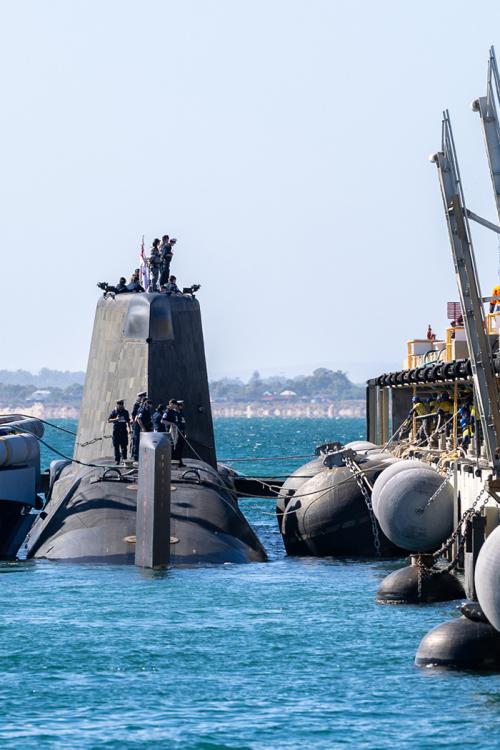
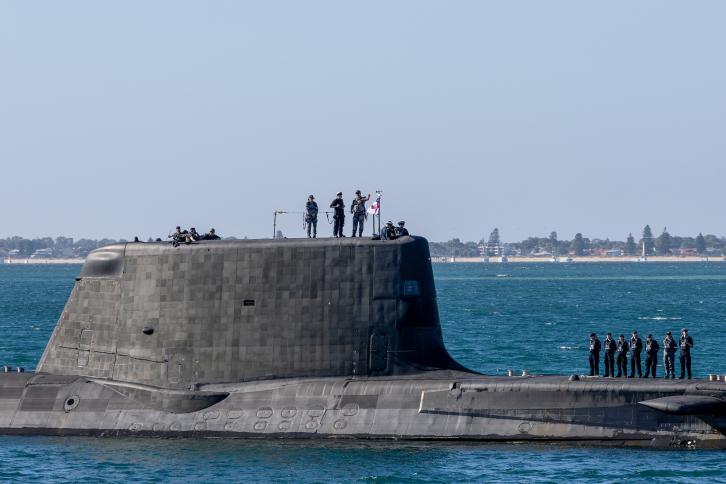
AUKUS represents the most comprehensive manifestation of Australia's Grand Strategy, simultaneously addressing military deterrence, industrial sovereignty, and alliance integration within a singular framework. The partnership delivering conventionally armed, nuclear-powered submarines that will provide "superior deterrence capability" through vessels that are "harder to detect, have longer range and endurance”, posing significant dilemmas on any adversary operating in our near region.43 From an economic perspective, AUKUS represents a deliberate investment in sovereign industrial capability, “20,000 direct jobs” and a significant boost to Australian manufacturing capability over decades.44
Beyond submarine acquisition, Pillar II establishes a framework for advanced technology sharing and development in critical domains including "undersea capabilities, quantum technologies, advanced cyber, hypersonic and counter-hypersonic capabilities."45 It is designed to provide a transformative boost to Australia’s defence sector.46 There are limitations to this, as currently the economic and diplomatic aspects are relatively undeveloped.47 Despite this, AUKUS demonstrates clear strategic logic by addressing Australia's capability requirements while simultaneously deepening industrial and technological integration with key allies in a long-term framework that serves Australia's position in the regional balance of power
Australia has implemented national resilience mechanisms, both in the realm of protective security and supply chain resilience, which fulfill the third criterion of Grand Strategy. This is done by ensuring that external deterrence capabilities are complemented with internal sovereign capabilities to withstand coercion. The Office of Supply Chain Resilience, established in 2021, monitors critical supply chains and advises on mitigating disruptions, enhancing economic stability amid global crises.48 The Department of Home Affairs has driven this agenda through the Security of Critical Infrastructure Act 2018, amended in 2021 to mandate risk management programs for key sectors, strengthening resilience against cascading failures.49 ASIO has escalated its efforts to counter foreign intelligence services, singled out in the 2025 Annual Threat Assessment as a primary threat to Australia’s sovereignty. ASIO head Mike Burgess warned, “We are getting closer to the threshold for high-impact sabotage,” focusing the organisations work on identifying and preventing these hostile actions.50 The Foreign Arrangements Scheme empowers the federal government to oversee and veto arrangements between state entities and foreign governments, ensuring they align with national security and foreign policy objectives. This enhances resilience by mitigating risks from foreign interference in critical sectors, complementing Home Affair’s efforts to safeguard infrastructure.51 This has extended into higher education to ensure the appropriate protection of information related to AUKUS,52 and to thwart Chinese interference in the tertiary sector.53 These efforts collectively illustrate a significant shift toward a cohesive resilience framework, intertwining economic security with protective measures to counter sophisticated threats.
Conclusion - the Strategic Logic Behind Australia's Implicit Approach
Australia has demonstrably developed a distinct Grand Strategy since 2020, which I define as 'Strategic Resilience through Integrated Deterrence.' This strategy represents a comprehensive response to Australia's deteriorating strategic environment. My analysis demonstrates this Grand Strategy meets all three assessment criteria, for which the evidence is compelling:
- Strategic architecture transformation: The progression from the 2020 Defence Strategic Update to the 2023 Defence Strategic Review and culminating in the 2024 National Defence Strategy reveals a consistent evolution toward integrated deterrence by denial rather than discrete policy shifts.
- Coordinated resource allocation across national power instruments: The government has directed substantial funding across domains through Defence capability investments, the Pacific Infrastructure Facility, National Reconstruction Fund, and targeted diplomatic initiatives with regional partners, demonstrating deliberate resourcing towards strategic goals.
- Coordinated whole-of-government initiatives: Australia has systematically harmonised defence capabilities, diplomatic partnerships, and economic resilience measures to achieve the dual objectives of maintaining a favourable regional balance of power while preserving sovereignty and prosperity.
Critical perspectives challenge this interpretation. White argues that Australia lacks a Grand Strategy altogether, viewing its actions as fragmented, reactive moves to external pressures rather than coherent strategic vision.54 Some commentators, like Scrafton, contend that Australia lacks the “military and economic heft” for a Grand Strategy,55 yet this view underestimates its ability to shape the Indo-Pacific, where a relative power vacuum enhances its influence.56 Layton contends that Australia executes two distinct grand strategies: a maritime strategy focused on denial through alliances like AUKUS, and a continental strategy centred on regional stability via initiatives like the Pacific Step-Up.57 Mick Ryan sees mainly continuity, with little significant change.58 These perspectives overlook how military, diplomatic and economic policy are consistently threaded around a strategic framework, for which momentum has built since 2020, which suggests a systematic rather than opportunistic approach.
Why is much of the Grand Strategy not explicit? While no single document codifies this Grand Strategy, it manifests as what Silove would identify as a coherent "organising principle".59 Its implicit nature reflects both domestic political constraints and diplomatic sensitivities. Australian policymakers seem to have determined that articulating an explicit Grand Strategy, beyond the Defence Strategy within the NDS, would antagonising regional partners and accelerate competition. Given rapid shifts in the security outlook, the successful implementation will require careful diplomatic handling and sustained bipartisan support, particularly in addressing the human and cultural dimension. The capability to mobilise, deploy, and sustain the large and capable ground forces required to secure strategic assets represent a gap in the framework.60 Those Australians (many who are currently civilians) who will fill the Battle Groups required to do this at home and in our near region will require a more explicit articulation of their role within the strategic architecture.
Bibliography
Australian Broadcasting Corporation. 2019. "Concerns Over Chinese Communist Party Infiltration in University Review." ABC News, August 28. https://www.abc.net.au/news/2019-08-28/concerns-chinese-communist-party-infiltration-university-review/11455588.
Australian Government. 2020. Defence Strategic Update 2020. Canberra: Department of Defence. https://www.defence.gov.au/about/strategic-planning/2020-defence-strategic-update.
Australian Government. 2023. Defence Strategic Review 2023. Canberra: Department of Defence. https://www.defence.gov.au/about/reviews-inquiries/defence-strategic-review.
Australian Government. 2024a. National Defence Strategy 2024. Canberra: Department of Defence. https://www.defence.gov.au/about/strategic-planning/2024-national-defence-strategy-2024-integrated-investment-program.
Australian Government. 2024b. 2024 Integrated Investment Program. Canberra: Department of Defence.
Australian Mission to ASEAN. 2025. "The ASEAN-Australia Comprehensive Strategic Partnership -- a Year of Progress." https://www.dfat.gov.au/asean-australia-csp.
Babbage, R. 2015. 'The case for a new Australian Grand Strategy'. The Strategist, Australian Strategic Policy Institute. https://www.aspistrategist.org.au/the-case-for-a-new-australian-grand-strategy/.
Babbage, R. 2025. "The ADF Reserve System Is Obsolete. We Need a Dramatically Expanded Force." The Strategist, March 21. https://www.aspistrategist.org.au/the-adf-reserve-system-is-obsolete-we-need-a-dramatically-expanded-force/.
Brands, H. 2014. What Good is Grand Strategy? Power and Purpose in American Statecraft from Harry S. Truman to George W. Bush. Cornell University Press, Ithaca.
Burgess, M. 2025. "ASIO Annual Threat Assessment 2025." Australian Security Intelligence Organisation, February 19. https://www.asio.gov.au/director-generals-annual-threat-assessment-2025.
Cave, D. 2024. "Australia Targets China's Influence with Deals in Pacific Islands." The New York Times, December 20. https://www.nytimes.com/2024/12/20/world/australia/australia-china-pacific-deals.html.
Clark, C. 2024. "Aussie Auditors: 38 Years of Defense Procurement Delays." Breaking Defense, February 12. https://breakingdefense.com/2024/02/aussie-auditors-38-years-of-defense-procurement-delays/.
Dean, P. J., and Goddard, L. 2022. "How AUKUS Has Brought an Alliance Revolution to Australia." Australian Financial Review, April 4. https://www.afr.com/policy/foreign-affairs/how-aukus-has-brought-an-alliance-revolution-to-australia-20220404-p5aar3.
Department of Defence. 2025. "Joint Statement: Australia-Papua New Guinea Defence Ministers' Meeting." February 20. https://www.minister.defence.gov.au/statements/2025-02-20/joint-statement-australia-papua-new-guinea-defence-ministers-meeting.
Department of Foreign Affairs and Trade. 2023. "Joint Statement: Second Australia-India 2+2 Ministerial Dialogue, New Delhi." November 20. https://www.dfat.gov.au/news/media-release/joint-statement-second-australia-india-2-2-ministerial-dialogue-new-delhi.
Department of Foreign Affairs and Trade. 2025. "Australia's Foreign Relations (State and Territory Arrangements) Act 2020." https://www.dfat.gov.au/international-relations/foreign-arrangements-scheme.
Department of Foreign Affairs and Trade. 2025. "Plan of Action for the Indonesia-Australia Comprehensive Strategic Partnership (2020-2024)." https://www.dfat.gov.au/geo/indonesia/indonesia-australia-comprehensive-strategic-partnership.
Department of Home Affairs. 2024. "Critical Infrastructure Resilience." Australian Government, February 27. https://www.homeaffairs.gov.au/about-us/our-portfolios/national-security/critical-infrastructure-resilience.
Department of Home Affairs. 2025. "Countering Foreign Interference in Education and Research." Australian Government, March 14. https://www.homeaffairs.gov.au/about-us/our-portfolios/national-security/countering-foreign-interference/overview/in-education-and-research.
Department of Industry, Science and Resources. 2025. "National Reconstruction Fund." Australian Government. https://www.industry.gov.au/news/national-reconstruction-fund.
Department of Industry, Science and Resources. 2025. "Office of Supply Chain Resilience." Australian Government. https://www.industry.gov.au/office-supply-chain-resilience.
Dibb, P. 1986. Review of Australia's Defence Capabilities: Report to the Minister for Defence. Canberra: Australian Government Publishing Service.
Dombrowski, P., and Reich, S. 2018. "What Is Grand Strategy? Sweeping a Conceptual Minefield." Texas National Security Review 2(1): 8-35. https://tnsr.org/2018/11/what-is-grand-strategy-sweeping-a-conceptual-minefield/.
Earle, E. M. (ed). 1943. Makers of Modern Strategy: Military Thought from Machiavelli to Hitler. Princeton, NJ: Princeton University Press.
Green, M. J., and Dean, P. J. 2023. "AUKUS' Strategic Deterrence Good for the Nation and Region." United States Studies Centre, March 11. https://www.ussc.edu.au/aukus-strategic-deterrence-good-for-the-nation-and-region.
Gyngell, A. 2017. Fear of Abandonment: Australia in the World since 1942. Melbourne: La Trobe University Press.
Hurst, D. 2023. "Australia to Offer Residency to Tuvalu Citizens Displaced by Climate Change." The Guardian, November 10. https://www.theguardian.com/australia-news/2023/nov/10/australia-to-offer-residency-to-tuvalu-residents-displaced-by-climate-change.
Kennedy, P. 1991. "Grand strategy in War and Peace: Toward a Broader Definition." In Grand Strategies in War and Peace, edited by Paul Kennedy. New Haven, CT: Yale University Press.
Layton, P. 2021. "Executing Australia's Two Grand Strategies." Australian Outlook, October 25. https://www.internationalaffairs.org.au/australianoutlook/executing-australias-two-grand-strategies/.
Lowy Institute. 2025. "How Should Australia Respond to Chinese Warships' Live Fire?" The Interpreter, February 27. https://www.lowyinstitute.org/the-interpreter/how-should-australia-respond-chinese-warships-live-fire.
Marles, Richard. “Sydney Institute Speech,” Australian Government Department of Defence, April 4, 2024. Accessed March 23, 2025. Link: https://www.minister.defence.gov.au/speeches/2024-04-04/sydney-institute.
Medcalf, R. 2021. "The Indo-Pacific and the Need for Strategic Clarity." The Strategist, September 15. https://www.aspistrategist.org.au/the-indo-pacific-and-the-need-for-strategic-clarity/.
Medcalf, R. 2023. "India-Australia Partnership: Strategic Convergence in the Indo-Pacific." Asia Policy 18(2): 67-85.
Pacific Islands Forum Secretariat. 2024. 2050 Strategy for the Blue Pacific Continent. Suva, Fiji: Pacific Islands Forum Secretariat. https://www.forumsec.org/2050.
Pearce, M. 2025. "The National Defence Strategy." Address presented at the Australian Command and Staff College, Remote course, February 18.
Quiggin, J. 2023. "Australia and China Turn a New Leaf in Economic Relations." East Asia Forum, December 23. https://eastasiaforum.org/2023/12/23/australia-and-china-turn-a-new-leaf-in-economic-relations/.
Ryan, M. 2024. "Australia's New National Defence Strategy: Mostly Continuity but with Some Change." Center for Strategic and International Studies, May 3. https://www.csis.org/analysis/australias-new-national-defence-strategy-mostly-continuity-some-change.
Scrafton, M. 2025. "Rising Powers: Grand Strategies, Balance of Power and Australia." Here and There. https://mikescrafton.com/rising-powers-grand-strategies-balance-of-power-and-australia/.
Security of Critical Infrastructure Act 2018 (Cth), as amended by the Security Legislation Amendment (Critical Infrastructure) Act 2021 (Cth). https://www.legislation.gov.au/Details/C2021A00124.
Shoebridge, M. 2025. "Preparing Australia for Trump's Return: Do More, Spend More, Risk More." The Strategist, January 29. https://www.aspistrategist.org.au/preparing-australia-for-trumps-return-do-more-spend-more-risk-more/.
Silove, N. 2018. "Beyond the Buzzword: The Three Meanings of 'Grand Strategy.'" International Security 43(1): 27-57.
Watson, K. 2025. "Cook Islands China Deal Riles Allies as West's Grip Loosens." BBC News, February 26. https://www.bbc.com/news/articles/cvg559y0803o.
Weissmann, M., and Rappe, E. 2022. "Australia's Economic Statecraft in the Indo-Pacific: The AIFFP as a Strategic Tool." Australian Journal of International Affairs 76(3): 345-362. https://doi.org/10.1080/10357718.2022.2051423.
White, H. 2019. "Waning US Power Must Shape Australia's Defence Strategy." The Strategist, May 23. https://www.aspistrategist.org.au/waning-us-power-must-shape-australias-defence-strategy/.
Wilson, L. 2023. "Explainer: AUKUS' Economics -- The Price of a Megaproject." United States Studies Centre, March 21. https://www.ussc.edu.au/explainer-aukus-economics-the-price-of-a-megaproject.
Wong, P. 2024. "Speech to the Asia Summit." Speech presented at the Asia Summit, hosted by The Australian Financial Review and Asia Society, September 3. https://www.foreignminister.gov.au/minister/penny-wong/speech/speech-asia-summit.
1 Marles, Richard. “Sydney Institute Speech,” Australian Government Department of Defence, April 4, 2024. Accessed March 23, 2025. Link: https://www.minister.defence.gov.au/speeches/2024-04-04/sydney-institute.
2 Earle, Edward Mead, ed. Makers of Modern Strategy: Military Thought from Machiavelli to Hitler. Princeton, NJ: Princeton University Press, 1943. In the introduction of the first edition of Makers of Modern Strategy, Edward Meade Earle defined strategy as “the art of controlling and utilizing the resources of a nation—or a coalition of nations—including its armed forces, to the end that its vital interests shall be effectively promoted and secured against enemies, actual, potential, or merely presumed.”
3 Paul Kennedy, “grand strategy in War and Peace: Toward a Broader Definition,” in grand Strategies in War and Peace, ed. Paul Kennedy (New Haven, CT: Yale University Press, 1991), 5.
4 Brands, H 2014, What Good is grand strategy? Power and Purpose in American Statecraft from Harry S. Truman to George W. Bush, Cornell University Press, Ithaca, 13.
5 Thierry, Peter Dombrowski, and Simon Reich. “What is grand strategy? Sweeping a Conceptual Minefield.” Texas National Security Review 2, no. 1 (November 2018): 8–35. Accessed March 10, 2025. https://tnsr.org/2018/11/what-is-grand-strategy-sweeping-a-conceptual-minefield/.
6 Nina Silove, "Beyond the Buzzword: The Three Meanings of 'grand strategy,'" International Security 43, no. 1 (2018): 27-57.
7 Babbage, R 2015, 'The case for a new Australian grand strategy', The Strategist, Australian Strategic Policy Institute, Accessed 29 January 2025, https://www.aspistrategist.org.au/the-case-for-a-new-australian-grand-strategy/
8 Australian Government. 2024. National Defence Strategy 2024. Canberra: Department of Defence. https://www.defence.gov.au/about/strategic-planning/2024-national-defence-strategy-2024-integrated-investment-program.
9 Lowy Institute. "How Should Australia Respond to Chinese Warships’ Live Fire?" The Interpreter, February 27, 2025. https://www.lowyinstitute.org/the-interpreter/how-should-australia-respond-chinese-warships-live-fire.
10 Watson, Katy. 2025. “Cook Islands China Deal Riles Allies as West’s Grip Loosens.” BBC News, February 26, 2025. Accessed March 10, 2025. https://www.bbc.com/news/articles/cvg559y0803o.
11 Australian Government. 2024. National Defence Strategy 2024.
12 Australian Government, Defence Strategic Update 2020 (Canberra: Department of Defence, 2020), 27, https://www.defence.gov.au/about/strategic-planning/2020-defence-strategic-update
13 Australian Government, Defence Strategic Review 2023 (Canberra: Department of Defence, 2023), 52, https://www.defence.gov.au/about/reviews-inquiries/defence-strategic-review.
14 Paul Dibb, Review of Australia’s Defence Capabilities: Report to the Minister for Defence (Canberra: Australian Government Publishing Service, 1986), 15.
15 Gyngell, Allan. 2017. Fear of Abandonment: Australia in the World since 1942. Melbourne: La Trobe University Press, 134.
16 Australian Government, National Defence Strategy 2024 15, 22.
17 Ibid, 35.
18 Ibid, 56.
19 Clark, Colin. “Aussie Auditors: 38 Years of Defense Procurement Delays.” Breaking Defense, February 12, 2024. Accessed March 10, 2025. https://breakingdefense.com/2024/02/aussie-auditors-38-years-of-defense-procurement-delays/.
20 Australian Government, National Defence Strategy 2024, 29.
21 Australian Government. 2024b. 2024 Integrated Investment Program. Canberra: Department of Defence, 95-96.
22 They are: project force, hold a potential adversary’s forces at risk, protect ADF forces and supporting critical infrastructure in Australia, sustain protracted combat operations, maintain persistent situational awareness in our primary area of military interest, and achieve decision advantage. Australian Defence Force, 2024 National Defence Strategy, 28-29.
23 Ibid, 23.
24 Ibid, 43.
25 Ryan, Mick. "Australia’s New National Defence Strategy: Mostly Continuity but with Some Change." Center for Strategic and International Studies, May 3, 2024. Accessed March 19, 2025. https://www.csis.org/analysis/australias-new-national-defence-strategy-mostly-continuity-some-change
26 Wong, Penny. “Speech to the Asia Summit.” Speech presented at the Asia Summit, hosted by The Australian Financial Review and Asia Society, September 3, 2024. https://www.foreignminister.gov.au/minister/penny-wong/speech/speech-asia-summit.
27 Wong, Penny. “Speech to the Asia Summit.” Speech presented at the Asia Summit, hosted by The Australian Financial Review and Asia Society, September 3, 2024. https://www.foreignminister.gov.au/minister/penny-wong/speech/speech-asia-summit.
28 Pearce, MAJGEN Matt. "The National Defence Strategy”. Address presented at the Australian Command and Staff College, Remote course, February 18, 2025.
29 Pacific Islands Forum Secretariat. 2050 Strategy for the Blue Pacific Continent. Suva, Fiji: Pacific Islands Forum Secretariat, 2024. Accessed February 28, 2025. https://www.forumsec.org/2050.
30 Hurst, Daniel. "Australia to Offer Residency to Tuvalu Citizens Displaced by Climate Change." The Guardian, November 10, 2023. https://www.theguardian.com/australia-news/2023/nov/10/australia-to-offer-residency-to-tuvalu-residents-displaced-by-climate-change.
31 Cave, Damien. 2024. “Australia Targets China’s Influence with Deals in Pacific Islands.” The New York Times, December 20. Accessed February 28, 2025. https://www.nytimes.com/2024/12/20/world/australia/australia-china-pacific-deals.html
32 Department of Defence. “Joint Statement: Australia-Papua New Guinea Defence Ministers’ Meeting.” Accessed February 28, 2025. https://www.minister.defence.gov.au/statements/2025-02-20/joint-statement-australia-papua-new-guinea-defence-ministers-meeting.
33 Australian Mission to ASEAN. “The ASEAN-Australia Comprehensive Strategic Partnership – a Year of Progress.” Accessed March 10, 2025. https://www.dfat.gov.au/asean-australia-csp.
34 Department of Foreign Affairs and Trade. “Plan of Action for the Indonesia-Australia Comprehensive Strategic Partnership (2020-2024).” Accessed March 10, 2025. https://www.dfat.gov.au/geo/indonesia/indonesia-australia-comprehensive-strategic-partnership.
35 Department of Foreign Affairs and Trade. “Joint Statement: Second Australia-India 2+2 Ministerial Dialogue, New Delhi.” Last modified November 20, 2023. Accessed March 10, 2025. https://www.dfat.gov.au/news/media-release/joint-statement-second-australia-india-2-2-ministerial-dialogue-new-delhi.
36 Australian Government, National Defence Strategy 2024 46.
37 Dean, Peter J., and Lachlan Goddard. 2022. “How AUKUS Has Brought an Alliance Revolution to Australia.” Australian Financial Review, April 4, 2022. Accessed March 10, 2025. https://www.afr.com/policy/foreign-affairs/how-aukus-has-brought-an-alliance-revolution-to-australia-20220404-p5aar3.
38 Green, Michael J., and Peter J. Dean. 2023. “AUKUS’ Strategic Deterrence Good for the Nation and Region.” United States Studies Centre, March 11, 2023. Accessed March 10, 2025. https://www.ussc.edu.au/aukus-strategic-deterrence-good-for-the-nation-and-region.
39 Michael Shoebridge, "Preparing Australia for Trump's Return: Do More, Spend More, Risk More," The Strategist, January 29, 2025. Accessed March 10, 2025. https://www.aspistrategist.org.au/preparing-australia-for-trumps-return-do-more-spend-more-risk-more/.
40 Mikael Weissmann and Elin Rappe, “Australia’s Economic Statecraft in the Indo-Pacific: The AIFFP as a Strategic Tool,” Australian Journal of International Affairs 76, no. 3 (2022): 345–362. Accessed March 10, 2025. https://doi.org/10.1080/10357718.2022.2051423.
41 Department of Industry, Science and Resources, “National Reconstruction Fund,” Australian Government. Accessed February 28, 2025, https://www.industry.gov.au/news/national-reconstruction-fund.
42 Australian Government, “Australia-UK Free Trade Agreement,” December 17, 2021, https://www.dfat.gov.au/trade/agreements/auukfta; Rory Medcalf, “India-Australia Partnership: Strategic Convergence in the Indo-Pacific,” Asia Policy 18, no. 2 (2023): 67–85.
43 Australian Government, National Defence Strategy 2024, 16.
44 Australian Government. 2024b. 2024 Integrated Investment Program, 17.
45 Australian Government, National Defence Strategy 2024, 21.
46 Wilson, Lachlan. 2023. “Explainer: AUKUS’ Economics – The Price of a Megaproject.” United States Studies Centre, March 21. Accessed March 10, 2025. https://www.ussc.edu.au/explainer-aukus-economics-the-price-of-a-megaproject.
47 Quiggin, John. 2023. “Australia and China Turn a New Leaf in Economic Relations.” East Asia Forum, December 23. Accessed March 10, 2025. https://eastasiaforum.org/2023/12/23/australia-and-china-turn-a-new-leaf-in-economic-relations/.
48 Department of Industry, Science and Resources, “Office of Supply Chain Resilience,” Australian Government, accessed February 28, 2025, https://www.industry.gov.au/office-supply-chain-resilience
49 Department of Home Affairs, “Critical Infrastructure Resilience,” Australian Government, last modified February 27, 2024, https://www.homeaffairs.gov.au/about-us/our-portfolios/national-security/critical-infrastructure-resilience; Security of Critical Infrastructure Act 2018 (Cth), as amended by the Security Legislation Amendment (Critical Infrastructure) Act 2021 (Cth). Accessed March 10, 2025. https://www.legislation.gov.au/Details/C2021A00124.
50 Mike Burgess, “ASIO Annual Threat Assessment 2025,” Australian Security Intelligence Organisation, February 19, 2025, https://www.asio.gov.au/director-generals-annual-threat-assessment-2025.
51 Department of Foreign Affairs and Trade, “Australia’s Foreign Relations (State and Territory Arrangements) Act 2020,” Australian Government, accessed February 28, 2025. https://www.dfat.gov.au/international-relations/foreign-arrangements-scheme.
52 Department of Home Affairs, Australian Government, "Countering Foreign Interference in Education and Research," last modified March 14, 2025, https://www.homeaffairs.gov.au/about-us/our-portfolios/national-security/countering-foreign-interference/overview/in-education-and-research.
53 Australian Broadcasting Corporation, "Concerns over Chinese Communist Party Infiltration in University Review," ABC News, August 28, 2019, https://www.abc.net.au/news/2019-08-28/concerns-chinese-communist-party-infiltration-university-review/11455588.
54 White, Hugh. 2019. "Waning US Power Must Shape Australia’s Defence Strategy." The Strategist, May 23. Accessed March 10, 2025. https://www.aspistrategist.org.au/waning-us-power-must-shape-australias-defence-strategy/.
55 Scrafton, Mike. n.d. “Rising Powers: grand Strategies, Balance of Power and Australia.” Here and There. Accessed March 10, 2025. https://mikescrafton.com/rising-powers-grand-strategies-balance-of-power-and-australia/.
56 Medcalf, Rory. 2021. “The Indo-Pacific and the Need for Strategic Clarity.” The Strategist, September 15. Accessed March 10, 2025. https://www.aspistrategist.org.au/the-indo-pacific-and-the-need-for-strategic-clarity/.
57 Layton, Peter. 2021. "Executing Australia’s two grand Strategies." Australian Outlook, October 25. Accessed March 10, 2025. https://www.internationalaffairs.org.au/australianoutlook/executing-australias-two-grand-strategies/.
58 Ryan, Mick. "Australia’s New National Defence Strategy: Mostly Continuity but with Some Change." May 3, 2024.
59 Nina Silove, "Beyond the Buzzword: The Three Meanings of 'grand strategy,'" 2018
60 Babbage, Ross. "The ADF Reserve System Is Obsolete. We Need a Dramatically Expanded Force." The Strategist, March 21, 2025. https://www.aspistrategist.org.au/the-adf-reserve-system-is-obsolete-we-need-a-dramatically-expanded-force/.
Defence Mastery
Technical Mastery
Social Mastery

Major Frank Tamsitt is a former RAR Infantry Officer and graduate of ACSC (Military Art)-Part-Time class of 2025. He is currently posted Headquarters Second Australian Division as Staff Officer Grade Two, Individual Training, where he works to ensure Australian soldiers are as well prepared for future conflict as possible.
Case Study 2 – Has Australia developed a distinct Grand Strategy since 2020? © 2026 by . This work is licensed under CC BY-NC-ND



Please let us know if you have discovered an issue with the content on this page.
Comments
Start the conversation by sharing your thoughts! Please login to comment. If you don't yet have an account registration is quick and easy.