Summary
This paper investigates the need for a defence and security education institution in Pacific Island Countries, with Fiji as a case study. Fiji's security strategy is influenced by its involvement in regional diplomacy, peacekeeping, and challenges such as political instability, transnational crime, and climate change, as well as the importance of its geographical location. The research emphasises Fiji's shift from reliance on foreign education for military and civil servants’ professional development to advocating the establishment of a domestic institution that is grounded on national experiences that could be conceptualised into local and traditional perspective and integrated with Western concepts. This could potentially provide future leaders with education in governance, defence, cyber-security, diplomacy and most importantly, the application of national best practices in the defence and security spectrum.
This institution could enhance Fiji's approach from reactive to proactive education and research for both its military and civilian industry experts. It would facilitate regional cooperation education on issues such as resource depletion and climate change by promoting collaboration among government, commercial sectors, and civil society. It would develop a curriculum that addresses specific security challenges and training that is relevant and practical in the Fiji and regional context. The institution has the potential to improve Fiji's leadership in regional security by integrating local knowledge with global security frameworks. The institution is essential for Fiji's strategic autonomy and would establish the country as a leader in addressing the security challenges of the 21st century in the Pacific.
Chapter 1: Introduction and Methodology
The evolving and complex security environment in the Pacific Island Countries (PICs) demands numerous national strategies from these oceanic states with existing agencies to navigate these current and future challenges. One of these approaches that this paper suggests is through defence and security education that provides the cognitive pathways that potentially support national security strategies by enhancing capacity, promoting whole of government approach, and harnessing a security culture across all sectors. Pacific countries, with defence establishments like Fiji, Papua New Guinea, and Tonga have traditionally relied on overseas institutions for the professional education for defence and civil servants. These nations face growing traditional and non-traditional security challenges such as geopolitical conflicts, climate change impacts, transnational crime, and cyber threats.1 Therefore, the need to establish national frameworks for defence and security education, research, and policy formulation in the local context is critical. It also includes harnessing strategic frameworks that could regulate a whole–of–government approach toward these challenges.
This thesis examines the viability and need of setting up the defence and security education in the PIC, using Fiji as a case study. Fiji's distinctive geopolitical location, diplomatic relations, history of military coups and political instabilities, and contributions to global peacekeeping and other non-traditional threat like the impact of climate change underscore how significant it is as a focal point in developing a national framework for defence and security education. The thesis also analyses comparable social science-oriented methodologies in defence and security education, utilising examples from the experiences of Albania and Romania. Both these examples underscore the significance of integrating social science approaches in the development of defence and security systems that integrate local Western knowledge and promote citizen awareness. This research investigates how institutional, structural, and ideational factors that shape Fiji's national interests and further uses these elements to determine the higher education needs analysis for defence and security roles across all departments. According to Parson's casual logic theory, the rationales for strategic decisions are influenced by structural, institutional, ideational, and psychological factors.2 Strategic decision also employs elements of national power, and this aligns with Morgenthau's national power theory for statecraft which includes geography, economy, diplomacy, military politics and demography.3 The correlation between these two theorists is significant to frame Fiji strategic policies for defence and security. In addition, this research further explores the integration of government departments that have direct or indirect roles in defence and security and establishes an intellectual and practical security culture for Fiji.
For over four decades, Fijian Senior Officers have graduated from overseas staff and war colleges in partnership with prominent universities, particularly in Australia, New Zealand, the U.K, the U.S., India, Malaysia, and China. It also includes senior public servants who have graduated from higher institutions locally and abroad. Despite the valuable knowledge and practitioner experience gained from these esteemed international institutions, Fiji has yet to fully integrate or incorporate this expertise into its local academic framework. This gap has hindered the development of a national institute dedicated to defence and security education and research. Implementing such an institute could yield significant policy insights, facilitate the establishment of think tanks, and advance research consistent with Fiji's national security strategy.
Research Objectives
The aim of this research is to evaluate the need to set up a national defence and security institute in Fiji by firstly determining the structural, institutional, and ideational factors that impede the nation's interest in defence and security. It investigates the extent to which these factors affect Fiji's national interests, highlighting the need for a practical and localised defence and security education strategy. Moreover, this paper further seeks to determine the education needs analysis for defence and security roles with a focus on professional development, capacity building, and national empowerment through knowledge-based platforms. Furthermore, the research seeks to assess the local and international educational institutions towards the development of defence and security curricula that potentially could enhance Fiji's national capacity. The research further investigates the ways in which social science concepts can effectively influence security frameworks, improve Fiji's strategic capabilities, and adopt best practices by drawing comparisons with European and international models.
Research Question
The central questions focus on what structural, institutional, and ideational variables influence Fiji's national interests, and how do they underscore the requirement for a local institute for defence and security education, to strengthen national capabilities to address evolving strategic challenges. This inquiry potentially offers a comprehensive analysis of Fiji's national interest, emphasising the influence of structural, institutional, and ideational factors that may shape or compromise it. It also presents the concept of local cognitive development and empowerment as methods for capacity enhancement.
The secondary inquiry questions the function that such an institute would serve within the nation's overarching security framework, emphasising its potential contributions to education, research, and policy formulation in tackling these issues. Finally, the supporting question explores how such institute can contribute to the cultivation of a strategic security culture throughout the government by advocating for a comprehensive approach involving all sectors and further extends collaboration with strategic partners as well.
Research Methodology
This research employs a predominantly qualitative methodology, complemented by quantitative analysis, to offer an in-depth understanding of Fiji's state obligations and strategic assistance to governmental institutions. The complexity and variety of the results highlight the interrelation of defence and security concepts, requiring a comprehensive yet targeted research approach. This study aims to substantiate the need for a local defence and security framework by analysing Fiji's national and regional strategic landscape via both qualitative and quantitative perspectives. The qualitative part establishes the research within recognised theoretical frameworks, particularly referencing Parson's causal logic theory and Morgenthau's national power theory that is also grounded on realist perspectives considering Fiji's case on the impact internal power struggle and military coups towards international relations. This method enables the research to contextualise Fiji's strategic environment and security dilemmas, establishing a solid basis for the planned defence and security institute. The literature evaluation includes contextual literature and theoretical frameworks pertinent to national power and strategic security studies. Furthermore, qualitative methods encompass the analysis of documents on essential government policies, official conceptions, and annual reports from relevant ministries and agencies. This method identifies repeating themes associated with governance, security, and policy development, facilitating the recognition of patterns and correlations within a comprehensive governmental strategy.
Quantitative Approach
This study integrates quantitative data analysis to assess the state's financial commitments to the defence and security sectors. Budgetary statistics about security allocations among government ministries central to its national economy were examined. The investigation further analyses the public funding for higher education institutions that demonstrates the government commitment towards professional and technical development for its people. This financial data was analysed to evaluate the state's dedication to enhancing capability within these institutions, emphasizing deficiencies in funding and strategy alignment with national security goals.
Limitations
A limitation of the research is the accessibility and breadth of secondary data about institutional collaboration, especially pertaining to higher education institutions in Fiji. The research indicated that the University of Fiji has commenced a comparable program as an Institute for Defence and Strategic Studies, which is under the Faculty of Law; however, there was inadequate source to indicate cooperation with the Fijian government in furthering this effort to enhance defence and public servant professional pathway. Future research should investigate how these institutions might formally cooperate with state agencies to address Fiji's changing security requirements.
Structure
Chapter one introduces the thesis conceptual framework and the research methodology, and chapter two provides a literature review on the topic. Chapter three examines Fiji strategic landscape and analyse how it impacts and influence national decision making central to defence and security perspectives. It seeks to lay the groundwork and provides a structural and institutional frame to determine the role of defence and security education in sustaining, managing and advancing Fiji's national interests. Chapter four examine Fiji's security challenges as a broad problem narrative. By conceptualizing how the defence and security institute can serve as a cognitive platform for future success, this chapter will articulate the institute's potential role in enhancing Fiji's ability to anticipate, respond to, and mitigate security challenges, thereby reinforcing the thesis's core argument for establishing such an institution.
In chapter five, Parson's institutional causal logic is employed to examine the role of existing higher education infrastructure and how these platforms potentially support a defence and security education.4 It analyses how these existing higher education institutions like the University of the South Pacific (USP), Fiji National University (FNU), and the University of Fiji can strengthen partnership incorporating local and traditional knowledge significant for such defence and security institute. A tailored educational approach that strengthens Fiji's strategic capabilities and secures its future in a way that resonates with its cultural identity will be stressed, along with the need to drive intellectual edge and harness intellectual property grounded in local and traditional knowledge.5 The analysis of the social science approach to defence and security studies to validate the importance of education and research for cognitive development and empowerment will be examined in chapter six. This chapter outlines various discourses on defence and security pedagogy and draws examples of Albania, Romania, and the European Union higher education. Chapter Seven provides a summary of the findings and a conclusion that highlights policy recommendations and recognition for future research, given the gaps encountered during the thesis.
Significance and Originality
Against the backdrop of this research are the recently launched Fiji National Development Plan for 2025 to 2030, the current review of the Fiji national defence and security strategy, as well as the implementation of the 2050 Blue Pacific Strategy. In addition, leveraging Fiji's experience in navigating its complex strategic and security landscape needs to be captured and translated into academia for higher education and research. Therefore, the research posits a capability platform through cognitive and pedagogical concepts for institutional empowerment in national defence security needs and best practices. Given Fiji's strategic environment and the evolving security challenges, there is a demand for a comprehensive and holistic approach to developing a culture of critical thinking from a local practitioner's capacity. It should not be perceived as a prescriptive approach to Fiji's national security but proposes a people capability development with roles to inform policymakers and manage potential challenges. Meg Keen stated that "approaches to Pacific security are still predominately top-down from regional to national declarations to national and local actions. They are often lost in translation when regional priorities transition to the local level."6 Given this assessment, this paper examines the role of the proposed institution in strengthening a bottom-up and integrated whole-of-government approach central to the empowerment of defence and middle-career leaders and practitioners who potentially are strategic enablers for policy advice and decision-making.
The need to establish a local institution for these curricula is often central to Fiji's security spectrum, but this is overlooked as international partners usually provide this. Therefore, this research objectively seeks a breakthrough in Fiji's defence and security studies with the justification framed by coherent and rational approaches that necessitate its establishment. Like other PIC, Fiji remains vulnerable to traditional and non-traditional security challenges that undermine its capacity to manage its strategic environment and impede national objectives.7 A cognitive approach through education and academia to build a security culture for the key stakeholders and enablers provides a more rational approach to fundamental shifts in mindsets. The Pacific Island Forum’s BOE Declaration of 2018 articulates that education is one of the essential pathways for peace and security.8 Australia's Department of Foreign Affairs and Trade has reinforced its support for the outcome of the PIF BOE Declaration by establishing the Pacific Security College [PSC] under the Australia National University [ANU].9
Chapter 2: Literature Review
Fiji's colonial history and developments in the post-independence era, its strategic positioning, and the existing higher education framework compared to other PIC make it an ideal prospect for the establishment of a national institute for strategic and security education. Its political concerns, neutral position in regional geopolitics, and significant contributions to global peacekeeping provide important insights into security and diplomacy. The nation's experience with international sanctions imposed by Australia, New Zealand, and the United States has shaped its strategic autonomy and regional diplomacy.10The possibility of foreign military involvement during its coups, while eventually averted, underscores the need for enhanced national defence and diplomacy resilience.11Strategic and security education may provide future leaders with the competencies to handle geopolitical rivalry and manoeuvre complex regional dynamics, establishing Fiji as a paradigm for addressing security challenges in the Pacific through education and research.
Strategic Landscape
Fiji's strategic landscape is defined by its ability to manage, sustain, and advance its national interest domestically, regionally, and globally with a focus on prosperity and stability. Tarte analyses Fiji's geostrategic significance with the term hub, elaborating on the country's location as a crossroads to regional trade, transportation, and a centre for international headquarters. Wallis describes Fiji's position in its regional leadership role and as an activist state in the context of its ability to forge new international partners or alliances outside Australia and New Zealand's sphere of influence with other traditional partners.'12 Powles and Sousa-Santo have observed that Fiji's leadership responsibilities, including its presidency of the Group of 77 and chairmanship in the United Nations General Assembly, further accentuate this strategic importance. The country's diplomatic autonomy, cultivated during times of international sanctions, highlights the necessity for a more robust national security framework that depends less on foreign military education.
Komai and Mawi, in similar literature, examine the challenges and success of Fiji's diplomacy during the sanction period from 2006 to 2014 and beyond. Furthermore, Fiji's national policies, such as the Fiji National Development Plan 2025, emphasise a strong platform that strengthens pillars towards ensuring prosperity and stability on the domestic front.13 This is also reinforced by the Fiji Foreign White Policy Paper that recognises and articulate guidance its Fiji's national interest at regional and international.14 The need for a national institution focused on defence and security education is evident in this setting. As Fiji shifts from reliance on foreign military education to a more autonomous position, this institute can establish a basis for teaching future leaders across all government sectors the cognitive aspect of causal approach in addressing complex geopolitical concerns. Similarly to the strategy employed by Romania in its post-communist transition, Fiji might leverage its diplomatic experiences during international sanctions to reinforce its strategic orientation via defence and security education.
Security Challenges
With the security challenges, Ratuva stated that Fiji's security landscape, like other PIC, is 'dynamic, complex and varied, reflecting the broad and dispersed nature of a region that is both globalised and constantly evolving.'15Tarte and Ratuva both highlighted the security challenges that Fiji encounters with military coups, political instability, and foreign interventions. Veitayaki's perspective delves into more socio-economic and socio-political factors of Fiji's internal security issues.16 He further contends the underdevelopment of rural regions that have fragmented the nation and increased political instability, as successive administrations have inadequately addressed the fundamental challenges that resulted in heightened political fragmentation; an issue similarly observed in Romania, where rural underdevelopment intensified societal divisions throughout its transitional phase.17 Comparing these two locations reveals that improving security education is essential not only for mitigating external threats but also for establishing a framework that fosters national resilience against internal political instability.
National policies, such as the Fiji Defence White Paper 1997, Fiji Development Plan 2025-2030, and the 2024 Fiji Foreign White Policy Paper, necessitate the systematic responses to evolving security concerns domestically, regionally, and globally. These policies underscore the deficiencies in Fiji's existing security architecture, indicating the need for specialised education and training for its defence and public sector personnel. A local institute specialising in defence and security education might address this deficiency by offering targeted, pertinent pedagogic focus that corresponds with Fiji's distinct security challenges. This immediately supports the research topic, which aims to investigate the structural, institutional, and ideational elements affecting Fiji's national interest. In this framework, security education serves as both a proactive and reactive approach to external challenges and a strategic instrument for enhancing national resilience and autonomy.
Higher Education Infrastructures
Fiji's higher education institutions are pivotal in influencing national security; nevertheless, existing frameworks lack the specialised emphasis required for defence and security education. Overall, the Fiji Development Plan 2025-2030 and the 2024 Fiji Foreign White Policy Paper emphasise education and training for capacity building and empowerment. The Fiji National University (FNU), which is a government-sponsored higher education institution, has a dual sector role and provides a multidisciplinary programme for highly skilled and academic candidates that, has the potential to support key ministries and assist in national building.18 In addition, the newly established University of Fiji, a faith-based institution that offers multidisciplinary academic courses has also pioneered the Institute of Strategic and Defence Studies, however, there remains little evidence to show a formal collaboration or partnership with the Fijian government in enhancing this institute to meet the needs of the workforce. The intent to utilise this existing local higher education will be similar to Albania and Romania's incorporation of security studies into their national academic systems during political transitions. Fiji could gain from a more comprehensive partnership between its higher education sector and national security frameworks. In particular, developing specialised programs could cultivate expertise in defence and security academics, and professional education for military and public servants for national security.
Regionally, the University of the South Pacific (USP) based in Fiji offers programs centred on the roles of higher education for the region. Education, research, and technology are vital strategic pathways that support the thematic area of peace and security as articulated in the 2050 Strategy for Blue Pacific, and USP, in this context, leverages its capacity to provide curricula subject matter expert support.19 USP's focus on enhancing the ability to address new security challenges, together with FNU that is responsible for domestic challenges, aligns with Romania's national goal for building resilience against security threats via education. The need to institutionalise a security culture, as emphasized by Romania's National Strategy for Defence, offers significant insights on how Fiji might cultivate a cohesive approach to national defence and security education that support ministerial and practitioner roles.20
Furthermore, the BOE Declaration of 2018 prompted the establishment of the Australia Pacific Security College (PSC) at the Australia National University (ANU), to support capacity building for security management in PIC.21 Capacity building that focused on "developing the executive leadership courses and providing forums for senior policymakers to discuss security challenges and opportunities with their peers". A report of APSC's independent mid-term review released by DFAT stated that the APSC was established to facilitate the execution of the 2018 BOE Declaration on Regional Security, which recognised a broadened understanding of security that encompasses both conventional and unconventional security matters.22
Defence and Security Education in Social Science Concept
The research on global literature in defence and security education seeks to determine the merit of defence and security education through a social science perspective exemplifying cases in Albania and Romania. In their proposal to the University of Tirana in Albania, Spahu, Lam, and Xharo observed that security studies examine structural dangers and the developing notion of security in a more predictable environment.23 They underscore the increasing need to comprehend the evolving global security landscape, characterised by escalating threats, intricate terrorist operations, nuclear ambitions, cyber-attack vulnerabilities, unstable nations, and violations of individual rights.24 According to Spahu, Lam, and Xharo's research on Albania's developing security studies, curriculum must be adjusted to reflect the shifting landscape of international security. Fiji's security concerns correspond closely with this, especially when it comes to climate change and regional diplomacy.
Furthermore, Lupulescu's works on security education provide a connection between security discipline and developing security culture, with emphasis on citizen awareness and state resilience, and could provide a blueprint for Fiji. Romania has shown how security education may be used as a strategic mechanism for enhancing national resilience by emphasizing the development of a security-aware society.25In Fiji, incorporating this methodology into a national security institute may facilitate the development of a strategic security culture that educates citizens about their role in national security in addition to preparing public servants and defence personnel. The cohort of professionals who would also benefit are those that are also not defence and 26security specialists but have to deal with these challenges in their line of work, for example civil servants working with the Ministry for Economy, Agriculture, and Fisheries, Immigration to name a few.
Comparisons With Similar Countries
Albania and Romania provide informative case studies illustrating how security education can enhance national resilience throughout political transitions and external pressures. Albania's transition from a rigid, militaristic security paradigm to a more comprehensive educational framework highlights the significance of interdisciplinary curricula that extend beyond conventional military instruction.27 Romania's emphasis on security culture to cultivate national cohesion and resilience against global security threats has a parallel for Fiji, where the promotion of a comprehensive security education model could also strengthen national unity and strategic capacities.28 Furthermore, Romania's situation illustrates the significance of incorporating local cultural values into global security frameworks. In Fiji, where indigenous cultural knowledge is integral to societal governance, a defence and security institute could effectively integrate local traditions with international security requirements, preparing future leaders to tackle both local and global concerns as well as collaborate more effectively across multi-dimensional sectors in the country.
Chapter 3: Fiji’s Strategic Landscape and the Role of Strategic and Security Education
Defence and security in Fiji’s strategic landscape is centred on safeguarding its national interest and support to national building and the advancement of Fiji’s interest. To frame Fiji's strategic landscape, this thesis employs Parson's structural causal logic factors, which is 'what people do as the function of their position visa-a’-visa exogenously given the material structures like geography, distribution of wealth or a distribution of physical power.'29In Fiji's context, it may include geographic position, natural resources, demographic distribution, and the physical environment, which underscores the rationale for strategic decisions. Moreover, Fiji's strategic landscape can be defined by the scope of its national interest domestically and on the international stage and how global trends continue to shape Fiji's efforts in navigating the complexities of its evolving strategic and security landscape. It comprises Fiji's strategic appetite for advancing, sustaining, as well as the development of opportunities for prosperity and stability for the nation. This chapter will examine Fiji's current and future strategic landscape and further analyse the role of defence and security education and research institution. It examines Fiji's strategic landscape through a domestic lens that covers its geography, economy, and demography. The second part examines Fiji's statecraft within both the regional and global contexts, focusing on its use of diplomacy, particularly military, and economic statecraft. Fiji's geostrategic location, its role as a United Nations peacekeeper, and leadership in climate change advocacy are central to its foreign policy and national interests. The chapter also explores Fiji's diplomatic efforts, regional leadership, and military cooperation, which have enhanced its global standing and contributed to its influence in Pacific and international affairs.
Domestic Strategic Landscape: Fiji's National Power and National Interest
Defence and security play a vital role in Fiji's domestic affairs particularly in safeguarding and maintaining its national interest and supporting national building and humanitarian aid disaster relief operations. Lessons learnt from domestic achievements and challenges are critical for academia focus on military and public servant professional development. Central to Fiji's domestic interest is the need for prosperity and stability, considering the country's history of political upheavals, military coups, ethnic tensions and other non-traditional challenges. Firstly, its geographical characteristics are fundamental to its economy and demographical construct and impact its national defence considering its maritime borders. According to Morgenthau, the most stable factor upon which the power of a nation depends is geography.30 Fiji's landmass provides natural mineral resources and sustains primary industries like forestry, agriculture, livestock, as well as manufacturing industries. In addition, its Economic Exclusion Zone (EEZ) provides maritime resources such as fisheries and a coastal area that supports its tourism industry. The need to sustain and protect this economic base has prompted the focus for a whole of government approach across all sectors.31 Fiji's national policy emphasise the fundamental areas that promote economic prosperity and stability.32For example, stressing the importance of national cohesion, good governance, internal security and stability as well as strengthening our sovereign and territorial integrity.33Therefore, the notion of international security and stability, and the strengthening of sovereignty and territorial integrity are central to the defence and security role employed by the Republic Fiji Military Forces, the Fiji Police Force, and other security agencies.
Fiji's geography, together with its rich natural resources, fosters the development of essential sectors such as agriculture, fisheries, and tourism. The abundance of marine and mineral resources, coupled with fertile land and a tropical climate, positions this region as a prime candidate for industries like sugar production, agriculture, and fisheries, while its natural oceanic appeal enhances its appeal for tourism. Furthermore, Fiji's porous borders make it an important point for regional security, emphasising the need for defence investments in protecting maritime resources and securing economic activities critical to national prosperity.34 The table represents abstracts from Fiji Budget estimates passed annually from 2016-2024. It represents five key productive industries that relate to geographical and natural characteristics.35 In addition, this data shows the Fiji government's commitment in monetary terms and how significant these are to defence and security policies in safeguarding these industries. Safeguarding these sectors via policies that emphasise security, stability, response, and recovery to traditional and non-traditional challenges could impact future prospects via effectively developed educational curricula.
| Year | Fisheries ($000) | Agriculture ($000) | Tourism ($000) | Sugar ($000) | Mining ($000) | Other Income-Generating Ministries ($000) |
|---|---|---|---|---|---|---|
| 2016-2017 | 11,012.10 | 62,547.10 | 44,400.00 | 22,876.40 | 9,500.00 | 130,000.00 |
| 2017-2018 | 11,912.00 | 64,441.40 | 49,000.00 | 24,780.50 | 10,340.00 | 142,000.00 |
| 2019-2020 | 10,780.00 | 60,705.40 | 51,000.00 | 57,750.40 | 9,900.00 | 148,000.00 |
| 2020-2021 | 11,080.00 | 62,968.70 | 47,000.00 | 60,730.00 | 10,500.00 | 153,500.00 |
| 2023-2024 | 13,490.00 | 81,800.00 | 52,650.00 | 70,800.00 | 11,800.00 | 160,000.00 |
Demography, a key factor in national progress, defence, and security, often shapes the fundamental characteristics of a country. In the theory of national power, a huge population is a vitally necessary; however, it does not automatically guarantee strength.37A large population may augment a nation's potential power by supplying a significant workforce, consumer market, and military capability; yet it does not inherently result in national strength without effective government, economic advancement, and social stability.38The Fiji government has recognised that Fiji's demographics, is unique in the Pacific region, and given its ethnic social construct and that impacts its economic strength.39Fiji national development policy articulates a vision of "Empowering the People of Fiji through Unity", which demonstrates the government emphasis on national cohesion that underpins prosperity and stability.40 More so Fiji's mixed demographics, especially its indigenous or I-Taukei and Indian ethnic-Fijians, Chinese, European descendants and other pacific islanders produce a complex social fabric unlike other Pacific states.41Historically, ethnic conflicts and divisions affected Fiji's internal balance of power, hurting social cohesiveness, political stability, and governance.42 In contrast to other Pacific states, Fiji has had to overcome severe cultural and political conflicts that affect its identity and politics. In addition, with regards to the economic power, the Fijians ethnic Indians, who make up 45 per cent of the population, have traditionally controlled trade, agriculture (especially sugarcane), and businesses, while I-Taukei has dominated more than 82 per cent of Indigenous land ownership.43
In addition, despite Fiji’s diminutive size, capitalises on its demographic advantages to establishing a socio-economic framework that fosters national identity, thus positioning itself as a considerable commercial and geopolitical force in the South Pacific region. This strategic position strengthens its influence in international relations and regional trade. More so, ensuring the unity of social fabric for national cohesion prompts the need for prosperity and stability, and these demands could be reinforced through education and awareness central to the security of ethnic tensions. This demographic analysis corresponds to how Fiji's distinct ethnic composition and socio-economic structure impact its national security interests, emphasising the necessity of a local institution to tackle these complexities through education and formulation of policy. By promoting national unity and addressing ethnic conflicts, such an institution would bolster Fiji's strategic ability to address internal and regional security concerns, hence augmenting its geopolitical impact and resilience.
Regional and Global Landscape: Statecraft in Fiji’s Context
Diplomacy, although subject to instability, is relatively significant compared to other factors of national power.44 Morgenthau states that the "quality of diplomacy combines different factors into an integrated whole, give them direction and weight, and awakens their slumbering potentialities by giving them the breath of actual power".45 The education on Fiji’s diplomatic platforms from a defence and security perspective could provide more understanding and allows its citizens to value it diplomacy qualities. In Fiji's context, the qualities of its diplomacy are grounded on its geostrategic location, economic interest as well as its global citizenry role in international peacekeeping as well as an advocate for climate change. These are elements of Fiji's statecraft, and its diplomatic qualities have been tested prior to, and during the seven years of sanctions from Australia, New Zealand, and the U.S, as well as in the regional leadership organisation such as the Pacific Island Forum (PIF).46 Geographically, Fiji serves as a strategic hub in the Pacific and geostrategic position within the regional and global framework, and recognised as a key contributor in the Pacific.47 Fiji’s geostrategic location facilitates various regional organisations, accommodates U.N. agencies operating in the South Pacific including other diplomatic missions. The country functions as a hub for trans-Pacific maritime and aerial pathways, acting as an entry point for various nearby countries which depend on it for the transfer of goods in their global commerce. This strategic position leverages Fiji in exerting influence in regional politics, fostering regional collaboration, and enhancing global connections whilst maintaining its geostrategic role as a connection area.48
The Fiji Foreign Policy White Paper (FFPWP) recognises and emphasises Fiji's active participation in regional diplomacy and its national interests, underscoring the significance of its geopolitical position in the Pacific, and its leadership in promoting regional stability.49 Furthermore, this policy document further articulates the recent initiatives like the Oceans of Peace vision, which underscores Fiji's commitment to ensuring that its geopolitical position is leveraged not only for national benefit but foster partnership and engagement with larger global powers while advocating for wide pacific interest.50 Such statecraft demonstrates the broad themes of how Fiji's national powers intertwined with its strategic diplomatic efforts focused on prosperity and stability. The fact that Fiji's policies recognise the importance of leveraging diplomacy is critical, especially from defence and security perspective, whereby Fiji has been viewed as one the activist state in the Pacific regions.51 Therefore, maintaining longevity for such foreign policies will require state-driven institutes that focus on education and research and set a platform as a national think-tank for policy.
The repercussions of the 2006 coup compelled Fiji to operate as a coerced state under sanctions from its traditional Western partners, including Australia, New Zealand, and the United States.52 The lessons learnt are fundamental to understanding leadership, statecraft and employment of national power in navigating complex geostrategic situation. The seven-year period of sanctions also led to Fiji's suspension from the Pacific Islands Forum, a regional assembly where Fiji, alongside Papua New Guinea, played a crucial role in amplifying its Pacific voice in the post-colonial context.53 However, using its geostrategic significance, Fiji strengthened its mini-lateral construct with the Melanesian Spearhead Group [MSG] through various partnership initiatives such as MSG trade agreements54.Furthermore, Fiji was pivotal in reshaping the regional narrative in the U.N. by strengthening the concept of Pacific Small Island Developing States: a narrative re-coined from the Alliance of Small Island States (AOSIS).55 The AOSI, formed in 1990, represents the interests of 39 small and low-lying coastal developing states in international climate change, sustainable development negotiations, and processes.56 Such comprehensive diplomatic engagement during this period catalysed Fiji's position as the chairmanship of G77 plus China, the Presidency of UNGA, and later the chairmanship of COP23.57 Drawing from this experience fundamentally could enhance education and research in defence and security. Such an institute would ensure that Fiji's strategic diplomatic efforts are supported by informed decision-making, contributing to national resilience and strengthening the country's regional and global leadership.
Fiji's geo-economic landscape spans from its domestic space and goes beyond its national border and regional peripheries. As a social determinant for national power, Fiji's trade in terms of commodity and service exports has solidified Fiji's position as an emerging economy in the Pacific. The Fiji National Development Plan 2025 delineates the ways in which economic development, which is fuelled by critical sectors such as agriculture, tourism, and manufacturing, contributes to Fiji's national interests in the pursuit of stability and prosperity.58 Fiji is one of the largest economies in the PIC in 2022; Fiji had recorded one of the highest GDP in the Pacific apart from Australia and New Zealand. Its diversified economy includes tourism which accounts for 40 per cent of GDP followed by agriculture, which accounts for about 14 per cent of the GDP.59 The World Bank reported that growth in the PIC post-COVID decelerated in 2023 but remained robust due to the normalization of economic activity in Fiji, which recorded a 20 per cent growth rebound. Notably, Fiji has been well represented in the international scene as a member of the African Caribbean Pacific Forum and International Sugar Organisation. For example, in 2012, Fiji resumed the Chairmanship of the ISO. Furthermore, when the country assumed the appointment of the G77 group [135 countries plus China], it emphasized the need for sustainable development and further strengthened a South-South Cooperation reinforcing the new concept of Pacific Small Island Development States [PSIDS]. 60
Military statecraft in Fiji's context can be categorized into two folds. One that includes peacekeeping in volatile regions for over 40 years to the status quo, and second, the military cooperation forged with its bilateral and multilateral defence partners. Clausewitz's concept of war as a "continuation of politics by other means" provides a valuable framework for analysing Fiji's peacekeeping commitments as an extension of its political objectives.61 Fiji's participation in peacekeeping strengthens its global standing, contributes to regional stability, and offers economic and military advantages, in line with its foreign policy objectives.62The effectiveness of these missions relies on strategic planning and the collaboration of military, governmental, and societal support, illustrating Clausewitz's intertwined "trinity." 63Ultimately, Fiji's involvement in peacekeeping extends beyond mere military efforts; it serves as a strategic mechanism for enhancing its influence on both global and regional stages. On the second fold, Fiji's military although has provided the platform for regional and global diplomacy. In the region, Fiji established a relationship with Australia through the Defence Cooperation Programme and the Pacific Security Maritime Programme.64 The hallmark of this cooperation has resulted in the construction of a Peacekeeping Centre, the Continuation of training and professional military education, and exchange programs. This cooperation has alleviated the 'Vuvale' or Family partnership commencing with Fiji-Australia Security cooperation to a more whole-of-government approach after the renewed signing in 2023.65 Furthermore, the relationship with N.Z. includes a Mutual Assistance Programme focused on capacity building. As for the U.S., defence relationships include annual exercises with INDOPACOMD, quarterly information sharing and State partnership programme with Nevada National Guard.
Leadership and Politics
The characteristics and approaches adopted by leaders are fundamental to national progress, and this study of leadership in the defence and security paradigm is critical for a nation's future strategic outlook. Leadership provides an ideational approach for institutional strengthening, and capturing these qualities, in Fiji's context, is a strategic imperative. Fiji has experienced leaders at the national level whose philosophies and politically driven policies make it unique for future academic studies for military and public servants' professional education development. For example, Ratu Sukuna, a prominently high chief and statesman during the colonial period, provided the impetus for the balance of power in Fiji's national leadership that focussed on the Three Legged Stool concept; "The Vanua (Traditional Land and People), Lotu (Religion-Christianity), Matanitu (Government)"66. Later, Fiji's first Prime Minster, Ratu Sir Mara, pioneered the concept of the "Pacific Way," providing impetus for regionalism that has evolved to the contemporary era as the Oceania states or the Blue Pacific.67 In addition, former Prime Minister Bainimarama was instrumental in introducing the policy for the term Fijians to be accorded to all citizens regardless of race or ethnicity, laying the pillar for national cohesion. Current Prime Minister of Fiji Rabuka introduced and advocated the concept of Oceans of Peace that emphasises non-alignment, collaboration among major countries like as the United States and China, and Pacific Way diplomacy, with the objective of bolstering security and alleviating the dangers of increasing militarisation in the region.68 Fiji's leadership in regional discussions and the Pacific Islands Forum (PIF) is pivotal to furthering this agenda and Fiji's numerous leadership ideologies have significantly influenced national identity and regional diplomacy, promoting stability and unity. As the nation progresses, the strategic methodologies of its leaders will be pivotal in confronting forthcoming problems and possibilities in the Pacific.
In conclusion, Fiji's strategic landscape is characterised by its geographical, economic, and demographic and leadership elements play a crucial role in shaping its national strategy that includes the defence and security needs. Fiji's geostrategic location and overall national interest significantly contribute to its involvement in both national and regional developments that extend to the global stages, thereby amplifying its diplomatic and economic prospects. The intricate social structure in Fiji's diverse populace has traditionally influenced its political landscape, yet recent initiatives aimed at fostering national cohesion and constitutional changes have contributed to its internal stability. Fiji's approach to international relations, especially through its involvement in peacekeeping missions and military diplomacy, has enhanced its standing and strengthened its partnerships on both regional and global levels. In this context, an institute focused on defence and security education and research is crucial for providing Fiji with the necessary knowledge and resources to tackle evolving strategic challenges.
Chapter 4: Fiji Security Challenges: Deciphering Concepts for Contextualisation
Fiji's security challenges are shaped by internal and external factors with a unique combination of the interrelation of traditional and non-traditional threats. As the Indo-Pacific becomes a centre of global strategic struggle, the region has grown more important in key nations' geopolitical agendas. As a regional hub, Fiji must comprehend and adapt to a complicated and evolving security environment. An overview of the security landscape and its challenges are fundamental to shaping the concept of national security strategies thus demands cognitive approaches through education, research and policy formulations. PIC security concerns have traditionally focused on natural disasters, political instability, and economic vulnerability.69 Cyber insecurity, international crime, and climate change have also changed regional security objectives. The strategic interests of foreign nations, especially the increasing influence of China, along with the engagement of traditional allies like the US and Australia, are adding to the complexity to the security dynamics in the Pacific.
Before contextualizing the Fiji security landscape, this chapter first examines the definition and concepts of security based on the various literature and international theories that often frame perspectives and national policies. Furthermore the chapter will contextualise these concepts and analyse the traditional non-traditional security challenges, stressing the trends, problems, and possibilities that justify a national security education and research institution.
Defining Security and its Concepts
Researchers have argued that security lacks a universally accepted definition due to its dependence on context; its interpretation evolves with shifts in perceptions and discussions surrounding threats and dangers.70 The traditional definition of international security pertains to the armed protection of territory in the context is an anarchic state system characterised by a perpetual competition for security that is predominantly founded on military power.71 This concept has evolved and transformed where the traditional notion of security has been challenged in this contemporary era. For example, human security is a key reference for atypical security, challenging the standard and traditional concepts. The COVID-19 pandemic highlights the necessity of human security. The Commission of Human Security rethought security such as shifting from state-centric security that centred on state safety from military aggression to individual security, protection, and empowerment.72 Therefore, the state-centric, military-focused concept of international security is consistent with Fiji's traditional security challenges, which include the management of geopolitical tensions in the Pacific and the preservation of territorial integrity and its commitment to peacekeeping duties in volatile regions. Nevertheless, Fiji's non-traditional security concerns, such as the impact of the COVID-19 pandemic and climate change, transnational crime, and the focus on human security in general, prompt the prioritisation of the safety, well-being, and empowerment of individuals over just military defence.
Furthermore, the characteristics of the security landscape have been shaped by, and integral to the aspects of volatility, uncertainty, complexity, and ambiguity.73 Volatility is the rate of change in an industry, market, or the planet. It is linked to demand variations, turbulence, and brief market access, as described in industrial dynamism literature. In a turbulent environment, more things change quicker.74 Complexity is the term used to describe the number of factors that must be considered, their variety, and the relationships between them.75 People's inability to comprehend a situation is a component of uncertainty that is perceived and associated.76 Uncertainty, however, is a more objective characteristic of an environment. An environment that is truly uncertain is one that cannot be predicted, even on a statistical basis. It is more difficult to forecast the universe when it is more uncertain. A lack of clarification regarding the interpretation of something is referred to as ambiguity.77 In the context of Fiji, the security characteristics of volatility, uncertainty, complexity, and ambiguity are essential to defence and security studies, as they illustrate the dynamic and unpredictable nature of domestic and regional security environments, necessitating adaptive, flexible, and informed strategies to confront evolving threats and challenges in the South Pacific.
Traditional Challenges: Military Role and Experiences
Fiji's experience in a conventional warfare environment is characterised by its involvement in the First and Second World Wars, including the Malayan emergency campaign.78 The nation's defence force structure, military characteristics, and culture established under the British colony have evolved through the post-independence period to the status quo.79 Its conventional exposure spans from its peacekeeping mission overseas to safeguarding its maritime sovereign border and further posturing itself from foreign inventions experienced during its political tensions in 1987 and 2006.80 In peacekeeping mission, Fiji's experience in this is phenomenal considering its deployment since 1978 in Lebanon to the current occupied Golan Heights in Syria. Historically, peacekeeping missions arose in reaction to conventional threats, often tasked with enforcing ceasefires, maintaining buffer zones, or supervising peace accords between the conflicting parties.81 Deployments into these volatile territories expose peacekeepers to high-risk situations, like dealing with warring factions using force as self-defence, as well as perceived by local population as occupiers.82More than 60 Fijians soldiers have lost their lives whilst deployed in UN peacekeeping missions in South Lebanon, Iraq, Sinai and Occupied Golan in Syria as well as in East Timor.83 Apart from the risk to personnel, Fiji's peace operation experience prompts the need for defence and security studies in Fiji context. The execution and sustainment of the UN’s mission in the Middle East region, in the context of a small Pacific island country, demands competent and quality defence planners from strategic to tactical level to fulfil the intended mandates. Secondly, the combined arms and multinational force experience significantly shape and enhance Fiji's military characteristics that can prepare for future conflicts. Both these experiences, compiled with other lessons learned during deployment, are significant for future studies and research that harness Fiji's national security and foreign policy.
In addition, Fiji had come closer to foreign interventions during it political crisis when Australia and New Zealand came closer to intervening in Fiji military coups in 1987 and 2006 respectively. Australia and New Zealand were prepared to intervene militarily to evacuate their nationals in the event that the law-and-order situation in Fiji deteriorated following the first coup in May 1987.84 Defence planners had a "hard-learned lesson" from the events of 1987, especially about the traditional allies' negative reaction to the military takeover. "Every sovereign nation (including Fiji) must look to its own defence," was the lesson learned.85 Australia's participation came under scrutiny once again in the run-up to the December 2006 coup. Numerous SAS officers were purportedly among the Australian defence personnel who were deployed to help the Australian diplomatic mission with evacuation arrangements in the event of unrest. It was believed that the officers had entered the country covertly, potentially carrying a cargo of weaponry.86The apparent goal of a Navy deployment into Fiji's seas just before the coup was to support a potential evacuation of Australian citizens. Along with two additional navy warships, the mission included a Blackhawk helicopter detachment and a guided missile frigate.87These two incidents prompt the need for defence and security studies, particularly understanding the deployment of hard power by neighbouring countries and navigating these challenges through diplomatic means as in Fiji's case.
In addition, the Republic of Fiji Military Forces (RFMF), Naval Division is tasked with preserving and protecting Fiji's territorial integrity and sovereignty in the maritime domain.88The naval division's maritime role is also recognised under the international conventions whereby Fiji is obligated to conduct those maritime related activities within the framework of these conventions such as UNCLO.89 Therefore, these demand the employment of military capabilities that borders on conventional warfare setting. There have been tensions and disputes on EZZ boundaries with neighbouring countries Tonga and Vanuatu to an extent.90The contention between Tonga and Fiji on Minerva Reefs pertains to territorial assertions and lucrative subaqueous mineral entitlements.91Despite Tonga's four-decade dominance, Fiji has lately contested this authority by deploying naval troops to dismantle navigational infrastructure, therefore escalating tensions, particularly given the historical and cultural connections both countries have in the area. 92 Such territorial disputes borders on traditional threats and potentially could undermine the Pacific Security architect. Therefore, collaborative educations on diplomacy and defence are crucial from local perspective in managing such tensions in the future.
Non-Tradition Challenges: Negating Fiji's National Power
The non-traditional security challenges encountered by Fiji stem from a combination of environmental, socio-political, and economic factors. Fiji is increasingly threatened by elevated sea levels, extreme weather conditions, and coastal degradation, jeopardising its infrastructure, agricultural productivity, and overall food security. The impact of climate change intensifies existing vulnerabilities in health systems, livelihoods, and economic stability, leading to what some experts describe as a "threat multiplier" effect. The expected economic impact of climate change is estimated to exceed 12 per cent of the GDP in the Pacific region by 2100, with Fiji identified as one of the most significantly affected locations93. Furthermore, the political landscape in Fiji is marked by instability due to ethnic divisions and the entrenched role of military influence in governance. In the aftermath of the coups in 1987 and 2006, the military in Fiji has taken on a crucial role within the political framework, with the Republic of Fiji Military Forces (RFMF) acting as both a stabilising force and an active political player.94This involvement has led to a militarisation of public life, undermining democratic frameworks and creating an alternative system where military authorities hold significant political and economic influence.95Moreover, the socio-political factors in Fiji's context are intricately connected to issues of land ownership, ethnic identity, and economic inequality, making internal security vulnerable.96In addition, the administration of resources in Fiji is appearing as a more urgent concern. Unsustainable practices in logging, fishing, and mining have led to environmental degradation, exacerbating tensions between indigenous communities and political elites.97Disputes over land and resource ownership, often associated with communal land tenure systems, pose significant obstacles to social stability, especially in rural areas where traditional authority remains highly influential.98
By offering a platform for research, policy development, and education, the establishment of a defence and security education in Fiji could be instrumental in confronting these non-traditional security threats in a holistic approach bringing together training and education to build local expertise and capacity in the workforce. An institute of this nature could concentrate on the integration of local knowledge with global security frameworks, thereby promoting a more profound comprehension of Fiji's distinctive security environment. It has the potential to foster interdisciplinary collaboration in the development of strategies for sustainable development, conflict resolution, and climate resilience. The institute could improve Fiji's national security capabilities and guarantee that the nation can effectively address its complex security challenges through training in disaster response and management for enhancing resilience and preparedness. It could also serve by providing training to future leaders and policymakers, especially strengthen the relationship between civil-military relations in having a platform to promote and share best practises and professional development. Moreover, the institute has the potential to serve as a regional centre for security education, thereby enhancing collaboration with other Pacific Island nations and promoting a collective response to shared security threats. A dedicated institute can provide specialized training and education to address issues including maritime security, illegal fishing and impacts of climate change in the Fiji context as well as in a regional context. The institution could more importantly become a focal point for strategic competition where military resources are used to build relationships and influence as well as address security concerns and contributing to broader development goals in the region.
Chapter 5: National Educational: Institutional Approach to Security
The role of higher education institutions for the nation and in the region is crucial, as it potentially provides the broader platform for cognitive empowerment and develops a knowledgeable and skilled society and culture.99The concept of defence and security education that aligns with an institutional approach to manage structural factors shapes a nation's appetite for its strategic interest.100Institutional factors as refers to 'what people do as a function of their position within man-made organizations and rules'.101 In Fiji's context, institutional approach, therefore, includes government agencies and other state-sponsored institutions and policies that underscore the advancement and protection of Fiji national interest.
This chapter examines how institutions like the Fiji National University (FNU) facilitate support to the government in integrating higher education with national interests, especially regarding security and strategic planning. The analysis will examine the University of the South Pacific's (USP) as regional institutional role by analysing how it fosters national and regional development, emphasising its contribution to regional security frameworks. Furthermore, an analysis of the University of Fiji Defence and Security program will be conducted in the context of modelling its platform for national institutes. In addition, higher education curricula provided by defence partners particularly specialised for staff and war colleges and other universities will be analysed to evaluate their influence on Fiji's security capabilities. Finally, the need for a specialised local institute for defence and security education and research will be assessed, considering how such an entity may consolidate efforts to tackle both conventional and unconventional security challenges.
Fiji National University: State-Sponsored Higher Education Institution
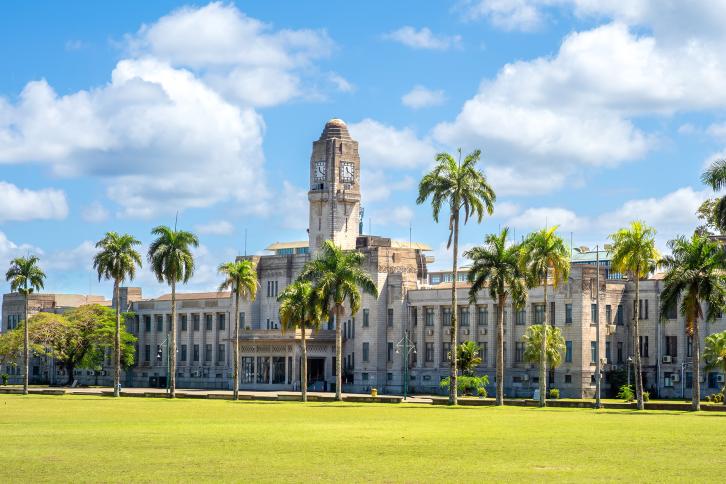
FNU plays an essential role in Fiji's socio-economic and educational development via a dual-sector model that combines technical and vocational training with higher education.102This framework guarantees that FNU aligns with the nation's development objectives while fulfilling labour market demands via partnerships with enterprises and governmental agencies. In 2010, Fiji amalgamated its existing advanced technical colleges that were founded backed in 1885, like the Fiji School of Medicine (FSM), Fiji School of Nursing (FSN), Fiji College of Agriculture, Fisheries and Forestry, Fiji Institute of Technology (FIT), Fiji Maritime Academy(FMA), into FNU.103 The University plays a significant part in the governance of Fiji, principally by being a public institution that is mostly supported by the Fiji government via operational grants and student tuition fees.104 FNU also helps Fiji's socio-economic development by delivering both technical and vocational education (TVET) as well as higher education up to the PhD level. FNU's programs, which encompass a wide variety of subjects, relate to national goals and are established in conjunction with businesses, ensuring that students are equipped to contribute to Fiji's labour market. Moreover, FNU's position in research and teaching is meant to directly affect national and regional development, making it a crucial educational institution for Fiji's growth.
Furthermore, FNU conducts research for government ministries, including agriculture, health, and marine, via a range of programs and colleges. For instance, the College of Agricultural, Fisheries, and Forestry (CAFF) conduct research and offer postgraduate degrees that are specifically related to the agricultural industry. Furthermore, the College of Medicine, Nursing and Health Sciences actively engages in research that is directly applicable to the healthcare industry. This program aims to expand research and includes the listing of institutions such as the Environmental Health Lab and Nuffield Clinic. Furthermore, the Fiji Marine Academy (FMA) carries out research and initiatives that are pertinent to the marine industry. The FMA programs for seafarers and their compliance with international standards compromise a few areas of focus for research.
The University of Fiji's, International Relations and Diplomacy and Faculty for Law exemplifies the institution's comprehensive interdisciplinary approach to teaching the defence and security modules.105 Courses like Politics of International Justice and Conflict and Peace in the Pacific focus on significant global themes such as justice, peace, and multilateral cooperation, whereas courses such as Geopolitics of the South Pacific and Contemporary Strategic Issues in the Asia Pacific critically examine strategic challenges in the Pacific, North Korea's nuclear threats, and China's military endeavours.106This curriculum aligns with the University's overarching objective to address complex regional issues through an interdisciplinary approach that combines security and defence with geopolitics, international relations, and local contexts, such as the climate and food security challenges in the Pacific region.107This model can be adopted by the Fiji government for a national institute for defence and security studies and research. However, given the ambiguity of collaboration between the government and the University of Fiji, the thesis suggests more research on this to ascertain the development and level of public involvement. Although the institution benefits from significant government funding, its dependence on this funding given the relatively small allocation of higher education of average of 3.47 per cent as shown in Table 1.2 is a concern regarding the long-term sustainability of these programs, particularly if external challenges, such as economic recessions, affect government contributions.
Regional Institution: Defence and Security Education in Regional Scope
The setup of the University of the South Pacific in Fiji has a strategic value that allows Fijians and other Pacific Islanders access to higher education learning. As a regional institution, it reinforces the strategic intents articulated as articulated under the 2050 Blue Pacific Strategy. Established in 1968, USP is one of only two institutions of its kind worldwide.108The entity is jointly held by the governments of twelve member nations: the Cook Islands, Fiji, Kiribati, the Marshall Islands, Nauru, Niue, Samoa, the Solomon Islands, Tokelau, Tonga, Tuvalu, and Vanuatu. USP manages campuses in each of these member nations.109It provides comprehensive academic programs in social sciences and sciences that correspond with national and regional objectives. The social science programs at USP, especially within the School of Law and Social Sciences (SoLaSS), encompass various disciplines including law, political science, international affairs, and governance, thereby providing students with essential skills for policy formulation, legal practices, and diplomatic functions.110 Simultaneously, the sciences, particularly via the School of Agriculture, Geography, Environment, Ocean, and Natural Sciences (SAGEONS), highlight disciplines such as environmental management, marine science, and sustainable agriculture.111These initiatives are essential for national strategic research, tackling issues like as climate change, food security, and regional development. The academic programs of USP in law, governance, environmental sciences, and international affairs provide a solid framework for adopting a planned national institution for defence and security studies in Fiji. Utilising USP's expertise in policy formulation, climate resilience, and regional security matters, the institution can promote pioneering research and informed decision-making essential for national security and strategic planning.
Higher Education Infrastructure Analysis
The establishment of a national institute for defence and security studies could notably benefit from the collective capacities of Fiji National University (FNU), the University of Fiji, and the University of the South Pacific (USP). FNU's pragmatic educational method, rooted in technical and vocational proficiency, along with its research competencies in fields such as agriculture, health, and marine sectors, will guarantee the institution incorporates security issues related to national resources and key infrastructures. The University of Fiji's multidisciplinary approach, especially in security and defence studies, would provide significant academic and research perspectives, concentrating on the socio-political aspects of security, including international relations, climatic issues, and regional geopolitics. USP, as a regional institution, provides a comprehensive strategic outlook, using its proficiency in governance, law, environmental sciences, and regional collaboration, which are essential for tackling both conventional and unconventional security challenges in the Pacific.
Collectively, these institutions may provide a multidisciplinary framework for the proposed institute, guaranteeing that it addresses Fiji's urgent security requirements while also fostering long-term resilience and strategic planning at both national and regional levels. To address contemporary security challenges, the institute must prioritise the integration of academic research with practical defence strategies, promote inter-institutional collaboration, and customise its curriculum to Fiji's unique security context, encompassing environmental threats and geopolitical changes in the Pacific.112Therefore, the existing infrastructures have the potential to support a state-sponsored national institute for defence and security studies focus on research and empowerment for practitioners in Fiji national security.
Tables 1.2 illustrate Fiji's government commitment from 2016 to 2024 towards higher education institutions. It is drawn from Fiji budget estimates for the focus years. Notably, these commitments are critical when new national institutions or higher education centres are proposed for national capacity and capability, which are investigated in this paper.
| University | 2016-2017 Budget | % of GDP | 2017-2018 Budget | % of GDP | 2020-2021 Budget | % of GDP | 2023-2024 Budget | % of GDP |
|---|---|---|---|---|---|---|---|---|
| University of South Pacific | 30,217,468 | 0.3 | 30,745,864 | 0.28 | 27,618,635 | 0.28 | 33,530,000 | 0.25 |
| Fiji National University | 45,072,521 | 0.45 | 56,072,521 | 0.51 | 49,000,000 | 0.49 | 41,456,429 | 0.31 |
| University of Fiji | 2,334,862 | 0.02 | 3,442,029 | 0.03 | 2,734,962 | 0.03 | 2,804,774 | 0.02 |
Chapter 6: The Role of Security Education in Fiji Strategies: A Social Science Approach
Education plays a crucial role in establishing a sense of security as it encompasses both the acquisition of knowledge and the understanding of our existence.114It goes beyond simply acquiring knowledge as well as taking actions to ensure the continuity and stability of existence.115In this sense, to delve and explore into the security rationale one focuses on the power of cognitive approaches that drives a nations' intellectual edge that not only conforms future policies but set platforms for interagency and international collaboration. More importantly, security education offers the potential interagency and ministerial collaboration concepts that harness a bottom-up approach for strategic and security curricula and correlation that integrate localised (traditional culture and national experience) and Westernized approaches.116
Exploring security studies as an academic paradigm involves delving into the framework of threats and examining how the concept of security has evolved in our ever-more uncertain world117. The importance of understanding the evolving global security landscape has reached unprecedented levels. With the rise of various threats, such as sophisticated terrorist attacks in urban areas worldwide, nuclear ambitions, the escalating danger of cyber-attacks, the resurgence of 'empires,' and the risks associated with the failure of new democracies, and the vulnerability of 'fragile' states, the need to address these issues has become more critical than ever.118Within this context, security studies appear as a scholarly discipline that seeks to offer insightful analysis and predictions for all individuals or entities involved in matters of security.119Lupulescu stated that security education should be an essential part of a person's education where its enables the population empowerment to gain the necessary knowledge, skills, and abilities to foster and enhance a security culture.120
Essence of Strategic Security Education
Education in security focuses on equipping individuals with the necessary skills to recognize and address potential risks and vulnerabilities, ultimately playing a crucial role in safeguarding national security. This requires primarily adopting a proactive approach.121The concept and environment of security are in a state of perpetual, uninterrupted, and rapid evolution.122The security process is becoming more challenging as scenarios are constantly evolving. Preparing for change is the most effective method of predicting the future. Academic forums are at the vanguard of analysis, evaluation, and opportunities for solutions.123 Prominent institutions in the Western world, including universities, academies, colleges, and institutes, are dedicated to the study, explanation, and prediction of security-related developments. They provide scientific analysis and recommendations to decision-making institutions about the dynamics of developments.124Security studies now include a wide range of complicated national and international topics, including sovereignty, military power, and state-to-state confrontations. Economic capacity, ethnic and ideological tensions, non-state actors, climatic change, and political instability are studied. At the 2010 Lisbon Summit, NATO approved a New Strategic Concept that prioritises "human security" and individual well-being and safety.
In the case of Albania, the country's approach to security studies has been influenced by its unique historical background and the difficulties of embracing Western norms while moving away from a traditional security mindset. Throughout the Cold War era, Albania's security studies had a limited scope, primarily centred on safeguarding its territory. These studies were strongly shaped by ideological and military doctrines. The progress of this approach has been sluggish as traditional concepts continue to dominate academic and institutional frameworks.
Nevertheless, recent endeavours, especially in partnership with Western institutions, have been made to update Albania's security education. These efforts aim to introduce comprehensive curricula that cover a wide range of security issues, such as human security, economic stability, and transnational threats. The reforms in Albania demonstrate the country's ongoing efforts to move away from a history of strict, militaristic security views towards a more comprehensive understanding that incorporates current global security issues and equips future leaders to navigate a rapidly evolving security landscape. European University of Tirana (UET) is at the forefront of modernising security studies in Albania, setting itself apart from the traditional approaches that have historically dominated the field. UET stands out from traditional institutions by adopting a modern, interdisciplinary curriculum that incorporates international relations, strategic studies, crisis management, and other relevant subjects. This approach proves a notable change towards a more comprehensive view of security, which includes aspects related to human well-being, economic stability, and transnational cooperation. UET's programs are carefully crafted to meet global standards, taking inspiration from top Western universities. The goal is to equip students not just for national security roles but also to actively participate in international forums. UET is playing a crucial role in preparing security professionals for the challenges of the 21st century by providing advanced modules and promoting a holistic understanding of security.
Towards a Strategic and Security Culture
When Lupescu examined the security education and culture literature, it became clear that there is often a misperception between the concepts of security culture and security education. The two concerns share a common objective: ensuring that the population possesses the necessary knowledge, skills, and behaviour to uphold and enhance national security.125Nevertheless, conceptual and approach disparities exist. Security education should primarily be the responsibility of the state, necessitating a structured setting and specialised teaching methods that are tailored to the population's experience and status.126On the other hand, security culture is the ultimate outcome of successful security education. This distinction is significant in shaping practitioners.127Culture teaches us norms, behaviour, and practices that must be followed by a group or community. A society without standards, or culture, is anarchy where everyone does their own thing and considers nothing. We need culture to operate and avoid conflict. In the security zone, we see the necessity to develop a culture of security by establishing laws, norms, and behaviour so that society feels free and safe.128
In order to build a strong security culture, security education must focus on skills, critical thinking, and the capacity to analyse the environment and adapt. However, security education cannot be implemented without government involvement, a legal framework, systematisation of the learning process, and on-going content updates.129Security education continues after leaving the institutional context. It is permanent and applies to both professional and personal life, especially in state security agencies. Education and culture are essential for the well-being and safety of individuals, communities, and nations, both at home and abroad. Developing a strong security culture is often the result of successful security education. Undoubtedly, the development and reinforcement of a security culture are greatly influenced by practical experience. However, the importance of education cannot be overlooked, particularly when it takes place in a structured setting, with up-to-date and reliable information delivered by knowledgeable instructors using adaptable methods tailored to the audience.130 A cultural perspective that influences contemporary security thinking and underscores its humanistic components, transcending ordinary theoretical assertions intended for academic discourse. Modern civilization's growth, nearly universal systems, complexity, global character, and high specialisation benefit this cultural idea.131 Adapting to a technological environment is now difficult.132Education is crucial to security growth. Education is becoming more important as civilisation and culture develop. Modernisation made people think about the past and future. One paradigm in modern security discourse is subjectivity (personal security), which prioritises cultural over naturalist perspectives and puts man at the centre of security development, including education.133
Integrating Security Education and Security Culture Into Fiji's Context
In alignment with the social science approach of security education, the proposed institute for defence and security education holds immense potential to become the foundation of a comprehensive strategy that brings together various government ministries, moving away from the conventional isolated mind-set that has frequently impeded coordinated national security endeavours. Through the centralisation of education and research, the defence and security education institute aims to foster a cohesive approach to security practices across various sectors. This will facilitate shared understanding of security threats and the necessary strategies to combat them effectively. Adopting a comprehensive strategy is essential in addressing the diverse security issues that Fiji confronts, including climate change, public health risks, transnational crime, and geopolitical tensions in the Indo-Pacific region.
Furthermore, the importance of a cognitive approach within this framework cannot be emphasised enough. A national defence and security institute for Fiji has the potential to lead the way in fostering strategic thinking and critical analysis skills among Fiji's defence and public servants professionals, enabling them to effectively predict and address complex security challenges. Through partnerships with local higher education institutions like the University of the South Pacific (USP), Fiji National University (FNU), and the University of Fiji, as well as international collaborators such as the Australian Defence Force Academy (ADFA) and the US Naval War College, the propose defence and security institute is able to incorporate a blend of local expertise and global standards into its curriculum. This collaboration aims to cultivate a security culture that considers local realities and benefits from global perspectives, resulting in a strong and flexible security framework for Fiji.134By adopting an integrated approach, Fiji's security strategy becomes comprehensive, proactive, and resilient, establishing the nation as a regional security leader in the broader Indo-Pacific context.
Chapter 7: Conclusion and Recommendations
Summary of Research Findings: Fiji Context
This thesis questions the need to establish an institute for defence and security studies for Fiji, prompted by evolving regional strategic and security concerns, the advancement of the national interest, and future causal logic decisions required at the strategic level. Fiji's geostrategic location and its regional diplomatic activities highlight its crucial role in the Pacific for regional progress and stability. Notwithstanding its increasing importance, Fiji continues to rely excessively on foreign and partner countries to provide defence and security studies education for its military and civil servants' professional development. This reliance constrains its ability to develop local resources based on national experiences and traditional philosophies and autonomously tackle the escalating complexities of future security challenges.
A national defence and security institute could bridge this gap by developing localised solutions tailored to Fiji's strategic context. The overall security challenges spanning geopolitical conflicts, peacekeeping missions, and the impact of climate change, transnational crime, and cyber threats require a comprehensive national framework that enhances best practices in policy, planning, and implementation. Fiji should enhance its defence and public sector capabilities to foresee, mitigate, and address this strategic security challenge. A dedicated national institute might significantly contribute to fostering resilience and autonomy, especially to curb political instability and the persistent influence of the military in governance.
The universities in Fiji, FNU, and USP have ample academic resources, but they do not offer any specific national security and defence programs driven by strategic needs that regulate a whole government approach for education and research coordination. The University of Fiji's recent defence and security studies programme setup has paved the way for such an academic approach.
The education capability for national security could serve as a model for other PIC. Furthermore, integrating theoretical knowledge with practical experiences, the proposed institute seeks to improve security education and best practices. In addition to fortifying Fiji's framework for national security, this would establish it as a leader in the region for security education contextualised for other PIC.
Analysis of Policy Implications
There would be significance national policy implications for establishing a defence and security institute for Fiji. Establishing such an institute would represent a shift toward increased independent thinking in Fiji's defence and security strategy on the home front. It would balance Fiji's reliance on international defence education programs and enable the creation of a curriculum that is appropriate for the local environment and international scene. Fiji can create a more unified national security strategy that combines local and regional customs and values with international security norms by investing in the educational and professional development of its own defence and public sector leaders. 135 Multiple challenges threatening Fiji, including geopolitical competition, the impact of climate change, cyber threats, maritime disputes, and transnational crime, are also encountered by neighbouring Pacific nations. A national defence and security institute in Fiji can be modelled by other PIC to support their own national security framework. It could also strengthen regional cooperation and provide educational and policy development opportunities for leaders around the Pacific. This would bolster regional security and diminish dependence on external entities in accordance with the objectives of the PIF Blue Pacific Strategy.
Public-private partnerships and collaboration with international partners could facilitate the practical implementation of this institute. Fiji could capitalize on both international best practices and local knowledge incorporation by leveraging the expertise of global military academies and security institutions, including those in the United States, New Zealand, and Australia. The institute could also function as a research centre, fostering innovation in critical areas such as managing great power competition contextualised on Fiji perspectives in navigating political instabilities and ethnic division, the impact of cyber threats , resource management, and climate change adaptation; all of which are essential for the Fiji and the Pacific's future stability and prosperity.
Policy Recommendations for Establishing the Institute in Fiji
The following policy recommendations are essential for establishing a national defence and security institute in Fiji, tasked with cognitive development and empowerment, collating local intellectual property for research, and advisory formulations. Firstly, the Fiji government's commitment is crucial, as it must prioritize the institute by investing sufficient financial resources and regulating institutional support. Such policies entail establishing public and international collaborations for infrastructure advancement, faculty acquisition, and program design. Secondly, regulating interagency collaboration is essential. The effort and policy towards interagency collaboration entails the requirement of a holistic national strategy that regulates the integration of key ministries such as defence, foreign affairs, economy and strategic planning, trade, agriculture and primary industries, Indigenous or I-Taukei, and multi-ethnic affairs and education to formulate a multidisciplinary curriculum. Engagement with civic society and the commercial sector will guarantee a comprehensive strategy for national security.
In addition, regional and international partnerships are fundamental for developing Fiji's national security capability through education. Enhancing cooperation with regional institutions such as USP is essential for using existing academic expertise. The higher education collaboration includes partnerships with respected defence colleges in Australia, New Zealand, the United States, and the UK, which will provide essential knowledge and resources to create a primary curriculum that reflects integrated local and Westernised knowledge for education and research. The latter should be extended to the broader Asia region, noting Fiji's defence partners like Malaysia, India, China, and Indonesia. Furthermore, leadership development is essential for a broader strategic approach, especially for middle-level career professionals. The proposed institution should provide specialized leadership development programs for mid-career and senior individuals in both defence and civilian servants. This establishment could cultivate leadership development in national security and protection domains, equipping future leaders to address intricate security challenges in a progressively linked global landscape.
Future Research Recommendation
While this thesis highlights the essential need for a national defence and security institute in Fiji, additional research is necessary to enhance the institutional framework, curriculum, and operation focus. With research gaps identified, it is recommended that a curriculum innovation study be focused on examining the integration of Fiji and the broader Pacific local and traditional knowledge based on its national experiences post-colonial era, with the global security frameworks. Case studies from places like Albania and Romania may provide insights into enhancing strategic security education via local expertise. In addition, further research on climate change impact is necessary to evaluate the implications of climate change on national and regional security. This should guide both policy formulation and teaching material inside the institution.
Further research studies could focus on cyber-security and emerging technologies, considering the increasing significance of these developments and threats in the Pacific. The research on this could concentrate on integrating technology breakthroughs and the impact of disruptive technologies into the institute's curriculum to adequately equip future leaders for digital security problems in the Pacific. In addition, more extensive research could focus on how Fiji may enhance its leadership in regional security cooperation by using its peacekeeping knowledge and experience to foster collective regional stability and advance regional commitments into global citizenship roles.
Conclusion
Fiji's strategic significance in the Pacific and its growing vulnerability to both conventional and unconventional security threats highlight the urgent requirement for a National Defence and Security Institute. Enhancing local capacity in security education, research, and policy formulation would enable Fiji to strengthen its strategic autonomy further and make substantial contributions to the overall security of the Pacific region. This institution has the capacity to serve as a fundamental element of Pacific security, promoting cooperation, innovation, and resilience to tackle 21st-century concerns.
The creation of this institution will not only bolster security resilience but also rectify significant deficiencies in Fiji's existing defence education system by amalgamating Western security ideas with local knowledge and concepts. This will allow Fiji to create a unique educational framework corresponding to the country's geopolitical and cultural setting. This institution would provide stakeholders with the means to formulate holistic answers to regional issues, including climate change, maritime security, and transnational crime, while simultaneously enhancing Fiji's leadership in regional peacekeeping and diplomacy. Additionally, the institution would function as a regional platform, promoting joint security initiatives among Pacific Island Countries (PICs) and diminishing dependence on foreign organizations for defence training and education. This comprehensive defence and security education strategy will enhance national and regional security while equipping a new generation of leaders to manage the changing global security environment adeptly.
By addressing these strategic and security challenges, the institution could guarantee that Fiji and its regional allies are more adequately prepared to confront the complex challenges of the modern age, whether via proactive policy formulation, strategic alliances, or adaptive security education. This program is crucial for Fiji's national security strategy and critical for the long-term stability for the nation and the Pacific region through educational and research pathways.
Bibliography
“2050 Strategy for the Blue Pacific Continent,” 2022. https://forumsec.org/sites/default/files/2023-11/PIF-2050-Strategy-Blue-Pacific-Continent-WEB-5Aug2022-1.pdf.
Abeysinghe, Achala C, Brook M R Dambacher, Rebecca Byrnes, Gebru Jember Endalew, and Subhi Barakat. “Action, Ambition, Investment: What Success at COP23 Looks like for LDCs.” JSTOR, 2017. http://www.jstor.com/stable/resrep02649.
Anna, Powles, and Cain Tess Newton. “Why the Pacific Islands Is Seeing a Rise in ‘Defense Diplomacy.’” United States Institute of Peace, May 14, 2024. https://www.usip.org/publications/2024/05/why-pacific-islands-seeing-rise-defense-diplomacy.
AOSI. “Member States,” n.d. https://www.aosis.org/about/member-states/.
Aşkın Sökmen. “New Concepts and New Conflicts in Global Security Issues.” Academia.edu, February 17, 2016.
Beck, Collin. “Geopolitics of the Pacific Islands: How Should the Pacific Islands States Advance Their Strategic and Security Interests?” Security Challenges 16, no. 1 (2020): 11–16. https://www.jstor.org/stable/26908762.
Brewester, David, Dennis Hardy, Richard Herr, Norah Huang, Ronnel Lala, Valasi Iosefo, Steven McGann, and Sunayna Nandini. “Island Voices and Covid-19: Vulnerability and Resilience: Views from the Strategist.” Edited by David Brestwer and Richard Herr. JSTOR, 2021. https://www.jstor.org/stable/resrep31490.
Coning, Cedric de, and John Karlsrud. “‘Peacekeeping Doctrine.’ Edited by Mateja Peter. United Nations Peace Operations: Aligning Principles and Practice. Norwegian Institute of International Affairs (NUPI), 2015.” Jstor.org, 2024. https://www.jstor.org/stable/resrep08088.7.
Defence.gov.au. “Status of Forces Agreement between Fiji and Australia | Defence Ministers,” 2022.https://www.minister.defence.gov.au/statements/2022-10-20/status-forces-agreement-between-fiji-and-australia.
Department of Foreign Affairs and Trade “Australia Pacific Security College Mid Term Review,” 2021. https://www.dfat.gov.au/sites/default/files/dfat-foi-lex8209.pdf.
Drabik, Krzysztof. “THE Subjective Dimension of Ssecurity Education.” Security and Defence Quarterly 21, no. 4 (October 22, 2018): 23–37. https://doi.org/10.5604/01.3001.0012.6494.
Fangyin, Zhou. “A Reevaluation of China’s Engagement in the Pacific Islands.” Edited by Graeme Smith and Terence Wesley-Smith. JSTOR. ANU Press, 2021. https://www.jstor.org/stable/j.ctv1h45mkn.11.
Fiji, Ministry for Economy. “Budget Estimates 2016-207.” Fiji Government, June 22, 2016. https://www.parliament.gov.fj/wp-content/uploads/2017/03/2016-2017-Budget-Estimates.pdf.
Fiji National University (FNU). “Fiji National University, Prospectus 2021.” Fiji National University, 2021. https://www.fnu.ac.fj/.
Firth, Stewart, and Jon Fraenkel. “The Fiji Military and Ethno-Nationalism: Analyzing the Paradox.” Edited by Stewart Firth, Jon Fraenkel, and Brij V. Lal. JSTOR. ANU Press, 2009. https://www.jstor.org/stable/j.ctt24hdz7.10.
Firth, Stewart, and Vijay Naidu. Understanding Oceania: Celebrating the University of the South Pacific and Its Collaboration with the Australian National University. JSTOR. ANU Press, 2019. https://www.jstor.org/stable/j.ctvk8vzcb.
Fraenkel, Jon. “Chapter Title: Postcolonial Political Institutions in the South Pacific Islands: A Survey,” 2019.
Goiran, Hélène. “The Political Roles of the Fiji Military: A Brief History of the Chiefs’ Warriors, Heroes of the World Wars, Peacekeepers and Dictators.” Edited by David Hegarty and Darrell Tryon. JSTOR. ANU Press, 2013. https://www.jstor.org/stable/j.ctt2tt18z.12.
Gucake, Jone, Nicholas Thomson, and Amelia Turagabeci. “Enhancing Multi-Agency Biological Threat Preparedness and Response in Fiji AUSTRALIAN CIVIL-MILITARY CENTRE PROJECT REPORT FIJI,” 2023.
Hayward-Jones, Jenny. “Big Enough for All of Us: Geo-Strategic Competition in the Pacific Islands.” www.lowyinstitute.org, 2013. https://www.lowyinstitute.org/publications/big-enough-all-us-geo-strategic-competition-pacific-islands.
Jablonsky, David, and J. Boone Bartholomees. “National Power.” JSTOR, 2014. http://www.jstor.com/stable/resrep12023.12.
Jore, S. H. “The Conceptual and Scientific Demarcation of Security in Contrast to Safety.” European Journal for Security Research 4, no. 1 (November 7, 2017): 157–74. https://doi.org/10.1007/s41125-017-0021-9.
Kalouniwai, Jone, Jack Moceica, Akuila Savu, and Alipate Naulivou. “Achieving Best Practice through Security Cooperation: The Pacific Way,” 2021. https://pacificsecurity.net/wp-content/uploads/2021/10/DB82_Part29.pdf.
Kenneth Neal Waltz. Theory of International Politics. McGraw-Hill Humanities, Social Sciences & World Languages, 1979.
Komai, Makereta. “Fiji’s Foreign Policy and the New Pacific Diplomacy.” Edited by Greg Fry and Sandra Tarte. JSTOR. ANU Press, 2015. https://www.jstor.org/stable/j.ctt19w71mc.16.
Lal, Brij V. “‘Anxiety, Uncertainty and Fear in Our Land’: Fiji’s Road to Military Coup, 2006.” Edited by Brij V. Lal, Jon Fraenkel, and Stewart Firth. JSTOR. ANU Press, 2009. https://www.jstor.org/stable/j.ctt24hdz7.6.
Lawson, Stephanie. “The State of Democracy in Fiji.” E-International Relations, December 2, 2015. https://www.e-ir.info/2015/12/02/the-state-of-democracy-in-fiji/#google_vignette.
Lupulescu, Georgiana-Daniela. “Security Education – the Main Tool for Strengthening the Security Culture.” Land Forces Academy Review 27, no. 3 (September 1, 2022): 221–34. https://doi.org/10.2478/raft-2022-0029.
Masys, Anthony J. Sensemaking for Security. Cham, Switzerland: Springer, 2021. ISBN 978-3-030-71998-2.
Mawi, Litia. “Fiji’s Emerging Brand of Pacific Diplomacy: A Fiji Government Perspective.” Edited by Greg Fry and Sandra Tarte. JSTOR. ANU Press, 2015. https://www.jstor.org/stable/j.ctt19w71mc.15.
McDougall, Derek. “Peacekeeping from Oceania: Perspectives from Australia, New Zealand and Fiji.” The Round Table 106, no. 4 (July 4, 2017): 453–66. https://doi.org/10.1080/00358533.2017.1352151.
Mearsheimer, John. The Tragedy of Great Power Politics. New York: Norton, 2001.
Ministry of Finance, Strategic Planning, National Development and Statistics. “Fiji National Development Plan,” 2025. https://www.finance.gov.fj/wp-content/uploads/2024/09/NPDF_final-9.pdf.
Morgenthau, Hans J. Politics among Nations: The Struggle for Power and Peace. New York: Alfred A. Knopf, 1985.
“Multi-Country Programming Framework for the Pacific Islands,” 2017. https://www.fao.org/fileadmin/user_upload/sap/docs/Signed%20Pacific%20CPF%202018-2022.pdf.
Newman, Edward. “Human Security and Constructivism.” International Studies Perspectives 2, no. 3 (2001): 239–51. https://www.jstor.org/stable/44218167.
O’Keefe, Michael. “The Implications of Australia’s ‘Smart Sanctions’ against Fiji 2006 to 2014 for Geopolitical Contest in the South Pacific.” East Asia, June 25, 2021. https://doi.org/10.1007/s12140-021-09368-9.
O’Sullivan, Dominic. Indigeneity: A Politics of Potential: Australia, Fiji and New Zealand. JSTOR. 1st ed. Bristol University Press, 2017. https://www.jstor.org/stable/j.ctt1t89hxx.12.
Obergassel, Wolfgang, Christof Arens, Lukas Hermwille, Nicolas Kreibich, Florian Mersmann, Hermann Ott, and Hanna Wang-Helmreich. “The Calm before the Storm the Calm before the Storm the Calm an Assessment of the 23 Rd Climate Change Conference COP23 in Bonn,” n.d. https://wupperinst.org/fa/redaktion/downloads/publications/COP23-Report.pdf.
Oldham, J. H. “National and Missions.” International Review of Mission 9, no. 3 (July 1920): 372–83. https://doi.org/10.1111/j.1758-6631.1920.tb04544.x.
“Pacific Economic Update,” 2023. https://thedocs.worldbank.org/en/doc/b4ba519c39ea4804a03aee6fa188d894-0070012023/original/Pacific-Economic-Update-February-2023.pdf.
Parsons, Craig. How to Map Arguments in Political Science. Oxford: Oxford Univ. Press, 2010.
Raj, Shivneil Kumar, and Priteshni Pratibha Chand. “Analysis of Fiji’s Export and Its Impact on Economic Growth.” International Journal of Business and Social Research 7, no. 4 (May 3, 2017): 01. https://doi.org/10.18533/ijbsr.v7i4.1031.
Ratuva, Steven. Contested Terrain: Reconceptualising Security in the Pacific. Acton, A.C.T.: ANU Press, 2019.
Rauno Pirinen, Juha Mäkinen, and Arto Salonen. “Towards Comprehensive Security Related Pedagogy - an Approach to Learning and Resilience” Theseus (Ammattikorkeakoulujen), January 1, 2016. https://doi.org/10.5220/0006090102540262.
“Republic of Fiji.” IMF Country Report 2023, no. 238 (June 1, 2023): 1–1. https://doi.org/10.5089/9798400247798.002.
Republic of Fiji. “Foreign Policy White Paper – Ministry of Foreign Affairs.” Ministry of Foreign Affairs, September 27, 2024. https://www.foreignaffairs.gov.fj/foreign-policy-white-paper-2/.
“Republic of Fiji National Climate Change Poilcy,” 2018. https://fijiclimatechangeportal.gov.fj/wp-content/uploads/2022/01/FIJI-NCCP-2018-2030_0.pdf.
Republic of Fiji Government. “Budget Estimates as Presented to Parliament,” 2024. https://www.finance.gov.fj/wp-content/uploads/2024/07/Final-Budget_2024-v2-3.pdf.
Republic of Fiji Government, Ministry of Finance, Strategic Planning, National Development and Statistics. “Fiji National Development Plan 2025-2029 and Vision 2050,” 2024. https://www.finance.gov.fj/wp-content/uploads/2024/09/NPDF_final-9.pdf.
Rodd, Adrien. “A Road to Island Sovereignty and Empowerment? Fiji’s Aims within the Belt and Road Initiative.” Island Studies Journal 15, no. 15 (2020). https://doi.org/10.24043/isj.128.
Salem, Saber. “Chinese Foreign Aid to Fiji: Threat or Opportunity.” China Report 56, no. 2 (April 29, 2020): 242–58. https://doi.org/10.1177/0009445520916875.
Schieder, Dominik. “‘Fiji Has a Coup Culture’: Discussing Fiji’s Ongoing Political Instability.” Paideuma: Mitteilungen Zur Kulturkunde 58 (2012): 45–67. https://www.jstor.org/stable/23644453.
Schimel, Anna. “Fiji.” JSTOR, 2020. https://www.jstor.org/stable/resrep25128.11.
SKYTRAX. “World’s Top 100 Airlines 2024.” Accessed August 5, 2024. https://www.worldairlineawards.com/worlds-top-100-airlines-2024/.
Smith, Mason, Josh Kemp, and Rustam Pulatov. “Navigating Fiji’s Maritime Future: Safety First in the Blue Pacific.” UNDP, September 26, 2024. https://www.undp.org/pacific/blog/navigating-fijis-maritime-future-safety-first-blue-pacific.
Spahiu, Vilma, Blendi Lami, and Kristaq Xharo. “Within the Paradigm of Security Studies.” Polis 18, no. 1 (January 1, 2019): 59–76. https://doi.org/10.58944/vpdc1677.
SpringerLink. “Global Political Transitions,” n.d. https://link.springer.com/bookseries/15583.
Sutherland, William. “The Problematics of Reform and the ‘Fijian’ Question.” Edited by A. Haroon Akram-Lodhi. JSTOR. ANU Press, 2016. https://www.jstor.org/stable/j.ctt1bgzbq3.13.
Takamura, Yukari. “Climate Change and Small Island Claims in the Pacific.” Edited by Oliver C. Ruppel, Christian Roschmann, and Katharina Ruppel-Schlichting. JSTOR. Nomos Verlagsgesellschaft mbH, 2013. https://www.jstor.org/stable/j.ctv941w8s.25.
Tangney, Peter, Claire Nettle, Beverley Clarke, Joshua Newman, and Cassandra Star. “Climate Security in the Indo-Pacific: A Systematic Review of Governance Challenges for Enhancing Regional Climate Resilience.” Climatic Change 167, no. 3-4 (August 2021). https://doi.org/10.1007/s10584-021-03197-8.
Tarte, Sandra. “Building a Strategic Partnership: Fiji–China Relations since 2008.” Edited by Graeme Smith and Terence Wesley-Smith. JSTOR. ANU Press, 2021. https://www.jstor.org/stable/j.ctv1h45mkn.16.
Tarte, Sandra. “Fiji Islands Security Challenges and Defense Policy Issues. Asia Pacific Countries Security Outlook and Its Implications for Defense Sector ,” 2010.
The Cove. “#KYR: Fiji - Economy | the Cove.” The Cove, 2021. https://cove.army.gov.au/article/kyr-fiji-economy.
The Fijian Government. “The Fijian Government,” 2013. https://www.fiji.gov.fj/About-Fiji/Fijian-Constitution.
The Global Economy.com. “Fiji Economic Indicators | the Global Economy.com,” 2024. https://www.theglobaleconomy.com/Fiji/remittances.
The Straits Times. “US, Chinese Military Officials Meet in Fiji in Rare Engagement.” September 1, 2023. https://www.straitstimes.com/asia/east-asia/us-chinese-military-officials-met-in-fiji-in-rare-engagement.
United Nations. “Fatalities.” United Nations Peacekeeping, 2023. https://peacekeeping.un.org/en/fatalities.
United States Department of State. “The United States-Fiji Relationship and Our Partnership for Peace, Stability, and Prosperity,” February 11, 2022. https://www.state.gov/the-united-states-fiji-relationship-and-our-partnership-for-peace-stability-and-prosperity/.
Univeristy of Fiji. Strategic Plan 2022-2026. 2022. Reprint, University of Fiji Press, 2022. https://www.unifiji.ac.fj/wp-content/uploads/2022/03/Strategic-Plan-2022-2026.
US Department of State. “The United States-Fiji Relationship and Our Partnership for Peace, Stability, and Prosperity.” United States Department of State, February 11, 2022. https://www.state.gov/the-united-states-fiji-relationship-and-our-partnership-for-peace-stability-and-prosperity/.
Veitayaki, Joeli. ‘Breaking Fiji’s Coup Culture through Effective Rural Development.’ in Understanding Oceania: Celebrating the University of the South Pacific and Its Collaboration with the Australian National University, Edited by Stewart Firth and Vijay Naidu Http://Www.jstor.org/Stable/J.ctvk8vzcb.19.” ANU Press, 2019.
Wallis, Joanne. “Crowded and Complex: The Changing Geopolitics of the South Pacific.” ASPI Australian Strategic Policy Institution, April 24, 2017.
Wesley, Terennce, and Graeme Smith. “Introduction: The Return of Great Power Competition.” Accessed June 2, 2024. https://press-files.anu.edu.au/downloads/press/n7754/pdf/introduction.pdf.
Wilkins, Kelsey. “Economic Developments in the South Pacific.” Reserve Bank of Australia, June 15, 2023. https://www.rba.gov.au/publications/bulletin/2023/jun/pdf/economic-developments-in-the-south-pacific.pdf.
World Bank. “Pacific Economic Update March 2024,” March 2024. https://www.worldbank.org/en/country/pacificislands/brief/pacific-economic-update-march-2024.
1 2050 Strategy for the Blue Pacific Continent," 2022. https://forumsec.org/sites/default/files/2023-11/PIF-2050-Strategy-Blue-Pacific-Continent-WEB-5Aug2022-1.pdf (1-21)
2 Craig Parsons, How to Map Arguments in Political Science (Oxford: Oxford Univ. Press, 2010).
3 Hans J Morgenthau, Politics among Nations: The Struggle for Power and Peace (New York: Alfred A. Knopf, 1985).
4 Craig Parsons, How to Map Arguments in Political Science (Oxford: Oxford Univ. Press, 2010).
5 Kalouniwai, Jone, Jack Moceica, Akuila Savu, and Alipate Naulivou. "Achieving Best Practice through Security Cooperation: The Pacific Way," 2021. https://pacificsecurity.net/wp-content/uploads/2021/10/DB82_Part29.pdf
6 Keen Meg, Security through a Pacific Lens. ANU
7 "2050 Strategy for the Blue Pacific Continent," 2022, https://forumsec.org/sites/default/files/2023-11/PIF-2050-Strategy-Blue- Pacific-Continent-WEB-5Aug2022-1.pdf
8 2050 Strategy for the Blue Pacific Continent, 2022
9 Department of Foreign Affairs and Trade, "Australia Pacific Security College Mid Term Review," 2021, https://www.dfat.gov.au/sites/default/files/dfat-foi-lex8209.pdf.
10 Powles, Anna, and Jose Sousa-Santos. "Principled Engagement: Rebuilding Defence Ties with Fiji." Lowy Institute for International Policy, 20 http://www.jstor.org/stable/resrep10181.
11 Tarte, Sandra. "Fiji Islands Security Challenges and Defense Policy Issues. Asia Pacific Countries Security Outlook
and Its Implications for Defense Sector ," 2010
12 Wallis, Joanne. 2017. "Crowded and Complex: The Changing Geopolitics of the South Pacific," April. [14]
13 Ministry of Finance Republic of Fiji Government Strategic Planning, National Development and Statistics, "Fiji National Development Plan 2025-2029 and Vision 2050," 2024, https://www.finance.gov.fj/wp-content/uploads/2024/09/NPDF_final-9.pdf.
14 Republic of Fiji, "Foreign Policy White Paper - Ministry of Foreign Affairs," Ministry of Foreign Affairs, September 27, 2024,https://www.foreignaffairs.gov.fj/foreign-policy-white-paper-2/.
15 Ratuva, Steven. 2019. Contested Terrain: Reconceptualising Security in the Pacific. Acton, A.C.T.: ANU Press.[101-103]
16 Veitayaki, Joeli. 'Breaking Fiji's Coup Culture through Effective Rural Development.' in Understanding Oceania: Celebrating the University of the South Pacific and Its Collaboration with the Australian National University, Edited by Stewart Firth and Vijay Naidu Http://Www.jstor.org/Stable/J.ctvk8vzcb.19." (ANU Press, 2019).
17 Veitayaki, Joeli
18 Fiji National University (FNU), https://www.fnu.ac.fj/.
19 2050 Strategy for the Blue Pacific Continent [21]
20 Lupulescu, Georgiana-Daniela. "Security Education – the Main Tool for Strengthening the Security Culture." Land Forces Academy Review 27, no. 3 (September 1, 2022): 221–34. https://doi.org/10.2478/raft-2022-0029. (224-226)
21 Australia Pacific Security College Independent Mid Term Review." 2021. https://www.dfat.gov.au/sites/default/files/dfat-foi-lex8209.
22 Australia Pacific Security College Independent Mid Term Review." 2021.
23 Spahiu, Vilma, Blendi Lami, and Kristaq Xharo. "Within the Paradigm of Security Studies." Polis 18, no. 1 (n.d.): 59–76. doi:10.58944/VPDC1677.
24 Spahiu, , Lami, and Xharo [67-68]
25 Lupulescu, Georgiana-Daniela. "Security Education – the Main Tool for Strengthening the Security Culture." Land Forces Academy Review 27, no. 3 (September 1, 2022): 221–34. https://doi.org/10.2478/raft-2022-0029. (224-226)
26 Spahiu, Vilma, Blendi Lami, and Kristaq Xharo. (59-70)
27 Lupulescu, Georgiana-Daniela.. (224-226)
28 Lupulescu, Georgiana-Daniela. (224-226)
29 Craig Parsons, How to Map Arguments in Political Science (Oxford: Oxford Univ. Press, 2010).
30 Morgenthau, Hans J. Politics among Nations: The Struggle for Power and Peace. New York: Alfred A. Knopf, 1985
31 Fiji National Development Plan 2025-2050
32 Fiji National Development Plan 2025-2050
33 Fiji National Development Plan 2025-2050
34 Mason Smith, Josh Kemp, and Rustam Pulatov, "Navigating Fiji's Maritime Future: Safety First in the Blue Pacific," UNDP, September 26, 2024, https://www.undp.org/pacific/blog/navigating-fijis-maritime-future-safety-first-blue-pacific
35 Ministry for Economy Fiji, "Budget Estimates 2016-207" (Fiji Government , June 22, 2016),
https://www.parliament.gov.fj/wp-content/uploads/2017/03/2016-2017-Budget-Estimates.pdf.
36 Ministry for Economy Fiji , "Budget Estimates 2016-2024):Fiji Budget estimates have been collated to reflect the number of years Fiji government has invested in this economic sectors
37 Jablonsky, David, and J. Boone Bartholomees. "National Power." JSTOR, 2014. http://www.jstor.com/stable/resrep12023.12.
38 Jablonsky, David, and J. Boone Bartholomees
39 Fiji National Development Plan
40 Fiji National Development Plan
41 Ratuve Steve (78, 271)
42 Ratuve Steve (78, 271)
43 Veitayaki, Joeli. 'Breaking Fiji's Coup Culture through Effective Rural Development.' in Understanding Oceania: Celebrating the University of the South Pacific and Its Collaboration with the Australian National University, Edited by Stewart Firth and Vijay Naidu Http://Www.jstor.org/Stable/J.ctvk8vzcb.19." ANU Press, 2019. [289]
44 Morgenthau.
45 Morgenthau.
46 Sandra Tarte, "Building a Strategic Partnership: Fiji–China Relations since 2008," ed. Graeme Smith and Terence Wesley-Smith, JSTOR (ANU Press, 2021), https://www.jstor.org/stable/j.ctv1h45mkn.16.
47 Tarte, Sandra. "Fiji Islands Security Challenges and Defense Policy Issues. Asia Pacific Countries Security Outlook and Its Implications for Defense Sector," 2010.
48 Anna, Powles, and Cain Tess Newton. "Why the Pacific Islands Is Seeing a Rise in 'Defense Diplomacy.'" United States Institute of Peace, May 14, 2024. https://www.usip.org/publications/2024/05/why-pacific-islands-seeing-rise-defense-diplomacy.
49 Fiji Foreign White Paper
50 Fiji Foreign White Paper
51 Wallis
52 Tarte, Sandra. "Fiji Islands Security Challenges and Defense Policy Issues
53 Litia Mawi, "Fiji's Emerging Brand of Pacific Diplomacy: A Fiji Government Perspective," ed. Greg Fry and Sandra Tarte,
JSTOR (ANU Press, 2015), https://www.jstor.org/stable/j.ctt19w71mc.15
54 Litia Mawi,
55 Litia Mawi
56 AOSI. “Member States,” n.d. https://www.aosis.org/about/member-states/.
57 Komai, Makereta. “Fiji’s Foreign Policy and the New Pacific Diplomacy.” Edited by Greg Fry and Sandra Tarte. JSTOR. ANU Press, 2015. https://www.jstor.org/stable/j.ctt19w71mc.16.
58 Fiji National Development Plan 2025 -2050
59 The Global Economy.com. "Fiji Economic Indicators | the Global Economy.com," 2024. https://www.theglobaleconomy.com/Fiji/remittances.
60 Komai, Makereta.
61 Clausewitz, Carl Von. On War. Princeton University Press, 1832.
62 Baledrokadroka, Jone. "The Unintended Consequences of Fiji's International Peacekeeping." Security Challenges 8, no. 4 (2012): 105–16. http://www.jstor.org/stable/26462895.
63 Clausewitz, Carl Von
64 Wallis, Joanne, Henrietta McNeill, James Batley, and Anna Powles. “Mapping Security Cooperation in the Pacific Islands.” Apo.org.au, June 15, 2021. https://apo.org.au/node/312723.
65 Stünkel, Larissa. “Issue Brief Fijian Leadership in the Pacific: Charting a New Course?,” 2020. https://isdp.eu/wp-content/uploads/2020/10/The-Future-Course-for-Fiji-IB-13.09.20.pdf.
66 Sir Lala Sukuna, Fiji: The Three Legged Stool, Selected Writing of Ratu Sir Lala Sukuna, Edited by Deryck Scarr, 1983.
67 Kirsch, Stuart. “Talanoa Dialogue at UN Climate Change Meetings: The Extraordinary Encompassment of a Scale‐Climbing Pacific Speech Genre.” Oceania, September 30, 2021. https://doi.org/10.1002/ocea.5314.
68 Tarte, Sandra. "Advancing Regional Stability in an Era of Geopolitical Competition and Tension: The Role of Fiji Sandra Tarte," 2024. https://cms.apln.network/wp-content/uploads/2024/04/Fiji-Paper_Sandra-Tarte_V4.pdf.
69 2050 Strategy for the Blue Pacific Continent." n.d. https://forumsec.org/sites/default/files/2023-11/PIF-2050-Strategy-Blue-Pacific-Continent-WEB-5Aug2022-1.pdf.
70 S. H. Jore, The Conceptual and Scientific Demarcation of Security in Contrast to Safety," European Journal for Security Research 4, no. 1 (November 7, 2017): 157–74, https://doi.org/10.1007/s41125-017-0021-9.
71 Newman, Edward. Human Security and Constructivism." International Studies Perspectives2, no. 3 (2001): 239–51.
72 Masys, Anthony J. Sensemaking for Security. Cham, Switzerland: Springer, 2021. ISBN 978-3-030-71998-2.
73 Masys, Anthony J. Sensemaking for Security. Cham, Switzerland: Springer, 2021. ISBN 978-3-030-71998-2.
74 Masys, Anthony
75 Masys, Anthony
76 Masys, Anthony
77 Masys, Anthony
78 Howlett, Robert. 1948. The History of the Fiji Military Forces, 1939-1945. https://research.ebsco.com/linkprocessor/plink?id=ae800fbc-eaf1-3adc-b986-9bb27d25bf28.
79 Goiran, Hélène. “The Political Roles of the Fiji Military: A Brief History of the Chiefs’ Warriors, Heroes of the World Wars, Peacekeepers and Dictators.” Edited by David Hegarty and Darrell Tryon. JSTOR. ANU Press, 2013. https://www.jstor.org/stable/j.ctt2tt18z.12.
80 Tarte, Sandra. Fiji Islands Security Challenges and Defense Policy Issues. Asia Pacific Countries Security Outlook and Its Implications for Defense Sector," 2010
81 Pablo Antonio Fernández Sánchez. 2018. Peacekeeping: Global Perspectives, Challenges and Impacts. Hauppauge, New York: Nova. https://research.ebsco.com/linkprocessor/plink?id=ecc60894-abbd-3415-aa26-9f4db6ed3684.
82 Pablo Antonio Fernández Sánchez. 2018.
83 United Nations, "Fatalities," United Nations Peacekeeping, 2023, https://peacekeeping.un.org/en/fatalities.
84 Tarte, Sandra. "Fiji Islands Security Challenges and Defense Policy Issues. Asia Pacific Countries Security Outlook and Its Implications for Defense Sector," 2010.
85 Tarte, Sandra. "Fiji Islands Security Challenges and Defense Policy Issues
86 Tarte, Sandra. "Fiji Islands Security Challenges and Defense Policy Issues
87 Tarte, Sandra. "Fiji Islands Security Challenges and Defense Policy Issues
88 Fiji Defence White paper 1997
89 United Nations Convention on the Law of the Sea (UNCLOS), 1982, https://treaties.un.org/doc/publication/CTC/Ch_XXI_6_english_p.pdf.
90 Field, Michael. "Fiji, Tonga War over Minerva Reef." Stuff, May 15, 2011. https://www.stuff.co.nz/world/south-pacific/5008060/Fiji-Tonga-war-over-Minerva-Reef.
91 Field, Michael.
92 Field, Michael.
93 Keen Meg, Security through a Pacific Lens. ANU
94 Ratuva, Steven. 2019. Contested Terrain: Reconceptualising Security in the Pacific. Acton, A.C.T.: ANU Press.[101-103]
95 Ratuva, Steven. 2019
96 Ratuva, Steven. 2019
97 Ratuva, Steven. 2019
98 Ratuva, Steven. 2019
99 Rauno Pirinen, Juha Mäkinen, and Arto Salonen, "Towards Comprehensive Security Related Pedagogy - an Approach to
Learning and Resilience,” Theseus (Ammattikorkeakoulujen), January 1, 2016,
https://doi.org/10.5220/0006090102540262.
100 Rauno Pirinen, Juha Mäkinen, and Arto Salonen (258-259)
101 Parson Craig
102 Fiji National University
103 The University of Fiji. 2024. Future Ready Handybook & Calender 2024. https://www.unifiji.ac.fj/wp-content/uploads/2022/04/Final-Handbook-and-Calendar-2024-1.pdf.
104 Fiji National University Future Ready
105 The University of Fiji. 2024. Future Ready
106 The University of Fiji. Future Ready
107 The University of Fiji Press. 2022. "Strategic Plan 2022-2026." https://www.unifiji.ac.fj/wp-content/uploads/2022/03/Strategic-Plan-2022-2026.pdf.
108 University of South Pacific, "USP Shaping Pacific Futures, Explore Vuvale 2022 Prospectus," 2022, https://www.usp.ac.fj/wp-content/uploads/2021/09/2022-USP-Prospectus.pdf.
109 University of South Pacific
110 University of South Pacific
111 University of South Pacific
112 Kalouniwai, Jone, Jack Moceica, Akuila Savu, and Alipate Naulivou. "Achieving Best Practice through Security Cooperation: The Pacific Way," 2021. https://pacificsecurity.net/wp-content/uploads/2021/10/DB82_Part29.pdf
113 Fiji Budget Estimates for 2016-2017, 2017-2018, 2020-2021, 2023-2024.
114 Drabik, Krzysztof. "The Subjective Dimension of Security Education." Security and Defence Quarterly 21, no. 4 (October 22, 2018): 23–37. https://doi.org/10.5604/01.3001.0012.6494.
115 Drabik, Krzysztof.
116 Kalouniwai, Jone, Jack Moceica, Akuila Savu, and Alipate Naulivou. "Achieving Best Practice through Security Cooperation: The Pacific Way," 2021. https://pacificsecurity.net/wp-content/uploads/2021/10/DB82_Part29.pdf
117 Spahiu, Vilma, Blendi Lami, and Kristaq Xharo. "Within the Paradigm of Security Studies." Polis 18, no. 1 (January 1, 2019): 59–76. https://doi.org/10.58944/vpdc1677.
118 Spahiu, Vilma, Blendi Lami, and Kristaq Xharo
119 Rauno Pirinen, Juha Mäkinen, and Arto Salonen. "Towards Comprehensive Security Related Pedagogy - an Approach to Learning and Resilience",Theseus (Ammattikorkeakoulujen), January 1, 2016. https://doi.org/10.5220/0006090102540262.
120 Lupulescu, Georgiana-Daniela. (228-229)
121 Lupulescu, Georgiana-Daniela. (228-229)
122 Spahiu, Vilma, Blendi Lami, and Kristaq Xharo
123 Spahiu, Vilma, Blendi Lami, and Kristaq Xharo
124 Spahiu, Vilma, Blendi Lami, and Kristaq Xharo
125 Lupulescu, Georgiana-Daniela
126 Lupulescu, Georgiana-Daniela
127 Lupulescu, Georgiana-Daniela
128 Lupulescu, Georgiana-Daniela
129 Lupulescu, Georgiana-Daniela
130 Lupulescu, Georgiana-Daniela
131 Lupulescu, Georgiana-Daniela
132 Drabik, Krzysztof. "The Subjective Dimension of Security Education." Security and Defence Quarterly 21, no. 4 (October 22, 2018): 23–37. https://doi.org/10.5604/01.3001.0012.6494.
133 Drabik, Krzysztof. "The Subjective Dimension of Security Education." Security and Defence Quarterly 21, no. 4 (October 22, 2018): 23–37. https://doi.org/10.5604/01.3001.0012.6494.
134 Kalouniwai, Jone, Jack Moceica, Akuila Savu, and Alipate Naulivou. "Achieving Best Practice through Security Cooperation: The Pacific Way," 2021. https://pacificsecurity.net/wp-content/uploads/2021/10/DB82_Part29.pdf
135 Kalouniwai, Jone, Jack Moceica, Akuila Savu, and Alipate Naulivou
Defence Mastery

Biography
Aseri Nabete Rokoura
Director of Force Development and Strategic Engagement at the RFMF Strategic Headquarters
Colonel
Colonel Rokoura is a career officer in the Republic of Fiji Military Forces (RFMF). Currently serving as the Director of Force Development and Strategic Engagement at the RFMF Strategic Headquarters in Suva, Fiji. Colonel Rokoura is a graduate of the 2018 Australia Command Staff College with a Master’s degree in Military and Defence Studies and Australian War College Class of 2024 holding a Master’s degree in National Security and Strategy (Leading Capability Development and Policy).
Is There a Need for National Institute for Defence and Security Education in the Pacific Island Countries? A Case for Fiji © 2026 by . This work is licensed under CC BY-NC-ND



Please let us know if you have discovered an issue with the content on this page.
Comments
Start the conversation by sharing your thoughts! Please login to comment. If you don't yet have an account registration is quick and easy.