Summary
China's Belt and Road Initiative (BRI) infrastructure development in the Southwest Pacific is a major strategic project that challenges the United States hegemony and the international rules-based order in th.e region. The aim was to determine the issue of debt trap diplomacy compounded with the lack of absorptive capacity by the recipient countries in the SWP. Hence the research question is to what extent have BRl-funded projects contributed to increased debt levels in the SWP countries?
The research reviewed several articles on BRI from 2013 to 2023 through qualitative and quantitative analysis using both primary and secondary sources to establish the validity of the issue and identify any information gaps with empirical evidence to substantiate the findings. Also, a case study was conducted for Papua New Guinea and the Solomon Islands to test the government statecraft framework using a project cycle to determine absorptive capacity. It was established that both countries have limited capacity but have been engaged with BRI for several years and have never experienced increased debt levels leading to debt trap diplomacy. In fact, BRI is addressing the absorptive capacity through infrastructure projects and transforming SWP countries
Finally, a conclusion covering the significance of the thesis with both economic and strategic impacts of BRI with policy recommendations.
Introduction
In 2013, the Chinese government implemented the Belt and Road Initiative (BRI) with the aim of promoting economic development, trade and investment, tourism, and cooperation in the Southwest Pacific (SWP) through infrastructure development and connectivity enhancement.1 The BRI aims to revolutionize infrastructure development to promote macroeconomic activities, bilateral trade, tourism, and social service delivery in the SWP Islands. This has resulted in China's increased influence and strengthened relationships within the SWP, allowing for greater control over available resources. To date, China has allocated US$4.5 billion towards infrastructure development in the SWP through a BRI concessional loan and has extended another US$498 billion in funding to various countries worldwide from 2008 to 2021, which is comparable to the US$601 billion provided by the World Bank during the same period (GDP Centre 2023).2
Even so, repeated concerns about the BRI have been raised by Western countries, especially in relation to the risks of debt-trap diplomacy that can purportedly result in a loss of sovereignty and the broader lack of absorptive capacity that is referred to the total amount of foreign capital plus technical assistance that a developing country can use productively among the recipient states.3 Indeed, these concerns underscore the need for careful analysis of the geopolitical implications of China's growing influence, through the BRI, in the Southwest Pacific for the region’s dynamics and relations with other major powers.4
But while the issue of debt-trap diplomacy stemming from Chinese finances and investments has generated intense debate in recent years, a number of researchers have presented compelling evidence that discredits the notion as a threat to sovereignty.5 While Chinese development financing is often viewed as a form of soft power diplomacy intended to influence, if not coerce. China does have a track record of driving economic transformation by providing alternative funding sources for struggling nations in the region. That said, one criticism of Chinese development financing still deserves note here: that is, the frequently-levelled claim of limited absorptive capacity of recipient countries. This is because, in reality, many SWP Island governments arguably have limited capacity to negotiate and oversee Chinese development financing – and the question is to what extent is this the case?
The purpose of this thesis is to examine to what extent recipient states in the Pacific possess the absorptive capacity to make efficient and effective use of the development finance offered by the BRI, specifically with regard to infrastructure development, trade facilitation, and investment opportunities. To explore the actual and potential risks and challenges associated with debt sustainability, among other BRI-related considerations, among SWP countries.6 The thesis applies a conceptual framework to evaluate the economic impacts of China's developing financing, alongside the capacity of recipient states to sustain the loans.
Drawing on both primary and secondary source materials (e.g., official documents, media reports, academic journal articles and quarterly bulletins), this thesis focuses on the two case studies of Papua New Guinea (PNG) and the Solomon Islands, as both countries constitute major destinations for Chinese development finance. In view of concerns pertaining to insufficient absorptive capacity, along with accountability, corruption and limited local stakeholder participation, the thesis analyzes whether sufficient governance structures and transparency mechanisms are in place to support BRI-related projects and initiatives in these two countries – and the SWP, more broadly. Here, the project-level observations distilled from these two cases stand to raise broader geostrategic implications for the Southwest Pacific region as a whole.
Following this, the thesis advances recommendations for the region’s traditional development partners (i.e., Australia, the United States (US), New Zealand, and Japan) on how to effectively manage donor-funded projects in the region. The aim here is to highlight opportunities for cooperation and partnership among SWP nations and other relevant parties, such as regional organizations, international development agencies, and private sector entities. In order to address the issue of limited capacity among Pacific Island countries, it is necessary for governments in the region to establish respective national policy frameworks to help inform how they can ensure a greater degree of control over the use of development finance.
At the crux of this thesis is the aim of uncovering the ways through which the advantages of the BRI can be optimized while its potential drawbacks are minimized. While the BRI is purportedly designed to be mutually beneficial – by supporting the economic growth of neighbouring countries while assisting China in developing markets for its products in the long term and easing industrial excess capacity in the short term – it is crucial for SWP countries to thoroughly assess the pros and cons of participating in the BRI and to put in place measures to ensure that development financing via the BRI is adaptable, transparent, and sustainable.
Overview of the Thesis
In Chapter 1, the current strategic competition between China and the US with its Allies in the region is presented with context. China's increasing economic and military strength is challenging the US's authority and the international rules-based system, particularly in the SWP. China is using soft power diplomacy to influence the SWP and is focusing on infrastructure development under the BRI. The US and its Allies are responding by taking aggressive measures to counter China, which could result in potential conflict. The chapter also explores the geographical background of the SWP and development financing with project/financial statistics. It then examines China's infrastructure development through the BRI, followed by a brief overview of the challenges faced by Papua New Guinea and Solomon Islands, which are two strategic locations for both China and the US.
The purpose of Chapter 2 is to examine and comprehend how BRI affects the absorptive capacity of recipient states. By analyzing various literature sources on BRI, it seeks to identify the potential problems associated with the lack of absorptive capacity. Furthermore, we briefly discuss the approach to evaluate absorptive capacity, and the subsequent chapters will delve into case studies to fully comprehend the impacts of BRI. Then in chapter 3, we will conduct a case study of the implementation process of the BRI project to test PNG's absorptive capacity. This chapter is a continuation of the previous two chapters, and it will examine the challenges that PNG faces and evaluate its capability to absorb BRI development financing thoroughly. We will closely analyze the implementation of Chinese projects throughout the project cycle, which comprises five stages - project identification, feasibility studies, appraisal and approval, detailed design, civil works, and project completion reports. Our primary objective is to evaluate PNG's absorptive capacity and its ability to execute BRI projects.
Furthermore, in Chapter 4, we will conduct a comprehensive case study on the Solomon Islands and its ability to execute BRI projects. The chapter aims to provide a detailed analysis of the country's history with BRI, while also highlighting the challenges presented by the strategic competition between China and the US. With the Solomon Islands recently signing a security agreement with China, there is an increased focus on their ability to carry out BRI projects without incurring unsustainable levels of debt, especially given the recent surge in development financing from China.
Moreover, Chapter 5 is dedicated to sharing the findings of the case studies carried out in the Solomon Islands and PNG. The main objective is to address the thesis question of debt-trap diplomacy, with a specific focus on absorptive capacity and the impact of BRI on these two countries. Additionally, we will also explore the strategic implications of BRI, taking into account the ongoing strategic competition between China and the US. Finally, the conclusion will include the significance of this thesis with answers to the research question. Briefly summarise the economic implications of BRI in SWP and the strategic implications in the region with policy recommendations for donor partners and development financing recipients in SWP.
Chapter One
The purpose of this chapter is to provide context for the current strategic competition in the region between China and the US with its Allies. China's increasing military and economic power is challenging the US's dominance and international rules-based order, particularly in the SWP. Through soft power diplomacy, China is exerting its influence over the SWP, particularly through infrastructure development under the BRI. In response, the US and its Allies are taking aggressive action to counter China, which may lead to potential conflict. This chapter will also delve into the SWP's geographical background, and development financing with project/financial statistics in the aid-dependent, natural disaster-prone region. Furthermore, it will examine China's BRI infrastructure development, followed by a brief overview of Papua New Guinea and Solomon Islands challenges as the two strategic locations for both China and the US.
The Development Finance Context in the Pacific
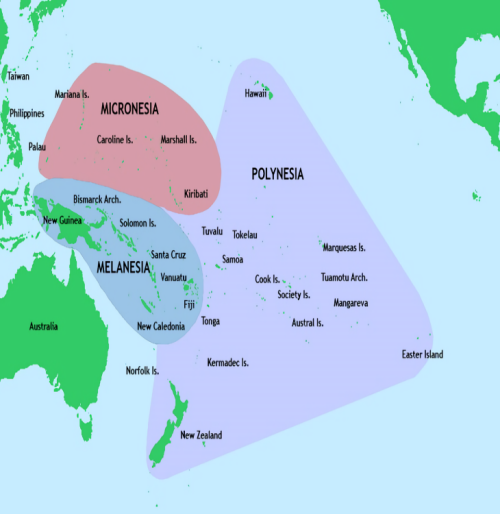
The Pacific Ocean is home to the Southwest Pacific Islands, a group of islands that are divided into three main groups - Melanesia, Micronesia, and Polynesia.7 These islands are renowned for their pristine beaches, cultural and geographic diversity, and the unique development challenges they face. These 14 independent nations and seven territories have a combined population of under 13 million people and span over 15% of the world's surface. The Melanesian sub-region of the Pacific islands is located near the east coast of Australia, with only 6 kilometers separating Australia and PNG, and 2,000 kilometers separating Australia and Vanuatu. The atolls in eastern Kiribati are located northwards and are only 3,000 kilometers away from Hawaii, while Palau is 1,300 kilometers from Guam.8
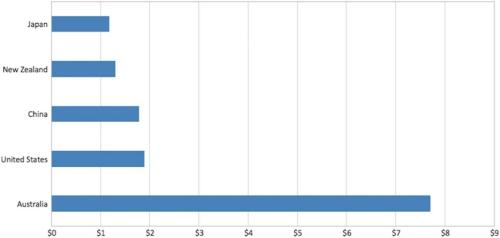
The SWP region ranks high on the list of aid-dependent regions in the world.10 A recent report by the Development Policy Blog reveals that Australia is the largest provider of development assistance in the area, with a total of US$6.5 billion allocated between 2011 and 2017 (as shown in Figure 3). In 2019, the United States launched a new Pacific Islands regional foreign assistance program and pledged $US300 million, with an additional US$5.5 million slated for March 2023.11 According to the Brookings Institution, China provided close to US$1.5 billion in development financing to the Pacific Islands region between 2006 and 2017, through a combination of grants and loans. This figure has since increased to US$4.5 billion by 2022.12 The World Bank is also expanding its support in the Pacific Islands region through the International Development Association (IDA)
Over the past decade, China’s BRI has had a significant impact on the Asia-Pacific region’s infrastructure development, showcasing its soft power diplomacy. China provides development financing to the SWP in three forms: grants and interest-free loans administered through state finances, and concessional loans administered through China Eximbank.13 This thesis deals with BRI’s concessional loans or soft loans which have more generous terms than market loans, very low-interest rates with several years of grace periods.14 From 2008 to 2020, China provided nearly US$3.148 billion in development finance to the SWP, with details of Chinese-funded projects available in Figure 2.15 Chinese financing is playing a crucial role in infrastructure development, bilateral trade, tourism, and economic investment in the SWP. The BRI initiative has the potential to reduce poverty levels that have persisted for decades. Notably, China's investment in Pacific Island nations reached US$2.72 billion by the end of 2022.16 For a comparison of Chinese development financing and investment with the Top Five South Pacific Donors from 2006-2014, refer to Figure 3.17
Developing financing in the SWP Islands presents a multitude of complex challenges. Development obstacles are substantial due to the region's vulnerability to natural disasters and the impact of climate change. In the SWP, poor governance is a likely factor contributing to lower development financing project effectiveness. In the last 30 years, the Pacific has experienced less than 1% growth in per capita income, indicating restricted levels of development.20 Economic and natural shocks pose a unique threat to the Pacific region due to the countries' small size, geographical isolation, and susceptibility to natural disasters. China's development financing to the Pacific region is delivered through sizable infrastructure projects funded by concessional loans.21
The SWP has seen an expansion of donors, with China now playing a significant role alongside traditional development partners. The Chinese government has funded more than 100 development projects in the region, donated over 200 batches of in-kind support, and trained approximately 10,000 local professionals since the 1970s. According to the 2022 Lowy Institute Pacific Aid Map, China provided close to $US3.148 billion in development financing to the Pacific between 2008 and 2020.22 As part of the BRI initiative, China will contribute to the development of the SWP by investing in infrastructure, free trade, tourism, and foreign direct investments. China's assistance is aligned with the national interests of SWP, infrastructure, and socioeconomic development of the SWP countries.
Cooperation between China and the SWP in the development of island tourism, agricultural products, and infrastructure has been solidified through the signing of BRI memoranda of understanding. China holds significant power in the Southwest Pacific region, evidenced by the bilateral trade volume growth from $4.512 billion in 2012 to $8.66 billion in 2018, with an average annual growth rate of 11.48%.23 Additionally, the number of tourists visiting the region has consistently increased each year. Specifically, the number of tourists from China has risen from 55,000 in 2012 to 143,000 in 2017 and 224,900 in 2018, with an average annual growth rate of 14.64%.24
Focusing on Infrastructure
The good characteristic of China’s BRI is financial support to developing countries in building essential infrastructure that can enhance economic growth. The infrastructure includes transportation facilities like roads, bridges, and ports that connect markets and people. Furthermore, access to basic services such as clean water, electricity, and sanitation can improve living standards and positively impact health, education, and other aspects of life. Improved infrastructure makes trading easier and more cost-effective, leading to increased exports and revenue generation that stimulates socio-economic development.25 Therefore, the question of increased debt levels from BRI development financing projects cannot be justified against other donors like the US, Australia, New Zealand and Japan.
One key distinction between China and conventional development partners lies in the focus of their financial support. SWP's primary objective is to promote infrastructure development that drives economic progress and lifts the nation out of poverty. Consequently, conventional development partners must decrease their investment in the social sector and channel resources towards infrastructure. This will enable the beneficiary countries to provide social services with the support of a robust economy.
The Situation in PNG and the Solomon Islands
China's BRI has played a significant role in its relationship with Pacific Island nations like PNG and the Solomon Islands. Indeed, these two countries are the SWP region's greatest beneficiaries of Chinese development finance, PNG and the Solomon Islands. China's investment in infrastructure development in PNG has led to increased bilateral trade, which surged from US$3.21 billion in 2020 to US$4.02 billion in 2021.26 Based on this growth in trade, China and PNG are expected to sign a free-trade agreement soon, with the rest of the SWP following suit in a bid to promote and encourage economic independence. The Solomon Island Security Agreement with China can effectively be challenged by the US with the signing of a Security Agreement with PNG to establish a military presence. Despite receiving the largest number of BRI projects in the SWP region and an increase in foreign direct investment worth US$4.02 billion, PNG is currently in talks with Beijing for a free trade agreement.27 PNG remains committed to its foreign policy of maintaining friendly relations with all nations and avoiding enemies. Furthermore, PNG is aware that BRI is a China Communist Party-driven strategy with geopolitical objectives that may lead partner countries into unsustainable debt through 'debt trap diplomacy'. Despite this, China's BRI projects have contributed to the growth of tourism, bilateral trade, and the local economy in SWP countries.
The development financing initiative from China to the Solomon Islands has encompassed several key areas, such as infrastructure development, telecommunication, and security cooperation. One noteworthy achievement is the construction of a sports stadium that will serve as a focal point for the Pacific Games.28 China has emerged as a major financier in the region, and in 2019, the Solomon Islands joined other Pacific nations in recognizing China, cutting diplomatic ties with Taiwan, and signing agreements with BRI. As a result, China now accounts for 46% of all trade for the Solomon Islands.29 This is an indication that debt trap diplomacy cannot be verified against the economic growth stimulated by BRI projects. However, other nations in the Indo-Pacific region have expressed concerns regarding the security agreement between China and the Solomon Islands, as it may result in a Chinese military presence or even a base in the country.30 Additionally, while Huawei's proposal to construct 160 telecommunication towers in the Solomon Islands could be beneficial for the nation's progress, it has also raised security concerns for the US and Australia.
Discussions surrounding China's aid to the Solomon Islands and PNG have raised concerns about China's increasing influence in the SWP, as well as doubts about its intentions and the response of Western nations to balance this influence. The security agreement between China and the Solomon Islands aims to boost the latter's national security capabilities and includes collaboration on disaster response, humanitarian aid, and maintaining social order, among other areas.31 However, the United States and their regional partners are concerned that this agreement could lead to the deployment of Chinese soldiers to the Solomon Islands and the establishment of a permanent military base, which is less than two thousand kilometres away from Australia.32
Therefore, China has encountered opposition from the United States, Australia, and their allies in the Southwest Pacific due to their aid delivery to the Solomon Islands and PNG. The concern arises from China's increasing influence in the region and the possibility of aid being utilized to establish a military presence. The Solomon Islands' acceptance of $730 million in financial aid from China resulted in violent anti-government protests, causing Australia and New Zealand to express serious concerns about the security agreement between the Solomon Islands and China. As a result, the Solomon Islands promised Australia that they would not allow a permanent Chinese military presence in their country. In response, the US signed a security agreement with PNG, stating the need to cooperate on humanitarian assistance and disaster relief operations. However, it is important to consider the geostrategic context of the United States.33
Chapter Two
The objective of this chapter is to evaluate and comprehend the effects of BRI on the absorptive capacity of recipient states. Through a review of various literature sources on BRI, we aim to determine the potential issues related to the lack of absorptive capacity. Additionally, we briefly touch upon the framework to assess absorptive capacity, with further details to be explored in subsequent chapters through case studies to fully understand the BRI and Its Impacts
Understanding the BRI and Its Impacts
This thesis conducted a survey of existing literature on the BRI from 2013-2023 to assess the validity of the concerns raised about the Initiative’s negative impacts – in particular, those pertaining to the widely discussed debt trap diplomacy and the lack of absorptive capacity among recipient states. Although this literature review cannot purport to be exhaustive, it does draw on some key works that underscore the debates and gaps in understanding that persist in relation to these issues, as well as the relevance of the insights obtained through this survey for the Southwest Pacific context.
According to a recent study by Mansi Mishra and Vivek Kumar, China employs debt trap diplomacy to gain influence over smaller nations, as doing so allows Beijing to build infrastructure, establish capital, and promote international connectivity and trade. Doing so positions China as the central economic hub for strategically located countries. This view stands in contrast, however, to other studies and wider commentary. The Prime Minister of Samoa, Tuilaepa Sailele Malielegaoi, has stated that the BRI offers great opportunities for small countries like Samoa in the South Pacific region,34 arguing that grants from China have been beneficial and that debt trap allegations are based on misunderstandings. Moses Oyintarelado, Cecilia Springer, and Kevin P Gallagher have likewise argued that no evidence exists to support claims that China lends to gain strategic leverage or control over strategic public assets.35 Instead, their study found that China's Overseas Lending and Development Finance (OLDF) is linked to economic growth that benefits the host nations. In a similar vein, Deborah Brautigam and Meg Tithmire have pointed out that the term "debt trap diplomacy" has been used by US policymakers since 2018 to criticize the BRI following the transfer of the Sri Lankan port of Hambantota to Chinese management for lease after the government defaulted on BRI development financing loan.36 They critique, however, the concept of debt-trap diplomacy and cite examples where China has offered additional funding to help countries struggling with loan repayments, such as Sri Lanka.
Research conducted by Roland Rajah, Alexandre Dayant, and Jonathan Pryke (2019) further suggests that China has not intentionally engaged in debt-trap diplomacy in the Pacific region. Even so, the significant amount of lending by China, combined with the lack of strong institutional mechanisms to ensure the debt sustainability of borrowing countries, poses substantial risks.37 These observations are substantiated by the work of Lee Jones and Shahar Hameiri, who reveals that the accusations of debt trap diplomacy are unfounded, as the BRI is an economic project and Chinese development funding mainly depends on the recipient. China does not dictate the construction of BRI projects unilaterally, and often it is the political leaders of the recipient countries who make poor choices that result in economic loss.38
In view of these observations, political leaders in the SWP must provide good governance with integrity and accountability for prudent management of project funds. While financial assistance can be beneficial, it is important that it meets specific criteria to best serve the needs of the people in the Southwest Pacific. This includes a mandatory government policy document and action plan, with a framework that outlines key performance indicators for national projects. These policy documents also guide a country's national interest in investments, including those funded through BRI concessional loans. The financier China, the US, Australia, New Zealand and Japan must only finance countries with policy documents with long-term development plans. Moreover, to continue serving as a significant financier in the Pacific, while avoiding accusations of debt-trap diplomacy, China should adapt its approach and adopt formal lending rules similar to those of multilateral development banks and in accordance with the Organization for Economic Cooperation and Development (OECD). A unique forum where the governments of 37 democracies with market-based economies collaborate to develop policy standards to promote sustainable economic growth.39
Unpacking the Question of Absorptive Capacity
With respect to the question of absorptive capacity, studies on this issue have tended to focus more broadly on whether recipient countries have the capacity to productively use foreign development financing. Here, absorptive capacity refers to the total amount of foreign capital plus technical assistance that a developing country can use productively among the recipient states.40
As noted by Simon Feeny and Ashton de Silva, the international community has been increasing foreign aid to unprecedented levels; however, this additional development financing may not be effectively utilized due to a lack of finances and technical issues in recipient countries. These considerations led Patrick Guillaumont to explore whether the issue of absorptive capacity should serve as a mandatory reason for rejecting BRI development financing. Guillaumont argues, however, that the poverty trap is a significant concern for many nations, particularly those categorized as Least Developed Countries, and that an increase in financing would be beneficial for them. According to his study, whether or not a country can absorb development financing and other forms of development financing effectively depends on the nature of the financing itself as well as the modalities used to deliver it.41
According to McGillivray, Naudé, and Santos-Paulino (2018), the United Nations views the Pacific Islands as facing significant challenges as they become more integrated into global markets. These challenges include limited resources, inadequate technology, poor economic management, and institutional capabilities. As a result, economic growth in the region is heavily reliant on external resources such as aid, migrant remittances, and foreign direct investment (FDI). Meanwhile, Yongxing (2018) acknowledges the critics who claim that China's Belt and Road Initiative (BRI) is the new engine of global economic growth. Despite criticisms of debt trap diplomacy and concerns about absorptive capacity, China is seen as offering significant advantages in productivity, technology, funding, experience, and development to countries that participate in the Belt and Road Initiative.42
Framework for Assessing Absorptive Capacity
Traditional methods for assessing absorptive capacity primarily evaluate the extent to which a recipient can utilize donor funds in accordance with the donor's specifications. More advanced conventional approaches concentrate on the technical proficiency of recipients to strategize and execute programs or projects in compliance with donor criteria, which may be collaboratively determined with the recipients.43 The usual solutions for surmounting the obstacles to development financing absorption typically presume that the standards, specifications, goals, or schemes of donor-funded interventions are "correct," and that the recipients' technical implementation skills need to be enhanced.
Absorptive capacity cannot exist in a vacuum - it is only relevant in the context of a specific intervention, program or project and as such can only be measured within a model of that intervention. For example, the implementation of a BRI road project in PNG and Solomon Islands. Additionally, improving absorptive capacity requires not only strengthening the implementation capacity of recipients but also enhancing the delivery capacity of donors and refining the design or intent of the intervention itself. This approach enables the testing of whether a given intervention or project aligns with the social, political, economic, and technical realities on the ground, ultimately answering the question: Can this BRI road project succeed in PNG and Solomon Islands? The MAC framework should be viewed as an additional module to standard tools for assessment, planning, monitoring, and evaluation within the government statecraft of both countries and the rest of SWP.
The National governments evaluate all types of development financing, including Chinese assistance, through their respective Department of Works, Infrastructure and Transport, and Planning and Monitoring. These two government agencies are responsible for assessing the effectiveness of Chinese development financing and its alignment with the recipient countries' development objectives and priorities. The framework scrutinizes project implementation, ensuring compliance with local regulations and quality standards, timely delivery, capacity-building efforts, and technology transfer. It also evaluates the economic, social, and security impact on Pacific Island countries.44 Evaluating development financing impact is a complex process that requires comprehensive data collection, analysis, monitoring, evaluation and reporting. This systematic assessment allows for informed decision-making and policy formulation, ensuring the effectiveness, efficiency, and sustainability of Chinese BRI development financing to avoid debt trap diplomacy. A detailed assessment of absorptive capacity under the BRI project will be discussed in Chapters 3 and 4 respectively using a case study on PNG and Solomon Islands to determine the hypothesis of debt-trap diplomacy.
Despite the disagreements between researchers on the issue of BRI's debt-trap diplomacy compounded by the lack of absorptive capacity by recipient countries. Based on Clarke et al analysis, the Chinese BRI investment in the SWP region is focused on addressing challenges such as inadequate infrastructure and human resources. The BRI is expected to alleviate some of these challenges by enhancing regional connectivity and stimulating economic growth.45 The initiative aims to optimize resource allocation and trade, promote regional economic integration, and achieve synchronized economic and social development. Through foreign direct investments (FDI), tourism, international capacity cooperation, and joint development of third-world markets, the BRI has delivered tangible benefits to the global community. China's objective with the BRI is to reinforce its regional dominance by fostering extensive economic integration. Ultimately, China aims to establish a regional production chain where it will lead in advanced manufacturing and innovation and set the standards for the SWP region.46
China's foreign aid is distinctive for several reasons when compared to other countries. A significant proportion of China's aid comprises non-concessional state loans and export credits, which are frequently employed to finance development projects in less developed nations. In 1964, Chinese Premier Zhou Enlai established eight principles that continue to guide China's foreign aid policy. One of these principles stresses the importance of mutual respect and equality in aid provision, stating that aid should not be employed as a tool for interfering in the internal affairs of the recipient countries. However, empirical research suggests that China often attaches its political and economic interests to its foreign aid. For example, China tends to channel more aid towards its trade partners. China is renowned for its non-interference policy, which implies that it does not demand political or economic reforms in exchange for its aid.47 Many observers believe that Chinese assistance is swift, responsive to the preferences of local political leaders, and has fewer conditions attached than aid from other nations. A senior Pacific bureaucrat once remarked, "We appreciate China because they bring us red flags rather than red tape.48
Chapter Three
The aim of this chapter is to conduct a case study of the BRI project implementation process to verify the absorptive capacity of PNG. This is an extensive follow-up to the first two chapters, delving into the obstacles that PNG faces and conducting a thorough evaluation of its ability to absorb BRI development financing. Throughout the project cycle, which consists of five stages - project identification, feasibility studies, appraisal and approval, detailed design, civil works, and project completion reports - we will thoroughly scrutinize the implementation of Chinese projects in order to assess PNG's absorptive capacity and its capacity to carry out BRI projects.
Papua New Guinea Case Study on BRI Implications
Papua New Guinea (PNG) was the first country to join China's BRI infrastructure development program in 2013 and currently remains the largest beneficiary within the SWP.49 However, there is uncertainty surrounding PNG's ability to avoid falling into the debt trap diplomacy despite facing a lack of absorptive capacity issues for over a decade. To delve into this matter further, a case study was conducted on BRI project execution in PNG, analyzing the stages of project execution from conceptual planning to implementation, monitoring, and evaluation. By evaluating both China's aid's development impact and the recipient state's capacity to sustain loans, the study sheds light on the challenges that BRI project execution poses to all SWP countries.
The case study's objective is to examine the impact of BRI projects on PNG's economy and politics, including their costs and contribution to infrastructure. By analyzing the government framework's absorptive capacity, we can determine whether it is capable of effectively implementing BRI projects. If not, we will provide recommendations to improve its capacity. This research is essential because it addresses the issue of sustainability in BRI project loans, which can lead to debt trap diplomacy. Despite PNG's limited absorptive capacity, the country has managed to avoid defaulting on these loans for the past decade.
Furthermore, the bilateral trade between the two nations has increased from US$3.21 billion in 2020 to US$4.02 billion in 2021.50 In 2018, China and PNG upgraded their relationship to a "comprehensive strategic partnership," which is one of the highest categories of bilateral relations in China's diplomatic terminology.51 All ten Pacific Island Countries that maintain diplomatic relations with China have signed Memorandums of Understanding (MOUs) for Belt and Road cooperation, with Papua New Guinea (PNG) and Vanuatu having signed Belt and Road cooperation plans.52
In recent times, the Belt and Road Initiative (BRI) has posed a challenge for the United States and its partners who aim to curb China's sway and dominance over resources in the South West Pacific (SWP). Given the ongoing strategic competition between China and the US, both the US and Australia have stepped up their efforts to bolster infrastructure in the SWP. As the security of Australia is closely linked to the security of the SWP, Australia must safeguard and nurture the region to prevent China from filling the gaps.
BRI Projects
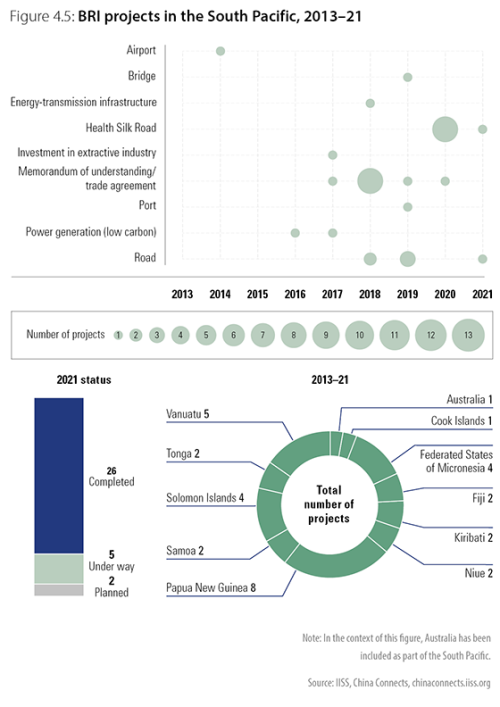
From 2013 to 2021, PNG accounted for nearly a quarter of all SWP BRI projects with a total of eight among others below four, as depicted in Figure 2. At first, the projects were centred on airport infrastructure and low-carbon power generation infrastructure. However, in 2017, multiple trade agreements were established, which resulted in the expansion of BRI projects. These projects encompassed investments in various sectors, like extractive industries, bridges, energy transmission infrastructure, and ports. Furthermore, amidst the COVID-19 pandemic in 2020, Health Silk Road projects were inked with eight Pacific Island nations.53
The majority of the 15 Chinese investments in PNG that exceeded $US100 million were focused on three sectors. These sectors were transport, real estate, and metals, with four, three, and two projects respectively. The sectors that received the most Chinese investment were metals, energy, and real estate, with a combined total of $US3.88 billion. Metals received the largest investment, with $US930 million, followed by energy with $US880 million, and real estate with $US730 million. In total, these three sectors accounted for 65% of the recorded Chinese investment in PNG.54 These foreign direct investments stimulate economic activity and generate revenue to sustain BRI loans as such the issue of debt trap diplomacy cannot be justified. It was created to discredit the excellent initiative of China to assist developing countries.
The participation of PNG in China's BRI program has caught the attention of Western nations. The program involves a considerable amount of Chinese investment in diverse projects throughout the country. There is a competition for influence in the region between China and the US, with Western countries investing more to offset Chinese-funded initiatives.55 Nevertheless, despite the strategic rivalry between the two sides, PNG is experiencing the advantages of increased attention and investment.
Challenges - Lack of Absorptive Capacity
It is not proven that PNG is incapable of implementing BRI projects due to a lack of absorptive capacity. PNG has been actively engaged in BRI since 2013 and has established Belt and Road cooperation MOUs with all 10 Pacific Island nations that have diplomatic relations with China.
The primary obstacle is not the absence of the ability to take in new technical information, but rather the dangers of becoming ensnared in debt trap diplomacy, corruption, substandard work, and the involvement of Chinese contractors. Other critiques or concerns, mostly centred on absorptive capacity, aim to demonstrate why additional aid would likely be pointless, squandered, or even harmful, and therefore not result in a significant push forward or an eventual escape from poverty. However, it is important to note that absorptive capacity can only be attained by successfully implementing a project, as has been observed in PNG.
It's worth noting that the BRI has potential benefits, but there are also worries about debt sustainability, environmental impact, and geopolitical implications. Countries must manage their involvement in the BRI carefully and ensure that projects are economically viable, socially inclusive, and environmentally sustainable.56 Some experts fear that the BRI could create instability in PNG and the Pacific. On the other hand, some proposed BRI projects have been linked to corruption.57 The BRI also includes technology, information, and communication projects that could raise concerns about security from nations like Australia, as was seen with the sale of PNG Digicel to Telstra.58 However, it is important to note that BRI projects have stimulated macroeconomic activities which resulted in increased bilateral trade from US$3.21 billion in 2020 to US$4.02 billion in 2021.59
Project Cycle Framework to Test Lack of Absorptive Capacity
Usually, the project cycle encompasses five stages, namely project identification, feasibility studies, appraisal and approval, detailed design, civil works, and project completion. During the execution of Chinese projects, a thorough evaluation of PNG's absorptive capacity was conducted in all these stages to determine if it is capable of carrying out BRI projects.
Inception and Design
According to Financial Instruction Part 11, Division 1, the primary goal of the PNG Government procurement system is to acquire public goods and services through ethical and transparent processes while ensuring that value for money is achieved and promoting fair competition. The National Procurement Commission manages the tender process, but contracts exceeding PGK10 million require endorsement and formalization by the National Executive Council (NEC) and the Governor General before implementation.60 As a result, all projects, including those involving BRI, must follow this standard government procurement system. While allegations of corruption by politicians have been made regarding contractor selection, there is no concrete evidence to support these claims. Chinese contractors are often awarded BRI-sponsored projects due to their ability to deliver large-scale projects on time and within budget.
The issue in PNG lies not in absorptive capacity but in a lack of integrity, transparency, and accountability within government systems. The Department of Works (DoW) is responsible for infrastructure implementation throughout the country, serving as the custodian and sole authority for state infrastructure designs and approvals. By providing thorough project specifications and designs with professional cost estimates, the DoW can minimize corruption and ensure value-for-money outcomes. Both Chinese consultants and the DoW can generate designs for BRI projects, but they must be approved by the Secretary of the DoW and remain consistent throughout implementation, quality control, monitoring, and evaluation.
Construction and Implementation
For projects valued at PGK10 million or more, the Governor General selects the bidder recommended by the National Executive Council (NEC), a Chinese company handling BRI projects. This company brings in resources like machinery, equipment, and construction materials, along with a workforce that is deployed to the project site to begin construction by the contract terms. Due to the lower cost of bulk procurement, the Chinese company imports all resources, including workers, from China, citing a lack of absorptive capacity. However, the language barrier between the Chinese workforce and the PNG workforce makes communication difficult. There has been much debate about the limited local content and workforce in BRI projects, but no action has been taken by the government. Chinese companies do subcontract to local companies and hire casual labourers from PNG, but this does not do much to develop the capacity of the PNG workforce, mainly due to the language barrier.
There are two main reasons why construction and implementation projects may suffer from poor-quality work and incomplete jobs. The first reason is when funds that were meant for the project get redirected to other unplanned activities, which can result in a decrease in quality or even a complete stop to the project. The second reason is due to the responsibility of the DOW in managing quality control and ensuring that the design is accurately translated into the outcome. Civil and building engineers are assigned to the project, and they must ensure that the design specifications are met before signing off on a satisfactory works completion report for payment. Therefore, the issue at hand is not a lack of absorptive capacity, but rather a matter of accountability, transparency, and integrity from all stakeholders involved.
Monitoring and Evaluation
PNG possesses the ability to effectively oversee and assess infrastructure developments, including those related to BRI projects. The Department of National Planning and Monitoring (NPM) plays a crucial role in ensuring that BRI projects align with the Medium-Term Development Plan (MTDP). Additionally, the NPM is responsible for monitoring and reporting on the progress of these projects. The Department of Works (DoW) oversees the construction process, ensuring quality control, and guides contractors to meet the design specifications and cost estimates. Meanwhile, the NPM evaluates and monitors project progress, deliberating on the government's key performance indicators (KPIs) to assess the success of the BRI projects.
With the implementation of MTDP, the government has taken steps to avoid past issues of political favouritism and financial waste. The focus is now on investing intentionally in areas that will drive national growth and prosperity. The goal of MTDP IV is to increase GDP by PGK164 billion by 2030.61 To ensure success, NPM has a significant responsibility to oversee all strategic projects funded by development funds, assess progress, and provide reports on outcomes. In general, PNG has a strong foundation for delivering projects effectively and efficiently. However, individuals involved must demonstrate diligence and prudence to ensure accountability and excellence in the delivery of state infrastructure.
What Needs to Change / What Can Be Done Differently
Over time, the government of PNG has pursued some projects solely for political reasons without generating sufficient economic returns to service the loans obtained from various sources such as China, the Asian Development Bank, the World Bank, and the International Monetary Fund. This has resulted in a substantial debt of $US 15.3 billion, which has put pressure on the government to repay the loans and, in turn, affected the effectiveness of service delivery. It is vital for the government to carefully choose projects that can stimulate economic growth and generate revenue to repay loans. PNG has abundant resources and a significant economic base to service the loans, but the government systems require more transparency, integrity, and accountability.
Great news! PNG has adopted a National Policy, known as "Vision 2050", which aligns with the eight Goals and Principles outlined in the National Constitution. This policy aims to create a healthy, happy and prosperous nation by 2050. By the parliamentary election cycle, the newly elected government releases a Medium-Term Development Plan (MTDP) every five years, which is in line with Vision 2050. This framework includes KPIs for all government department heads and statutory bodies to follow when implementing public expenditures. The policy document also guides the country's investments, including projects funded under BRI aid assistance, concessional loans, and commercial loans. Monitoring and evaluating the success and failure of these projects is done using the MTDP. This is an exciting new approach to drive socio-economic growth, leading to a more prosperous future for PNG.
Chapter Four
The objective of this chapter is to conduct a comprehensive case study on the Solomon Islands and its ability to implement BRI projects. The chapter provides an in-depth analysis of the country's BRI history, while also highlighting the unique challenges posed by the ongoing strategic competition between China and the US. With the Solomon Islands currently in the spotlight following a security agreement with China, there is heightened scrutiny of their capacity to implement BRI projects while avoiding a potentially unsustainable increase in debt levels amidst the recent surge in development financing from China.
Solomon Islands Case Study on BRI Implications
In this section, we will delve into the complex relationship between China and the Solomon Islands. Specifically, we will explore the diplomatic changes, infrastructure improvements, and the impact of the Belt and Road Initiative (BRI) on politics, the economy, and security. In light of the past decade's limited capacity for implementation, we conducted a case study on the execution of BRI projects in the Solomon Islands. Our study analyses how the government's lack of absorptive capacity leads to debt trap diplomacy, examining each stage of project execution from ideation to implementation, monitoring, and evaluation.
The relationship between China and the Solomon Islands is multifaceted, involving the BRI as well as a recent security pact. In 2019, the Solomon Islands shifted its diplomatic recognition from Taiwan to China, which subsequently increased its influence in the region. In April 2022, the two countries signed a bilateral security agreement that covers areas such as humanitarian aid, disaster relief, and efforts to maintain social stability.62 This move is likely to cause concern among the Solomon Islands' traditional partners, including Australia, New Zealand, and the United States.63
Prime Minister Manasseh Sogavare believes that infrastructure development is a crucial step for the government to promote progress with full dedication. On September 21, 2019, China and the Solomon Islands signed a joint communique, and China currently stands as the largest trading partner and export market for the Solomon Islands, accounting for 46% of all trade.64 Investments in the BRI by China have surpassed construction in 2022, rising to 48% compared to 29% in 2021, indicating that infrastructure development has led to increased economic activity and growth.65
BRI Projects
The government views infrastructure development as a crucial step in driving progress, and the BRI is a significant initiative in achieving this goal. The Solomon Islands have joined with China in signing BRI cooperation MOUs. To promote inclusive economic prosperity in the SWP, China is financing multiple infrastructure projects in the Solomon Islands. Chinese aid pledges to the Solomon Islands are particularly noteworthy. Examples of ongoing China-funded projects include the National University dormitory complex ($US21.4 million), a comprehensive Medical Centre at the National Referral Hospital, 160 mobile phone towers ($US66 million), and a $US53 million national sports stadium.66
The government of the Solomon Islands has stated that the reconstruction of the port is part of a larger project worth $US170 million, funded by the Asian Development Bank (ADB), which aims to upgrade roads and wharves. In 2022, the road component of this project was awarded to China Civil Engineering Construction Company (CCECC).67 As part of this project, the old Honiara International Port will be rehabilitated, and the Honiara domestic port and two provincial ports will be constructed. Chinese state-owned enterprises, such as CCECC, China Railway Construction Company (CRCC), and China Harbor Engineering Company (CHEC), have been responsible for the construction of various infrastructure projects, including roads and wharves. These foreign direct investments stimulate economic activity and generate revenue to sustain BRI loans as such the issue of debt trap diplomacy cannot be justified. It was created to discredit the excellent initiative of China to assist developing countries.
While some critics contend that Chinese state-owned enterprises' involvement may not be advantageous for recipient countries in terms of capability development and knowledge transfer, I totally disagree. Many smaller Pacific Island nations may not possess the capacity to undertake large-scale projects independently, but they can still contribute significantly as sub-contractors. Additionally, politicians often award contracts to acquaintances who may have capacity issues and are unlikely to produce the desired results. By participating as sub-contractors, local contractors can progressively improve their capabilities.
Challenges - Lack of Absorptive Capacity
Smaller economies, such as the Solomon Islands, could not historically attract investment from traditional partners, resulting in limited infrastructure, economic activity, and bilateral trade. However, China is defying these odds by undertaking large-scale infrastructure projects to stimulate socio-economic growth, promote tourism, and facilitate regional trade. These efforts also address the lack of absorptive capacity by working with local sub-contractors under Chinese state-owned enterprises. It is crucial to prioritize economically viable projects that generate revenue and avoid politically motivated projects that may result in wasteful spending.
The success of BRI is contingent upon managing several challenges, such as navigating national elections, addressing corruption, and resolving complex land rights issues that could jeopardize the project's viability. While national elections are a necessary part of the democratic process, once a government contract is sealed, it cannot be revoked without incurring the full contract value as a penalty. Corruption can arise during the awarding of major contracts by the National Executive Council (NEC) to individuals with limited capacity who have personal connections. However, the BRI project tender process is distinct, as the contractor is predetermined as part of the aid or soft loan package. Additionally, the complexities surrounding land tenure can be managed effectively. The Solomon Islands government and China have successfully addressed land issues through compulsory state acquisition programs. Given the potential environmental and social risks associated with any significant infrastructure project, the government has established the "Safeguards Procedure Manual" (SPM) to guide the Ministry of Infrastructure Development in managing these impacts and risks.
China may have arrived late to the lending and development finance game, typically dominated by advanced economies, but it has managed to invest billions of dollars in just the past five years. 68 However, the expansion of the BRI in the Pacific has sparked geopolitical rivalries and elicited mixed reactions from Pacific communities. It is important to note that there are concerns about China's growing influence in the Pacific region, particularly in the Solomon Islands, and the potential security implications of China's involvement in various projects in the area. This presents a significant challenge for both the US and Australia.
Project Cycle Framework to Test Lack of Absorptive Capacity
In general, a project cycle encompasses five distinct stages: project identification, feasibility studies, appraisal and approval, detailed design, civil works, and project completion. During each of these stages, a comprehensive assessment of the Solomon Islands' absorptive capacity was conducted to evaluate its ability to execute BRI projects effectively.
Inception and Design
The Solomon Islands National Transport Plan (NTP) is implemented by the Ministry of Infrastructure Development (MID) to ensure effective transport infrastructure and services, supporting economic growth and social development.69 The NTP prioritizes the rehabilitation and maintenance of existing transport infrastructure while providing new facilities that are strategically important. The 20-year strategic outlook for the transport sector, known as NTP 2011–2030, serves as the basis for prioritising funding of projects and obtaining Cabinet endorsement. As a result, any BRI proposals are evaluated based on predetermined priorities within the government's transport facilities development strategy. This approach avoids politically motivated projects that fail to generate economic returns to sustain the loans.
The project cycle typically consists of five stages, which include project identification, feasibility studies, appraisal and approval, detailed design, civil works, and project completion. The infrastructure development plan is used to identify potential major projects, which are then subject to feasibility studies to determine their viability, initial design, potential negative impacts, as well as benefits. The social and environmental studies and mitigation plans are disclosed to the project-affected people and the general public for mandatory feedback during the appraisal and approval stage. Once all stakeholders agree, qualified engineers initiate the detailed engineering designs. Proven by ongoing projects, the Solomon Islands government possesses the absorptive capacity and a well-established process for the inception and design phase when implementing BRI projects. 70
Construction and Implementation
The implementation process for Solomon Island government infrastructure development projects is outlined in the "Safeguards Procedures Manual." To start, new contractors undergo training to ensure they understand all requirements of the machine-based maintenance contract (MBMC) Guideline, including the importance of the construction environment management plan (CEMP). Once completed, the project is approved by the central project implementation unit (CPIU) Safeguards Team, and construction can commence. This management practice is crucial in ensuring that construction design specifications are followed with minimal environmental impact.
In accordance with the contract terms, the Contractor is required to promptly establish a Community Advisory Committee (CAC) for projects lasting six months or more. The Chinese Contractor holds the authority to hire or subcontract community members and must inform the Site Supervisor/Regional Manager of any such arrangements. It's important to note that there are pros and cons associated with Chinese contractors importing their own workforce and materials from China. While the timely delivery of infrastructure is appreciated, it can have a negative impact on local businesses and the economy due to the lack of local content. Additionally, performance audits and outcome evaluations will be conducted upon completion of civil works. Ultimately, the objective of the project is to enhance the capabilities of Solomon Islanders through subcontracting with Chinese contractors.
Monitoring and Evaluation
A monitoring and evaluation process has been put in place by the government to ensure that national projects are of high quality, cost-effective, and beneficial for the people. Unfortunately, this process has been partially non-functional due to a lack of funding and poor management. However, the process has been revived with the help of Chinese experts in project management and a loan from the Asian Development Bank (ADB). This has resulted in the creation of a "Safeguards Procedures Manual," which serves as a guide for monthly reports. These reports include a checklist based on the guidelines of machine-based maintenance contracts (MBMC), as well as information on routine monitoring of safety, health, and the environment. If any issues arise, they are reported to the Safeguards Officer for immediate action. Furthermore, a community advisory committee (CAC) oversees contractors on quality issues and can report any incidents to the Safeguards Team.
The central project implementation unit (CPIU) and the contractor collaborate to ensure quality control and monitoring, while the Safeguards Environmental officer conducts compliance audits every two months to verify the Chinese Contractor's adherence to the construction environmental management plan (CEMP). The quality progress report, which includes the findings of these audits, is prepared by the CPIU and submitted to the Ministry of Infrastructure Development and development partners. The project implementation has successfully tackled the issue of absorptive capacity in monitoring and evaluation, thanks to China's BRI, which is effectively addressing this challenge.
What Needs to Change / What Can Be Done Differently
In 2019, the Solomon Islands altered their diplomatic recognition from Taiwan to China, which subsequently led to an increase in Chinese influence in the area. As per Prime Minister Sogavare, China's aid and support have brought about positive developments in infrastructure, roads, wharves, telecommunications, power, and energy in the Solomon Islands. The Belt and Road Initiative (BRI) has proven to have several economic benefits, unlocking growth through enhanced trade and transportation in the SWP. These are the remarkable changes in bilateral relations with China over the past five years while still maintaining relationships with longstanding partners.

The Solomon Islands government has taken a decisive step forward towards improving the living standards of its citizens. Through a comprehensive infrastructure transformation and with the support of China, as evidenced by the BRI concept, the country aims to stimulate economic development. The National Transport Plan 2011-2030 provides a strategic roadmap for the transport sector over the next 20 years, with China's willingness to finance it under BRI. This approach will minimize corrupt practices and ensure investments are directed towards productive projects rather than political ones.
The security of the US and Australia in the region is of great importance due to the ongoing strategic competition with China. However, the Solomon Islands and the rest of the SWP have a paramount national interest in infrastructure and socioeconomic development. Despite criticism from Western countries, China has been providing a solution that aligns with the principles laid out by Chinese Premier Zhou Enlai in 1964. These principles emphasize the importance of equality and mutual benefit in providing aid, which should not be used to interfere in the internal affairs of recipient countries. In light of this, the US and Australia need to learn from China and provide financial aid and assistance that focuses on developing infrastructure and stimulating economic growth in SWP countries. This will enable SWP countries to manage their social services more effectively and achieve their development goals.
Chapter Five
The intention of this chapter is to present the results of the case studies conducted in PNG and the Solomon Islands. The focus will be on addressing the thesis question of debt-trap diplomacy, with an emphasis on absorptive capacity and the impact of BRI on these two countries. Towards the end, we'll also delve into the strategic implications of BRI, considering the existing strategic competition between China and the US.
Synthesis of Findings
The findings from the two case studies of PNG and Solomon Islands, by comparison, revealed that the issue of lack of absorptive capacity in implementing BRI projects contributes to increased debt trap diplomacy is not true. Both countries do have limited capacity but managed to successfully implement BRI projects over many years. In fact, BRI projects are transforming both countries' infrastructure subsequently increasing bilateral trade with social services like health and education but more importantly stimulating economic growth. The case study is limited to PNG and Solomon Islands but the positive effects of China’s BRI-funded projects are experienced throughout the ten SWP countries affiliated to BRI. This is evident with China's bilateral trade with the SWP growing at an annual rate of 11.48%, from US$4.512 billion in 2012 to US$8.66 billion in 2018.71 Therefore, the thesis question of to what extent BRI-funded projects increase debt level in the SWP and the hypothesis put forth that it resulted in debt-trap diplomacy is proven wrong.
The lack of absorptive capacity refers to the total amount of foreign capital plus technical assistance that a developing country can use productively among the recipient states. Hence, absorptive capacity can only be achieved through projects or its modalities which is the case with BRI-funded projects in the SWP countries. Moreover, China's aid is tailored to meet the national interests which are infrastructure and socioeconomic development of SWP countries. China acknowledges the challenges of limited absorptive capacity and is actively supporting the development of human resources in the region. The BRI-funded projects are expected to bring long-awaited changes and transform the economies of SWP countries.
Implications of BRI for PNG and Solomon Islands
The strategic competition between China and the US in the Indo-Pacific region has significant implications for nation-state actors like PNG and the Solomon Islands. China’s investment through BRI in PNG and the Solomon Islands builds the necessary infrastructure to support and stimulate economic growth. The infrastructures like roads, bridges, ports, and other transportation facilities will help connect people and goods to markets. It can also help improve living standards by providing access to basic services such as clean water, sanitation, and electricity. which will have a positive impact on health, education, and other aspects of life. Improved infrastructure helps facilitate trade by making it easier and cheaper to transport goods. Subsequently, increases exports and generates more revenue to stimulate economic prosperity. It is evident that China currently stands as the largest trading partner and export market for the Solomon Islands, accounting for 46% of all trade.72 While PNG increased bilateral trade with China from US$3.21 billion in 2020 to US$4.02 billion in 2021.73 Also, the Chinese foreign direct investment in metals, energy and real estate in PNG increased to $US3.88 billion.74 However, PNG and Solomon Islands need to be cautious about their dealings with both China and the US and strive to protect their sovereignty and national interests. PNG and Solomon Islands need to develop a balanced foreign policy that takes into account the interests of all major players in the Indo-Pacific region.
Strategic Level Implications of BRI for the Region
China's Belt and Road Initiative poses a challenge to traditional donor partners in the delivery of infrastructure projects that can stimulate macroeconomic activity, bilateral trade, tourism, and social services. As a result, the issue of Chinese BRI has led to concerns about debt-trap diplomacy and the lack of absorptive capacity of recipient states. However, empirical evidence suggests that these concerns are baseless propaganda from Western countries seeking to discredit China's soft power diplomacy.75 In reality, the issue is the strategic competition between the US and China for influence and control of resources in the Indo-Pacific. China's significant investments in the region are viewed as a threat to US global dominance and the international rules-based order. Consequently, the US has introduced countermeasures like QUAD, AUKUS, and the Blue Pacific initiative. Moreover, the recent security agreement between PNG and the US which aims to counter China's security agreement with the Solomon Islands, may potentially lead to a repeat of the Pacific conflict in World War II.
Infrastructure and socioeconomic development are the main focus of PNG and Solomon Islands' national interests. Conversely, the developed Western countries and China prioritize security as their primary national interest, followed by economic sustainability. This creates a conflicting interest among all stakeholders, which China is working to address in order to achieve its security goals and aspirations. The Security Agreement between the Solomon Islands and China, along with other projects like the installation of 160 mobile phone towers, is causing concern for the US and Australia. Australia's influence prevented Huawei from participating in telecommunication services in Australia and PNG. As a result, the Solomon Islands' telecommunication project becomes crucial for China strategically, it is economically beneficial, but raises security concerns for the US and Australia. Developing countries' national interest becomes insignificant when dealing with the strategic interests of global superpowers.
Offer Recommendations to Other Development Partners
Australia has been reported to be the largest provider of development assistance in the region with a total of US$6.5 billion, which is higher than China's US$ 4.5 billion, according to the Development Policy Blog.76 But the question is how do you measure the tangible outcomes on the ground? The United States has invested well over US$1.9 billion along with New Zealand's US$1.3 billion and Japan's US$1.8 billion financing, as shown in Figure 3.77 It is highly recommended that recipient countries' national interests, such as infrastructure and socio-economic development agendas for mass inclusive benefit, guide all expenditures. The focus on the social service sector should be shifted towards infrastructure development to stimulate economic growth, as evidenced by China's Belt and Road Initiative. The recipient countries must provide a mandatory government policy document and action plan, with a framework that outlines key performance indicators for national projects.
Conclusion
Importance of This Thesis Paper
Research and findings regarding China's Belt and Road Initiative in the Southwest Pacific are of utmost importance due to the significant impact it will have on the region, particularly given the ongoing strategic competition between China and the United States and its allies. It is crucial to recognize the differences in national interests between developed nations and developing states, as the latter prioritizes economic development and prosperity over security interests. This is the primary reason why ten SWP countries have chosen to participate in the BRI, as it offers a pathway towards poverty alleviation, infrastructure development, and economic growth.
Answer to the Research Question
After conducting qualitative and quantitative analyses of various primary and secondary sources, the results of two case studies on PNG and Solomon Islands have indicated that the notion of a lack of absorptive capacity hindering the implementation of BRI projects leading to debt trap diplomacy is unfounded. While both countries do face capacity limitations, they have managed to effectively execute BRI projects over an extended period of time. In reality, these projects are actively addressing the capacity issues and revolutionizing the infrastructure of both nations. This, in turn, is fostering greater bilateral trade, and foreign direct investment, and promoting economic growth.
Economic Implications of BRI
In brief, the Belt and Road Initiative has made a significant impact on the Southwest Pacific with an investment of US$4.5 billion. The resulting infrastructure improvements, including roads, bridges, ports, wharves, and transportation facilities, will help connect communities and goods to markets and essential services like clean water, sanitation, and electricity. This will have a positive impact on health, education, and overall quality of life, as well as make trade more accessible and inexpensive.
Moreover, the BRI has bolstered China's influence in the region, with bilateral trade volume increasing from US$4.512 billion in 2012 to US$8.66 billion in 2018, an annual growth rate of 11.48%. The number of tourists from China also increased from 55,000 in 2012 to 224,900 in 2018, with an average annual growth rate of 14.64%. By the end of 2021, China's foreign direct investment in the SWP had reached $US2.72 billion. Most importantly, the BRI aligns with the national interests of SWP Island countries for infrastructure and socio-economic development and marks a long-awaited shift toward much-needed change.
Strategic Implications of BRI
China's Belt and Road Initiative has had a significant impact on the SWP, posing a challenge to the US and the international rules-based order in the region. As the US and China compete for influence and control of resources in the Indo-Pacific, China's substantial investments are viewed as a threat to US global dominance and stability. To counter this, the US has implemented measures such as QUAD, AUKUS, and the Blue Pacific initiative. The recent security agreement between PNG and the US aims to address China's security agreement with the Solomon Islands, which could potentially lead to a repeat of the Pacific conflict of World War II.
Policy Recommendations
While financial assistance can be beneficial, it is important that it meets specific criteria to best serve the needs of the people in the South West Pacific. This includes a mandatory government policy document and action plan, with a framework that outlines key performance indicators for national projects. These policy documents also guide a country's national interest in investments, including those funded through BRI concessional and commercial loans.
For example, Papua New Guinea's Medium-Term Development Plan 2023-2027 is a strategic guide for all investments and infrastructure development, with monthly reports provided to the Chief Secretary by department heads. Similarly, the Solomon Islands National Transport Plan 2011-2030 serves as a basis for prioritizing funding and obtaining Cabinet endorsement. By ensuring accountability, integrity, and prudent management practices, these policies can help reduce corruption and minimize unproductive political projects, while avoiding debt-trap diplomacy.
It is crucial that development project financiers such as China, the US, Australia, New Zealand, and Japan make these policy documents mandatory for recipient countries. This will encourage good governance and promote secure, prosperous, and harmonious relationships among our Southwest Pacific neighbours in the Indo-Pacific region.
Bibliography
Batala, Lochan Kumar, Wangxing Yu, Anwar Khan, Kalpana Regmi, and Xiaoli Wang. ‘Natural Disasters’ Influence on Industrial Growth, Foreign Direct Investment, and Export Performance in the South Asian Region of Belt and Road Initiative’. Natural Hazards 108, no. 2 (1 September 2021): 1853–76. https://doi.org/10.1007/s11069-021-04759-w
Brautigam, Deborah and Meg Rithmire. “The Chinese ‘Debt Trap’ Is a Myth” The Atlantic, (Feb 2021):
Chengxin Pan, Matthew Clarke & Sophie Loy-Wilson. “Local Agency and Complex Power Shifts in the Era of Belt and Road: Perceptions of Chinese Aid in the South Pacific”, Journal of Contemporary China, (05 Nov 2018): https://www.tandfonline.com/loi/cjcc20
Bank, Asian Development. Meeting Asia’s Infrastructure Needs. Asian Development Bank, 2017. https://www.adb.org/publications/asia-infrastructure-needs.
‘Belt and Road and Debt Diplomacy in the Pacific | Lowy Institute’. Accessed 9 August 2023. https://www.lowyinstitute.org/publications/ocean-debt-belt-road-debt-diplomacy-pacific.
‘Belt and Road Countries -- Solomon Islands - Xinhua Silk Road’. Accessed 4 September 2023. https://en.imsilkroad.com/p/316392.html.
‘Belt and Road Initiative (BRI)’. Accessed 30 July 2023. https://www.ebrd.com/what-we-do/belt-and-road/overview.html.
Briefing, Silk Road. ‘A Potential China-Papua New Guinea Free Trade Agreement’. Silk Road Briefing, 5 June 2022.
Brookings. ‘The Risks of China’s Ambitions in the South Pacific’. Accessed 7 August 2023. https://www.brookings.edu/articles/the-risks-of-chinas-ambitions-in-the-south-pacific/.
Cheer, Joseph M., Stephen Pratt, Denis Tolkach, Anthony Bailey, Semisi Taumoepeau, and Apisalome Movono. ‘Tourism in Pacific Island Countries: A Status Quo Round-Up’. Asia & the Pacific Policy Studies 5, no. 3 (September 2018): 442–61. https://doi.org/10.1002/app5.250.
China Briefing News. ‘China-Australia Trade Relations Growing Stronger’, 8 February 2023. https://www.china-briefing.com/news/china-australia-trade-relations-growing-stronger/.
‘China Firm Wins Solomon Islands Port Project as Australia Watches on | Reuters’. Accessed 9 September 2023. https://www.reuters.com/world/asia-pacific/chinese-company-wins-tender-redevelop-solomon-islands-port-official-2023-03-22/.
ChinaPower Project. ‘How Will the Belt and Road Initiative Advance China’s Interests?’, 8 May 2017. https://chinapower.csis.org/china-belt-and-road-initiative/.
‘China’s Influence as a Pacific Donor | Lowy Institute’. Accessed 5 August 2023. https://www.lowyinstitute.org/the-interpreter/china-s-influence-pacific-donor.
China-US Focus. ‘Five Challenges for the Belt and Road’, 18 October 2018. https://www.chinausfocus.com/finance-economy/five-challenges-for-the-belt-and-road
Clarke, Michael, Matthew Sussex, and Nick Bisley. The Belt and Road Initiative and the Future of Regional Order in the Indo-Pacific. Lexington Books, 2020.
Council on Foreign Relations. ‘China’s Massive Belt and Road Initiative’. Accessed 30 July 2023. https://www.cfr.org/backgrounder/chinas-massive-belt-and-road-initiative.
Council on Foreign Relations. ‘What the China-Solomon Islands Pact Means for the U.S. and South Pacific’. Accessed 8 August 2023. https://www.cfr.org/in-brief/china-solomon-islands-security-pact-us-south-pacific.
Council on Foreign Relations. ‘What the China-Solomon Islands Pact Means for the U.S. and South Pacific’. Accessed 9 September 2023. https://www.cfr.org/in-brief/china-solomon-islands-security-pact-us-south-pacific.
David De Cremer, Bruce McKern, and Jack McGuire. The Belt and Road Initiative : Opportunities and Challenges of a Chinese Economic Ambition. Los Angeles: Sage Publications Pvt. Ltd, 2020.
‘Debunking the Myth of “Debt-Trap Diplomacy” | Chatham House – International Affairs Think Tank’, 19 August 2020. https://www.chathamhouse.org/2020/08/debunking-myth-debt-trap-diplomacy/1-introduction.
Dornan, Matthew, and Philippa Brant. ‘C Chinese Assistance in the Pacific: Agency, Effectiveness and the Role of P Acific I Sland Governments’. Asia & the Pacific Policy Studies 1, no. 2 (May 2014): 349–63. https://doi.org/10.1002/app5.35.
Dornan, Matthew, and Jonathan Pryke. ‘Foreign Aid to the Pacific: Trends and Developments in the Twenty-First Century’. Asia & the Pacific Policy Studies 4, no. 3 (2017): 386–404. https://doi.org/10.1002/app5.185.
———. ‘Foreign Aid to the Pacific: Trends and Developments in the Twenty-First Century’. Asia & the Pacific Policy Studies 4, no. 3 (2017): 386–404. https://doi.org/10.1002/app5.185.
‘Fact Sheet: Cooperation Between China and Pacific Island Countries’. Accessed 9 August 2023. https://www.fmprc.gov.cn/eng/wjdt_665385/2649_665393/202205/t20220524_10691917.html.
‘Fact Sheet: Cooperation Between China and Pacific Island Countries’. Accessed 30 July 2023. https://www.fmprc.gov.cn/eng/wjdt_665385/2649_665393/202205/t20220524_10691917.html.
Feng, Da Hsuan, and Hai Ming Liang. Belt and Road Initiative : Chinese Version of ‘Marshall Plan’? Series on China’s Belt and Road Initiative. World Scientific, 2019.
Gibson, John, and Chao Li. ‘The “Belt and Road Initiative” and Comparative Regional Productivity in China’. Asia & the Pacific Policy Studies 5, no. 2 (2018): 168–81. https://doi.org/10.1002/app5.237.
Grossman, Derek. ‘America Is Winning Against China in Oceania’. Foreign Policy (blog), 1 June 2023. https://foreignpolicy.com/2023/06/01/china-south-pacific-oceania-solomon-islands-kiribati-papua-new-guinea-australia-new-zealand-geopolitics-military/.
Guillaumont, Patrick, and Sylviane Guillaumont Jeanneney. ‘13 “Big Push” versus Absorptive Capacity: How to Reconcile the Two Approaches’. In Foreign Aid for Development, edited by George Mavrotas, 1st ed., 297–322. Oxford University PressOxford, 2010.
https://doi.org/10.1093/acprof:oso/9780199580934.003.0013.
Harvard International Review. ‘Disconnected: Electrification in Papua New Guinea’, 16 May 2022. https://hir.harvard.edu/electrification-in-papua-new-guinea/.
https://www.abc.net.au/news/stephen-dziedzic/166934. ‘Which Country Gives the Most Aid to Pacific Island Nations? The Answer Might Surprise You’. ABC News, 9 August 2018. https://www.abc.net.au/news/2018-08-09/aid-to-pacific-island-nations/10082702.
Hurst, Daniel, Daniel Hurst Foreign affairs, and defence correspondent. ‘ADF to Expand Pacific Links in $1.9bn Budget Package to Boost Australia’s Influence’. The Guardian, 9 May 2023, sec. Australia news. https://www.theguardian.com/australia-news/2023/may/10/adf-to-expand-pacific-links-in-19bn-budget-package-to-boost-australias-influence.
‘IF11208.Pdf’. Accessed 5 August 2023. https://crsreports.congress.gov/product/pdf/IF/IF11208.
IISS. ‘APRSA 2023 | Chapter 4: China’s Belt and Road Initiative a Decade On’. Accessed 2 August 2023. https://www.iiss.org/publications/strategic-dossiers/asia-pacific-regional-security-assessment-2023/aprsa-chapter-4/.
Isaksson, Ann-Sofie, and Andreas Kotsadam. ‘Chinese Aid to Africa: Distinguishing
Features and Local Effects’. SSRN Electronic Journal, 2020. https://doi.org/10.2139/ssrn.3643781.
jkg66. ‘China-Solomon Islands Security Agreement and Competition for Influence in Oceania’. Georgetown Journal of International Affairs (blog), 2 December 2022. https://gjia.georgetown.edu/2022/12/02/china-solomon-islands-security-agreement-and-competition-for-influence-in-oceania/.
Kapma, Ryan. ‘The Belt and Road Initiative and Cultural Bias in Bilateral Trade with China’. Journal of Economic Issues (Taylor & Francis Ltd) 57, no. 1 (March 2023): 172–91. https://doi.org/10.1080/00213624.2023.2170129.
Lee, Chermaine. ‘Experts See Environmental Risk from China’s Small Island BRI Efforts’. VOA, 27 November 2022. https://www.voanews.com/a/experts-see-environmental-risk-from-china-s-small-island-bri-efforts-/6851936.html.
Moses, Oyintarelado, Cecilia Springer, and Kevin P Gallagher. ‘Demystifying Chinese Overseas Lending and Development Finance’, n.d.
‘Pacific Islands | Countries, Map, & Facts | Britannica’, 6 June 2023. https://www.britannica.com/place/Pacific-Islands.
‘Papua New Guinea: Friend to All, Enemy to None’, 15 June 2023. https://www.ips-journal.eu/topics/foreign-and-security-policy/papua-new-guinea-friend-to-all-enemy-to-none-6774/.
‘Papua New Guinea: Friend to All, Enemy to None’, 15 June 2023. https://www.ips-journal.eu/topics/foreign-and-security-policy/papua-new-guinea-friend-to-all-enemy-to-none-6774/.
Press, The Associated. ‘Solomon Islands Signs Policing Pact with China’. NPR, 11 July 2023, sec. Asia. https://www.npr.org/2023/07/11/1186916419/solomon-islands-signs-policing-pact-with-china.
‘South Pacific Islands Crisis Response Plan 2023 - 2025 | Global Crisis Response Platform’. Accessed 7 August 2023. https://crisisresponse.iom.int/response/south-pacific-islands-crisis-response-plan-2023-2025.
The Centre for Independent Studies. ‘Aid Has Failed the Pacific’, 2 May 2015. https://www.cis.org.au/publication/aid-has-failed-the-pacific/.
The Oxford Review. ‘Absorptive Capacity: Definition and Explanation’. Accessed 16 July 2023. https://oxford-review.com/oxford-review-encyclopaedia-terms/encyclopaedia-absorptive-capacity/.
‘There Is No Chinese “Debt Trap” - The Atlantic’. Accessed 9 August 2023. https://www.theatlantic.com/international/archive/2021/02/china-debt-trap-diplomacy/617953/.
WANG, Christoph NEDOPIL. ‘China Belt and Road Initiative (BRI) Investment Report 2022 – Green Finance & Development Center’, 3 February 2023. https://greenfdc.org/china-belt-and-road-initiative-bri-investment-report-2022/.
Washington Post. ‘China’s Growing Reach Is Transforming a Pacific Island Chain’, 11 August 2022. https://www.washingtonpost.com/world/2022/08/11/solomon-islands-china-australia-pacific/.
Xinhua News Agency. ‘Spotlight: China’s Belt and Road Initiative Provides Opportunities for Cooperation in Pacific: Experts’. 28 August 2018.
Ye, F. (1), J. (2) Park, C. (3) Li, and Y. (3) He. ‘The Relationship between China-South Pacific Island Countries Tourism and Trade in the Context of the Belt and Road Initiative’. Island Studies Journal 15, no. 2 (1 November 2020): 73–92. https://doi.org/10.24043/isj.126.
Xinhua News Agency. ‘Spotlight: China’s Belt and Road Initiative Provides Opportunities for Cooperation in Pacific: Experts’. 28 August 2018.
Zhang Yongxing, “Interview: China-proposed Belt and Road Initiative Provides Opportunities for South Pacific Island nations: Samoan PM”, Xinhua News Agency, Suva, (14 Oct 2018):
Xi, J. (2017b), Secure a Decisive Victory in Building a Moderately Prosperous Society in all Respects and Strive for the Great Success of Socialism with Chinese Characteristics for a New Era, Delivered at the 19th National Congress of the Communist Party of China, 18 October.
1 Lee, Jones and Shahar Hameiri. “Debunking the Myth of Debt-trap Diplomacy” How Recipient Countries Shape China’s Belt and Road Initiative, Asia Pacific Programme (Aug 2020): 3
2 Moses, Oyintarelado and et. “Demystifying Chinese Overseas Lending Development Finance”, Global Development Policy Center, no. 18 (April 2023): 4
3 Adler, ‘Absorptive Capacity The Concept and Its Determinants’, 1.
4 Kapma, ‘The Belt and Road Initiative and Cultural Bias in Bilateral Trade with China’, 4.
5 Ibid
6 David De Cremer, Bruce McKern, and Jack McGuire, The Belt and Road Initiative, 33.
7 Foster, Sophie. Etl, “Pacific Island region, Pacific Ocean”, Encyclopedia Britannica, (June 2023)
8 ‘The Risks of China’s Ambitions in the South Pacific’, 2.
9 ‘Pacific Islands | Countries, Map, & Facts | Britannica’, 2.
10 Dornan and Pryke, ‘Foreign Aid to the Pacific’, 2017, 1.
11 ‘IF11208.Pdf’, 1.
12 ‘The Risks of China’s Ambitions in the South Pacific’, 4.
13 Dornan and Brant, ‘<span Style="font-Variant’, 2.
14 ‘Modernising the Measurement of Concessional Sovereign Loans - OECD’, 1.
15 ‘China’s Influence as a Pacific Donor | Lowy Institute’, 2.
16 Lee, ‘Experts See Environmental Risk from China’s Small Island BRI Efforts’, 1.
17 Dornan and Pryke, ‘Foreign Aid to the Pacific’, 2017, 394.
18 ‘APRSA 2023 | Chapter 4’, 13.
19 Dornan and Pryke, ‘Foreign Aid to the Pacific’, 2017, 394.
20 ‘Aid Has Failed the Pacific’, 1.
21 ‘The Risks of China’s Ambitions in the South Pacific’, 2.
22 ‘China’s Influence as a Pacific Donor | Lowy Institute’, 2.
23 Ye et al., ‘The Relationship between China-South Pacific Island Countries Tourism and Trade in the Context of the Belt and Road Initiative’, 74.
24 Cheer et al., ‘Tourism in Pacific Island Countries’, 451.
25 ‘How Will the Belt and Road Initiative Advance China’s Interests?’, 4.
26 Briefing, ‘A Potential China-Papua New Guinea Free Trade Agreement’, 1.
27 ‘Papua New Guinea’, 15 June 2023, 4.
28 ‘China’s Growing Reach Is Transforming a Pacific Island Chain’, 1.
29 ‘The Risks of China’s Ambitions in the South Pacific’, 3.
30 ‘China-Solomon Islands Security Agreement and Competition for Influence in Oceania’, 2.
31 ‘What the China-Solomon Islands Pact Means for the U.S. and South Pacific’, 1.
32 ‘What the China-Solomon Islands Pact Means for the U.S. and South Pacific’, 2.
33 Grossman, ‘America Is Winning Against China in Oceania’, 2.
34 Briefing, ‘China’s Belt & Road Initiative In The Pacific Islands’, 3.
35 Moses, Springer, and Gallagher, ‘Demystifying Chinese Overseas Lending and Development Finance’, 2.
36 ‘There Is No Chinese “Debt Trap” - The Atlantic’, 2.
37 ‘Belt and Road and Debt Diplomacy in the Pacific | Lowy Institute’, 2.
38 ‘Debunking the Myth of “Debt-Trap Diplomacy” | Chatham House – International Affairs Think Tank’, 5.
39 ‘Modernising the Measurement of Concessional Sovereign Loans - OECD’, 1.
40 Adler, ‘Absorptive Capacity The Concept and Its Determinants’, 1.
41 Guillaumont and Guillaumont Jeanneney, ‘13 “Big Push” versus Absorptive Capacity’, 2.
42 ‘Spotlight’, 1.
43 Lamb, ‘Measuring Absorptive Capacity (MAC)’, 1.
44 Dornan and Brant, ‘<span Style="font-Variant’, 2.
45 Clarke, Sussex, and Bisley, The Belt and Road Initiative and the Future of Regional Order in the Indo-Pacific, 8.
46 Feng and Liang, Belt and Road Initiative, 6.
47 Isaksson and Kotsadam, ‘Chinese Aid to Africa’, 1.
48 ‘Belt and Road and Debt Diplomacy in the Pacific | Lowy Institute’, 4.
49 ‘Papua New Guinea’, 15 June 2023, 1.
50 Briefing, ‘A Potential China-Papua New Guinea Free Trade Agreement’, 1.
51 ‘Papua New Guinea’, 15 June 2023, 1.
52 ‘Fact Sheet: Cooperation Between China and Pacific Island Countries’, 1.
53 ‘APRSA 2023 | Chapter 4’, 14.
54 ‘Belt and Road Initiative (BRI)’, 9.
55 ‘Disconnected’, 1.
56 ‘China’s Massive Belt and Road Initiative’, 7.
57 ‘Belt and Road Initiative (BRI)’, 12.
58 ‘Belt and Road Initiative (BRI)’, 14.
59 Briefing, ‘A Potential China-Papua New Guinea Free Trade Agreement’, 1.
60 Papua New Guinea Financial Instruction Part 11, Division 1
61 Papua New Guinea Government Medium Term Development Plan IV 2023-2027
62 jkg66, ‘China-Solomon Islands Security Agreement and Competition for Influence in Oceania’, 2.
63 Press, ‘Solomon Islands Signs Policing Pact with China’, 1.
64 ‘The Risks of China’s Ambitions in the South Pacific’, 3.
65 WANG, ‘China Belt and Road Initiative (BRI) Investment Report 2022 – Green Finance & Development Center’, 2.
67 ‘China Firm Wins Solomon Islands Port Project as Australia Watches on | Reuters’, 3.
68 ‘Five Challenges for the Belt and Road’, 3.
69 Solomon Islands Government National Transport Plan 2011-2030
70 Solomon Islands Ministry of Infrastructure, Safeguards Procedures Manual 2013
71 Ye et al., ‘The Relationship between China-South Pacific Island Countries Tourism and Trade in the Context of the Belt and Road Initiative’, 74.
72 ‘The Risks of China’s Ambitions in the South Pacific’, 3.
73 Briefing, ‘A Potential China-Papua New Guinea Free Trade Agreement’, 1.
74 ‘Belt and Road Initiative (BRI)’, 9.
75 Moses, Springer, and Gallagher, ‘Demystifying Chinese Overseas Lending and Development Finance’, 2.
76 https://www.abc.net.au/news/stephen-dziedzic/166934, ‘Which Country Gives the Most Aid to Pacific Island Nations?’, 1.
77 ‘IF11208.Pdf’, 1.
Defence Mastery

Biography
John Giregire
Chief of Logistics / Support Commander and the Financial Delegate of Commander PNGDF
Colonel
Colonel Giregire is a career officer in the Papua New Guinea Defence Force (PNGDF). Currently serving as the Chief of Logistics / Support Commander and the Financial Delegate of Commander PNGDF at the Strategic Headquarters at Murray Barracks in Port Moresby. Colonel Giregire is a graduate of 2011 Malaysian Staff College with Diploma in Strategic and Defence Studies and Australian War College Class of 2023 holding a Master’s degree in National Security and Strategy, (Leading in International Policy).
Economic Implications of China's Belt and Road Initiative in the Southwest Pacific © 2026 by . This work is licensed under CC BY-NC-ND



Please let us know if you have discovered an issue with the content on this page.
Comments
Start the conversation by sharing your thoughts! Please login to comment. If you don't yet have an account registration is quick and easy.