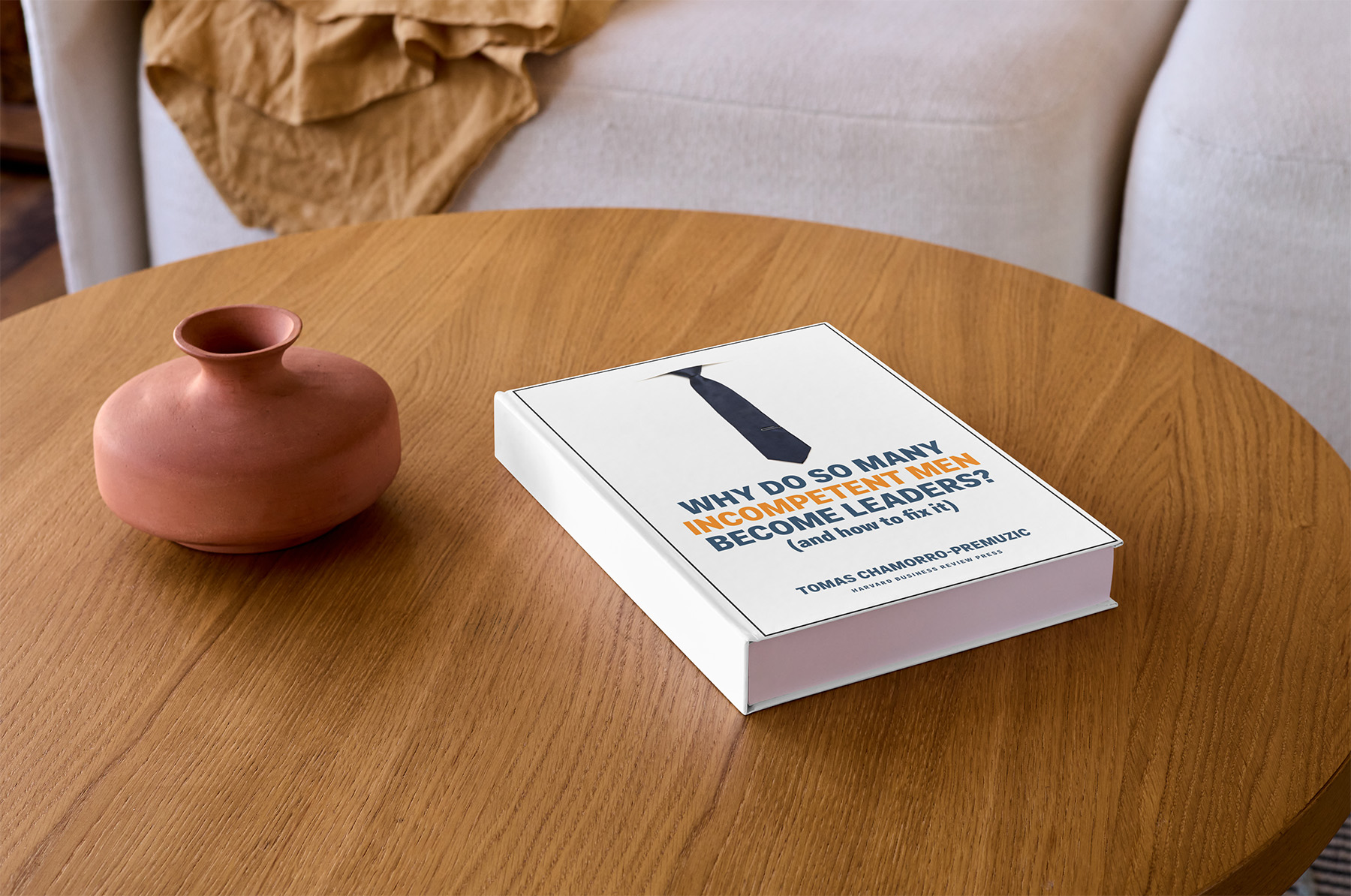
Sometimes the best way to tackle a complex problem is to come at it from another direction. Tomas Chamorro-Premuzic is an organisational psychologist, business professor and entrepreneur, and has been a consultant for the British Army. His expertise is in identifying and developing leaders. Instead of asking ‘How can we appoint more competent women as leaders?’, he explores the controversial idea of ‘How can we stop appointing incompetent men?’
The book discusses research that shows how men make up the majority of leaders but underperform compared with female leaders. Unfortunately, traits like overconfidence, charisma and narcissism can help people get recruited for leadership positions but then undermine their performance and team leadership. Arrogance rather than humility, loudness rather than wisdom is celebrated. People, especially emotionally-intelligent women who don’t meet the stereotype, are overlooked. It is a flawed system he asserts.
The author identifies the consequences including a widespread dissatisfaction with bosses such that 65% of Americans say they would prefer a change of boss than a pay rise! Women can be habitually ignored, or alternatively encouraged to be more like men in ways they may self-promote, confidently lean in and fake it till they make it. Organisations prefer charismatic heroes especially in times of crisis, though actually what they might actually need is someone more like Angela Merkel or Michelle Obama.
Among the implications, the book points towards broader and research-tested approaches to identifying leadership potential rather than just trusting intuition or flawed job interview systems, and leadership coaching systems that will best help people replace toxic habits with effective principles. Ultimately, we need to abandon criteria that fosters bad leadership.
This is best practice for women or men. The author debunks much of the accepted wisdom about gender differences but demonstrates that one key difference is that women demonstrate greater emotional intelligence (EQ) and associated capacity for self-control, empathy and transformational leadership. This is the best foundation for boosting employee engagement and driving positive change. It’s also key for being able to exercise self-control, perseverance and bounce back from setbacks – as demonstrated for example by self-aware and resilient heroes the author discusses, such as Sheryl Sandberg in Option B: Facing Adversity, Building Resilience, and Finding Joy.
The most effective leadership traits are not male nor female. Yet resilience and effectiveness in leadership does not stem from over-confidence and charisma, but from humility and self-awareness, integrity and competence – this is among the most important lessons of the book.
The book is mainly illustrated from the business and political worlds but the ideas are as relevant for Defence and its need for quality leadership development and human resource management including performance reporting. I am curious what the author brought to the British Army and what lessons from that context may be particularly relevant to ADF. The conscientization lessons and principles are also important for the Gender Peace and Security Mandate and the contribution of women to peace-making and international relations. It is valuable for leaders in the Profession of Arms to understand gender and how it influences them and their leadership, their teams and their adversaries.
If you don’t have time yet to read the book, see the original HBR article, the 10 minute TedX talk or the author’s website drtomas.com. Yet the whole book is worthwhile reading for leaders who are men or women. It is especially relevant for leaders wanting to bring out the best in their teams including valuing the differences of women and not overvaluing dysfunctional aspects of leadership whether exhibited by men or women.
Notes:
Publisher details: Tomas Chamorro-Premuzic, Why Do So Many Incompetent Men Become Leaders? (and how to fix it) (Boston, MS: Harvard Business Review Press, 2019)














Comments
Start the conversation by sharing your thoughts! Please login to comment. If you don't yet have an account registration is quick and easy.