Intercultural intelligence is a foundational skill for contemporary Defence leaders that helps foster a future-ready workforce. We need to express the central Defence value of respect in respecting the differences and contributions of people from different cultural backgrounds. This is important for teaming behaviours with culturally diverse teams in our workforce. It is also critically imperative for understanding allies and adversaries from different cultural backgrounds.
The church tribe I belong to and the denomination I used to work for, the Baptist Union of Victoria, have explored how we can be “Better Together”. Like many churches in the Western world, we desperately want to reorient ourselves to be more relevant to a changing society. As churches, we are increasingly understanding that our mission is to cooperate with God in helping bring the world more into line with God’s dream of justice and peace. But we are also coming to realise that any single local church, and any mono-cultural group, are unlikely to be able to face the challenge of this task on our own. We need one another. This is true of churches as supporting and learning from one another. But we also need one another with our diverse cultural and other different backgrounds.
A similar dynamic exists for organisations of other types. As people of different cultures work together, we need to understand and learn from one another. This is true of members within an organisation. It is also true beyond an organisation, as they partner with others to achieve shared strategic objectives. But what are the postures and behaviours of cultural intelligence and intercultural communication at their best? How do we foster intercultural community, and is this relevant among teams fostering national security and peaceful international relations?
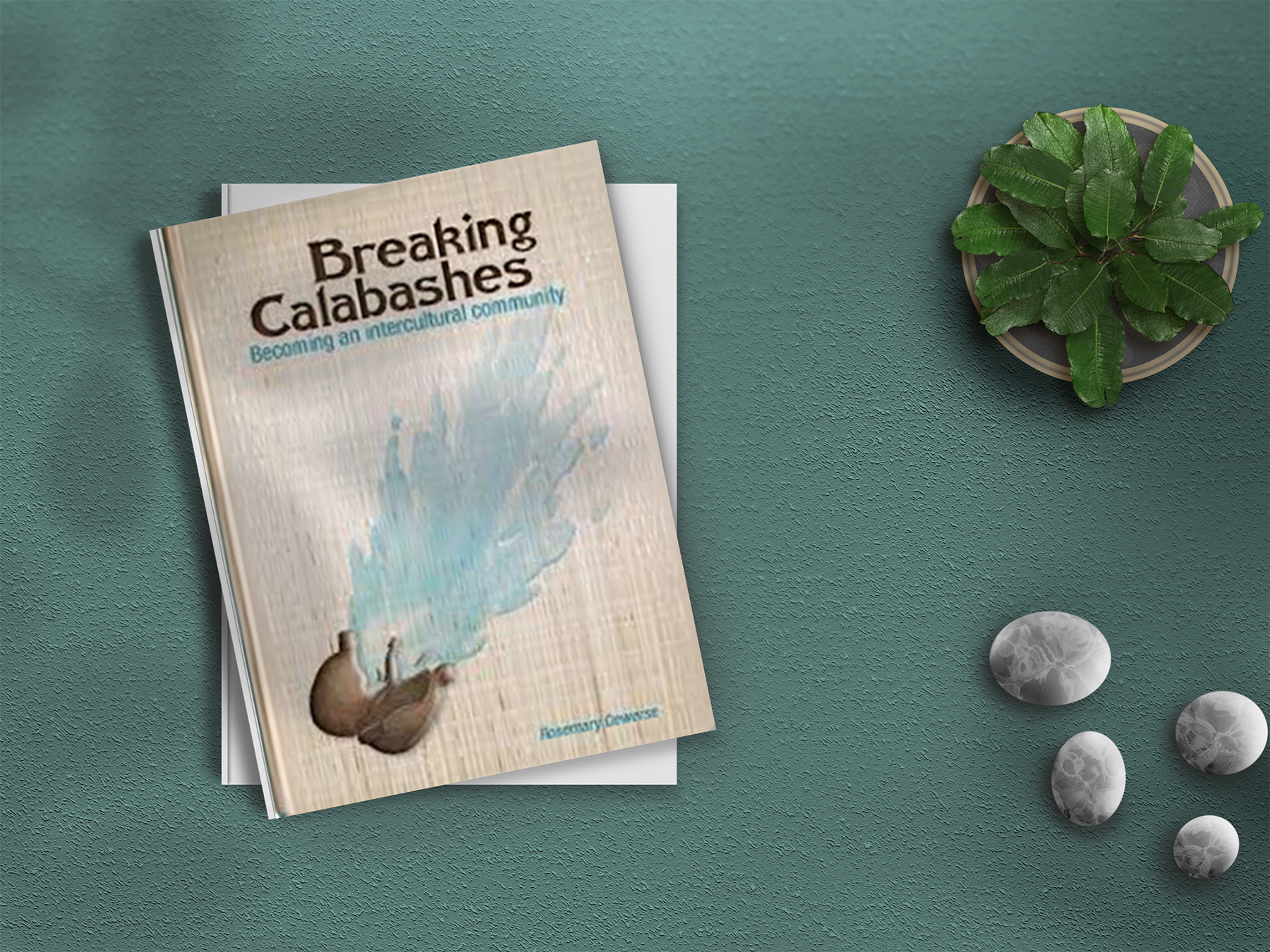
Rosemary Dewerse is a Kiwi, or Aotearoa New Zealander, who enjoys an ethnically diverse marriage and family. She has worked in intercultural contexts, including Central Asia and Maori communities. She wrote this book when she worked as Director of Missiology and Coordinator of Postgraduate Studies at Uniting College for Leadership and Theology in Adelaide. Dewerse has sought to identify the “calabashes” (a metaphor drawn from a Maori legend) that need breaking to form respectful, mutually enriching relationships with people who are culturally different. Her helpful method was to seek out and learn from teachers who epitomise the embrace of intercultural relationships, and 18 of whose voices find their way into the book.
The calabashes that she contends need breaking, and the suggested counter-behaviours, are:
Stereotypes are useful for understanding people.
Instead, we need to care for identity by asking with genuine interest, “Who are you?” and listening to people’s hybridity.
My voice is most worthy.
Actually, we need to listen to silenced voices, including women and people of other cultures, who Western speakers and academic processes sometimes dominate over.
Cultural ignorance is bliss.
We cannot pretend we live in a mono-cultural world, and so we need to nurture “epistemic ruptures”. We need to see with new eyes how other people see things.
- Our kind is better than your kind
Rather than keeping “them” at a distance from “us”, we need to personally engage with people of other cultures, and also boldly advocate for and uphold justice in our neighbourhoods and society.
The book offers a combination of principles and stories. It teaches practical actions for different leadership and decision-making approaches that invite and value the “other” rather than marginalising them. I especially appreciated the inspiring stories of transformation and conscientization; Dewerse illuminates the power of welcoming culturally different voices rather than the damage of marginalising them. She is a truth-teller who calls out intercultural bad behaviour and marginalisation for what they are. But she also models “mission-in-reverse” or being open to being converted and changed by people of other cultures we relate to (rather than just thinking we have the wisdom to teach “them”). This is challenging language for people of religious faith, including Christians. For Christians, intercultural witness is not about bringing Christ to people, but as an Italian American man explained, witness is “bringing your relationship with Christ into your relationship with another human being” (p.62) and mutually learning and respectfully being open to conversion from one another’s perspectives.
This same principle applies to intercultural learning in other contexts, including Defence. What can we learn from military personnel from other cultural backgrounds, whether Australian Defence Force members of diverse cultural backgrounds or foreign military personnel working alongside or visiting us?
For my work and leadership in churches, and now in my chaplaincy in the Army, I am convinced that one of the most important practices for fostering good teaming is hospitality toward strangers and people of different cultures, and, by extension, different traditions, genders, abilities, sexual orientations, and ages. This is a powerfully transformative practice, as one of Dewerse’s poems expresses (pp.62-63):
“To choose to listen
really listen
to the other we have silenced
and
to discover
two-way mission
will
I am realising
mess with theology
potentially
change our answers to
Who is God
and
What does it mean to be human?
open up
the possibility of conversion
redefine faithfulness
demand a commitment to
speaking the truth
and a commitment to
listening for it as well.”
Breaking Calabashes is one of the most beautifully written books I have read. It is not merely a field guide for intercultural communication, but a moving memoir of the author’s journey of belonging and learning from her intercultural experiences and the stories of other teachers she interviewed. I found it ideal reading for Christians who want to foster the richness of intercultural community in church contexts. It is also a rich resource for students of intercultural communication and/or Defence leaders who want to move beyond the rhetoric of multiculturalism to the reality of inclusion, learning from and welcoming the rich contribution of people from different backgrounds.
Notes
Publisher details: Unley, SA: Mediacom, 2013.
Earlier versions of this review were published in Journal of Missional Practice (2014) and then in The Cove - “Understanding Yourself and Others as a Leader” (2021).











Comments
Start the conversation by sharing your thoughts! Please login to comment. If you don't yet have an account registration is quick and easy.