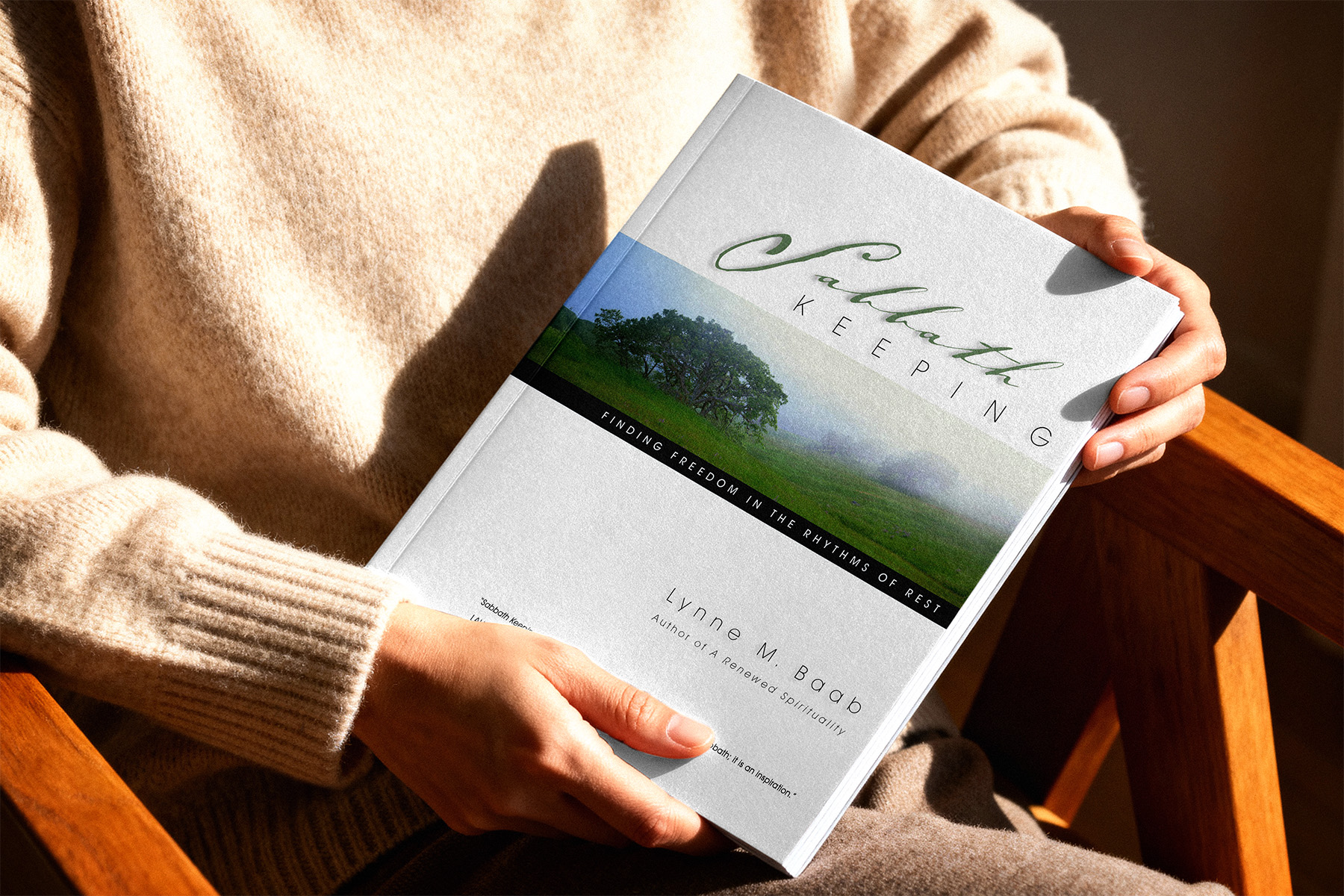
If you are looking for tools for resilience, among the best are good quality (and actually consistently practised) spiritual practices. Spiritual practices are often sourced from religious traditions but are not exclusive for people of personal faith. Faith may bring extra motivation or energy to them, but quality spiritual practices are helpful for people of any faith or none. Among different spiritual practices, one of the simplest, most life-giving and most effective for fostering resilience is Sabbath.
Sabbath reminds me that the world, as much as I might tend to be tempted to think otherwise, does not rely on me to keep it going. This is countercultural and subversive. Sabbath gracefully recalibrates away from the voices of my culture and family backgrounds that suggest I have to justify myself with 24/7 activity. For me as a Christian, Sabbath reminds me that God has made the world good and for me to enjoy, and that although work is a satisfying part of life, God does not expect me to be a slave to it all the time.
Every day we need sleep. Every week we need Sabbath. By extension, every year we also need holidays, and some of my most resilient colleagues remind me that every decade we need some kind of long-service leave or Sabbatical (with a helpful linguistic allusion to Sabbath in itself). Thankfully, I don’t have to wait till holidays or an extended Sabbatical to take a solid break – I can do that each week with Sabbath.
The author Lynne M Baab is a Presbyterian minister who I met back when she taught in New Zealand as lecturer in pastoral theology at the University of Otago. She has written extensively on resources for personal spirituality.
A highlight of her book on Sabbath keeping is Baab’s description of what she learned of Sabbath from living in the Middle East (Israel and Iran), where whole communities ceased activity and focused on rest and relationships – motivated by their (Jewish) religious faith. She explores the biblical background to Sabbath, presenting it as “one of God’s great gifts”. Baab explains that Sabbath is actually one of our rights as children of God, created and redeemed by a gracious God who does not require us to work to get God to love us more.
Whether or not readers find motivation for Sabbath from its religious roots in Judaism, Christianity, there are helpful principles in it for all of us. Sabbath Keeping is a practical book full of interesting suggestions from Baab’s life and from the people she has interviewed – outlining activities different people cease doing and the possibilities of what they focus on instead. There are insights for all different sorts of people – Baab herself reflects on her practice of Sabbath as a vocational minister, a student, a stay-at-home Mum and as a professional writer working at home. She interviewed people at all different stages of life who offered their insights into keeping the Sabbath. For example, Carl, a man in his sixties, commented, “What do I cease from on the Sabbath? All that keeps me from reflection, wonder, finding joy in God, finding joy in God’s creation, and finding joy in his people” (p.67). Baab is careful to warn against adopting all her suggestions, but to select a few and experiment to see what is helpful and life-giving.
For example, the book inspired me when I first read it over a decade ago to experiment with Sabbath:
- Follows the Jewish timing from sundown Friday to sundown Saturday (a full 24 hours, but with space Saturday night to get ready for Sunday ministry, which was among the busiest days of my work week when I was in church ministry).
- Begins together as a family with a candle and examen prayer, and giving pocket money to the kids as part of the celebration.
- Have the computer, phone and other technology been switched off?
- Avoids shopping and activities that foster hurry, stress, anxiety or compulsiveness
- Prioritise relationships and activities that foster peace, delight, enjoyment, re-creation and contentment.
- Combines, to different degrees in different weeks, playfulness and prayerfulness.
- Is especially attentive in relationships with my family and friends.
This has been a practice of conversion for me, and I returned to the thoughts of the book recently as I realised I needed a recalibration of effort (or actually a reminder of permission-giving) back in these directions.
The Sabbath is not helpful as a legalistic list of rules to which we slavishly conform, but as a loving invitation to more life-giving rhythms. It is almost a “one-size-fits-all” prescription as a balanced, life-giving, renewing rhythm for our weeks.
Sabbath-Keeping is a helpful book that offers Scriptural foundations from Jewish and Christian traditions, but also practical suggestions of how to practice Sabbath in life-giving ways. It is highly recommended for natural relaxers and strivers alike.
Notes
The book’s publisher details are Lynne M Baab, Sabbath Keeping: Finding Freedom in the Rhythms of Rest (Downers Grove: IVP, 2005). This review draws on a previously published review in Zadok Perspectives 115 (Winter 2012), 22-23.







Comments
Start the conversation by sharing your thoughts! Please login to comment. If you don't yet have an account registration is quick and easy.