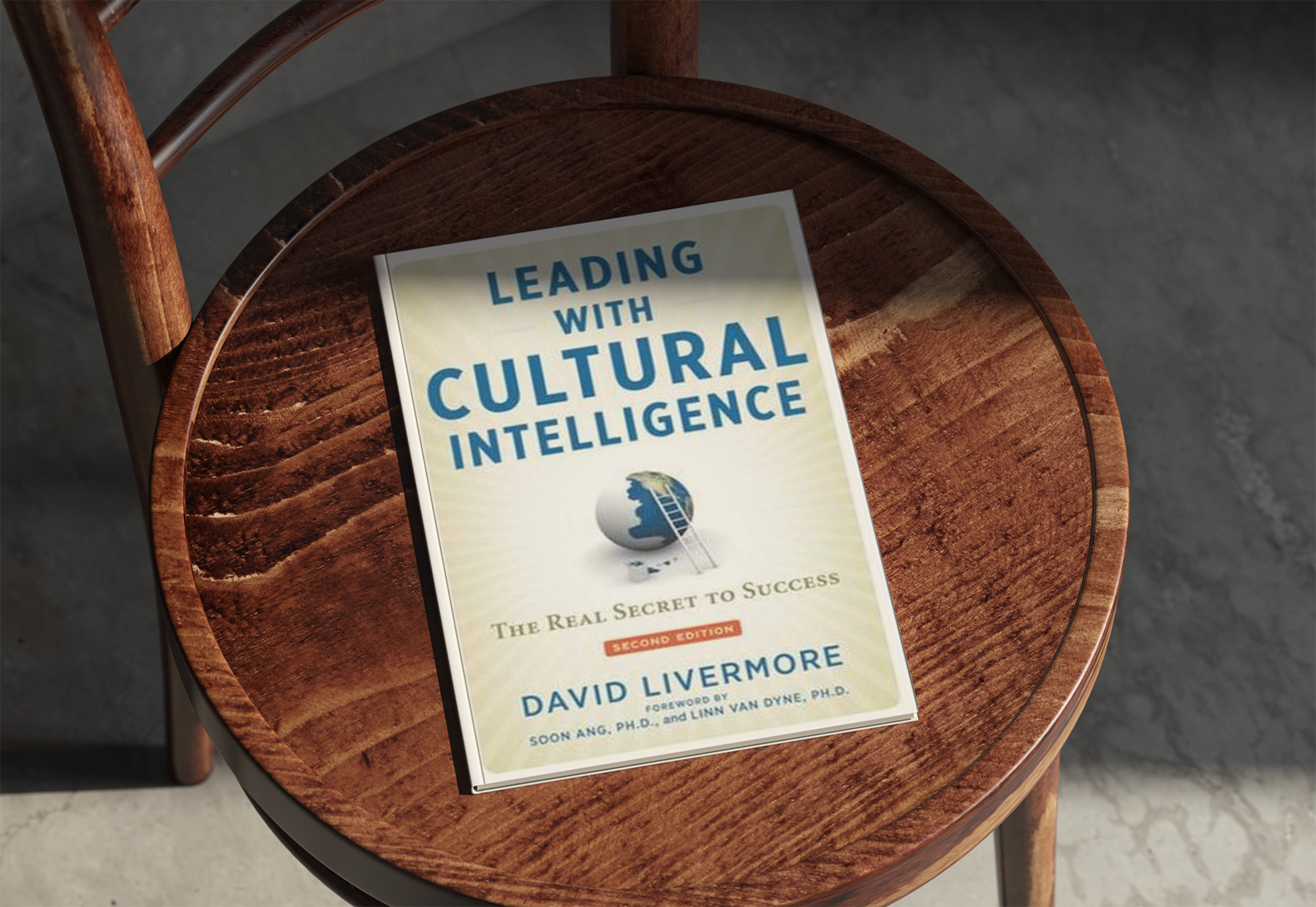
Businesses are giving priority to fostering cultural intelligence (CQ) for the sake of opening new markets, making good decisions with international partners and helping multicultural teams flourish. At the bottom line, cultural mistakes are costly and are the main cause for the 70% failure rate for international ventures. Yet I was drawn to this book as a church leader, since for church leaders the costs of cultural insensitivity include lack of adjustment for cross-cultural workers, miscommunication, and relational breakdown in cross-cultural teams. It also has relevance for those involved in peace-building and humanitarian work, and military leaders, since the challenges of maintaining peace and fostering community resilience often depend on thorough cultural understanding. What, therefore, can military or other leaders learn from the business literature on CQ?
A foundational writer on CQ is David Livermore, who has taught and consulted on this in over 100 countries. His seminal volume Leading with Cultural Intelligence has been recently updated. CQ is not about merely memorising a list of dos and don’ts, but about a posture of willingness to adapt to different cultural systems. Livermore details a four-part model for thriving across cultures:
- Drive. Having the motivation and confidence for interacting with other cultures.
- Knowledge. Understanding how differences in spheres such as economics (capitalist vs socialist), families (kinship vs nuclear), education (formal vs informal), religion (rational vs mystical) and values (especially individualism vs collectivism but also power distance, uncertainty avoidance, cooperatives vs competitiveness, short vs long term, direct vs indirect communication, and neutral vs affective emotional expression) influence how people think and respond.
- Strategy. Planning ahead for unfamiliar settings – not just trusting your gut but adjusting to be understood appropriately.
- Action. Adapting verbal and nonverbal behaviours.
With examples and case studies, Livermore leads the reader through dilemmas with eating, negotiation, partnerships, team building, conflict and fact-finding in intercultural contexts. Livermore spreads wisdom and practical experience throughout the book, with stories of his own and others cultural successes and mistakes. But most importantly there is an underlying ethos of respect an appreciation for different cultures and their perspectives: “We have to move beyond artificial approaches in which we pretend to be respectful and move toward becoming leaders who genuinely respect and value people from different cultural backgrounds.” (p.39)
I especially appreciated the snippets of advice scattered through the book such as how to ask for help, what different cultural groups prioritise, and knowing when to adapt or not. For example, this is Livermore’s advice for adapting communication to an audience who are not native speakers of your language:
- Slow down. Slow down. Slow down. Sllllllloooooowwwwww d o w n.
- Use clear, slow speech. Enunciate clearly.
- Avoid colloquial expressions and idioms.
- Repeat important points using different words to explain the same thing.
- Avoid long, compound sentences.
- Use visual representations (pictures, tables, graphs, etc.) to support what is being said.
- Mix presentations with a balance of story and principles.
- Hand out written summaries.
- Pause more frequently. …
- Create questions and activities that will reveal the level of understanding. (p.168-9)
The book is thus useful for anyone working with people of different national and ethnic cultures, but also different generations and organisational cultures. For example, one of the most insightful case studies is Simon who left his role as a successful CEO to be President of a liberal arts college. He offered contagious leadership and strategic decision-making. But his new staff and especially faculty did not trust his corporate language and what some saw as overenthusiastic salesmanship. His Asian cultural background was no problem, but he seemed unable to adapt to a new academic culture.
Livermore describes Leading with Cultural Intelligence as a field guide for developing cultural intelligence in yourself and those you work with. It is highly recommended for anyone seeking to understand and work with different cultures – internationally or at home – including church leaders, community development workers and military officers preparing for international deployment.
Notes:
The publisher details of the book are David Livermore, Leading with Cultural Intelligence: The Real Secret of Success (New York: Amacon, 2015).
Earlier versions of this review were originally published in Mission Studies 34:1 (2017), 131-132, and then in The Cove “Understanding Yourself and Others as a leader” (2021).














Comments
Start the conversation by sharing your thoughts! Please login to comment. If you don't yet have an account registration is quick and easy.