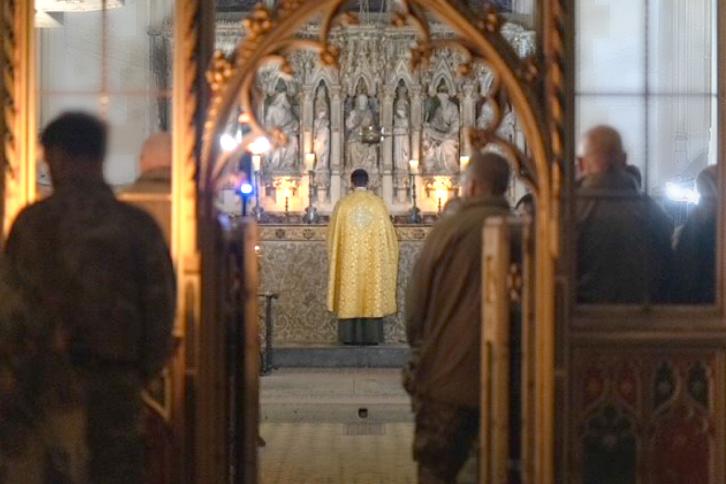
In a dimly lit church in Eastern England, the priest’s voice resonates with harmonious prayer chants, answered by the cantor in kind. This ancient church, steeped in history and adorned with intricate sculptures and stained glass windows, is filled with flickering prayer candles and a group of Ukrainian soldiers. Taking a break from their training, they gather to pray and receive ministry before heading back to the front lines in the coming days. With heads bowed, the soldiers cross themselves throughout the service, engaging in the familiar rituals of worship from their homeland, even in this foreign place. For a brief moment, they immerse themselves in prayer, feeling a sense of calm wash over them. They share quiet conversations with friends and pray for their loved ones, experiencing a fleeting sense of ease amidst the chaos of military life. In this sacred space, they let their guard down and find a moment of freedom.
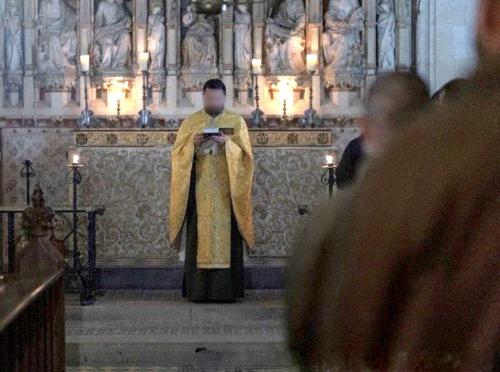
Chaplain Mykhailo, who presides over the prayer service, comes from a family of devoted Ukrainian patriots. His family is fiercely committed to their country and works tirelessly to achieve their life’s purpose. Following in his father’s footsteps, Mykhailo became a Ukrainian Orthodox priest, drawn to ministering to soldiers on the front lines—not by chance, but as a true calling.
In 2014, when Russia temporarily occupied Crimea, Mykhailo began serving the community and the soldiers fighting in the war as a student. At that time, there were no official chaplain positions, so his father volunteered as a priest, ministering to the troops and relocating to eastern Ukraine to support soldiers there. Each time Mykhailo’s father returned from the battlefield, he shared stories of what he had witnessed and the needs he encountered. They discussed the front lines, the challenges faced by the soldiers, and the power of prayer, all of which Mykhailo began to see in a new light. Through these conversations, he developed a profound understanding of the importance of chaplaincy in the military. He describes this period as the moment he recognised his purpose: to become a military chaplain. From that point on, everything he did was focused on preparing himself for that role.
Mykhailo attended a military academy and studied theology, ultimately becoming a chaplain in the military. It was a long journey to reach this point—by 2022, chaplaincy had been established as a permanent role in the Ukrainian military, transforming chaplains from volunteers into fully integrated military personnel. Initially, Mykhailo had planned to join the military, serve for a few years, progress to an officer rank, and then serve on the front lines before returning home to become a priest. However, when the opportunity arose for him to step directly into chaplaincy, he seized it as a chance to move closer to his purpose. Interestingly, his father took a similar path, following in Mykhailo’s footsteps and while Mykhailo is now a captain, his dad is at the rank of lieutenant.
Faith serves as the foundation of Mykhailo’s life and underpins all his work. In his ministry, he encounters a wide range of spiritual needs among Ukrainian soldiers, whether they are Orthodox or of a different faith. Spiritual conversations are frequent, and many soldiers come with questions, often requesting prayers for their families, comrades, friends, and themselves. Over cups of tea, Mykhailo engages in casual conversations with the soldiers. Some seek answers to burning questions, whilst others seek confession, and Mykhailo has even had the honour of baptising a soldier right on the front lines, after the soldier expressed the desire to do so. While he meets many who do not believe in God, they often approach him with curiosity and a willingness to engage in conversation. There are also those who once identified as religious but have drifted away from their faith, they also speak with him and ask him questions. Once the soldiers realise that he is not there to impose beliefs on them, they feel comfortable joining in regular conversation. Sometimes, they simply need answers to their questions, a different person to talk to, or just simply to be around a person who is there to support them and care for them. Even those who claim not to believe will join him for tea, and by the end of their time together, many find themselves participating in prayer.
Recognising that soldiers face significant trauma and challenges in their roles, Mykhailo provides vital support. He believes that the Holy Bible offers the answers they seek. He reminds them that while God presents challenges, He also provides solutions. Mykhailos' support does not stop at the spiritual; however, physical support is also essential. The needs of the soldiers’ families are paramount in the soldiers' minds and worry about issues at home can consume them. As a chaplain, Mykhailo acts as a “holy linkman,” as he calls it, asking them about their families and the problems they face, then connecting them with resources and support in their respective areas. Other individuals often step in to assist the families back home as well, coordinated and put in place through the Chaplain. Mykhailo emphasises ‘our strength lies in unity; we are strongest when we come together.’
It is important to remember that a chaplain is not immune to the stress and fatigue of being in a war zone. Mykhailo openly acknowledges his feelings of fear when he hears the sounds of artillery, missiles, and bombs. However, it is his faith that anchors him and helps him weather any difficulty. “I pray in those moments,” Mykhailo says, “and I am reminded of the limitless nature of God. While humans have their limitations, God does not.” This simple truth comforts him, and through his own experiences, he is able to share with the soldiers he ministers to about the solace found in God.
The work of a chaplain can be incredibly taxing, but Mykhailo sustains himself by continuing to read the Bible, where he finds many answers to his questions. God's word provides him with the strength he needs, but he also draws inspiration from his family. Mykhailo’s wife and children remind him of his purpose and the reasons behind his work. Mykhailo passionately asserts, “I fight for freedom and independence. When I look at my children, I want them to grow up in an independent Ukraine, filled with liberty and freedom. This aspiration drives my purpose.” But of course, he also finds empowerment in his comrades, soldiers, and friends. They go to the front lines, share their experiences with him, and he feels honoured to be a part of their lives. Each soldier has their own family and purpose, and Mykhailo takes pride in being able to support them.
If we abandon our morality, we become no better than animals that act purely on instinct, devoid of compassion and care. Morality is a fascinating quality that is unique to humankind. However, in war, soldiers are often asked to do things that stretch the very laws of morality—those laws that dwell within us. They face harrowing decisions that challenge their ethical boundaries and force them to confront the darker aspects of human nature. In such circumstances, the struggle to maintain a moral compass becomes even more critical as they navigate the complexities of duty, survival, and the preservation of their humanity amid chaos.
For those coming from the frontline, including Mykhailo himself, it often feels as though the enemy is devoid of humanity and that same moral compass that exists within the Ukrainian soldiers. Mykhailo articulates this confusion, stating, “Our enemy does not behave like human beings; they do not adhere to the expected conventions we are accustomed to.” Mykhailo firmly believes that Ukrainians possess an inherent boundary, a way of being that reflects their humanity and embodies their values. In his efforts to help Ukrainian soldiers stay focused amidst the moral dilemmas and maintain who they are, he encourages them to concentrate on their tasks and responsibilities and to communicate openly. Keeping the harsh realities they encounter bottled up inside is a sure way to allow evil to take root within them. Therefore, he urges them to unburden themselves, share their experiences, pray, and support one another. Mykhailo reminds them of their purpose, their families, and he reminds them of their children, and finally, he points them towards the teachings of the Holy Bible. Mykhailo firmly believes that Ukrainians possess an inherent boundary, a way of being that reflects their humanity and embodies their values.
Mykhailo’s support fosters the Ukrainian Soldiers' spiritual resilience, a resilience that is not simply about surviving. As noted in “Spiritual Resilience in a Time of Total War” by Rostyslav Vysochan, “Spiritual resilience is about remaining human, even when everything around you pushes toward despair.” Vysochan notes further that the Ukrainian sense of spiritual resilience is deeply rooted in their Kyivan Rus heritage in 988, ‘through centuries of occupation, repression, and the long years of Soviet atheism, the Church, the family, and the soul of the people carried something indestructible: the conviction that faith and freedom belong together.’2
Mykhailo believes that despite the cruelty of the enemy and the harsh realities of war, Ukrainians understand they are on the right side, fighting against evil. They are defending their nation, their land, and their people.
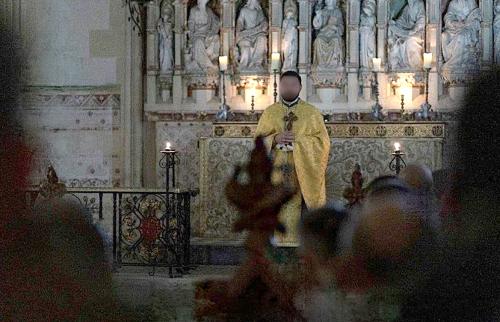
One special story that Mykhailo shared was about a particular position where he knew the soldiers were having an especially tough time. He prepared himself to share some amazing stories of miracles he had heard from elsewhere to encourage them. However, the situation took an unexpected turn when the soldiers began recounting the miracles they had witnessed and experienced themselves.
The enemy had attempted to burn their positions, starting a fire, but then it rained for about 10-15 minutes, preventing the fire from taking hold. They also tried to poison the soldiers with chemicals, and one soldier found himself without a gas mask. Fortunately, a previous call sign had been in that position and had left behind a gas mask, saving everyone. Despite the challenges they faced, they managed to withdraw without a single loss. There were numerous stories of these small miracles and how they escaped from seemingly impossible situations.
As wars continue to rage the world over, the unwavering presence of chaplains in the armed forces, like Chaplain Mykhailo, serves as a beacon of strength and hope. With a commitment to nurturing the spiritual resilience of soldiers, encouraging them to confront their fears, share their burdens, and to remain anchored in their humanity, profoundly impacts those who serve on the front lines. In a world fraught with despair, chaplains remind us that even in the darkest moments, faith can illuminate the path forward. Ultimately, it is this intertwining of spirituality and duty, embodied in the stories of miraculous survival and steadfast purpose, that reinforces the belief that Ukrainians will emerge from this struggle not only as defenders of their homeland but as bearers of a profound moral legacy. In the face of adversity, Mykhailo’s dedication exemplifies the enduring spirit of a nation united by faith, family, and an unwavering commitment to freedom, and Mykhailo does truly serve as a light in the darkness.
Defence Mastery
Social Mastery

Sarah Petchell is an Australian Army Chaplain, dedicated to providing spiritual and emotional support to service members and their families. She holds a Bachelor of Contemporary Ministry from Alphacrucis and an Ordained Ministers Credential with the Australian Christian Churches. Sarah is committed to promoting mental and spiritual health and well-being support in the Military.
Chaplaincy in the Ukraine War: A Light amidst the Darkness © 2026 by . This work is licensed under CC BY-NC-ND



Please let us know if you have discovered an issue with the content on this page.
Comments
Start the conversation by sharing your thoughts! Please login to comment. If you don't yet have an account registration is quick and easy.