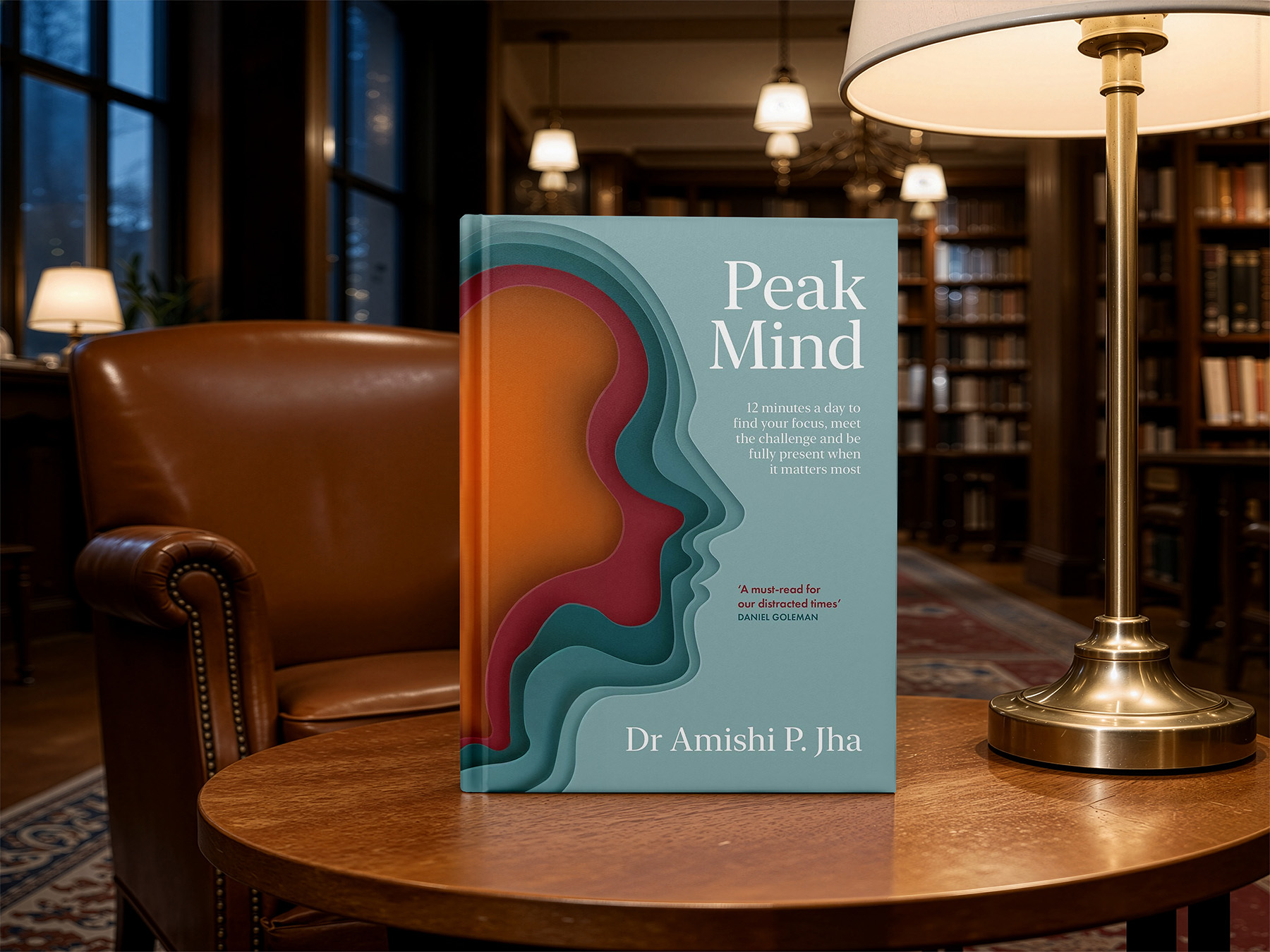
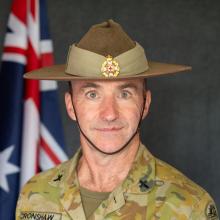
We work together at 6RAR – as a unit support chaplain and a Sergeant for Pegasus Platoon. As such we are both keenly interested in what fosters resilience for individuals and the teams we work with and support. We have enjoyed learning from one another – Darren joining Pete’s yoga classes he offers for Pegasus Platoon and others in the unit, and Pete exploring faith and spirituality with Darren as Padre. We are also learning together from books on yoga and breathing, resilience and mindfulness. One of the best books we have started learning from and sought to apply for the Battalion’s resilience is Peak Mind.
Dr Amishi Jha is Professor of Psychology at the University of Miami. She is Director of Contemplative Neuroscience for the Mindfulness Research and Practice Initiative which she co-founded in 2010. She has contributed professionally to the World Economic Forum, NATO and The Pentagon and so evidently is recognised as someone who has value to offer the military. Her Ted Talk “How to Tame Your Wandering Mind” is an 18 minute introduction to the capacity of our minds. What is interesting is she had an aversion of Eastern perspectives because of family upbringing. She was a sceptic of meditative and contemplative practices. But studying neuroscience and especially attention which showed her how vulnerable the human mind is to being preoccupied and distracted.
The key idea of Peak Mind is that attention is your superpower. We miss 50% or more of our life if we are not paying attention. Vulnerabilities and unbridled distractions or especially stress, poor mood and threats are sneakily kryptonite for attention. Depleted, hijacked, fragmented or disconnected attention can leave us feeling foggy and even irritable. Mental mind travel takes us away from the present task in front of us. The good news, despite a wildly chaotic and distracting world where attention is fragile, is that we can train our attention and find our focus where we need it. Jha urges us to live powerfully in the “here and now” and to stop “biased thinking” that affects clarity. She offers scientific background for the power of attentiveness but also practical core training for our brains to transform how our minds function and focus.
This training has obvious value for something we are eager to develop in ourselves and in the soldiers we support: resilience. But Dr Jha describes what she is especially interested in developing is “pre-silience”. If resilience is about how we bounce back from adversity, then Jha’s concept of presilience as training our minds to “maintain our capacities even as we are experiencing challenge”.
This book addresses a pandemic we have seen in the inability for people to pay attention. Soldiers’ ability to pay attention for even a small amounts of time is significantly compromised with adverse affects for capability. The reasons may be wide and varied including the rampant use of devices such as watches speaking to us consistently, and even energy drinks and other things that drive consumption. Our attentional capacity is diminished. Thus the importance of Peak Mind. It’s advantage is that it is written with a neuroscientist with military insights – not just mystical perspectives with no scientific tangibles. The book also brings the skills and postures of mindfulness to the level of practical use with five core meditation practices to improve attention.
We like how Lieutenant General Walter (Walt) Piatt commented: “Mindfulness training gave our soldiers push-ups for the mind”. The beauty of the training is all it takes is utilising our mind, body and breath – in order to strengthen our capacity for attention.
Mindfulness is essential to increase our attention span and assist us in paying attention to the present moment, on purpose, non-judgmentally. You cannot learn what you cannot pay attention to. You also cannot help others if you are not paying attention to them. Thus this is important for mental health but also good soldiering and leadership.
Peak Mind is highly relevant for soldiers and commanders at any level – relevant for our work but also for the sake of our broader mental and relational health.










Comments
Start the conversation by sharing your thoughts! Please login to comment. If you don't yet have an account registration is quick and easy.