Christopher Nolan’s 2026 film “The Odyssey” is the latest screen adaptation of Homer’s epic mythical story of Odysseus. In the film, Matt Damon plays the character of Odysseus, the legendary Greek King of Ithaca. The saga narrates the battles of returning home after the fall of Troy. Avoiding gods and monsters, losing his men, his memory and his boat, he finally makes it home to his family on their island.
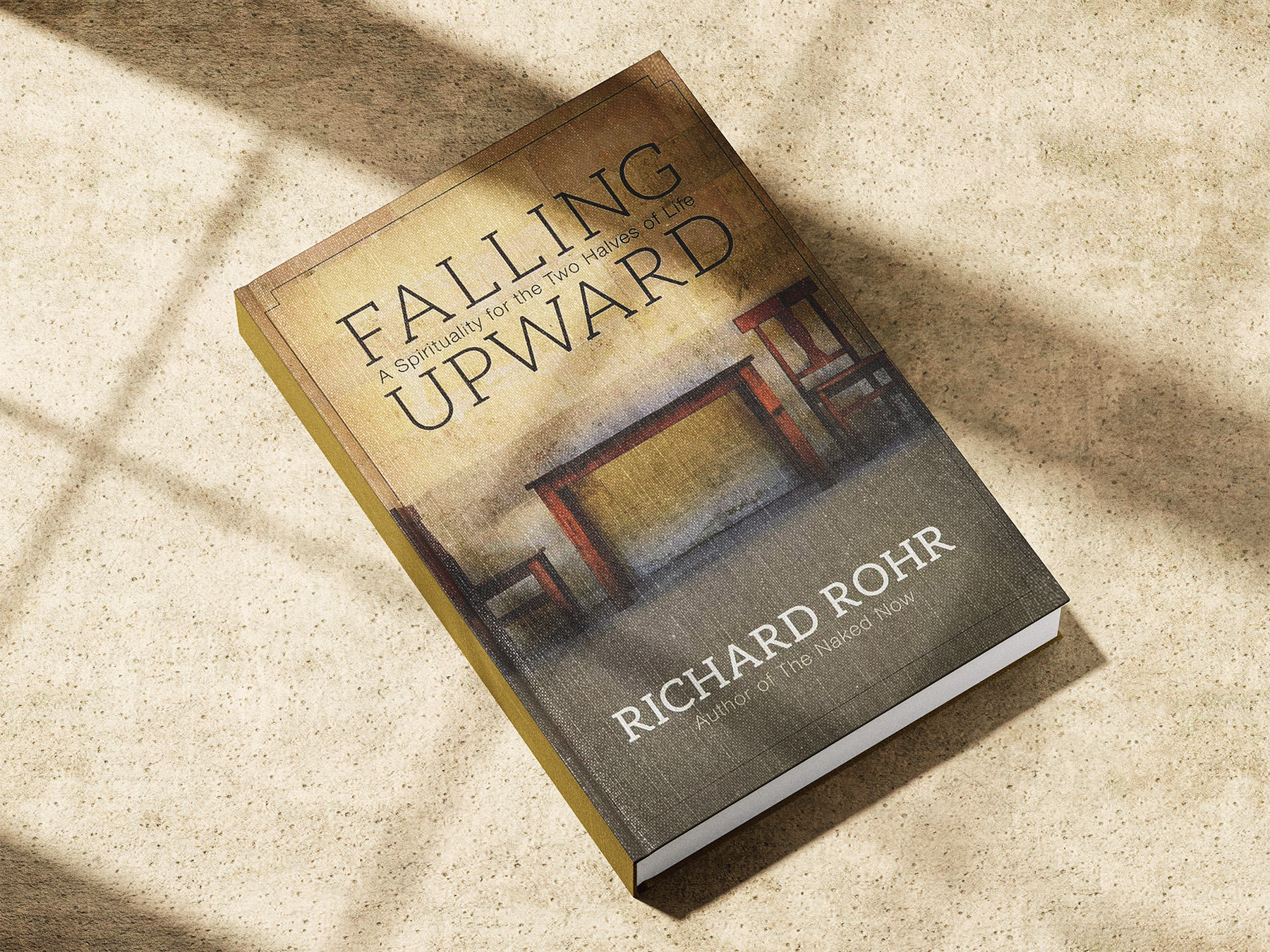
This is where the film ends, but for Richard Rohr the story of Odysseus is not just to entertain, but to help guide and give meaning to our journey or “odyssey” through two halves of life. As Rohr explains in Falling Upwards, Homer’s original writings describe how significantly Odysseus is called on a second journey. The full journey of life involves something more than an adventure, which is followed by settling down into traditional expectations.
Rohr summarises Homer’s tale of how Odysseus carries a boat oar and treks across the mainland. He finds people who know nothing of the sea or boats, and so, the locals think of his oar as a winnowing shovel. Odysseus planned to return home and die peacefully as an old man. However, he plants the oar and leaves it there. What had been so significant to him he had to leave behind. Rohr reflects:
Turning 55 soon, I’ve been reflecting on my first half of life and dreaming of the next. Rereading Rohr’s revised and updated Falling after 15 years, I find it an invaluable guide for midlife transition—helping those of us navigating this stage and younger readers preparing for it. Rohr contrasts the first half’s drive to establish ourselves (career, family, security) with the second half’s invitation to embrace frailty through unavoidable failures and disappointments. He reframes these “falls” not as downfalls but as “falling upward”—a positive reorientation toward deeper meaning. At different points in our life, we are invited to respond to the question, as Rohr quotes Mary Oliver, “What is it you plan to do with your one wild and precious life?” (p.1).
In the first half of life (however many years that takes), Rohr explains we seek to build what makes us significant, work out how we will support ourselves and who will go with us; in the second half we want to take more time for pure friendship, appreciating beauty, communing with nature. It takes courage and imagination to confront the shadows in our life and to take the journey of falling upwards.
The well-known AMEX card promotion line is “Don’t leave home without it”, but spiritual pilgrimage advice is “Leave home to find it” (p.85). Rohr suggests that to find ourselves, and to move into the best of what our second half of life offers, we have to be prepared to leave what is familiar: “Many just fall in love with their first place and position, as an extension of themselves, and spend their whole life building a white picket fence around it” (p.46). Leaving home is not necessarily geographical but it is being prepared to leave the familiar behind and stretch outside of our comfort zones.
Falling Upwards offers sage advice for navigating vocational and relationship adjustments.
Reading and rereading it helped me identify ways in which I have been drawn to plant and leave the oar I had used to steer and drive my vocational life and pursue new directions. It offers valuable guidance to face and process situations I could not control, change or understand – including unfulfilled vocational dreams and relationships that have not delivered what I expected. It has helped me confront the shadows in my life and to take the journey of falling upwards. Ultimately, as I am still learning, this is about leaving the familiar behind and stretching outside my comfort zones; and identifying and pursuing the plan for my “one wild and precious life”, both in my work but in far more than that.
Rohr is the founder of the Centre for Action and Contemplation (CAC) and maintains the most important word in that title is “and” – to hold inner and outer engagement or the activist and contemplative sides of life together in balance. Falling Upwards profoundly invites contemplation about what drives our activism and where it is best focused as go mature through life. It is an unapologetically spiritual book but relevant for people of any faith or none while they navigate the two halves of life.
Publisher details: Richard Rohr, Falling Upwards: A Spirituality for the Two Halves of Life (San Francisco: Jossey-Bass, 2011) ISBN 978-0-470-907757-7 Hardback, xxxvii, 199 pages.
For more of Rohr listen to his CAC podcasts.
This reflective review draws on an earlier review in Crucible Theology & Ministry, Vol3: No2 (September 2011).






Comments
Start the conversation by sharing your thoughts! Please login to comment. If you don't yet have an account registration is quick and easy.