This article is available as an audiobook.


Introduction
Part of the difficulty with researching memes is that there is no universally accepted definition of what a meme is. Many research papers, including this one, will begin by acknowledging that the term meme was coined in 1976 by Richard Dawkins in his book “The Selfish Gene”. Dawkins took the Greek word for imitation, ‘Mimeme’, and modified it to rhyme with ‘gene’ which he used as an analogy for how memes replicate. Dawkins used the term meme to describe a type of replicator that works within the domain of human culture, propagating itself by spreading from one brain to another. He defined meme as a “unit of cultural transmission, or a unit of imitation.”[1] Dawkins proposed that memes can be ideas, clothes, fashion, music, ideas, catch-phrases or ways of doing things like baking bread or building a house. Dawkins drew on his analogy for ‘gene complexes’ which are made up of different size genetic units, to propose the idea of ‘meme complexes’ which are made up of different sized memes. For example, a song might be a meme, but if a smaller part of that song can be abstracted and be distinctive and memorable by itself, it could also be described as a meme. A religion could also be thought of as a meme complex, comprising many smaller memes such as the ideas of God, or hell.
This research paper will examine the extent to which memetic warfare is applicable to the Australian Defence Force (ADF). The study of military memetics reaches as far back as 1996 and possibly earlier; however, a review of existing literature was unable to yield any papers specifically considering the role of memetic warfare in the context of the ADF. As potentially the first ADF-specific research on memetics, this paper will provide a comprehensive history of military memetics and seek to prompt future ADF discussion and research in this field. Historical military memetics research has offered bold proposals such as the creation of meme warfare units within organisations such as the United States military, none of which have come to fruition. This paper will highlight that memetics is not a panacea to warfare in the Information Domain, but could serve as a useful framework for approaching the narrative and cognitive aspects of Information warfare. Future ADF research in memetics should be pragmatic and not fall into the same faddish traps that military memetics has succumbed to in the past.
In terms of research methodology, this paper will utilise case study analysis to identify the applicability of memetic warfare to the ADF.[2] This method has been chosen as there is no universally accepted definition or theory of memetics, which makes quantitative research methods difficult. Case study analysis allows a flexible and pragmatic approach to be taken when assessing the applicability of the ill-defined field of memetic warfare to the ADF. An ‘inclusive’ definition of memes will be utilised for the case study, whereby meme can be taken as any type of information that can be copied through imitation as a meme.[3]
The case study chosen is the current conflict between Ukraine and Russia arising from Russia’s invasion of Ukraine in 2022. The case study demonstrates that memetic warfare is an active component in a contemporary conflict and will almost certainly be a component in a future Indo-Pacific conflict. Of particular note in the Russia-Ukraine conflict is the significance of the civilian online resistance movement, the North Atlantic Fellas Organisation (NAFO), with their primary utility being in countering Russian disinformation. The ADF must consider how it will interact with online civic resistance organisations such as NAFO, and what role, if any, the ADF chooses to participate in the memetic warfare component of future conflict. This paper will highlight that ‘higher level’ memes may have played a role in Putin’s decision to invade Ukraine, and it would therefore be useful for the ADF to understand what kind of memes exist within ADF decision-makers and what memes about the ADF exist in the minds of those outside the ADF.
Memetics History and Frameworks
The formal study of memes is referred to as memetics which is defined as “the theoretical and empirical science that studies the replication, spread and evolution of memes.”[4] Whilst Dawkins may have coined the term meme, others have proposed different terms to describe cultural units that replicate. For example, ‘culturgen’, ‘symbol’, ‘culture-type’, ‘theme’ and ‘mnemon’ have all been put forward, although the precise meaning of those terms is debated.[5] The term meme has been used to describe world views, traditions, phrases of music, economic systems, phenotypic traits, self-awareness, neural structures and cultural artefacts.[6] To add to the confusion, some believe that memes control behaviour, whilst others believe that memes are acquired through choice.[7] The confusion in definition and scope is not unsurprising given the span of academic disciplines that have equities in the meme concept. For example, memetics spans disciplines including but not limited to Psychology, Anthropology, Behavioural Studies, Neuroscience, Computer Science, Philosophy, Archaeology, Biology, Marketing and Systems engineering, each with their own language and frameworks.[8] The inability to develop a precise definition that enables memes to be recognised and measured has resulted in a lack of empirical studies in the field of memetics. The lack of empirical studies has, in turn, resulted in memetics never attracting the kind of funding from most governments and universities that are enjoyed by established sciences.[9] This has also likely contributed to the perception of memes by some as a ‘pseudoscience’. Despite the confusion in definitions and the resultant impact on memetics as a discipline, most definitions of meme agree that “a meme is a unit (whatever that means) of cultural transmission/information (whatever that means), where culture may be defined as the total pattern of behaviour (and its products) of a population of agents, embodied in thought, behaviour, and artifacts, and dependent upon the capacity for learning and transmitting knowledge to succeeding generations.”[10]
In popular culture, the term meme has a different meaning than what is used within academic discourse on memetics. In the age of the internet, the term ‘internet meme’ or just ‘meme’ is commonly understood to describe “catchy and widely propagated ideas or phenomena.”[11] Even more specifically, most internet-memers would understand a meme as “an idea, expression or opinion captured in text or visual material, such as a photo, video or GIF file, mostly accompanied by text or sound, which is copied and distributed online.”[12] The popular understanding of meme tends to bundle both the ‘idea’ and ‘carrier’ under the same term. An important distinction between the academic understanding of memetics and the popular understanding of memes is the longevity of memes. Popular culture would not assign a level of longevity to memes compared to those studying memetics.[13] For example, the recent performance of Australian Olympian Raygun at the 2024 Olympics became a highly popular internet meme, but the longevity of that meme would not be expected to compare to a meme complex such as a religion if you were to adopt Dawkins’ view of memetics.
Despite the conjecture over definitions, broadly speaking there are three main categories within memetics, mentalist-driven memetics, behavioural driven memetics and inclusive approaches. In mentalist-driven memetics the distinction is made between a meme and a ‘meme vehicle’.[14] The meme itself is the complex idea or information stored within our brain, similar to how a computer stores information. The meme is then ‘loaded’ onto a vehicle such as an image, ritual, text, speech or other artifact which is the tangible or observable expression of the meme.[15] In behavioural-driven memetics, memes are viewed as artifacts and behaviours instead of ideas. In this conceptualisation, there is no distinction between the meme and the meme vehicle. That is, the meme does not exist outside of its observable manifestation. This definition allows for the empirical study of memes.[16] A third category is an inclusive approach which essentially classifies any type of information that can be copied through imitation as a meme. Under this approach, a meme could be music, ideas, brain structures that initiate ideas, behaviours that those brain structures produce and so on.[17]
| Inoculate | Infect | Treat | |
|---|---|---|---|
| Purpose | Prevent or minimize the effect of adversary messaging | Transmit messages in support of USG interests | Contain the effect of adversary messaging |
| Distribution | Preventative Anticipatory | Offensive Stand Alone Effort | Defensive Reactive |
| Message Disposition | Adversary | USG | Adversary |
Other frameworks used in memetics focus on the properties and utilities of memes rather than the definition of what a meme is. For example, Limor Shifman developed a framework to focus on the ‘memetic dimensions’ associated with memes. These memetic dimensions are content, form and stance. Whilst not analytical in nature, this framework focuses on dimensions of culture that people can imitate and allows categorisation of memes based on these dimensions.[18] Another framework developed by the Center for Naval Analyses (CNA) in their self-initiated exploratory study titled “Exploring the Utility of Memes for U.S. Government Influence Campaigns” identifies three methods by which memes can be utilised to undertake information and influence campaigns.[19] The three methods are ‘inoculate’, ‘infect’ and ‘treat’ and are depicted in Table 1.
Table 3: CNA Innoculate, Infect, Treat framework[20]
The CNA innoculate, infect, treat framework provides a pragmatic way to view the utility of memes in a military context, whereas Shifman’s framework is more useful for categorising memes to enable an understanding of their structure and cultural meaning. Future ADF research in memetics should consider how the CNA framework could be operationalised within an ADF context.
Military Memetics
It is difficult to pinpoint exactly when the idea of using memes in a military context arose, however the concept of applying memetics to information warfare was discussed in a Janes Special Report titled “The Memetic Warfare Model” by Dr George Stein and Colonel (USAF Retired) Richard Szafranski in 1996.[21] This report suggested that memes acted like a mind virus and that memetics could be applied to Information Warfare with the intent of inserting new memes into the mind of the adversary.[22] Edmund Glabus referenced this report later in 1996 where he advocates for the virus analogy in the context of meme warfare, but also notes that memetic warfare is the “least tangible type of warfare” and not “proven” by academics or strategists.[23] He notes that due to the immaturity of memetics, it should be considered as an “innovative idea” rather than a doctrine or a concept.[24]
In the early 2000’s, the civilian industry had some success with using memes for internal change management, and the United States and its allies were having difficulty fighting counterinsurgency in Iraq and Afghanistan.[25] The difficulty of the counterinsurgency campaign in Iraq highlighted a pattern of behaviour similar to Vietnam, where the US and its allies relied too heavily on military technology rather than adopting more holistic counterinsurgency strategies.[26] This led to the US revising its FM 3-24 counterinsurgency manual to place more emphasis on the non-military factors that significantly shape and impact insurgency and terror campaigns such as political, economic, social, infrastructure, physical environment and time.[27] Whilst an improvement on the previous manual, one criticism of the revised edition was that it applied a reductionist approach to a complex and adaptive system by implying that treating the symptoms of the insurgency (such as poverty) would inevitably make the insurgency go away.[28] What it did not adequately address was how to treat the ideology. Around 2005, US defence think tanks and contractors saw examples of civilian industry using the concept of memes to implement change management within their organisations and proposed the idea of using memes to solve military problems such as insurgent ideology.[29]
Major Michael B Prosser from the United States Marine Corps authored one of the earliest military-specific papers on memetics where he proposed that the US needed to embrace ideological warfare through the weaponizing of memes to succeed in the future battlespace. Prosser took a mentalist-driven approach, defining memes as “metaphysical, intangible entities, transmitted from mind to mind, either verbally, with actions, music, or by repeated actions and/or imitation.” He argues that memes influence ideas, which form beliefs, which combine with other factors, such as feelings and emotions, to influence behaviour.[30] He boldly proposed the creation of a Meme Warfare Centre which would be comprised of an Internal Meme Centre (IMC) and an External Meme Centre. The IMC would manage internal memes to achieve desired effects within the organisation such as change management. The EMC would focus on memes external to the organisation such as combatting insurgent ideology.[31] Aside from being one of the first military-specific memetics papers, one of the key contributions of Prosser’s paper was to distinguish his version of memetic warfare from standard Information Operations. The fundamental difference in Prosser’s conception of the MWC was the intended target audience and the expertise of personnel contributing to the operations. Prosser states that where traditional Information Operations primarily target enemy combatants, the MWC specifically targets non-combatants.[32] A controversial concept in and of itself. He also notes that traditional Psychological Operations task forces are generally small and specialised, whereas the MWC would be a joint and inter-agency organisation combining subject matter experts in culture, economy, linguistics, targeting and military technical and assessment experts.[33] The major challenge with his idea of establishing a MWC was that memetics was not yet established as a recognised discipline, therefore it was not realistic to expect the US Military to approve creation of a new organisation without further establishment of the field.
From 2006 to 2009 the US Defence Advanced Research Projects Agency (DARPA) funded Robotic Technology Inc. to establish a scientific basis for memetics.[34] The project led by Dr Robert Finkelstein delivered a 1680 page ‘Memetics Compendium’ which collated a wide array of papers from different authors on topics related to memetics, and a 152 slide tutorial on ‘Military Memetics’ which provides a comprehensive definition of memetics and their potential military uses. Dr Finkelstein’s work proposed that a military memetics program could have utility for countering ideology, conflict prevention and strengthening the US military in peacekeeping, PSYOPS, recruitment and training.[35] The proposed definition for a meme was any information that propagates, has impact, and persists, with detailed criteria developed for each of those properties.[36] The report proposed a framework for the operational application of memetics by establishing a Meme Control Centre comprising of a Meme Processing Center (MPC) and a Counter-Meme Processing Centre (CPC) which would include meme engineering staff from multi-disciplinary backgrounds, similar to Prosser’s concept of having a broad range of subject matter experts within an MWC.[37]
In 2010, the year after the conclusion of the DARPA Military Memetics program, Brian Hancock, an Information Executive who joined the US Army and worked within Psychological Operations Group, produced a paper again arguing that the “emerging subfield of psychology known as memetics” could be used to attack the root cause of insurgency and indeed other social problems.[38] Hancock used a mentalist approach to memetics defining memes as ideas that are passed between minds. He draws on the analogy of memes as a mind-virus which is used to describe “pathogenic memes which have potentially disastrous effects on their hosts and neighbours.”[39] Hancock concludes that the root cause of terrorism, insurgency and other social problems is that people suffer from contagious diseases of the mind, and that they can be ‘cured’ by identifying, tracking, isolating, eliminating and inoculating people against the harmful memes. He, therefore, defined memetic warfare as the displacement or overwriting of dangerous memes and memeplexes with more benign or beneficial ones.[40] Hancock proposed that offensive memetic operations should be articulated at the Theatre level in military operations to communicate the commander’s intent. Memetic operations should be led by intelligence staff who coordinate and deconflict with non-governmental organisations, and synchronise capabilities such as cyber warfare, public affairs and psychological operations platforms to both propagate the memetic message and monitor for feedback. Hancock’s view is that ‘memetic saturation’ is achieved once the target population exhibits artifacts and behaviours that support friendly forces, and that ongoing monitoring is required to maintain the desired memeplexes.[41]
The following year, in 2011, DARPA funded a project called Social Media in Strategic Communication (SMISC) which ran until 2015. The purpose of SMISC was to develop automated and semi-automated tools and techniques for the use of social media data. One of the program goals was to develop tools and techniques for detecting, classifying, measuring and tracking the formation and spread of memes (defined as ideas and concepts) and purposeful and deceptive messaging and misinformation.[42] The SMISC ran for four years, cost $50 million dollars, and published over 200 papers. Subsequent DARPA projects that are not explicitly framed as memetic warfare, but continue on the theme of online information and influence war include the 2021 Influence Campaign Awareness and Sensemaking program in 2021, and various projects sponsored by the DARPA Information Innovation Office which are ongoing in 2024.[43]
In 2016, meme warfare was brought back into the foreground of so-inclined military circles by Jeff Gisea, who authored a paper in the North Atlantic Treaty Organisation (NATO) publication Defence Strategic Communications titled ‘It’s time to embrace memetic warfare’.[44] Gisea wrote the paper in response to the extremely effective online strategies deployed by Islamic State in Iraq and Syria (ISIS). In the paper, Gisea frames memetic warfare as a subset of information operations specific to social media and defines memetic warfare as “competition over narrative, ideas and social control in a social-media battlefield”.[45] He goes further to distinguish conventional memetic warfare, which is equivalent to propaganda and public diplomacy, from guerrilla memetic warfare, which is trolling and psychological operations.[46] He argues that memetic warfare is inexpensive, has asymmetric impact and global reach and that it can be used in an offensive, defensive and predictive capacity. Gisea makes four recommendations to the NATO community to embrace memetic warfare as a method to defeat ideology. Firstly he proposes that NATO must normalise memetic warfare in the military through the development of memetic warfare concepts and language. Secondly he proposes that NATO members should allocate resources to developing memetic warfare. He uses the analogy of cyber warfare taking control of data, and memetic warfare taking control of the “dialogue, narrative, and psychological space”.[47] Thirdly, Gisea proposes that military leaders must embrace a “memetic mindset” and empower those within the organisation that already have it. They should observe what does and doesn’t work, experiment, and network with those that achieve success such as marketers, internet trolls, hackers and PR subject matter experts.[48] Lastly, Gisea proposes that NATO must make legal, bureaucratic and ethical space for memetic warfare due to the many potential challenges associated with the techniques.[49]
The history of military memetics is well described by John Robb who is an ex United States Air Force pilot with experience in special operations where he observes, “stuff like this is perennial…every couple of years a new program comes out, people spend money for a couple of years then it goes away. Then people forget about that failure and they do it again.”[50] This is a somewhat scathing review of military memetics, but it reflects the polarisation in attitudes towards the field of memetics in general. The ADF should take heed of this advice in the future application of resources to study memetics, viewing memetics as one of several frameworks for thinking about narrative and cognitive warfare within the Information domain. Memetics is not a panacea as it has been viewed by some, but it does offer potentially useful frameworks that could be operationalised in a pragmatic way, and for minimal cost, as argued by Gisea.
Contemporary Meme Warfare and Applicability to Australia
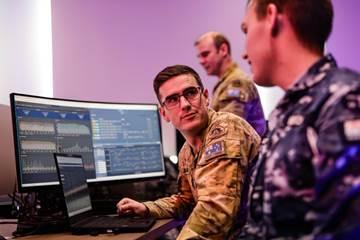
The ongoing conflict between Russia and Ukraine provides an opportunity to observe the use of memetic warfare during a contemporary conflict. Sarah Kreps, Paul Lushenkko, and Keith Carter used an empirical approach to analyse Ukrainian-themed memes (in this case, the term meme is being used in the ‘popular’ sense being an image or video posted online) posted to Reddit and plotted the frequency against key military milestones during the war. They found that the frequency of memes was highest during the Russian invasion of Ukraine in 2022 and has steadily declined since that time.[51] They inferred this decline indicates that the meme war is most likely being waged by the public rather than as a government-led activity, as a government-led activity would likely have a more sustained frequency over time.[52] This is a plausible explanation. However, it could also mean that the meme war shifted from Reddit to other platforms, or it could mean that the public component of the meme war decreased in frequency and that the government component remained constant but is less significant in volume than the public component. Their study, whilst interesting, highlights some of the weaknesses in using empirical approaches to memes, as drawing meaningful inferences from somewhat limited data sets is difficult.
The Ukrainian government has used online communication to seek support and promote its political agenda throughout the course of the conflict.[53] The Ukrainian government runs several official X accounts and has not shied away from amplifying memes via these official accounts. Many of the memes are shared by the Ukrainian Government’s Ukraine Crisis Management Centre (UCMC) account which “uses popular visual culture to reach the public.”[54] Ukrainian Government accounts have been used to share memes that are often “dark and witty, reflecting the Ukrainian spirit and using sarcasm to convey actual events”.[55] These memes and other media shared by the official accounts are often shared in multiple languages, which enables online resistance groups globally to create ‘spin-off’ memes, which results in greater longevity of the meme as it evolves and spreads over time.[56] Whilst the reader of this paper may not be able to recall a specific instance of the following memes, it is highly likely the reader can recall the idea of Ukrainian farmers towing away Russian military hardware using tractors, the Ukrainian soldiers on Snake Island telling a Russian warship to “go f*** itself”, and the Ukrainian President Volodymyr Zelenskyy stating that he needs ammunition and not a ride in response to offers to evacuate him at the start of the war. These are all memes that have been shared through official Ukrainian government accounts, online resistance groups, and others. One benefit of utilising official accounts to spread memes is that the use of humour by power can render criticism less effective, captured well by the quote “the smartest is the king who, indeed, is his own jester”.[57] It can also contribute to internal unity, attract wider audiences, ‘win hearts’, boost morale and expose disinformation, however, it needs to be culturally sensitive and strategically calibrated, particularly if it is to be effective to non-Western audiences.[58] This last point is particularly poignant for Australia given the strategic focus on the Indo-Pacific region. The Indo-Pacific is a diverse region, and memetic material that works for a Western audience may not have the same effect on other audiences, and visa-versa. There are also likely to be different memetic attack vectors that adversaries could exploit, such as targeting the wives of military members. In some cultures, wives have a much more formal military standing than in Australia, for example, the Wives Soldiers Union in Indonesia.[59] These organisations could be targeted with the intent of impacting the service of their husbands. Cultural understanding and strategic empathy are therefore required to reduce the likelihood of undesirable effects in memetic warfare.
The amplification of memes, in particular humorous ones, from official Ukrainian government and Defence channels begs the question as to what role, if any, Australian Defence Force official accounts could play in either peacetime or a future conflict. Utilising X as an example, Australian politicians, including the Prime Minister, have demonstrated a willingness to post humorous memes to pursue their own political goals with mixed reception[60]. Australian Defence Force official accounts, however, maintain a professional demeanour, with posts seemingly generated using standard corporate marketing templates and lacking any edgy or humorous aspect. This is appropriate given the professional image the ADF is trying to project, which in itself can be considered a meme. However, the trade-off of not using edgier memes is opportunity cost in terms of reach and potential appeal to a more diverse audience. One major contextual difference, of course, is that Ukraine is currently in a war of survival, and the ADF is not. The ADF’s risk tolerance for edgier online activities might increase under such circumstances. The ADF could consider creating separate accounts that are dedicated to spreading edgier memes, similar to Ukraine’s UCMC account. Another avenue for the ADF to spread memes could be via non-attributable means such as pseudo-accounts or paying influencers. Such deployment of memes by the ADF raises both ethical and legal questions as the information domain includes Australia and Australians. Given the prevalence of memes online during the invasion of Ukraine, it is likely that future conflicts in which Australians are more personally involved will involve some form of online meme war. The ADF should consider what role, if any, its official accounts will take in interacting with such material, noting the utility it has served for the Ukrainian military but also the risks associated with this approach.
Online civic resistance in the form of meme warfare has been observed to play a role in countering Russian information operations online, helping bring Ukrainians closer together and garner international support.[61] One of the most prominent examples arising from the conflict is the formation of the North Atlantic Fella Organisation or NAFO. This group has been described as “the shit-posting, twitter-trolling, dog-deploying social media army taking on Putin one meme at a time.”[62] The group was formed in May 2022 by Kamil Dyszewski, who started to make cartoon dog pictures to thank people who donated to the Georgian Legion fighting in Ukraine.[63] The group has grown into a decentralised group of volunteers, recognisable by their customised Shiba Inu-themed profile pictures, who produce memes to counter Russian disinformation online and raise funds to support the Ukrainian war effort. NAFO claims to have in excess of 85,000 members worldwide including an Asia Pacific ‘division’.[64] The group has attracted support from political and media figures, including Australians such as General (retired) Mick Ryan and ex-Australian Ambassador to Ukraine, Bruce Edwards and has also been acknowledged by official Ukrainian government accounts. NAFO accounts have at times attracted direct replies from official Russian government accounts. NAFO’s strength lies in its decentralisation, which makes it extremely resilient and able to respond rapidly to emerging Russian disinformation.[65] As well as memes being used by NAFO to counter disinformation, they have played a role in the growth of NAFO itself. This is because the participation and consumption of memes encourage people to develop networks.[66] This particular utility of memes in helping people to develop networks would be especially useful for the ADF to consider in peacetime in terms of recruiting via social media, but also the role of memes in informal social groups within the ADF and how they shape ADF culture.
One of the primary objectives of NAFO is to counter Russian disinformation, and any future Indo-Pacific conflict is unlikely to be immune from such Russian tactics. Russia has attempted to build greater influence in the Indo-Pacific region, and whilst it is not a major power in the region, it is powerful enough to disrupt the regional order and promote its anti-Western interests.[67] China has also invested heavily in tools to manipulate narratives and has its own army of online trolls called the “50 cent army” who currently promote a positive message online to make it appear as if there is widespread support for Chinese narratives.[68] China is active in trying to shape narratives over Taiwan and its claims over the South China Sea in Western media. It is likely that disinformation and contest over narrative would increase during times of conflict in the Indo-Pacific region. It is reasonable to expect that online civic resistance would be observed in the event of major conflict within the Indo-Pacific. NAFO already has an Asia-Pacific division, and whilst NAFO is predominantly focused on Ukraine, it is possible that they could pivot to an Indo-Pacific conflict, particularly with their experience in countering Russian disinformation. If not NAFO, then a NAFO-like model (SEAFO?) may form whereby an army of online citizens counter Chinese and Russian disinformation and false narratives specific to the Indo-Pacific region. The ADF should consider the possible involvement of NAFO or an NAFO-like online civic resistance within the Indo-Pacific and determine to what extent, if any, the ADF would interact with such a movement. For example, NAFO often amplifies memes posted from official Ukrainian accounts and creates ‘spin-off’ memes that assist in the propagation of the meme. The ADF could exploit this type of behaviour and use it as an opportunity to gain reach in spreading memes created by and beneficial to the ADF.
Whilst it is easy to be distracted by the more visible online meme war when considering the conflict between Russia and Ukraine, it is important to consider the role that less visible and ‘higher level’ memes had in the lead-up to the conflict. That is memes as ideas. Viewing things through a memetic lens, Putin and likely those around him had memes or meme complexes that viewed Ukraine as having no national identity and Russia needing to be restored to its former glory.[69] Those almost certainly contributed to Putin’s decision to invade Ukraine. From a Western perspective, some experts and many members of the public were surprised that Ukraine was able to withstand the initial Russian invasion. This may have been due to memes circulating about Russia being a ‘near-peer’ adversary to the United States, with an almost ‘mystical’ military ability. These memes started spreading in Western military circles after Russia’s successful annexation of Crimea and interventions in Syria.[70] Applying this to an Australian context, it would be beneficial for the ADF to be aware of the memes that exist about its potential adversaries, particularly among ADF decision-makers. Similarly, it would be beneficial for the ADF to be aware of what memes the general public, foreign militaries and governments possess about the ADF. If memes are identified that are not beneficial to the ADF, it would be beneficial for the ADF to have the capability to replace those memes with more favourable ones.
Conclusion
Jacob Siegel provides almost the perfect quote regarding the discipline of memetics since the term meme was first coined by Richard Dawkins in 1976. “Memetics, the study of meme theory and application is a kind of grab bag of concepts and disciplines. It’s part biology and neuroscience, part evolutionary psychology, part old fashioned propaganda, and part marketing campaign…though memetics currently exists somewhere between science, science fiction, and social science, some enthusiasts present it as a kind of hidden code that can be used to reprogram not only individual behaviours but entire societies.”[71]
Through providing the history of memetics and military memetics, this research paper has highlighted that there is no universally accepted definition of what a meme is, let alone a unifying theory of memetics. Bold proposals have been made within the field of military memetics, including the proposal that entire military meme units be formed, none of which have come to fruition. Memetics is a polarising field that tends to push people to extreme ends of the spectrum of opinions. Despite there being no unifying theory, the strength of intentionally adopting a memetic mindset is the requirement to seek expertise from multiple fields to help solve problems in the Information warfare domain. In that sense, memetics is relevant to the ADF, but further research is required on how the ADF could operationalise memetic concepts, without exaggerating the potential outcomes of adopting such a framework.
Memes, both in the popular and academic sense, have featured heavily in the ongoing conflict between Ukraine and Russia. Civic online resistance is a significant factor in the current meme war, with the resilient, decentralised NAFO being the main actor. NAFO’s primary utility lies in rapidly countering Russian disinformation and advancing Ukraine’s agenda to an international audience. Given that any future conflict in the Indo-Pacific region is likely to feature Russian and Chinese disinformation and narrative campaigns, the ADF must consider how NAFO or a similar organisation would act to counter that disinformation and to what extent, if any, the ADF should interact with such a movement. The successful use of, and engagement with, memetic material online by official Ukrainian Defence accounts indicates that the ADF should consider its position with regard to engaging with such material online. Lastly, the ADF may benefit from considering what memes, in the sense of ideas, are prevalent within its leadership and how that may affect decision-making. Similarly, the ADF may benefit from considering what memes exist in the minds of others regarding the ADF.
Memetic warfare is relevant to the ADF and should be approached as an intentional decision to engage memetic frameworks to assist in approaching Information Domain related problems such as narrative and cognitive warfare. Engaging such frameworks can have utility across the full spectrum of conflict, as well as in training, recruitment and organisational culture.
ABC News. “Albanese Tells Critics of Labor’s Three-Eyed Nuclear Memes to ‘Lighten Up.’” June 21, 2024. https://www.abc.net.au/news/2024-06-21/albanese-reponds-to-nuclear-meme-critics/104005762.
Aunger, Robert. “A Report on the `conference Do Memes Account for Culture?’ Held at King’s College, Cambridge.” Journal of Memetics - Evolutionary Models of Information Transmission 3, no. 2 (December
1, 1999): 39.
Best, Michael L. “Memes on Memes -- a Critique of Memetic Models.” Journal of Memetics - Evolutionary Models of Information Transmission 2, no. 1 (June 1, 1998): 1.
Bracciale, Roberta, and Junio Aglioti Colombini. “Meme Tales: Unraveling the Function of Memes in the Russian-Ukraine Conflict.” RIVISTA TRIMESTRALE DI SCIENZA DELL AMMINISTRAZIONE 2023 (January 1, 2023): 36. https://doi.org/10.32049/RTSA.2023.4.08.
Cuppens, Tessa. “The Weaponisation of Memes.” Stichting Jason, March 26, 2023. https://jasoninstitute.com/the-weaponisation-of-memes/.
Dewantara, Cicilia, Sebastian Koto, and Tommy Hariyanto. “The Role of the Army Spouse Association (PersitKartika Chandra Kirana) in Supporting the Task of the Indonesian Army.” IOSR Journal of Humanities and Social Science 23, no. 7 (July 2018). https://www.iosrjournals.org/iosr-jhss/papers/Vol.%2023%20Issue7/Version-10/C2307102029.pdf.
Dirlam, D.K. “Using Memetics to Grow Memetics.” Journal of Memetics 9, no. 1 (January 1, 2005). https://research.ebsco.com/linkprocessor/plink?id="24b1ec95-061b-3a1e-b110-66d67349c109."
Emerging Europe. “Why Decentralisation Is NAFO’s Greatest Strength,” January 25, 2023. https://emerging-europe.com/opinion/why-decentralisation-is-nafos-greatest-strength/.
EUROPP. “The Great Blunder: Why Did Putin Miscalculate over Ukraine?,” March 6, 2023. https://blogs.lse.ac.uk/europpblog/2023/03/06/the-great-blunder-why-did-putin-miscalculate-over-ukraine/.
Finkelstein, Robert. “Tutorial: Military Memetics.” Tutorial. Social Media for Defense Summit: Robotic Technology Inc., October 24, 2011. https://www.robotictechnologyinc.com/images/upload/file/Presentation%20Military%20Memetics%20Tutorial%20Conference%2013%20Dec%2011.pdf.
Giesea, Jeff. “It’s Time to Embrace Memetic Warfare.” Defence Strategic Communications, March 1, 2016.
Glabus, Edmund M. “Metaphors and Modern Threats: Biological, Computer, and Cognitive Viruses.” US Army War College, 1998. http://www.jstor.com/stable/resrep11957.13.
Grossman, Derek. “Russia Is a Strategic Spoiler in the Indo-Pacific,” July 12, 2024. https://www.rand.org/pubs/commentary/2024/07/russia-is-a-strategic-spoiler-in-the-indo-pacific.html.
Hancock, Brian J. “Memetic Warfare: The Future of War.” Military Intelligence Professional Bulletin, U.S. Army Intelligence Center and School, April 1, 2010. Gale Academic OneFile.
infoprof. “The Story Behind the DARPA Social Media in Strategic Communication (SMISC) Program.” Information Professionals Association, June 28, 2017. https://information-professionals.org/the-darpa-social-media-in-strategic-communication-smisc-program/.
“Information Innovation Office.” Accessed October 10, 2024. https://www.darpa.mil/about-us/offices/i2o/more.
Kirichenko, David. “Can NATO’S Ukraine success be extended to Taiwan.” PacNet Newsletter, no. 60 (August 10, 2023): 1–3.
Knobel, Michele, and Colin Lankshear. “Online Memes, Affinities, and Cultural Production.” In A New Literacies Sampler, 199–227, 2007.
Kreps, Sarah, Paul Lushenko, and Carter, Keith. “Lessons from the Meme War in Ukraine.” Brookings, February 10, 2023. https://www.brookings.edu/articles/lessons-from-the-meme-war-in-ukraine/.
Librarians, Health Liaison. “LibGuides: Qualitative Study Design: Case Studies.” Accessed October 10, 2024. https://deakin.libguides.com/qualitative-study-designs/case-studies.
“Memes as an Online Weapon: An Analysis into the Use of Memes by the Far Right.” National Coordinator for Security and Counterterrorism, May 2024. https://english.nctv.nl/binaries/nctv-en/documenten/publications/2024/08/01/far-right-memes-undermining-and-far-from-recognizable/NCTV_Memes+as+an+online+weapon_English+version+May+2024.pdf.
Metahaven, ed. Can Jokes Bring down Governments? Memes, Design and Politics. First edition. Moscow: Strelka Press, 2013.
“Military Memetics, Robotic Technology Inc., Robots, Unmanned Vehicles, Artificial Intelligence and More.” Accessed October 10, 2024. https://www.robotictechnologyinc.com/index.php/military-memetics.
Munk, Tine, 1970- author. “Memetic War : Online Resistance in Ukraine / Tine Munk.,” January 1, 2024. https://research.ebsco.com/linkprocessor/plink?id="43c93bc7-4b9f-3a62-ae25-18bad3b41d11."
NAFO Asia Pacific. “Want to Help Ukraine Online? Join NAFO!” Accessed October 11, 2024. https://nafo.ukrainians.org.au/.
Pirnie, Bruce R, and Edward O’Connell. “Counterinsurgency in Iraq (2003-2006).” RAND Corporation, 2008.
POLITICO. “The Shit-Posting, Twitter-Trolling, Dog-Deploying Social Media Army Taking on Putin One Meme at a Time,” August 31, 2022. https://www.politico.eu/article/nafo-doge-shiba-russia-putin-ukraine-twitter-trolling-social-media-meme/.
Prosser, Michael B. “Memetics - A Growth Industry in US Military Operations.” Marine Corps University, January 1, 2006. https://apps.dtic.mil/sti/citations/ADA507172#:~:text="Memes%20are%20units%20of%20cultural,the%20minds%20of%20the%20undecided."
Renz, Bettina. “Western Estimates of Russian Military Capabilities and the Invasion of Ukraine.” Problems of Post-Communism 71, no. 3 (May 1, 2024): 219–31. https://doi.org/10.1080/10758216.2023.2253359.
Richard Dawkins. The Selfish Gene : 40th Anniversary Edition. 40th anniversary edition. Oxford Landmark Science. Oxford: OUP Oxford, 2016.
Shifman, L. “Memes in a Digital World: Reconciling with a Conceptual Troublemaker.” Journal of Computer-Mediated Communication 18, no. 3 (January 1, 2013): 362–77. https://doi.org/10.1111/jcc4.12013.
Siegel. “Is America Prepared for Meme Warfare?” Vice: Tech, January 31, 2017. https://www.vice.com/en/article/meme-warfare/.
Smart, Jason Jay. “Founder of NAFO Reveals Identity, Discusses Raison D’être.” Kyiv Post, November 14, 2022. https://www.kyivpost.com/post/204.
Tokariuk, Olga. “Humour as a Strategic Tool against Disinformation Ukraine’s Response to Russia.” Journalist Fellowship Paper. University of Oxford, June 2023. https://reutersinstitute.politics.ox.ac.uk/sites/default/files/2023-12/RISJ%20Project_OlgaT_HT23_Final.pdf.
Wilkins, John S. “What’s in a Meme?” Journal of Memetics - Evolutionary Models of Information Transmission 2, no. 1 (June 1, 1998): 56.
Zakem, Vera, McBride, and Kate Hammerberg. “Exploring the Utility of Memes for U.S. Government Influence Campaigns.” CNA Analysis and Solutions, April 2018.
1 Richard Dawkins, The Selfish Gene : 40th Anniversary Edition, 40th anniversary edition, Oxford Landmark Science (Oxford: OUP Oxford, 2016), 249.
2 Health Liaison Librarians, “LibGuides: Qualitative Study Design: Case Studies,” accessed October 10, 2024, https://deakin.libguides.com/qualitative-study-designs/case-studies.
3 L. Shifman, “Memes in a Digital World: Reconciling with a Conceptual Troublemaker,” Journal of Computer-Mediated Communication 18, no. 3 (January 1, 2013): 367, https://doi.org/10.1111/jcc4.12013.
4 Shifman, 363.
5 Michael L. Best, “Memes on Memes -- a Critique of Memetic Models.,” Journal of Memetics - Evolutionary Models of Information Transmission 2, no. 1 (June 1, 1998): 1.
6 John S. Wilkins, “What’s in a Meme?,” Journal of Memetics - Evolutionary Models of Information Transmission 2, no. 1 (June 1, 1998): 56.
7 Wilkins.
8 Robert Aunger, “A Report on the `conference Do Memes Account for Culture?’ Held at King’s College, Cambridge.,” Journal of Memetics - Evolutionary Models of Information Transmission 3, no. 2 (December 1, 1999): 39.
9 D.K. Dirlam, “Using Memetics to Grow Memetics,” Journal of Memetics 9, no. 1 (January 1, 2005), https://research.ebsco.com/linkprocessor/plink?id="24b1ec95-061b-3a1e-b110-66d67349c109."
10 Robert Finkelstein, “Tutorial: Military Memetics,” Tutorial (Social Media for Defense Summit: Robotic Technology Inc., October 24, 2011), 22, https://www.robotictechnologyinc.com/images/upload/file/Presentation%20Military%20Memetics%20Tutorial%20Conference%2013%20Dec%2011.pdf.
11 Michele Knobel and Colin Lankshear, “Online Memes, Affinities, and Cultural Production,” in A New Literacies Sampler, 2007, 201.
12 “Memes as an Online Weapon: An Analysis into the Use of Memes by the Far Right” (National Coordinator for Security and Counterterrorism, May 2024), 1, https://english.nctv.nl/binaries/nctv-en/documenten/publications/2024/08/01/far-right-memes-undermining-and-far-from-recognizable/NCTV_Memes+as+an+online+weapon_English+version+May+2024.pdf.
13 Knobel and Lankshear, “Online Memes, Affinities, and Cultural Production,” 1.
14 Shifman, “Memes in a Digital World: Reconciling with a Conceptual Troublemaker,” 366.
15 Shifman, 366.
16 Shifman, 367.
17 Shifman, 367.
18 Shifman, 368.
19 Vera Zakem, McBride, and Kate Hammerberg, “Exploring the Utility of Memes for U.S. Government Influence Campaigns” (CNA Analysis and Solutions, April 2018), iii.
20 Zakem, McBride, and Hammerberg, iv.
21 Edmund M. Glabus, “Metaphors and Modern Threats: Biological, Computer, and Cognitive Viruses.” (US Army War College, 1998), 205, http://www.jstor.com/stable/resrep11957.13.
22 Glabus, 206.
23 Glabus, 204.
24 Glabus, 197.
25 Michael B. Prosser, “Memetics - A Growth Industry in US Military Operations” (Marine Corps University, January 1, 2006), 5, https://apps.dtic.mil/sti/citations/ADA507172#:~:text="Memes%20are%20units%20of%20cultural,the%20minds%20of%20the%20undecided."
26 Bruce R Pirnie and Edward O’Connell, “Counterinsurgency in Iraq (2003-2006)” (RAND Corporation, 2008), xiv.
27 Brian J. Hancock, “Memetic Warfare: The Future of War,” Military Intelligence Professional Bulletin (U.S. Army Intelligence Center and School, April 1, 2010), Gale Academic OneFile.
28 Hancock.
29 Prosser, “Memetics - A Growth Industry in US Military Operations,” 5.
30 Prosser, 2.
31 Prosser, 14.
32 Prosser, 17.
33 Prosser, 14.
34 “Military Memetics, Robotic Technology Inc., Robots, Unmanned Vehicles, Artificial Intelligence and More.,” accessed October 10, 2024, https://www.robotictechnologyinc.com/index.php/military-memetics.
35 Finkelstein, “Tutorial: Military Memetics,” 12.
36 Finkelstein, 34.
37 Finkelstein, 93.
38 Hancock, “Memetic Warfare: The Future of War.”
39 Hancock.
40 Hancock.
41 Hancock.
42 infoprof, “The Story Behind the DARPA Social Media in Strategic Communication (SMISC) Program,” Information Professionals Association, June 28, 2017, https://information-professionals.org/the-darpa-social-media-in-strategic-communication-smisc-program/.
43 “Information Innovation Office,” accessed October 10, 2024, https://www.darpa.mil/about-us/offices/i2o/more.
44 Jeff Giesea, “It’s Time to Embrace Memetic Warfare,” Defence Strategic Communications, March 1, 2016.
45 Giesea, 69.
46 Giesea, 69.
47 Giesea, 70.
48 Giesea, 73.
49 Giesea, 74.
50 Siegel, “Is America Prepared for Meme Warfare?” Vice: Tech, January 31, 2017, https://www.vice.com/en/article/meme-warfare/.
51 Sarah Kreps, Paul Lushenko, and Carter, Keith, “Lessons from the Meme War in Ukraine” (Brookings, February 10, 2023), https://www.brookings.edu/articles/lessons-from-the-meme-war-in-ukraine/.
52 Kreps, Lushenko, and Carter, Keith.
53 Tine Munk 1970- author., “Memetic War : Online Resistance in Ukraine / Tine Munk.,” January 1, 2024, 81, https://research.ebsco.com/linkprocessor/plink?id="43c93bc7-4b9f-3a62-ae25-18bad3b41d11."
54 Tessa Cuppens, “The Weaponisation of Memes,” Stichting Jason, March 26, 2023, https://jasoninstitute.com/the-weaponisation-of-memes/.
55 Munk, “Memetic War : Online Resistance in Ukraine / Tine Munk.,” 83.
56 Munk, 83.
57 Metahaven, ed., Can Jokes Bring down Governments? Memes, Design and Politics, First edition (Moscow: Strelka Press, 2013), 17.
58 Olga Tokariuk, “Humour as a Strategic Tool against Disinformation Ukraine’s Response to Russia,” Journalist Fellowship Paper (University of Oxford, June 2023), https://reutersinstitute.politics.ox.ac.uk/sites/default/files/2023-12/RISJ%20Project_OlgaT_HT23_Final.pdf.
59 Cicilia Dewantara, Sebastian Koto, and Tommy Hariyanto, “The Role of the Army Spouse Association (PersitKartika Chandra Kirana) in Supporting the Task of the Indonesian Army,” IOSR Journal of Humanities and Social Science 23, no. 7 (July 2018), https://www.iosrjournals.org/iosr-jhss/papers/Vol.%2023%20Issue7/Version-10/C2307102029.pdf.
60 “Albanese Tells Critics of Labor’s Three-Eyed Nuclear Memes to ‘Lighten Up,’” ABC News, June 21, 2024, https://www.abc.net.au/news/2024-06-21/albanese-reponds-to-nuclear-meme-critics/104005762.
61 Munk, “Memetic War : Online Resistance in Ukraine / Tine Munk.,” 77.
62 “The Shit-Posting, Twitter-Trolling, Dog-Deploying Social Media Army Taking on Putin One Meme at a Time,” POLITICO, August 31, 2022, https://www.politico.eu/article/nafo-doge-shiba-russia-putin-ukraine-twitter-trolling-social-media-meme/.
63 Jason Jay Smart, “Founder of NAFO Reveals Identity, Discusses Raison D’être,” Kyiv Post, November 14, 2022, https://www.kyivpost.com/post/204.
64 “Want to Help Ukraine Online? Join NAFO!,” NAFO Asia Pacific, accessed October 11, 2024, https://nafo.ukrainians.org.au/.
65 “Why Decentralisation Is NAFO’s Greatest Strength,” Emerging Europe, January 25, 2023, https://emerging-europe.com/opinion/why-decentralisation-is-nafos-greatest-strength/.
66 Roberta Bracciale and Junio Aglioti Colombini, “Meme Tales: Unraveling the Function of Memes in the Russian-Ukraine Conflict,” RIVISTA TRIMESTRALE DI SCIENZA DELL AMMINISTRAZIONE 2023 (January 1, 2023): 28, https://doi.org/10.32049/RTSA.2023.4.08.
67 Derek Grossman, “Russia Is a Strategic Spoiler in the Indo-Pacific,” July 12, 2024, https://www.rand.org/pubs/commentary/2024/07/russia-is-a-strategic-spoiler-in-the-indo-pacific.html.
68 David Kirichenko, “Can NATO's Ukraine success be extended to Taiwan,” PacNet Newsletter, no. 60 (August 10, 2023): 1–3.
69 “The Great Blunder: Why Did Putin Miscalculate over Ukraine?” EUROPP (blog), March 6, 2023, https://blogs.lse.ac.uk/europpblog/2023/03/06/the-great-blunder-why-did-putin-miscalculate-over-ukraine/.
70 Bettina Renz, “Western Estimates of Russian Military Capabilities and the Invasion of Ukraine.,” Problems of Post-Communism 71, no. 3 (May 1, 2024): 4, https://doi.org/10.1080/10758216.2023.2253359.
71 Siegel, “Is America Prepared for Meme Warfare?”
Defence Mastery
Social Mastery

Wing Commander Paul Strack is an Armament Engineer and a graduate of the Australian Command and Staff Course class of 2024. He is currently posted to Canberra, where he is working on Australia’s future sovereign rocket motor production capability
To what extent is memetic warfare applicable to the Australian Defence Force? © 2024 by . This work is licensed under CC BY-NC-ND



Please let us know if you have discovered an issue with the content on this page.
Comments
Start the conversation by sharing your thoughts! Please login to comment. If you don't yet have an account registration is quick and easy.