Grand strategies concern the relationship a state desires with others and how that state will build and apply national power to achieve those relationships.[1] Further, a grand strategy uses diverse national power that is often referred to as ‘means’.[2] The literature suggests this diversity can best be understood through the acronym DIME: Diplomacy, Information, Military, and Economic.[3] This diversity is not merely a whole-of-government but rather whole-of-nation and, in a globalised world, holds a geopolitical dimension.[4] An effective grand strategy uses all and every suitable means in a coherent, integrated manner. Australia, as a liberal democratic middle power, is heavily reliant on the free market global economy and the security arrangements that support prosperity.[5] The current dynamic geopolitical environment[6] and the growing influence of China in the Indo-Pacific region compels Australia to enact a grand strategy in support of long-term safety and prosperity. In 2023, Australia adopted a balance-of-power and engagement grand strategy[7] to maintain peace and shape a region to reflect its national interests and shared regional interests. This essay will outline Australia’s grand strategy and explore how its effectiveness and success can be measured using the Framework described by the Royal College of Defence Studies.[8]
A grand strategy is primarily concerned with building a better future for a nation. As articulated by Peter Layton, a grand strategy is, ‘the art of developing and applying diverse forms of power effectively and efficiently to try to purposefully change the relationship existing between two or more intelligent and adaptive entities’.[9] For over a decade, Australia has declared through various foreign policy statements and Defence white papers that its national interests and growth are closely linked to open and stable relationships within Southeast Asia and the Indo-Pacific region[10] Changing regional relationships[11] has led to a recent shift in policy focus from the Australian government, and applying all elements of national power to achieve two deliberate complementary grand strategies. The decision to enact two mutually reinforcing grand strategies is supported by the literature[12],[13], which has highlighted that a single grand strategy may not enable a state to achieve all it seeks, and in the case of Australia limit the government into a narrow range of possible domestic and foreign policy options.
Australia has adopted a balance-of-power grand strategy focused on the great power level.[14] Australia as a middle power assumes a key role similar to Canada in stabilising and legitimising the current world order.[15] The underpinning assumption of this strategy is that a superior power, such as China, India, or the United States of America (USA) determines outcomes.[16] Interestingly, Geoff Raby (Australia’s Ambassador to China; 2007–2011) highlights that a balancing of power strategy focused on working with those with common interests to maintain a regional balance and economic growth could effectively counter China's use of economic coercion but is not directly focused on China.[17] Further, this approach suggests that a state becomes more powerful by building up military and economic power and forming collective defence alliances. In 2023, the U.S. and Australian governments formalised a new era of US-Australian strategic cooperation, which focuses on collaborations across four pillars: (1) climate and clean energy, (2) defence, (3) economic, and (4) military collaborations.[18] Consequently, the Australian Defence Force (ADF) has shifted focus and aligned key military capabilities with their US allies. For example, AUKUS is a trilateral securing partnership between Australia, the United Kingdom, and the USA for the Indo-Pacific region. Under AUKUS, Australia declared it would acquire nuclear attack submarines[19] because it believed this would provide a key deterrent against aggression and generate a strategic equilibrium in the region. The balancing grand strategy will require the Australian foreign trade and international relations division to positively influence the regional and global environment, consistent with Australia’s national interests.
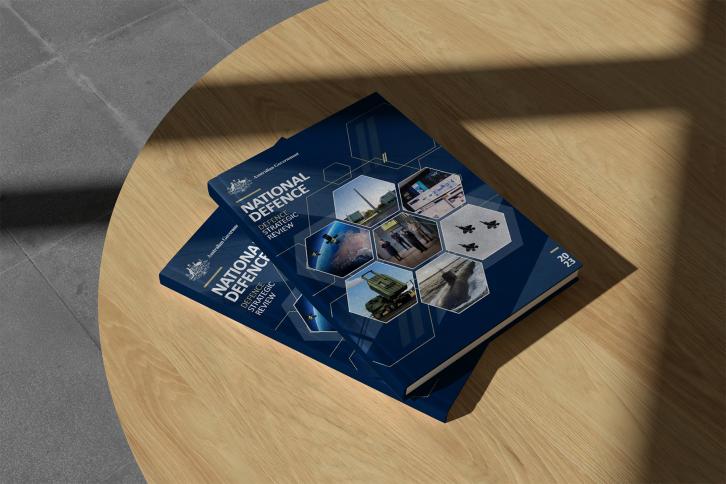
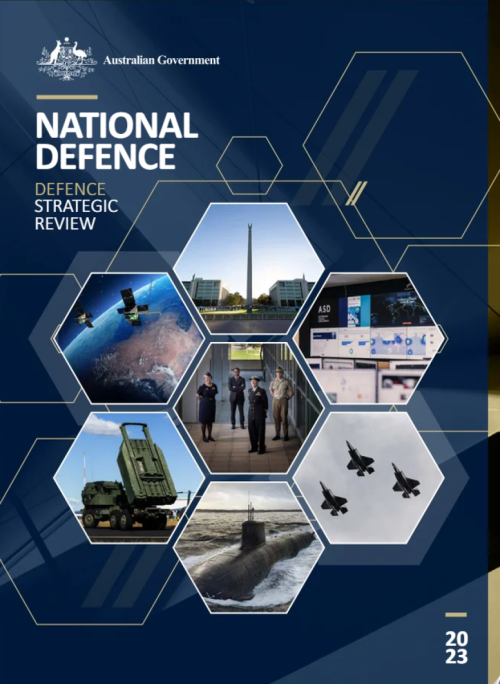
A fundamental relationship within any grand strategy is the relationship between the political objectives and the use of the military. Within the overarching balance-of-power grand strategy, the ADF has adopted the strategy of denial. The Defence Strategic Review (DSR) states that a strategy of denial is ‘a defensive approach designed to stop an adversary from succeeding in its goal to coerce states through force, or the threatened use of force, to achieve dominance. Denial is associated with the ability and intent to defend against, and defeat, an act of aggression.’[20] Forming coalitions is a key approach embedded within a strategy of denial, and as Gray describes acts like a ‘bridge’[21] linking Australia's balance-of-power strategy and accepted themes for military coalition formation including increased international legitimacy, improved chances of both international and national support, and improved deterrence.[22]
Economic power is also a critical element of grand strategy[23] and is embedded within the Australian balance-of-power grand strategy. For example, Australia has secured several bilateral and multilateral economic agreements with Indonesia, the Pacific Islands, India, Japan, and South Korea.[24],[25] In 2021, a strategic partnership between Australia and the Association of Southeast Asian Nations (ASEAN) was endorsed,[26] and provided Australia with ‘substantial geopolitical weight.’[27] The initiative is valued at A$154 million over ten years and represents the largest-ever increase in Australia’s development cooperation program with ASEAN. The program includes financing smart cities, digitisation, technology innovation, digital skills training, and a scholarship program in the areas of maritime, connectivity, economic development, and sustainable development goals. Additionally, The Quadrilateral Security Dialogue (QSD; referred to as the Quad) is a strategic security dialogue between Australia, India, Japan, and the US released a joint statement[28] recommitting to working in partnership with Pacific Island countries to achieve shared aspirations and address shared challenges in achieving sustainable consumption and production due to climate change.
Australia has also adopted an engagement grand strategy focused on middle and smaller powers in the region. This regional focus by Australia reflects a contemporary view that grand strategy is more than the military, politics, economics, and technology, and the significance of geography must be acknowledged.[29] International best-selling author Tim Marshall in Prisoners of Geography also emphasises that geopolitics affects every country, and geography remains crucial to the success of a state today and into the future.[30] Thus, the engagement grand strategy involves Australia working with other states in the Indo-Pacific region to achieve common goals. For Australia, the Minister for Foreign Affairs, Hon Penny Wong has declared her government’s key focus will be to work with South-East Asia and the Pacific ‘to enhance our collective security and prosperity.’[31] Supporting regional states to be more resilient to outside pressures aligns with a balance-of-power grand strategy.[32]
The ADF has also supported Australia’s engagement grand strategy. One example of a multinational objective led by the ADF that strengthens Australia’s national interest is the malaria mitigation program.[33] Led by the ADF Malaria and Infectious Disease Institute in partnership with the Vietnam People’s Army and the Papua New Guinea Defence Force, and nested within the Global Health program, the malaria mitigation program was designed with extensive collaboration with host nation stakeholders, empowered local institutions and governance systems, and built the capacity of the host nation to achieve independence from Australian. Employing health specialists from the ADF met the strategic policy requirements of all nations involved and strengthened Australia’s reputation in the Asian-pacific region. Additionally, improving the cultural competence of our region across the Australian Army has been a key focus of ADF leadership for several years. For instance, key Asian- Pacific educational forums have been initiated because understanding the geopolitics of the world is seen as being fundamental to those who serve as military professionals in the ADF.[34]
It is widely accepted in the literature, that grand strategy operates in a specific historical and contemporary circumstance,[35] and that strategy is a process, not an endpoint.[36] Tanev emphasises that ‘grand strategy is not about a single achievement of this extreme but rather about the long-term position at the extreme heights’.[37] Further, he argues grand strategy should cause a multiplier effect of securing a chain of accumulated extreme peaks for a state. For instance, the successful transformation of Germany after World War II and South Korea from authoritarian states with weak economic institutions to democratic regimes with strong economies are historical examples of successful grand strategies that focused on export-led economic growth.[38] Because grand strategy is an iterative process undergoing constant adaptation to shifting conditions and circumstances in a world where chance, uncertainty, and ambiguity dominate[39] judging its success is difficult. It is challenging to evaluate the success of the Australian balance of power and engagement grand strategy without specific policy ends, however, the Royal College of Defence Studies[40] provides a pragmatic framework to inform an assessment of key policy decisions over the past 12 months. To evaluate the effectiveness of the two Australian grand strategies, the experience of the College suggests it should pass five simple tests: ‘first, it must be acceptable; second, it must be feasible; third, it must be suitable to the circumstances, fourth it must be sustainable.’[41]
For a grand strategy to be successful it must first be acceptable. In the Australian context, the government's grand strategy must gain domestic approval to be successfully implemented. Further, the role of government is to represent the Australian people and enact policy that is important to them. Therefore, the Australian public’s views and perceptions of recent policy announcements such as AUKUS and the Quad should hold value and could be regarded as a surrogate metric of the success of the current balance of power and engagement grand strategies. The recent Lowy Institute Poll reported the
results of a national survey of 2,077 Australian adults between 14 and 26 March 2023[42]. Survey data from this poll suggests that Australians' feelings of safety have improved over the past year, and 63% of the population surveyed (n= 1, 308) stated they feel ‘very safe’ or ‘safe’. Half of those sampled reported AUKUS will make Australia safer (49%; n =1, 017), and a slightly lower number say it will make the region safer (46%; n = 955). Similarly, half of the participants felt the Quad partnership between Australia, India, Japan, and the United States would make Australia (51%) and the region (50%) safer.[43] The Lowy poll data suggests that the grand strategies proposed by the state are acceptable to the Australian public, and the government had a well-crafted strategic narrative that has fostered buy-in from the nation resulting in regional and international legitimacy.
Secondly, for a grand strategy to be successful it must be feasible, and an Australian balance-of- power grand strategy only works if the ADF can threaten or use violence. The 2023 DSR[44] identified that Australia’s strategic circumstances now require the ADF to realign and contribute to shaping the strategic environment, deter potential adversaries, and deny adversaries the ability to achieve objectives contrary to Australia’s interests. The DSR endorsed within the AUKUS agreement the acquisition of a conventionally armed, nuclear-powered submarine capability, including the establishment of an Australian Submarine Agency[45]. Others strongly support the decision by Australia to ‘take a long-term position on a proven weapon system that will deliver ancillary national security benefits and access to new technology over the next 20 years, and industrial cooperation with the UK and US.’[46] The literature supports the re-posturing of the ADF because the current strategic risks Australia faces require a new approach to defence planning, force posture, force structure, capability development, and acquisition.[47],[48] A renewed and strengthened alliance with the US remains central to Australia’s security and is embedded in key policy decisions such as AUKUS and the Quad. To further its deterrent effect, Australia is now buying new long-range strike missiles, and anti-ship missiles, upgrading northern defence bases, enhanced surface combat fleet[49], and developing offensive cyber capabilities.[50] Interestingly, the Australian Government's investment in military technology, hardware, and personnel is planned over the next two decades despite the DSR assessment that a threat to Australia’s national interest is most likely to occur in the next three to five years. Compounding the challenges for the ADF is the need for a new force structure, which is difficult in the current environment of poor recruitment and retention.[51] Finally, the ADF acquisition process and bureaucracy have also been highlighted as key barriers[52] to achieving key DSR recommendations because the search for the perfect has become the enemy of the good,[53] and Australia lacks the equipment and domestic industry base to enact key defence projects. Thus, ADF alone is unlikely to successfully provide the deterrent and war-fighting force to underpin the balance of power grand strategy but alliances such as AUKUS may afford the Australian industry base more time to deliver what is recommended within the DSR.
Thirdly, for a grand strategy to be successful it must be suitable to the circumstances. Resilience to cyber and foreign interference is a contemporary issue for industrial countries such as Australia.[54] Nested within the balance of power strategy is the 2023–2030 Australian Cyber Security Strategy. The Australian Cyber and security strategy aims to make Australia a world leader in cyber security by 2030[55] and has led to recent changes to Australia’s national security laws. For instance, federal laws have been updated to criminalise foreign interference with specific foreign telecom firms blocked, foreign investment rules strengthened, critical infrastructure regulations extended, and counters to misinformation and disinformation policies introduced.[56] The unique circumstances of Australia have also been clearly articulated by the Australian minister for foreign affairs, Senator the Hon Penny Wong, when she linked the centrality of geography to Australia’s grand strategy of engagement because of the strategic importance of Pacific islands to Australia’s security.[57] Consequently, numerous economic agreements have recently been reached between Australia’s regional partners including the Pacific Agreement on Closer Economic Relations, the Indonesia-Australia Comprehensive Economic Partnership, the Regional Comprehensive Economic Partnership, and the Australia-India economic cooperation and trade agreement. Further, there is now an Office of the Pacific and an Australia Pacific Security College.[58] A national strategy aiming for greater trade and investment between Australia and Southeast Asia has also been recently announced.[59] The ADF exercises routinely with regional nations, with the ADF’s flagship regional engagement activity Indo- Pacific Endeavour (IPE) completed in 2023. On balance, it does appear that the contemporary circumstances that Australia exists have driven numerous proactive initiatives both economic, and military in the region to support the grand balance of power and engagement grand strategies.
Fourthly, for a grand strategy to be successful it must be sustainable and requires a whole government investment involving diplomatic, information, military, and economic power. Both Australian grand strategies will require adequate stable resourcing into the future, requiring government budgets to consistently support a diverse range of projects in trade, defence, regional development, and aid. Current expert opinion suggests the ADF has inadequate resources to address the DSR recommendations.[60] Thus, for the grand strategy to be sustainable the ADF needs more certainty about its funding[61], and elements of sustainment and operating budgets must be reprioritised to support Defence's focus on the contemporary strategic threats.[62] Further, the literature has highlighted that for the two grand strategies to be viable there is an urgent need for improved Southeast Asia literacy across Australia’s business, government, education, and community sectors.[63] Additionally, others have highlighted the need for sectoral business missions in the region, more capable business chambers, more professional exchanges and internships, and for Australia to be a substantial regional investor using monies from its corporations, capital markets, national savings, and superannuation funds.[64] Over the last decade, successive Australian governments have flipped their priority in resourcing Australia’s diplomatic capability. The former Australian Liberal government cut $11.8 billion in development programs, which has been corrected with the current Labor government's first budget,[65] however, future governments may again reprioritise their investment in key foreign services such as the Department of Foreign Affairs and Trade putting the grand strategy of engagement at risk.
This essay has detailed how the balance of power and engagement grand strategies set out a path for Australia into the future, however, their success is uncertain. The literature has emphasised that grand strategies are whole-of-government, involving diplomatic, informational, military, and economic power. Consequently, the two grand strategies Australia adopted in 2023 strive to build national power in a way that will allow the state to positively influence the regional and global geopolitical environment. These two strategies call for different skill sets at the national, organisational, and individual levels. An analysis of economic policy, social policy and defence capabilities decisions over the past 12 months suggests that the two grand strategies could make Australia domestically strong and support a stable international system, based on the rule of law and open free trading. Further, while the newly enacted grand strategies are difficult to evaluate in this essay, the College framework has revealed that they have led to proactive policy initiatives, which recognise Australia's unique geopolitical position as a middle power. Specific policy ends are needed to enable a long-term assessment of these strategies' success, and barriers in Australia’s domestic industry capabilities may delay key defence material projects.
Editorial Note: This paper was written prior to the release of the National Defence Strategy 2024.
Australian Defence Business Review. ‘Australia’s AUKUS Opportunity: Fixing National to Tactical’, 3
January 2022. https://adbr.com.au/aukus-airpower-advantage/.
Australian Government. ‘Enhanced Lethality Surface Combatant Fleet Independent Analysis of Navy’s Surface Combatant Fleet’, 2024.
file:///C:/Users/61432/Downloads/Enhanced_Lethality_Surface_Combatant_Fleet_web.pdf.
Bergmann, Kym. ‘Fixing Defence Acquisition-a Greater Role for Industry?’ Asia-Pacific Defence Reporter 49, no. 5 (2023).
Brangwin, Nicole, and David Watt. ‘The State of Australia’s Defence: A Quick Guide’, 27 July 2022. https://www.aph.gov.au/About_Parliament/Parliamentary_departments/Parliamentary_Library/Research/Quick_Guides/2022-23/StateofAustraliasDefence.
Department of Defence. ‘National Defence: Defence Strategic Review: 2023’. Department of Defence, 2023.
Dobell, Graeme. ‘Australia’s Indo-Pacific Hope: Equilibrium’. The Strategist, 12 September 2022. https://www.aspistrategist.org.au/australias-indo-pacific-hope-equilibrium/.
Gray, Colin S. Strategy and History: Essays on Theory and Practice. London: Routledge, 2006.
Heiduk, Felix, Gudrun Wacker, and Stiftung Wissenschaft Und Politik. ‘From Asia-Pacific to Indo- Pacific: Significance, Implementation and Challenges’. SWP Research Paper, 2020. https://doi.org/10.18449/2020RP09.
Hellyer, Marcus. ‘Defence Budget 2023-24 – Nervous Times Ahead’. Australian Defence Magazine, 12 June 2023. https://www.australiandefence.com.au/defence/budget-policy/defence-budget-2023-24-nervous-times-ahead.
Ivimey, Shane. ‘Defence Strategic Review: Air Force Reserve Workforce Targeted Reengagement’.
Air/Space, 2023, 33262237.
Layton, Peter. ‘Building an Australian Grand Strategy’, 17 July 2019.
https://blogs.griffith.edu.au/asiainsights/building-an-australian-grand-strategy/.
Layton, Peter. ‘Defining Grand Strategy’, 2020.https://thestrategybridge.org/the-bridge/2020/8/17/defining-grand-strategy.
Layton, Peter. ‘Executing Australia’s Two Grand Strategies’. Australian Institute of International Affairs, 4 October 2023. https://www.internationalaffairs.org.au/australianoutlook/executing-australias-two-grand-strategies/.
Layton, Peter. ‘The Grand Strategies Shaping Australia’s View of the World’. EastAsiaForum, 17 November 2023.https://eastasiaforum.org/2023/11/17/the-grand-strategies-shaping-australias-view-of-the-world/.
Layton, Peter von. Grand Strategy. Erscheinungsort nicht ermittelbar: Peter Layton, 2018.
Leggatt, Ray. ‘Developing the Coalition – Can We Do More?’, 2019.
https://theforge.defence.gov.au/article/developing-coalition-can-we-do-more.
Manwaring, Rob, and Josh Holloway. ‘Resilience to Cyber-Enabled Foreign Interference: Citizen
Understanding and Threat Perceptions’. Defence Studies 23, no. 2 (2023): 334–57.
Marshall, Tim. Prisoners of Geography: Ten Maps That Tell You Everything You Need to Know about Global Politics. Paperback edition. London: Elliot and Thompson Limited, 2019.
Milevski, Lukas. ‘Can Grand Strategy Be Mastered?’ Military Strategy Magazine, 2017. Moore, Nicholas. Invested: Australia’s Southeast Asia Economic Strategy to 2040. Canberra: Department of Foreign Affairs and Trade, 2023.
———. Invested: Australia’s Southeast Asia economic strategy to 2040. Canberra: Department of Foreign Affairs and Trade, 2023.
Neelam, Ryan. ‘Poll 2023’. Lowy Institute Poll 2023, 21 June 2023.
https://poll.lowyinstitute.org/report/2023/.
‘Quad Leaders’ Joint Statement’. The White House, 20 May 2023. https://www.whitehouse.gov/briefing-room/statements-releases/2023/05/20/quad-leaders-joint-statement/.
Raby, Geoff. China’s Grand Strategy and Australia’s Future in the New Global Order. Carlton, Victoria: Melbourne University Press, 2020.
Reade, Michael Charles, A Auliff, B McPherson, and M Edstein. ‘Australian Defence Force Global Health Engagement through Malaria and Other Vectorborne Disease Programmes in the Pacific and Southeast Asia’. BMJ Military Health, 10 May 2023, e002335. https://doi.org/10.1136/military-2022-002335.
Roggeveen, Sam, and Mick Ryan. ‘Conversations: Military Strategist Mick Ryan on Australia Defence Strategic Review’, 2023.
Rosecrance, Richard, and Arthur Stein. ‘Beyond Realism: The Study of Grand Strategy’. In Domestic Bases of Grand Strategy, 3–21. Ithaca, New York: Cornell University Press, 1993. https://papers.ssrn.com/sol3/papers.cfm?abstract_id=2863654.
Steele, Robert David. Information Operations: Putting the" I" Back into DIME. Strategic Studies Institute, US Army War College, 2006.
Stothart, Wade. ‘Navigating Uncertain Times: The Need for an Australian “Grand Strategy”’. INDO- PACIFIC STRATEGIC PAPERS, March 2015. https://www.defence.gov.au/defence-activities/research-innovation/research-publications/navigating-uncertain-times-need- australian-grand-strategy.
Strachan, Hew. ‘The Lost Meaning of Strategy’. Survival 47, no. 3 (October 2005): 33–54. https://doi.org/10.1080/00396330500248102.
Svantesson, Dan Jerker B. ‘Australia’s Cyber Security Reform—an Update’. International Cybersecurity Law Review, 2023, 1–4.
Tanev, Todor. ‘Efficiency and Effectiveness of Grand Strategy’. Публични Политики. Bg 3, no. 1 (2012): 19–31.
The, Cove. ‘Know Your Region Series – #KYR’. The Cove, 29 May 2021. https://cove.army.gov.au/article/know-your-region-series-kyr.
Triggs, Adam, and Peter Drysdale. ‘Complex Trade-Offs: Economic Openness and Security in
Australia’. Navigating Prosperity and Security in East Asia, 2023, 53.
UK Government. ‘Getting Strategy Right (Enough)’. The Royal College of Defence Studies, 2017.
U.S. Department of State. ‘The United States’ Enduring Commitment to the Indo-Pacific: Marking Two Years Since the Release of the Administration’s Indo-Pacific Strategy’, 9 February 2024. https://www.state.gov/wp-content/uploads/2024/02/Indo-Pacific-Strategy-Second-Anniversary-Fact-Sheet.pdf.
Wallis, Joanne, Henrietta McNeill, James Batley, and Anna Powles. ‘Security Cooperation in the Pacific Islands: Architecture, Complex, Community, or Something Else?’ International Relations of the Asia-Pacific 23, no. 2 (2023): 263–96.
Wilkins, Thomas. ‘Middle Power Hedging in the Era of Security/Economic Disconnect: Australia, Japan, and the “Special Strategic Partnership”’. International Relations of the Asia-Pacific 23, no. 1 (2023): 93–127.
Wong, Penny. ‘Australian Interests in a Regional Balance of Power’. Political, National Press Club, Canberra, ACT, 17 April 2023. https://www.foreignminister.gov.au/minister/penny-wong/speech/national-press-club-address-australian-interests-regional-balance-power.
Yarger, Harry R. Strategic Theory for the 21st Century: The Little Book on Big Strategy. Letort Papers, no. 12. Carlisle Barracks, PA: Strategic Studies Institute, U.S. Army War College, 2006.
Zacharie, Ithamar. ‘The Determinants of Reconstruction: Why Were the 1960-1990 Post-World War II Transformations in West Germany and South Korea Successful?’ Political Analysis 17, no. 1 (2015): 7
1 Peter von Layton, Grand Strategy (Erscheinungsort nicht ermittelbar: Peter Layton, 2018).
2 Hew Strachan, ‘The Lost Meaning of Strategy’, Survival 47, no. 3 (October 2005): 34, https://doi.org/10.1080/00396330500248102.
3 Robert David Steele, Information Operations: Putting the" I" Back into DIME (Strategic Studies Institute, US Army War College, 2006).
4 Peter Layton, ‘Building an Australian Grand Strategy’, 17 July 2019, https://blogs.griffith.edu.au/asiainsights/building-an-australian-grand-strategy/.
5 Wade Stothart, ‘Navigating Uncertain Times: The Need for an Australian “Grand Strategy”’, Indo-Pacific Strategic Papers, March 2015, https://www.defence.gov.au/defence-activities/research-innovation/research-publications/navigating-uncertain-times-need-australian-grand-strategy.
6 Department of Defence, ‘National Defence: Defence Strategic Review : 2023’ (Department of Defence, 2023).
7 Penny Wong, ‘Australian Interests in a Regional Balance-of-power’ (Political, National Press Club, Canberra, ACT, 17 April 2023), https://www.foreignminister.gov.au/minister/penny-wong/speech/national-press-club-address-australian-interests-regional-balance-power.
8 UK Government, ‘Getting Strategy Right (Enough)’ (The Royal College of Defence Studies, 2017)
9 Peter Layton, ‘Defining Grand Strategy’, 2020, https://thestrategybridge.org/the-bridge/2020/8/17/defining-grand-strategy
10 Graeme Dobell, ‘Australia’s Indo-Pacific Hope: Equilibrium’, The Strategist, 12 September 2022, https://www.aspistrategist.org.au/australias-indo-pacific-hope-equilibrium/.
11 Felix Heiduk, Gudrun Wacker, and Stiftung Wissenschaft Und Politik, ‘From Asia-Pacific to Indo- Pacific: Significance, Implementation and Challenges’, SWP Research Paper, 2020, https://doi.org/10.18449/2020RP09
12 Layton, Peter, ‘The Grand Strategies Shaping Australia’s View of the World’ (EASTASIAFORUM, 17 November 2023), https://eastasiaforum.org/2023/11/17/the-grand-strategies-shaping-australias-view-of-the-world/.
13 Lukas Milevski, ‘Can Grand Strategy Be Mastered?’, Military Strategy Magazine, 2017.
14 Layton, Peter, ‘The Grand Strategies Shaping Australia’s View of the World’.
15 Stothart, ‘Navigating Uncertain Times: The Need for an Australian “Grand Strategy”’.
16 Layton, Peter, ‘Executing Australia’s Two Grand Strategies’ (Australian Institute of International Affairs, 4 October 2023), https://www.internationalaffairs.org.au/australianoutlook/executing-australias-two-grand-strategies/ .
17 Geoff Raby, China’s Grand Strategy and Australia’s Future in the New Global Order (Carlton, Victoria: Melbourne University Press, 2020).
18 U.S. Department of State, ‘The United States’ Enduring Commitment to the Indo-Pacific: Marking Two Years Since the Release of the Administration’s Indo-Pacific Strategy’, 9 February 2024, https://www.state.gov/wp-content/uploads/2024/02/Indo-Pacific-Strategy-Second-Anniversary-Fact-Sheet.pdf.
19 U.S. Department of Defence, n.d., https://www.defense.gov/Spotlights/AUKUS/.
20 Department of Defence, ‘National Defence: Defence Strategic Review: 2023’ (Department of Defence, 2023), 49.
21 Colin S. Gray, Strategy and History: Essays on Theory and Practice (London: Routledge, 2006), 164.
22 Ray Leggatt, ‘Developing the Coalition – Can We Do More?’, 2019, https://theforge.defence.gov.au/article/developing-coalition-can-we-do-more.
23 Wade Stothart, ‘Navigating Uncertain Times: The Need for an Australian “Grand Strategy”’, Indo-Pacific Strategic Papers, March 2015, https://www.defence.gov.au/defence-activities/research-innovation/research-publications/navigating-uncertain-times-need-australian-grand-strategy.
24 Thomas Wilkins, ‘Middle Power Hedging in the Era of Security/Economic Disconnect: Australia, Japan, and the “Special Strategic Partnership”’, International Relations of the Asia-Pacific 23, no. 1 (2023): 93– 127.
25 Adam Triggs and Peter Drysdale, ‘Complex Trade-Offs: Economic Openness and Security in Australia’, Navigating Prosperity and Security in East Asia, 2023, 53.
26 Australian Government, ‘The ASEAN-Australia Comprehensive Strategic Partnership’, 27 October 2021, https://asean.mission.gov.au/aesn/CSP.html.
27 Raby, China’s Grand Strategy and Australia’s Future in the New Global Order.
28 ‘Quad Leaders’ Joint Statement’, 20 May 2023, https://www.whitehouse.gov/briefing-room/statements-releases/2023/05/20/quad-leaders-joint-statement/.
29 Colin S. Gray, Strategy and History: Essays on Theory and Practice (London: Routledge, 2006).
30Tim Marshall, Prisoners of Geography: Ten Maps That Tell You Everything You Need to Know about Global Politics, Paperback edition (London: Elliot and Thompson Limited, 2019).
31 Penny Wong, ‘Australian Interests in a Regional Balance-of-power’ (Political, National Press Club, Canberra, ACT, 17 April 2023), https://www.foreignminister.gov.au/minister/penny-wong/speech/national-press-club-address-australian-interests-regional-balance-power.
32 Layton, Peter, ‘The Grand Strategies Shaping Australia’s View of the World’ (EASTASIAFORUM, 17 November 2023), https://eastasiaforum.org/2023/11/17/the-grand-strategies-shaping-australias-view- of-the-world/.
33 Michael Charles Reade et al., ‘Australian Defence Force Global Health Engagement through Malaria and Other Vectorborne Disease Programmes in the Pacific and Southeast Asia’, BMJ Military Health, 10 May 2023, e002335, https://doi.org/10.1136/military-2022-002335.
34 Cove The, ‘Know Your Region Series – #KYR’, The Cove, 29 May 2021, https://cove.army.gov.au/article/know-your-region-series-kyr.
35 Richard Rosecrance and Arthur Stein, ‘Beyond Realism: The Study of Grand Strategy’, in Domestic Bases of Grand Strategy (Ithaca, New York: Cornell University Press, 1993), 3–21, https://papers.ssrn.com/sol3/papers.cfm?abstract_id=2863654.
36 James Ellis, James Mattis, and Kori Schake, ‘Blue Print for America’, in Restoring Our National Security (Stanford University: Hoover Institution, 2016), Chp 10.
37 Todor Tanev, ‘Efficiency and Effectiveness of Grand Strategy’, Публични Политики. Bg 3, no. 1 (2012): 23.
38 Ithamar Zacharie, ‘The Determinants of Reconstruction: Why Were the 1960-1990 Post-World War II Transformations in West Germany and South Korea Successful?’, Political Analysis 17, no. 1 (2015): 7.
39 Harry R. Yarger, Strategic Theory for the 21st Century: The Little Book on Big Strategy, Letort Papers, no. 12 (Carlisle Barracks, PA: Strategic Studies Institute, U.S. Army War College, 2006).
40 UK Government, ‘Getting Strategy Right (Enough)’ (The Royal College of Defence Studies, 2017),
41 UK Government, 25.
42 Ryan Neelam, ‘Poll 2023’, Lowy Institute Poll 2023, 21 June 2023, https://poll.lowyinstitute.org/report/2023/.
43 Neelam.
44 Department of Defence, ‘National Defence: Defence Strategic Review : 2023’ (Department of Defence, 2023).
45 Department of Defence.
46 Australian Defence Business Review, ‘Australia’s AUKUS Opportunity: Fixing National to Tactical’, 3 January 2022, https://adbr.com.au/aukus-airpower-advantage/.
47 Sam Roggeveen and Mick Ryan, ‘Conversations: Military Strategist Mick Ryan on Australia Defence Strategic Review’, 2023.
48 Layton, Peter, ‘The Defence Gaps in Australia’s Emerging Grand Strategies’ (Australian Strategic Policy Institute: The Strategist, 5 October 2023), https://www.aspistrategist.org.au/the-defence-gaps-in-australias-emerging-grand-strategies/.
49 Australian Government, ‘Enhanced Lethality Surface Combatant Fleet Independent Analysis of Navy’s Surface Combatant Fleet’, 2024,
50Layton, Peter, ‘The Grand Strategies Shaping Australia’s View of the World’ (EASTASIAFORUM, 17 November 2023), https://eastasiaforum.org/2023/11/17/the-grand-strategies-shaping-australias-view-of-the-world/.
51 Shane Ivimey, ‘Defence Strategic Review: Air Force Reserve Workforce Targeted Re-engagement’, Air/Space, 2023, 33262237.
52 Roggeveen and Ryan, ‘Conversations: Military Strategist Mick Ryan on Australia Defence Strategic Review’.
53 Department of Defence, ‘Defence Strategic Review: 2023’.
54 Rob Manwaring and Josh Holloway, ‘Resilience to Cyber-Enabled Foreign Interference: Citizen Understanding and Threat Perceptions’, Defence Studies 23, no. 2 (2023): 334–57.
55 Dan Jerker B. Svantesson, ‘Australia’s Cyber Security Reform—an Update’, International Cybersecurity Law Review, 2023, 1–4.
56 Layton, Peter, ‘The Grand Strategies Shaping Australia’s View of the World’ (EasAsiaForum, 17 November 2023), https://eastasiaforum.org/2023/11/17/the-grand-strategies-shaping-australias-view-of-the-world/.
57 Penny Wong, ‘Australian Interests in a Regional Balance of Power’ (Political, National Press Club, Canberra, ACT, 17 April 2023), https://www.foreignminister.gov.au/minister/penny-wong/speech/national-press-club-address-australian-interests-regional-balance-power.
58 Joanne Wallis et al., ‘Security Cooperation in the Pacific Islands: Architecture, Complex, Community, or Something Else?’ International Relations of the Asia-Pacific 23, no. 2 (2023): 263–96.
59 Layton, Peter, ‘Executing Australia’s Two Grand Strategies’ (Australian Institute of International Affairs, 4 October 2023), https://www.internationalaffairs.org.au/australianoutlook/executing-australias-two-grand-strategies/.
60 Marcus Hellyer, ‘Defence Budget 2023-24 – Nervous Times Ahead’, Australian Defence Magazine, 12 June 2023, https://www.australiandefence.com.au/defence/budget-policy/defence-budget-2023-24-nervous-times-ahead.
61 Nicole Brangwin and David Watt, ‘The State of Australia’s Defence: A Quick Guide’, 27 July 2022, https://www.aph.gov.au/About_Parliament/Parliamentary_departments/Parliamentary_Library/Research/Quick_Guides/2022-23/StateofAustraliasDefence.
62 Department of Defence, ‘Defence Strategic Review: 2023’, 81.
63 Nicholas Moore, Invested: Australia’s Southeast Asia Economic Strategy to 2040 (Canberra: Department of Foreign Affairs and Trade, 2023).
64 Layton, Peter, ‘The Grand Strategies Shaping Australia’s View of the World’.
65 Wong, ‘Australian Interests in a Regional Balance of Power’.
Defence Mastery
Social Mastery

Major Ben Mackie, Royal Australian Army Nursing Corps, is a clinician and leader who has served in sub-unit command at the Australian Defence Force School of Health and attended Australian Command and Staff Course (Military Art) - Part Time (formally ACSC-Remote) in 2024. He now leads a regional ICU and mentors higher degree research students at Griffith University.
What is Australia’s ‘grand strategy’ and how can its success be judged? © 2024 by . This work is licensed under CC BY-NC-ND



Please let us know if you have discovered an issue with the content on this page.
Comments
Start the conversation by sharing your thoughts! Please login to comment. If you don't yet have an account registration is quick and easy.