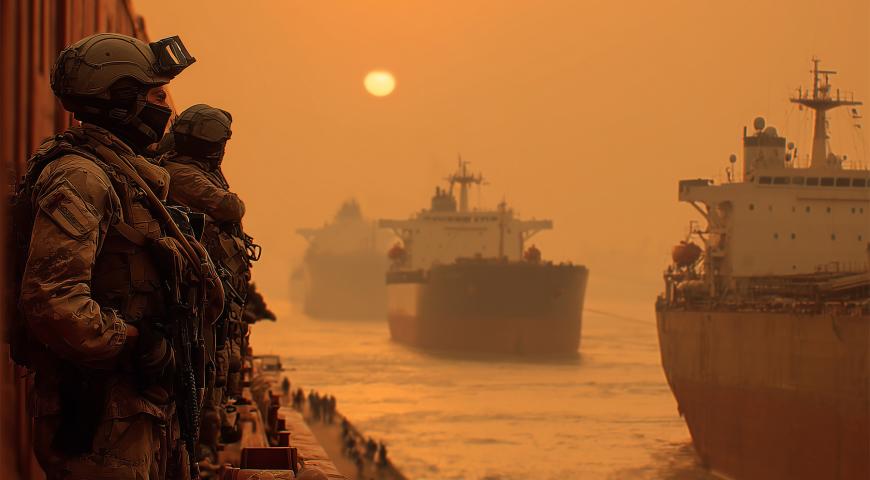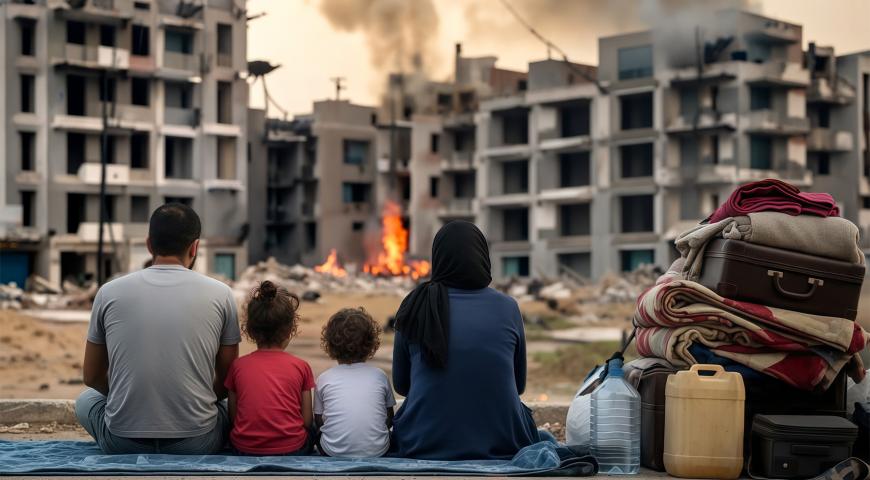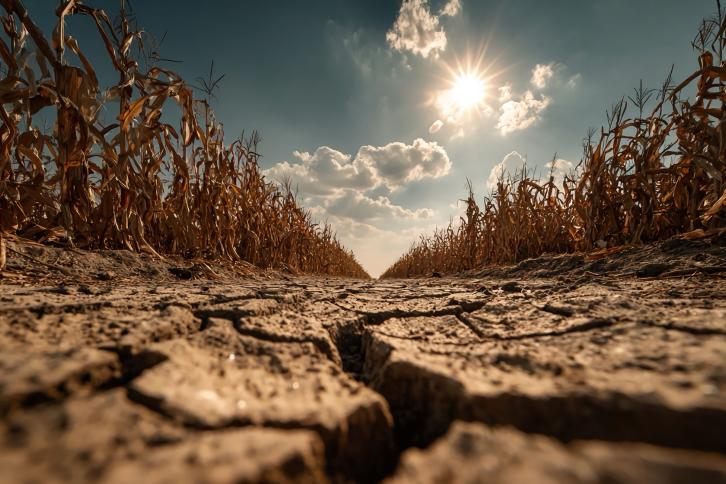
The three Perspectives – Case Studies focuses on translating strategy into capability and offers the best essays from students of the Military Art Part-Time program that address the question:
Has the 2023 Defence Strategic Review provided the broad force design needed for the demands of the next two decades?
Case Study 1
The purpose of the Defence Strategic Review (DSR) of 2023 is to optimise Defence capability and posture to meet the security challenges facing Australia over the next two decades and beyond.[1] Shaping and optimising the combat power of the ADF involves identifying the current and emerging strategic risks that will require an ADF operational response, developing posture and preparedness settings, and prioritising Defence spending on the force structures and capability options aligned to meeting the challenges of Australia’s strategic circumstances. This paper will contend that by focussing the force design and investment priorities on the highest strategic risk, the prospect of major conflict in our region, the DSR has left gaps in responding to the most likely strategic risk related to the impacts of climate change. As a result of these gaps, the force design will be misaligned to the full scope of demands the ADF will face in the coming decades.
Bateman and Bergin’s definition of the major elements of climate change risk to national security will be used as a framework for considering the DSR’s success or otherwise in identifying, assessing and addressing the risks and demands posed to Defence by climate change. Bateman and Bergin identify four key themes of climate change risk to national security. Firstly, militaries are polluters and there need for militaries to reduce their emissions and impacts on climate change. Secondly, climate change has direct impacts on the roles and missions of militaries, with increasing participation in Humanitarian Assistance and Disaster Relief (HADR) becoming routine for militaries across the globe. Thirdly, climate change has an impact as a threat multiplier, exacerbating social, economic and political vulnerabilities and contributing to instability and potential conflict. Lastly, increasing variabilities and extremities of weather, temperature and sea-level have direct impacts on Defence estate, training, activities and supporting infrastructure.[2]
Defence’s contribution as a polluter has been largely addressed and will not be considered further in this paper. Defence briefed the incoming Government in 2022 on a range of investments to drive a 43 per cent reduction in Greenhouse Gas Emissions by 2030 and achieve net zero by 2040.[3] The DSR further identifies the need to accelerate the Defence transition to clean energy and outlines a plan to be presented to Government by 2025.[4] The remaining three factors will be evaluated by firstly looking at climate change impacts in the Pacific region and the failure of the DSR to fully address expected climate related demands on the ADF in maintaining the regional stability critical to Australia’s national security. Secondly, the use of the ADF in support of domestic disaster relief and recovery support will be reviewed, contending that it is unrealistic for Defence to distance itself from this role given the predicted increasing frequency and intensity of natural disaster events and lack of suitable response alternatives available to Government in the short term. Lastly, the gaps associated with climate change impacts on the DSR’s pivot to the north will be identified, considering the risks to Defence estate, infrastructure, training and activities.
Climate change impacts in the Pacific
Climate change effects in the Pacific will create significant demands on the ADF over the coming decades. Climate change remains the single greatest threat to the security of the Blue Pacific Continent[5] and ADF operations will be impacted by both the first order effects of climate change, and climate change as a threat multiplier of existing vulnerabilities in traditional security concerns. The increasing frequency and intensity of extreme weather events and natural disasters can be expected to create increased requests for HADR from Australia as a regional leader. The higher order effects of climate change creating regional instabilities such as food insecurity, population migration, territorial disputes, political and economic instability, increase the likelihood of ADF involvement in peacekeeping operations in the region or related tasks such as bolstering the capacity of Australian Border Force in protecting Australia’s borders from climate migration.[6] The increasing occurrences of environmental and political instability as a result of climate change in the Pacific region will almost certainly translate into an increasing demand on the ADF to provide response options for Government in support of HADR and stability operations.
Beyond the tacit expectations of support from Australia as part of the Pacific family, the Australian Government has undertaken formal security commitments in the region to provide disaster relief and protection from military aggression, which would have severe political ramifications if not met. A salient example is the Falepili Union treaty with Tuvalu, in which Australia has committed to supporting migration of the Tuvaluan population as they are displaced by rising sea levels, but also providing assistance to Tuvalu in the event of a natural disaster, public health emergency or military aggression.[7] Conceivably, all three of these scenarios could result in an ADF tasking. Questions have been raised about the ADF’s capability to support a defence guarantee for Tuvalu, with Graham and Shrimpton suggesting the ADF difficulties in sustaining recent HADR operations in Tonga present a poor indicator of a credible response in Tuvalu.[8] Whilst Australia’s primary motivation for the agreement seems to be to deny China a security foothold in the region, the HADR and defence guarantee must be perceived as credible by Indo-Pacific nations in order for Australia’s position as security partner of choice in the region to remain firm and prevent the pivot to Beijing for security, as has already occurred in the Solomons and Kiribati in recent years.
The DSR identifies that climate change is now a national security issue and a major destabilising factor in the Pacific and it should be expected that the DSR therefore provides some assessment and recommendations in relation to the Defence structure, posture and preparedness to respond. The DSR highlights that the Pacific is critical to the security of Australia and the essentiality of HADR to Australia’s Pacific engagement. It further acknowledges the risk that climate change poses to the region as threat multiplier, and ensuing potential for increasing demands for peacekeeping, peace enforcement, and response to intrastate and interstate conflict.[9] In terms of force design priorities and recommendations however, the DSR is silent on explicit capability requirements to support the expected demands of Pacific HADR and stability operations. At most, the DSR definition of ‘focused force’[10] identifies that the capabilities required to address the primary military threat will provide some latent capability to deal with lower-level contingencies and crises.
The DSR is lacking in its stated aim of optimising Defence capability and posture to meet the nation’s security challenges to 2033 and beyond when it comes to the national security impacts of climate change in the Indo-Pacific region. The DSR highlights the vital importance of Pacific stability and engagement and significant expected demands related to climate change in the region over the coming decades, but describes only a latent capability to respond. Demands on the ADF as a result of first, or higher order effects of climate change in the Pacific are almost a certainty and Australia’s credibility as a security partner and regional leader relies on the ADF being able to credibly respond, yet the DSR does not specifically address these demands in its force design priorities.
Domestic disaster response and recovery support
Consistent with the upwards trend of climate change impacts in the Pacific, domestic climate events are also predicted to continue rising in frequency and intensity, presenting a significant risk to Australians. Since the extreme bushfire season of 2019-2020, which resulted in a significant loss of life and livelihood, Australia’s resilience and response to domestic disasters has been the subject of intense debate. Significant weaknesses in emergency management structures, funding arrangements and responsibilities between the state and federal governments have been identified and the role of the ADF in augmenting response and recovery support, when state resources have been overwhelmed, has been a major consideration.[11] Clarke highlights the increasing trend in ADF involvement in climate change related operations over the past 25 years and its correlation with Australia’s rising mean temperature anomaly.[12] Whilst alternatives to the ADF are being explored, the continuing pace of extreme weather events predicted and current immaturity of alternate capabilities make it likely that the demands on the ADF to contribute to domestic disaster response and recovery support will continue in the coming decades.
The use of ADF personnel to support domestic disaster relief is problematic due to the concurrency pressures on preparedness and capacity for primary security and warfighting tasks.[13] This has been recognised by Government, with the Royal Commission into National Natural Disaster Arrangements and the DSR clearly articulating the risks to the defence of Australia inherent in continuing to use the ADF in this role.[14] A suitable alternative to ADF support has not yet been agreed and implemented and there have been suggestions that the ADF should be postured to play a larger role, rather than be supplanted. In his speech to the National Press Club in 2020, Prime Minister Scott Morrison spoke of consideration for a greater role in domestic disaster relief for the ADF.[15] Glasser has further highlighted the need to adapt the posture, training and capabilities of the ADF to meet the expected demands of disaster relief alongside traditional security roles.[16] Until a clear decision and implementation of an alternative to Defence as a disaster response force is attained, its it is likely that Defence will continue to be requested to provide support and concurrency pressures should be accounted for in the Defence force design.
The development of an alternative to the ADF for domestic disaster relief will be challenging to realise in the next decade. The support provided by the ADF to augment the capacity of the states is described by Alexander as being a function of capability and scale. The ADF maintains a range of military and support capabilities not readily available to community or industry, inclusive of skilled personnel trained to operate such capabilities in highly demanding situations. It also provides a readily accessible, prepaid workforce able to provide support to low-skilled support tasks, prepositioned and capable of internal management of planning, movement and logistical functions.[17] Funding is a significant barrier to replicate the capabilities and scale that Defence currently provides, particularly as the responsibility for initial disaster response rests within individual states and territories. Recruiting, training, maintaining and coordinating a national disaster relief workforce, either paid or volunteer, is also a monumental task which will be further hampered if tackled differently by each state. Even if the funding barrier could be overcome, using the acquisition and force generation lead time of major Defence capabilities as an indicator, it could reasonably be expected to take a decade or more to develop a sufficiently equipped and skilled core of capabilities and workforce to provide a realistic alternative to the ADF. Such being the case, it would be reasonable to expect the ADF to plan and posture, via the DSR, to meet at least some level of the increasing needs of domestic disaster response and recovery support until able to transition to an alternative.
The DSR does not include demands for domestic disaster relief in the force design and assigns the responsibility to the Commonwealth to arrange suitable response measures in conjunction with the states and territories, with Defence as a measure of last resort only.[18] Government has only agreed-in-principle to the recommendation, and exploration of alternatives continues. The recent National Climate Risk Assessment has identified the concurrency impacts to Defence preparedness as a key risk to progress to second pass assessment and implementation planning. Public submissions have also been collated in support of a discussion paper on Alternative Commonwealth Capabilities for Crisis Response.[19] Development and implementation of alternative capacity and capability will take significant time and funding to implement, however, as previously described. There is not currently, nor likely to be in the next decade, a suitable mature alternative to calling out Defence as an adjunct domestic disaster relief force, despite acknowledgement of the impact on Defence preparedness to undertake primary security roles. By disassociating Defence from the problem, the DSR force design fails to recognise that until such time as an alternative is implemented, Defence will continue to be called out, realising the preparedness and concurrency risks highlighted.
ADF operations in the north
Defence activities in northern Australia will be particularly prone to the impacts of climate change over the next 20 years. Thomas describes two major aspects to this impact. Firstly, the increasing frequency and intensity of climate events will affect Defence bases, infrastructure, ports and equipment, including the reliance on civilian infrastructure such as sewerage, power, water. Extremes of heat, humidity, tides and weather have the potential to challenge both personnel and equipment, with the operating performance of fuels and sensors, and the ability of personnel to operate in high temperature environments posing significant challenges.[20] Secondly, climate hazards will impact the conduct of military training. Drought, floods, extreme weather and tide events will constrain the viability of training safely and to the extent needed to achieve required preparedness levels. For example, the fire danger associated with live fire activities in dry conditions.[21] Townsville is an example of a major northern Defence base that also hosts some of Australia’s largest joint and multilateral training exercises in the nearby training areas. The coming decades in the Townsville regions are predicted to bring higher temperatures and more frequent hot days above 35 degrees Celsius. The region will also be subject to more intense downpours and cyclones, rising sea levels, more frequent sea level extremes and warmer, more acidic seas.[22] This increasingly harsh operating environment is representative of the challenges that must be a key consideration in ADF force design decisions when expanding its posture and operations in northern Australia.
Previous Defence reviews have highlighted the pressures climate change will levy on the Defence estate, however the DSR does not articulate or assess climate change when assigning priorities for estate and force posture in the north. The DSR places significant emphasis on remediation and hardening of Defence bases in the north of Australia and the strategic criticality of the ability to posture in the north, including robust civil infrastructure. The DSR’s land domain force structure design priorities include major redisposition of Army personnel and equipment across northern bases, including an additional 500 personnel and their families to move from Adelaide to Townsville. The need to consider climate risks to estate is well established with the 2016 White Paper highlighting the need to ensure Defence estate is appropriately planned and postured to meet the implications of climate change beyond 2025.[23] The 2018 senate committee on the Implications of climate change for Australia’s national security noted the additional stress that climate change places on a range of military support and enabling functions.[24] The DSR does note the vulnerability of northern civil infrastructure to the effects of climate change, including road and rail networks and security of fuel supply, but recommends that these be dealt with by other bodies or in future work. Therefore, the DSR as it stands fails to fully identify or address the climate risks associated with the force design priorities in the north of Australia, one of the most climate affected areas of Australia. This suggests that the ADF will be inadequately prepared to deal with these climate risks as they are realised.
Conclusion
When considering a three-point estimate of the strategic risks facing Australia in the next two decades, the worst-case scenario is that major power competition spills over into a conflict scenario that impacts Australia’s sovereignty and national interests. The best-case is of course that the Indo-Pacific region is stable, secure and prosperous economically, politically and environmentally and the ADF remains an uncalled upon insurance policy. This paper contends that the most-likely, in fact almost certain scenario, is that the ADF will be operationally tasked in relation to the effects of climate change. The DSR has framed its force design and investment priorities around the highest strategic risk, and there is no argument that the ADF must be capable of deterrence and response to the highest level of threat Australia is likely to face. When addressing the most-likely threat of climate change however, this paper has shown that the force design articulated in the DSR contains serious gaps in its ability to meet the demands expected to be meted on Defence in the coming decades.
Batemen and Bergin’s definition of the major elements of climate change risk to national security provides a useful framework against which this paper has examined the extent to which the DSR addresses climate change impacts in the Pacific, domestically and in the execution of Defence activities in the north. The DSR is clear in recognising that climate change will amplify challenges across the region, and emphasises the importance of the collective security and engagement in the Indo-Pacific, yet describes only latent capability to deal with emergent crises and low-level conflicts. The ADF’s role in HADR, peacekeeping and stability operations, as a result of climate change, are critical to Australia’s reputation and regional leadership, and the credibility of Australia’s ability to provide a defence guarantee under formal arrangements such as that with Tuvalu. The DSR dissociates Defence from a routine role in domestic disaster relief and recovery support, citing the concurrency pressures impacting preparedness, readiness and combat effectiveness for the ADF’s primary task. It is unrealistic for Defence to expect operational taskings in support of domestic disaster relief to cease until a viable alternative has been implemented, which could conceivably take more than a decade. This will leave Defence realising the identified concurrency risks when Government has no other response alternatives and must act to save the lives of Australians. Lastly, Defence estate and infrastructure has been established on the basis of a stable climate with predictable variability.[25] The DSR places an immediate priority on remediation and hardening of Defence bases in the north of Australia and makes significant posture changes in the region. The impact of climate change is likely to have severe ramifications on Defence activities and critical infrastructure in northern Australia in the coming decades. Despite there being an established case for consideration through previous Defence reviews, the DSR does not explicitly address these issues.
The implications of the gaps identified in this paper are manifold. By not designing the force to meet the demands of the most-likely national security threat, climate change, the risks of concurrency pressures impacting preparedness, readiness and combat effectiveness are more likely to be realised. This could have severe follow-on consequences to the ADF’s ability to meet the primary military security threat identified in the DSR as well as reputational impacts to Australia’s position in the Indo-Pacific, putting further pressure on regional stability. It is heartening to see that there is significant energy being devoted to addressing, or at least further defining, some of these issues through parallel initiatives such as the National Climate Change Risk Assessment, Alternative Commonwealth Capabilities for Crisis Response Discussion Paper and others. The forthcoming National Defence Strategy and biennial net assessment of the DSR provide significant opportunities to recognise the significance of climate change impacts and should seek to refine the ADF force design priorities to ensure Defence is truly postured to meet the demands of the coming decades.
References
Alexander, Stephen. “Australian Defence Force Refocus of Resources Will Leave a Gap in Response and Recovery.” The Australian Journal of Emergency Management 38, no. 3 (July 1, 2023): 6.
Australian Government - Department of Climate Change, Energy, the Environment and Water. “National Climate Risk Assessment - First Pass Assessment Report,” 2024.
Australian Government - Department of Defence. 2016 Defence White Paper. Parliamentary Paper (Australia. Parliament) ; 2016, No. 59, 2016.http://www.defence.gov.au/whitepaper/Docs/2016-Defence-White-Paper.pdf.
———. National Defence: Defence Strategic Review, 2023.
Australian Government: Department of Defence. “Incoming Government Brief (Declassified),” September 2022.https://www.defence.gov.au/sites/default/files/2022-09/514_2122_documents.pdf.
Australian Government Department of Foreign Affairs and Trade. “Australia-Tuvalu Falepili Union Treaty.” Accessed April 4, 2024.https://www.dfat.gov.au/geo/tuvalu/australia-tuvalu-falepili-union-treaty.
Bateman, S., and A. Bergin. Naval, National Security and Defence Issues from Climate Change. Research Handbook on Climate Change, Oceans and Coasts. Edward Elgar Publishing Ltd., 2020.https://doi.org/10.4337/9781788112239.00030.
Bergin, Anthony. “Senate Report on Climate Change and National Security Offers Opportunities for Defence.” The Strategist, June 4, 2018.https://www.aspistrategist.org.au/senate-report-on-climate-change-and-national-security-offers-opportunities-for-defence/.
Clarke, Amanda Gosling. “Military Challenges From Climate Change.” Contemporary Issues in Air and Space Power 1, no. 1 (November 1, 2023): bp36471855.https://doi.org/10.58930/bp36471855.
Department of Home Affairs Website. “Alternative Commonwealth Capabilities for Crisis Response Discussion Paper.” Department of Home Affairs Website. Accessed April 6, 2024.https://www.homeaffairs.gov.au.
Glasser, Robert Daniel. “The Rapidly Emerging Crisis on Our Doorstep.” [Barton, Australian Capital Territory]: Australian Strategic Policy Institute, 2021.
Graham, Euan, and Bec Shrimpton. “The Defence and Security Implications of the Australia–Tuvalu Treaty.” The Strategist, November 23, 2023.https://www.aspistrategist.org.au/the-defence-and-security-implications-of-the-australia-tuvalu-treaty/.
Mark Binskin, Chair. “Royal Commission into National Natural Disaster Arrangements: Report.” Inquiry Report. [Manuka, A.C.T.]: Royal Commission into National Natural Disaster Arrangements, October 28, 2020. Australian Family & Society Abstracts Database.
Morrison, Scott. “Address, National Press Club.” PM Transcripts, January 29, 2020.https://pmtranscripts.pmc.gov.au/release/transcript-42638.
Ogge, Mark, Bill Browne, and Travis Hughes. “HeatWatch: Increasing Extreme Heat in Townsville.” The Australia Institute, March 2019.https://australiainstitute.org.au/wp-content/uploads/2020/12/P692-HeatWatch-Townsville-WEB_0.pdf.
Pacific Islands Forum Secretariat. “The Pacific Security Outlook Report: 2022-2023,” 2022.
Queensland Government: Department of Environment and Science. “Climate Change in the Townsville-Thuringowa Region,” 2019.https://www.qld.gov.au/__data/assets/pdf_file/0025/124675/townsville-climate-change-impact-summary.pdf.
Senate Foreign Affairs, Defence and Trade References Committee. Senate Report: Implications of Climate Change for Australia’s National Security, 2018.
Thomas, Michael. “Climate Change and Military Forces.” Edited by Robert Glasser, Cathy Johnstone, and Anastasia Kapetas. The Geopolitics of Climate and Security in the Indo-Pacific. Barton, Australian Capital Territory: Australian Strategic Policy Institute, 2022.
1 Australian Government - Department of Defence, National Defence: Defence Strategic Review, 2023, 12.
2 S. Bateman and A. Bergin, Naval, National Security and Defence Issues from Climate Change, Research Handbook on Climate Change, Oceans and Coasts (Edward Elgar Publishing Ltd., 2020), 409–424,https://doi.org/10.4337/9781788112239.00030.
3 Australian Government: Department of Defence, “Incoming Government Brief (Declassified),” September 2022, 76,https://www.defence.gov.au/sites/default/files/2022-09/514_2122_documents.pdf.
4 Australian Government - Department of Defence, National Defence: Defence Strategic Review, 41.
5 Pacific Islands Forum Secretariat, “The Pacific Security Outlook Report: 2022-2023,” 2022.
6 Amanda Gosling Clarke, “Military Challenges From Climate Change,” Contemporary Issues in Air and Space Power 1, no. 1 (November 1, 2023): bp36471855,https://doi.org/10.58930/bp36471855.
7 “Australia-Tuvalu Falepili Union Treaty,” Australian Government Department of Foreign Affairs and Trade, accessed April 4, 2024,https://www.dfat.gov.au/geo/tuvalu/australia-tuvalu-falepili-union-treaty.
8 Euan Graham and Bec Shrimpton, “The Defence and Security Implications of the Australia–Tuvalu Treaty,” The Strategist, November 23, 2023,https://www.aspistrategist.org.au/the-defence-and-security-implications-of-the-australia-tuvalu-treaty/.
9 Australian Government - Department of Defence, National Defence: Defence Strategic Review, 41–46.
10 Australian Government - Department of Defence, 54.
11 Mark Binskin, Chair, “Royal Commission into National Natural Disaster Arrangements: Report,” Inquiry Report ([Manuka, A.C.T.]: Royal Commission into National Natural Disaster Arrangements, October 28, 2020), Australian Family & Society Abstracts Database; Australian Government - Department of Climate Change, Energy, the Environment and Water, “National Climate Risk Assessment - First Pass Assessment Report,” 2024.
12 Clarke, “Military Challenges From Climate Change.”
13 Australian Government - Department of Defence, National Defence: Defence Strategic Review, 41.
14 Mark Binskin, Chair, “Royal Commission into National Natural Disaster Arrangements: Report,” 185–202.
15 Scott Morrison, “Address, National Press Club,” PM Transcripts, January 29, 2020,https://pmtranscripts.pmc.gov.au/release/transcript-42638.
16 Robert Daniel Glasser, “The Rapidly Emerging Crisis on Our Doorstep” ([Barton, Australian Capital Territory]: Australian Strategic Policy Institute, 2021).
17 Stephen Alexander, “Australian Defence Force Refocus of Resources Will Leave a Gap in Response and Recovery,” The Australian Journal of Emergency Management 38, no. 3 (July 1, 2023): 6.
18 Australian Government - Department of Defence, National Defence: Defence Strategic Review, 41.
19 Australian Government - Department of Climate Change, Energy, the Environment and Water, “National Climate Risk Assessment - First Pass Assessment Report,” 13–15; Department of Home Affairs Website, “Alternative Commonwealth Capabilities for Crisis Response Discussion Paper,” Department of Home Affairs Website, accessed April 6, 2024,https://www.homeaffairs.gov.au.
20 Clarke, “Military Challenges From Climate Change.”
21 Michael Thomas, “Climate Change and Military Forces,” ed. Robert Glasser, Cathy Johnstone, and Anastasia Kapetas, The Geopolitics of Climate and Security in the Indo-Pacific (Barton, Australian Capital Territory: Australian Strategic Policy Institute, 2022).
22 Mark Ogge, Bill Browne, and Travis Hughes, “HeatWatch: Increasing Extreme Heat in Townsville” (The Australia Institute, March 2019),https://australiainstitute.org.au/wp-content/uploads/2020/12/P692-HeatWatch-Townsville-WEB_0.pdf; Queensland Government: Department of Environment and Science, “Climate Change in the Townsville-Thuringowa Region,” 2019,https://www.qld.gov.au/__data/assets/pdf_file/0025/124675/townsville-climate-change-impact-summary.pdf.
23 Australian Government - Department of Defence, 2016 Defence White Paper, Parliamentary Paper (Australia. Parliament) ; 2016, No. 59, 2016, 102,http://www.defence.gov.au/whitepaper/Docs/2016-Defence-White-Paper.pdf.
24 Senate Foreign Affairs, Defence and Trade References Committee, Senate Report: Implications of Climate Change for Australia’s National Security, 2018, 26–27.
25 Anthony Bergin, “Senate Report on Climate Change and National Security Offers Opportunities for Defence,” The Strategist, June 4, 2018,https://www.aspistrategist.org.au/senate-report-on-climate-change-and-national-security-offers-opportunities-for-defence/.
Defence Mastery
Social Mastery

Wing Commander Kelly Chan is an Aviation Electrical Engineer and a graduate of the Australian Command and Staff Course (Military Art)–Part Time (formally ACSC-Remote) class of 2024. She is currently posted to Air Force Headquarters in Canberra, where she leads Air Combat Program governance.
Perspectives – Case Study 1 © 2026 by . This work is licensed under CC BY-NC-ND



Please let us know if you have discovered an issue with the content on this page.
Comments
Start the conversation by sharing your thoughts! Please login to comment. If you don't yet have an account registration is quick and easy.