Introduction
Antarctica sits out of sight and out of mind for the vast majority of the Australian population. Some people may think of Antarctica as a harsh and desolate frozen desert, others may consider it a pristine environmental wonderland. Most probably think of it for the penguins. However, in recent years Antarctica has become a figurative and literal hot topic for the media and many strategic thinkers. The most obvious and immediate issue is climate change which is wreaking havoc on the southern continent, with Antarctic sea ice recordings in 2024 being near all-time lows, causing significant security concerns for Australia and the rest of the global community.[2] However, not as obvious but as challenging for Australia is the increasingly opaque actions of some revisionist powers on Antarctica, such as China and Russia, at a time where great power competition is as high as it has been for decades.[3] These challenges have thrust Antarctica back into public view and raised many questions about how Australia is responding to the security concerns to our south.
Australia has had a vested interest in Antarctica since its earliest explorers and prides itself on being an Antarctic leader. Around 42 percent of the continent is claimed by Australia as sovereign territory, a landmass of 5.9 million square kilometres which equates to almost 80 percent of the landmass of Australia.[4] This vast claim, the Australian Antarctic Territory (AAT), underscores the significant stake that Australia has in maintaining a secure and stable Antarctica. Currently, Australia’s approach to achieving this security is through upholding the six-decade old Antarctic Treaty System (ATS), by leading scientific research, maintaining environmental protections and increasing collaborative educational and economic opportunities.[5] As technology develops, great power competition escalates and the strategic importance of Antarctica increases questions are being asked, including by the Vice Chief of the Australian Defence Force (ADF), on whether this approach is robust enough to maintain our interest in the AAT as more grey zone and traditional security challenges arise.[6] However, as the ATS has restrictions on military actions in Antarctica and Australia prides itself as a leader in the rules-based global system a “Catch-22” arises, where to respond to other nations bending or breaking the ATS would require Australia to do the same, undermining ourselves and justifying the behaviour of revisionist states.
This paper will argue that to best protect Australian national interests in Antarctica and provide assurance of long-term security in the face of rising grey-zone and traditional challenges, the ADF must take action to support the Government’s broader Antarctic strategy. It will show that the ADF can do this in ways which do not directly contravene the non-militarisation articles of the ATS, and in concert with its broader “Strategy of Denial”. [7] While many commentators acknowledge the growing security challenges in Antarctica, and some recommend stronger actions from broader government, this paper will go a step further and attempt to bridge theory and practice by providing tangible actions which the ADF could specifically take. Should the ADF continue to ignore or exclude Antarctica from Defence thinking, as it has done so for some time now, a critical lever of national power will be unprepared should the Government need to address any significant shift in the Antarctic security situation.
Method and Structure
In order to discern how Australia can best respond to more traditional security threats in Antarctica, including grey zone activity, this paper has use existing media articles, academic perspectives and official documents to gain a broad understanding of the historical aspects of security threats in Antarctica, the current means for enforcing security, emerging threats and existing solutions. Over seventy historical and contemporary sources and pieces were examined as part of this literature review, and while not all of them were pertinent to the final paper, they were all useful in gaining a comprehensive understanding of broader Antarctic history and policy. The reviewed sources that did inform the final conclusions are referenced throughout. It is acknowledged that the majority of the literature review was of Western (primarily Australian, British and United States) authors and media, with a heavy bent towards official government sources and defence focussed academics due to the nature of the research question. This paper also broadly ignores the primary security challenge for Antarctica, being the scourge of climate change, as numerous other authors have done so far more comprehensively, and the current Government strategy is already focussed on responding to that threat. Finally, only non-classified documents were available for review, thus there is potential that the ADF has or is already taking actions beyond those currently publicised; however, this is unlikely given the lack of evidence or effect.
To inform the argument that the ADF should take actions to best support the protection of Australian national interests in Antarctica, this paper will develop over three sections. The first section of this paper will provide deeper context to how the ATS developed to respond to traditional security challenges, what are Australian national interests in Antarctica and the current grey-zone and potential traditional security concerns surrounding revisionist actions in Antarctica. The second section will review the ADF’s past policies and current actions in support of Australian interests in Antarctica, leading opinions on how Australia should approach traditional security concerns in the AAT and current actions by likeminded states. The final section will provide some potential options which the ADF could take to better support our national interests in Antarctica and the most significant risks posed by the “Catch-22” that both action and inaction by the ADF creates.
Section 1 – Antarctic Background and Security Concerns
The Antarctic Treaty System (ATS)
The Antarctic Treaty System (ATS) emerged during a critical period of Cold War tensions, serving as a remarkable example of international cooperation against the backdrop of global competition. As the two super powers of the time competed for influence across the globe and into the new space domain, the ATS was signed in 1959 and entered into force in 1961, to prevent Antarctica from becoming another theatre of rivalry.[8] Up until this point in time, seven countries including Australia had made territorial claims to parts of Antarctica, some of which overlapped, creating potential for conflict over resources and strategic positions to the southern corridors of the world’s oceans. As numerous research stations were established to gain position on the continent, there was a clear need for what would become “the first arms control agreement in… the Cold War”.[9]
To meet this need, the ATS was written in a way that was both deliberate and ambiguous enough that it would appeal to all states, regardless of their existing or future desire to claim Antarctic sovereignty.[10] Article IV of the treaty essentially froze the status quo on Antarctica, neither denying existing claims, nor recognising them or any future claims on the continent.[11] Article I banned any “non-peaceful” military actions on the continent including weapons tests and exercises, ensuring Antarctica could only be used for scientific purposes.[12] Articles II and VII ensured that all areas on Antarctica would be free and open for access by any party to access for research or to maintain transparency through inspections.[13] These agreements, coupled with other Articles enshrining consistent dialogue, diplomacy and cooperation effectively put all questions of sovereignty on hold and removed the potential for any aggressive resolutions of ongoing or future territorial disputes. This has allowed evolution of the ATS to include new provisions which further protect the environment, such as the Madrid Protocol of 1991, which placed a prohibition on the extraction of mineral resources, and the Convention on the Conservation of Antarctic Marine Living Resources of 1982 which restricts and monitors actions in Antarctic fisheries.
Despite its longevity and the perceived successes over the past sixty years, the ATS in the modern era is a fragile solution in the face of renewed great power competition and increasing resource pressures.[14] It relies on the willingness and altruism of the signatory states to behave in line with not only the wording of the various articles and protocols, but also within the spirit of Antarctic cooperation, without the requisite mechanisms for enforcing compliance.[15] With 57 states now party to the ATS, 29 of whom have consultative and therefore voting power,[16] it places a significant pressure on a system which was designed for a small group whose original interests were mostly avoiding nuclear war between the Cold War powers. As latter sections of this paper will highlight the scenario that is evolving in Antarctica is one where individual nations are bending the standards of the ATS to meet their national interests and using their voting powers to stifle the systems success, which means relying solely on the ATS to remain enforced without taking active measures poses a strategic risk to Australian interests on the continent.
Australian Interests in Antarctica
Australia has significant interest in Antarctica due primarily to both proximity and territorial claims. In 1933, an act was passed by parliament, stating “that part of the territory in the Antarctic seas which comprises all the islands and territories, other than Adelie Land, situated south of the 60th degree south latitude and lying between the 160th degree east longitude and the 45th degree east longitude, is hereby declared to be accepted by the Commonwealth as a Territory under the authority of the Commonwealth, by the name of the Australian Antarctic Territory.[17] For the last ninety years, Australia has maintained this claim of sovereignty over the largest portion of the continent, with three permanent stations on the continent and one on Macquarie Island, allowing a year round presence in the AAT, two of which pre-date the establishment of the ATS.[18] This presence on AAT, coupled with the relative peace and stability afforded by the ATS to date, has provided Australia a strategic buffer to the South, giving comfort that no threats could easily threaten our southern approaches or sea lines of communication.[19] Successive governments have reiterated this strategic importance, and the core national interests have hardly changed since the Hawke administration first officially published them in the mid-1980s.[20]
The latest interests are articulated in the Australian Antarctic Strategy and 20 Year Action Plan which was last updated in 2022, and are summarised as:
- Maintain Antarctica’s freedom from strategic and/or political confrontation;
- Preserve our sovereignty over the AAT, including our sovereign rights over adjacent offshore areas;
- Support a strong and effective ATS;
- Conduct world-class scientific research consistent with national priorities;
- Protect the Antarctic environment, having regard to its special qualities and effects on our region;
- Be informed about and able to influence developments in a region geographically proximate to Australia;
- Foster economic opportunities arising from Antarctica and the Southern Ocean, consistent with our ATS obligations including the ban on mining and oil drilling.[21]
However, while the intent may be good, the Department of Climate Change, Energy, the Environment and Water, who are responsible for executing the strategy through the Australian Antarctic Division (AAD), are hampered by budgetary concerns and workforce issues.[22] And much like the ATS, the interests of Australia can only be achieved with the current level of support if all other states also do their part in not causing confrontation and supporting the ATS. Unfortunately, this is not the case.
It is no secret that the greatest strategic concern to Australia at present is the challenge posed by China in the Indo-Pacific region and the potential for the status-quo of a United States rules-based order to be undermined by revisionist states. The opening paragraphs, written by the Deputy Prime Minister, of the 2024 National Defence Strategy name China and Russia specifically as threats to global order and Australia’s interests.[23] While the remainder of the document fails to mention Antarctica, there is significant evidence which suggests that both countries have strategic interest in Antarctica and are stretching the ATS to its limits.
Russia
Russia’s involvement in the Antarctic was a driving force for the establishment of the ATS, with Soviet presence in the AAT expanding to seven research stations during the 1950s and threats of military basing causing significant concern to Australia and its interests.[24] Australia’s foreign minister at the time went as far as stating“ We do not want the Russians to mount installations in the Antarctic from which they can drop missiles on Melbourne or Sydney”.[25] Russia’s view is that they have a right to be perceived as a polar power and their media often victimises the Russia position on the continent, remarking that the ATS, claimant states and the United States seek to “capture the continent”.[26] Yet Russia’s actions both on Antarctica and in Europe seem to demonstrate that it is not the victim, and instead sees Antarctica as another theatre where it can challenge the global order. Russia’s Antarctic action plan sets goals for the establishment of new infrastructure to provide a further foothold on the continent, its Maritime Doctrine calls for investments in equipment and machinery and the National Security Strategy singles out increasing a presence in Antarctica to provide unhampered access to the Southern Ocean.[27]
Of note are Russia’s actions with its GLONASS dual-purpose navigation systems, where much like the equivalent Global Positioning System employed by the United States and its partners, GLONASS installations in Antarctica are critical for intelligence, surveillance and reconnaissance for military uses. Where the Western powers are more transparent with their use of GPS, Russia does not share the same view and given that President Putin expressly mentioned that Russian superweapons could “attack through the North and South poles”, it is likely that the Russians would not hesitate to use their Antarctic systems to support military theatres.[28] Beyond the dual use technologies are Russia’s suspicious actions in recent years, including the blocking of Norwegian inspectors in 2018,[29] an act expressly forbidden by the ATS, and falsifying of monitoring systems to mask the location of fishing vessels in 2020.[30] Thanks to Russia’s position on both the United Nations security council and the ATS bodies, the ability to block actions to curb this behaviour has led to the Russians further eroding the strength of the ATS. While the current actions in Ukraine have significantly drained the resources available to Russian actions in Antarctica, they have demonstrated that Russia is not bound by the norms of the global order, and may hope to increase competition in other strategic regions, like Antarctica, to support its aims closer to home.[31]
China
While Russia raises concerns for future Antarctic security, it is China who presents the greatest challenge to Australian national interests and the most realistic traditional threat to Antarctica. Much like their actions elsewhere in the region, in space and in cyberspace, China acts in assertive, aggressive and unexplained ways in Antarctica.[32] China advocates in its Antarctic strategy for safeguarding the ATS and moving towards a more equitable orientation of governance supported by Chinese leadership.[33] However, much like its broader global policies, China actions demonstrate that it views Antarctica in a more realist fashion, where the freezing of sovereignty by the ATS allows rational use and a “first come, first serve mentality”.[34] Since establishing its first station in 1985, China has built five bases on the continent, the majority of which are located within the AAT.[35] Thanks to China’s ‘civil–military’ fusion laws, even though these stations are outwardly designed for scientific research, any strategic benefit can be shared with the military.[36] China is also investing heavily in icebreaking ships, with its first nuclear powered version launched in 2024, and strengthening its logistic network, which alludes to a long-term intent to secure strategic access and operational autonomy in Antarctica.[37] Should conflict ever break out elsewhere in the Indo-Pacific, these assets and China’s bases would fall under the command of the Peoples’ Liberation Army – Navy, creating a dilemma for Australia in particular.[38]
Much like the Russians, China exploits the grey area of the ATS to its considerable advantage.[39] Whether it is installation of their own dual-use BeiDou navigation system, exploration for minerals or circumventing inspections and fishery limits, China uses the ambiguity of the ATS to its advantage. Even when it comes to the mandatory reporting of actions on Antarctica, China remains obscure choosing to either not publish or report nothing in its annual reports on operations, activities and military support.[40] While the ATS serves its purposes for China at present, it seems clear from their actions that should a situation arise where the benefit of breaking from the treaty arose, such as mining becoming financially viable or conflict in the South China Sea prompting military security of Chinese dual-use assets, they will exploit that opportunity.[41] For Australia, this indicates that the current policies of relying on the ATS to curb the actions of states like Russia and China are only useful as long as adhering to the ATS is in the interests of those nations.[42] Without the ability to deter the grey-zone and traditional security challenges posed to Antarctica, Australia risks being caught unprepared for a worst-case scenario.
Section 2 - Past and present responses to Antarctic security challenges
Past Defence Policies and Current ADF actions
Up until the end of the Cold War, the ADF maintained a public eye on Antarctica, because since the 1950s, Australia had held the position that “(we) could not afford to have the territory in ‘hostile hands’, as it was within aircraft range of Australia”.[43] In the 1987 White Paper, defence went as far as naming Antarctica as a component of the strategic operating environment and a key area for national defence and security interests.[44] However, thanks to the limits of technology and the general success of the ATS it was recognised that the need for defence activities could be reduced within the AAT and diplomatic solutions should be the preferred method for resolution of issues. In subsequent releases, white papers failed to mention Antarctica at all, until 2009 when it was reintroduced by defence as part of a shift in priority setting, returning it to the operating environment once more, albeit one where substantial military response was not likely until at least 2030.[45] Yet despite the rising grey-zone challenges and traditional risk as outlined in Section 1, along with the growing concern of climate change, subsequent white papers downplayed the continent as “no credible risk”.[46] With the first National Defence Strategy released in 2024 after the thorough Defence Strategic Review in 2023, there was likely some hope amongst more pessimistic Antarctic observers that the actions of China and Russia in other theatres would once again bring Antarctica to the fore of defence planning. Yet once again Antarctica was completely overlooked, at least in all publicly available documentation, affirming that the Government could turn a blind eye to ongoing issues and simply hope that nothing unexpected would arise to the south.
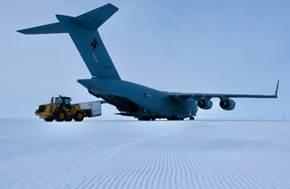
Despite the lack of Antarctic policy in any overarching ADF guidance, several functions are undertaken in support of the AAD and in compliance with the ATS. In a submission to a parliamentary inquiry in 2017, the ADF noted several supporting roles it plays including:
- logistics support functions
- scientific support (geospatial, hydrographical and meteorological)
- expertise in extreme climate, remote, maritime and airborne medicine
- aeromedical evacuation
- contributing to Australia’s national responsibilities in the region, notably, support to maritime resource protection tasks.[47]
Regular flights are conducted by the Royal Australian Air Force during summer months, under the auspices of Operation Southern Discovery, along with maritime meteorology and limited infrastructure support.[48] However, given the rising challenges, capping ADF support at these basic functions is arguably no longer sufficient, especially given recent decisions to abandon construction of an all year aerodrome which would have provided additional capacity to support the AAD and improve their ability to enforce the ATS through inspections without ADF involvement.[49]
Likeminded Nations
Australia’s key partners who share interests in Antarctica all approach Antarctic security in similar ways to Australia. New Zealand, Australia’s closest neighbour and another state who has a close relationship with Antarctica, focuses its policy on preservation of Antarctic environment and peace through commitment to the ATS.[50] Like Australia, maintain a Southern approach free of contest is in New Zealand’s national interests, and it was the first country to publicly call out military style activities which were being conducted by states exploiting the ATS.[51] They are active in patrolling the Southern Ocean, as demonstrated by the New Zealand plane which identified and singled out the Russian vessel spoofing its location discussed in Section 1.[52] However, like Australia, New Zealand has a relatively small force and budget available to maintain their national interests in Antarctica and as the grey-zone and more traditional security threats increase, New Zealand’s ability to police its strategic operating environment becomes more difficult.
The United States on the other hand, has significant forces and resources available to them. It, like Australia and New Zealand, has been one of the leading countries on the governance and protection of Antarctica since the ATS was established. The United States was the driving force behind drafting the ATS in 1958 and securing a peaceful Antarctica during the Cold War.[53] It has the largest presence in Antarctica, including three year-round stations, the largest amount of personnel and even a research station on the geographical South Pole.[54] Although it has a clear national interest in Antarctica, the United States was criticised in recent years, much like Australia is now, for not including Antarctica in its National Security Strategy despite the uptick in Chinese and Russia actions threatening Antarctic security.[55] Many American national security experts argued that the United States was falling behind in the Arctic presenting a significant threat to North America, and that the actions being undertaken by revisionist states in Antarctica mirrored those in the North Pole delayed by several decades.[56] Unlike Australia, the United States Government took note of this threat and recently issued its first Antarctic National Security Memorandum in over 30 years. This highlights an intent to “continuously strengthen (the) promotion of transparency, compliance, cooperation, the exchange of best practices, and adherence to relevant norms by all ATS participants.”[57]It has committed the country to investing in new icebreakers for the Coast Guard, an arm of the military, and refurbishing stations on the continent. Most importantly, it indicates direction from the White House for the military to take notice of the shift in Antarctic politics and to prepare for eventualities where their operational experience in the Arctic may have to be reoriented to the South.
Many other nations are concerned with Russian and Chinese actions in Antarctica, and while all see the value in maintaining a strong ATS, the concerns over mineral exploitation, sovereignty challenges and illegal fishing, as well as the danger of spillover of more traditional security threats from the wider world cannot be ignored. While in the Arctic, NATO and other traditional allies can group together in a more permissive security context for militaries to operate, in Antarctica it is more challenging. Australia, and one of the leaders of this group of likeminded nations with one of the largest stakes in Antarctic security should continue to lead efforts to counter the emerging threats.
Section 3 – Potential actions available to the ADF and the risks
This section aims to provide some theoretically simple actions which the ADF could undertake in the coming years in support of the AAD and securing Australia’s national interests, based upon the potential challenges outlined in Section 1 and the past and ongoing approaches in Section 2. They build on suggestions made by other authors, filling the research gap where recommendations cease at a national level and do not detail what individual arms, like the ADF, should aim to improve. The “Catch-22” of achieving these potential military led responses to Antarctic security without undermining the ATS and legitimising Chinese and Russian actions remains a huge challenge and the ADF has previously been embarrassed by trying to advocate for militarisation.[58] However, due to the rapid increase in the uncertainty of current great power competition and the exponential advances in technology which make challenging for position on Antarctica far more viable and attractive, at least some of the following recommendations are likely to be prudent to prepare the ADF and make Australia’s ability to protect its national interests credible.
Strengthening Defence Antarctic Policy and Dialogue
The first component of this recommendation would be for the ADF to use the directed two-yearly update cycle for the National Defence Strategy to include Antarctic security as a focus from 2026 onwards. The benefits of this action would cascade for both the ADF and Australia. Internal to the ADF, much like the United States Security Memorandum, planning and professional development would be draw back into considering Antarctica as a key friction point in the future. There would be no requirement to shift the main effort of the ADF from Deterrence by Denial in the Indo-Pacific, but including a secondary and complementary effort in increasing presence and focus on Antarctica and the Southern Ocean, within the confines of the ATS is an important step. For the broader Government, by the ADF and Defence leading with their policy, a more comprehensive Security Policy could be drafted. Led by the AAD but driven by the Government, this could encompass all the arms of national power and focus resources in a more definitive manner than the current strategy. The security focus, both in support of climate change mitigation and the more traditional threats, will likely increase impetus for funding. This recommendation could be bolstered by also enacting similar advice from scholars, including the creation of an Antarctic Group within Defence.[59]
Increase partnership and interoperability with likeminded nations
The ADF is well versed in integrated operations with other nations, and this should extend to Antarctic security. Experts have advocated for increased collaboration between Australia, New Zealand, and the United States to enhance logistics and maritime patrolling.[60] The ADF should actively pursue these ends, leveraging unmanned air and maritime systems as they come online, to better patrol the southern approaches and ATS protected areas. AUKUS style collaborations for not just interoperable, but interchangeable ice breaking and polar platforms should be explored by the ADF to make acquisition of further platforms more cost-effective. Additionally, the ADF in collaboration with intelligence agencies could advocate for an intelligence and communications sharing agreement with likeminded states, who may not be in the Five-Eyes intelligence community, to better inform them of the actions of revisionist states and enable more cohesive diplomacy in responding within the ATS. This would have benefits for not only deterring grey-zone and traditional threats, but also with protecting the environment and predicting impacts of climate change. Finally, embedding planners and operators into Arctic exercises to expose them to considerations for polar operations may also be a low cost, but high return action the ADF could make with its many likeminded partners.
Advocate for improved infrastructure
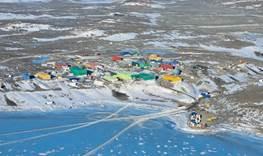
Several key pieces of infrastructure should be recommended by the ADF as priorities for the government in support of defending the national interests in Antarctica. The first would be the reversal of the decision to cancel the construction of the all-season runway near Davis Station.[61] This would have numerous security benefits, including redundancy for logistics, improved ability to conduct inspections via aerial platforms and providing a cooperative hub for other nations in the AAT. The ADF should also seek to leverage its ties with the United States to encourage the Coast Guard to establish a homeport in Australia, potentially co-located with the Royal Australian Navy in Western Australia, creating the infrastructure to not only support inspections and maritime patrolling, but provide a second strategic gateway city to Antarctica as an alternate to Hobart.
Support increased intelligence and security
While sharing intelligence with likeminded allies is a key part of the recommendation above, it goes hand in hand with improving Australia’s own ability to conduct reconnaissance and surveillance within the AAT and in support of enforcing the ATS. While the deployment of military systems on or over the AAT is not feasible while adhering to the ATS, increased employment of spaced based platforms, as well as enhancing regulatory patrolling in the Southern Ocean would be areas that the ADF could support broader Antarctic security. In addition, advise and support in protecting the cyber systems of AAD and scientific institutions is a critical function the ADF can easily fulfil, as testing and protecting the cyber domain could deny freedom of action from revisionist forces.[62]
Increase support to AAD through Operation Southern Discovery
As noted in Section 2, the ADF already provides limited support to AAD, but this could be increased with relatively low impost on the ADF but with potential benefits to the strategic security of Antarctica. One of the biggest areas of risk is that China and Russia cannot be held to account if inspections of their activities cannot be conducted. In general, low numbers of inspections are conducted by all parties[63] and Australia has only conducted three sets of inspections over the last decade.[64] The employment of skilled ADF personnel rotating in generalist roles in the AAT could provide either expertise or relieve the burden on qualified AAD staff to conduct more regular inspections and achieve a deterrence effect on states which may otherwise breach the ATS. Increasing the logistics support of Operation Southern Discovery via more regular airbridge would also relive pressure on Australia’s single Antarctic vessel to support research and inspections.
Conclusion
Antarctica is a wicked problem for Australia to address. The country has a longer history of supporting and leading as part of the ATS, and as such must adhere to its rules around non-militarisation of the continent. However, as revisionist powers increase their grey-zone activities through dual-use technologies, opaque use of military forces and expansion of infrastructure in the AAT, it becomes hard for Australia to address these issues and any potential tradition challenges which may arise without mirroring the competitive behaviours.[65] This creates a Catch-22 for the ADF, who over the past decades have generally ignored Antarctica in policy and like the rest of the government assumed that our national interests were protected by the ATS. As likeminded nations around the world start to take note of the increasing traditional threats around the southern pole, so to must Australia.
Considering the above, this paper has made recommendations to the ADF specifically, filling a gap where most current commentators stop at a more multi-agency government level. These actions are all relatively low impact, whether it is including Antarctica in Defence policy and discourse, advocating for improvements in infrastructure, using multi-national networks to increase efficiency or simply relieving pressure on the AAD to free them to conduct more accountability inspections. While minor in nature, bringing Antarctic security to the fore and preparing elements of the ADF to better support the defending of national interests in the face of rising tensions on our southern flank can only have a net benefit. By taking these steps in advance, the ADF can aid the broader government in avoiding greater militarisation in the future, and assist in strengthening the ATS rather than add to the challenges being posed by other states.
AAP. Australian Antarctic Strategy & 20 Year Action Plan: Update 2022. Australian Government, 2022.
ABC News. "Australia Contemplating Dual-Use Military Technology in Antarctica." August 19, 2019.
ABC News. "China Opens First Antarctic Research Station Due South of Australia and New Zealand." February 8, 2024.
Alshdaifat, Shadi, Brett van Niekerk, and Trishana Ramluckan. "Antarctica and Cyber-Security: Useful Analogy or Exposing Limitations?" In Proceedings of the 20th European Conference on Cyber Warfare and Security (ECCWS 2021), 18, 21. Curran Associates, 2021.
Antarctic Treaty Secretariat. "Inspections Database." Antarctic Treaty System. Accessed October 13, 2024.
Antarctic Treaty Secretariat. "Parties to the Antarctic Treaty." Antarctic Treaty System. Accessed October 6, 2024. Online.
Antarctic Treaty Secretariat. The Antarctic Treaty, 1 December 1959, 402 UNTS 71.
Australian Government. 2009 Defence White Paper. Canberra: Department of Defence, 2009.
Australian Government. The Defence of Australia (1987 Defence White Paper). Canberra: Department of Defence, 1987.
Australian Government. Australian Antarctic Territory Acceptance Act 1933. Sect. 2.
Australian Antarctic Division. "Australian Antarctic Territory." Australian Antarctic Program. Accessed October 4, 2024. Online.
Australian Antarctic Division. Australia’s Antarctic Strategy and 20 Year Action Plan: 2022 Update. 2022.
Australian War College. Research Questions Asked by Senior Leaders 2024. AWC707 Additional Resources, 2024.
Bloom, Evan T. Meeting Antarctica’s Diplomatic Challenges: Joint Approaches for Australia and the United States. Special Report No. 181. Canberra: Australian Strategic Policy Institute, February 2022.
Boulègue, Mathieu. Russia and China in Antarctica and the Southern Ocean: Implications for the Five Eyes. Sea Power Centre, Royal Australian Navy, 2022.
Brady, Anne-Marie. China as a Polar Great Power. Cambridge: Cambridge University Press, 2017.
Brady, Anne-Marie. "Antarctica as a Site of Strategic Competition: Optimal Responses for Australia and New Zealand." In Antarctica 2050: Strategic Challenges and Responses – Academic Opinion Papers, edited by Anne-Marie Brady, 19. Canberra: Australian National University, 2022.
Brady, Anne-Marie. "China’s Military Activities in Antarctica." China's Expanding Antarctic Interests: Implications for Australia. August 2017.
Buchanan, Elizabeth. Ice Panda: Navigating China’s Hybrid Antarctic Agenda. Australian Strategic Policy Institute, August 2024.
Buchanan, Elizabeth. "Antarctica in the Grey Zone." Australian Journal of International Affairs 76, no. 3 (May 2022): 326–328.
Buchanan, Elizabeth. "China Is Serious About Antarctica. Australia Should Be Too." The Strategist, Australian Strategic Policy Institute, June 14, 2024.
Burke, Ryan. The Polar Pivot: Great Power Competition in the Arctic and Antarctic. Boulder, CO: Lynne Rienner Publishers, 2022.
Burke, Ryan, and Jahara Matisek. "The Polar Trap: China, Russia, and American Power in the Arctic and Antarctica." Journal of Indo-Pacific Affairs, October 25, 2021.
Commission for the Conservation of Antarctic Marine Living Resources. Report of the Thirty-Ninth Meeting of the Commission. Virtual Meeting, October 27–30, 2020. Accessed October 9, 2024.
Department of Climate Change, Energy, the Environment and Water. Australian Antarctic Division Budget and Jobs, 2023. Accessed October 9, 2024.
Department of Defence. National Defence Strategy 2024. Australian Government, 2024.
Department of Defence. Submission to the Joint Standing Committee on the National Capital and External Territories Inquiry into the Adequacy of Australia’s Infrastructure Assets and Capability in Antarctica. Canberra: Department of Defence, 2017.
Department of Defence. "Operation Southern Discovery." Australian Government. Accessed October 13, 2024.
Dodds, Klaus. "Antarctic Geopolitics." In Handbook on the Politics of Antarctica, edited by Klaus Dodds, Alan D. Hemmings, and Peder Roberts. Cheltenham, UK: Edward Elgar Publishing, 2017.
Hayworth, J.D. "US National Security Planners Must Recognize Antarctica’s Importance." The Defense Post, April 16, 2024. Accessed October 13, 2024.
Johnson, Chris. "Australia Needs a Year-Round Runway on Antarctica." The Strategist, Australian Strategic Policy Institute, September 16, 2024. Accessed September 17, 2024.
Kökyay, Ferhat. "Impact of Security Dilemma on Antarctica’s Militarization." Polish Polar Research 43, no. 2, 2022.
McGee, Jeffrey, David Edmiston, and Marcus Haward. The Future of Antarctica: Scenarios from Classical Geopolitics. Singapore: Springer, 2022.
Merriam-Webster. s.v. "Catch-22." Merriam-Webster.com Dictionary. Accessed October 13, 2024.
New Zealand Ministry of Defence. Strategic Defence Policy Statement 2018. Wellington: Ministry of Defence, 2018.
Norwegian Government. Report of the Norwegian Antarctic Inspection Under Article VII of the Antarctic Treaty and Article 14 of the Environmental Protocol. February 2018. Accessed October 9, 2024.
Press, Tony. "Security Challenges of Antarctica and the Southern Ocean." United Service 74, no. 1 (March 2023)
Sacks, Benjamin J., and Peter Dortmans. "What Are China's Long-Term Antarctic Ambitions?" RAND Corporation, April 2024.
State Oceanic Administration. White Paper on China's Antarctic Activities. State Oceanic Administration, May 22, 2017. Accessed October 10, 2024. Online.
Tandon, Ayesha. "Antarctic Sea Ice Maximum in 2024 Is Second Lowest on Record." Carbon Brief, October 4, 2024.
U.S. Department of State. "Memorandum of a Conversation." Foreign Relations of the United States, 1955‐1957, vol. XI, UN and General International Matters, Document 305. Washington, DC: US Government Printing Office, October 14, 1957.
U.S. Government. "National Security Memorandum on United States Policy on the Antarctic Region." Section 1(d). The White House, May 17, 2024.
Wilson, Robert E. "National Interests and Claims in the Antarctic." Arctic 17, no. 1 (March 1964)
1 Merriam-Webster, s.v. "Catch-22," Merriam-Webster.com Dictionary, accessed October 13, 2024
2 Ayesha Tandon, "Antarctic Sea Ice Maximum in 2024 Is Second Lowest on Record," Carbon Brief, October 4, 2024, Online
3 Ryan Burke and Jahara Matisek, "The Polar Trap: China, Russia, and American Power in the Arctic and Antarctica," Journal of Indo-Pacific Affairs, October 25, 2021: 36
4 Australian Antarctic Division, "Australian Antarctic Territory," Australian Antarctic Program, accessed October 4, 2024, Online
5 Australian Antarctic Division, Australia’s Antarctic Strategy and 20 Year Action Plan: 2022 Update, 2022: 7
6 Australian War College, Research Questions asked by Senior Leaders 2024, AWC707 Additional Resources: 1
7 Department of Defence, National Defence Strategy 2024, Australian Government, 2024: 22
8 Jeffrey McGee, "Geopolitical Scenarios Examining the Potential for Militarisation of Antarctica," United Service 74, no. 1 (March 2023): 15
9 Ryan Burke, The Polar Pivot: Great Power Competition in the Arctic and Antarctic, (Boulder, CO: Lynne Rienner Publishers, 2022): 33.
10 Robert E. Wilson, "National Interests and Claims in the Antarctic," Arctic 17, no. 1 (March 1964): 24
11 Antarctic Treaty , 1 December 1959, 402 UNTS 71
12 Antarctic Treaty Secretariat, "The Antarctic Treaty," Antarctic Treaty System, accessed October 6, 2024, Online
13 Ibid
14 Elizabeth Buchanan, Ice Panda: Navigating China’s Hybrid Antarctic Agenda, Australian Strategic Policy Institute, August 2024: 6
15 Ryan Burke, The Polar Pivot: Great Power Competition in the Arctic and Antarctic, (Boulder, CO: Lynne Rienner Publishers, 2022): 225
16 Antarctic Treaty Secretariat, "Parties to the Antarctic Treaty," Antarctic Treaty System, accessed October 6, 2024, Online
17 Australian Government, Australian Antarctic Territory Acceptance Act 1933, Sect. 2
18 Tony Press, "Security Challenges of Antarctica and the Southern Ocean," United Service 74, no. 1 (March 2023): 22
19 Elizabeth Buchanan, Ice Panda: Navigating China’s Hybrid Antarctic Agenda, Australian Strategic Policy Institute, August 2024: 6
20 Marcus Haward and Andrew Jackson, "Australia’s Antarctic Future," in Australia and the Antarctic Treaty System: 50 Years of Influence, ed. Marcus Haward and Tom Griffiths (Sydney: University of New South Wales Press, 2011): 338.
21 AAP, Australian Antarctic Strategy & 20 year Action Plan: Update 2022, Australian Government, 2022,
22 Department of Climate Change, Energy, the Environment and Water, Australian Antarctic Division Budget And Jobs, 2023, accessed October 9,https://www.dcceew.gov.au/sites/default/files/documents/77327.pdf
23 Department of Defence, National Defence Strategy 2024, Australian Government, 2024: P6
24 Jeffrey McGee, David Edmiston, and Marcus Haward, The Future of Antarctica: Scenarios from Classical Geopolitics, (Singapore: Springer, 2022): 21-23
25 Klaus Dodds, "Antarctic Geopolitics," in Handbook on the Politics of Antarctica, ed. Klaus Dodds, Alan D. Hemmings, and Peder Roberts (Cheltenham, UK: Edward Elgar Publishing, 2017), Chapter 13.
26 Mathieu Boulègue, Russia and China in Antarctica and the Southern Ocean: Implications for the Five Eyes, Sea Power Centre, Royal Australian Navy, 2022: 5
27 Mathieu Boulègue, Russia and China in Antarctica and the Southern Ocean: Implications for the Five Eyes, Sea Power Centre, Royal Australian Navy, 2022: 5-6
28 Ibid: 7
29 Norwegian Government, Report of the Norwegian Antarctic Inspection Under Article VII of the Antarctic Treaty and Article 14 of the Environmental Protocol, February 2018, accessed 9 October 2024, Online
30 Commission for the Conservation of Antarctic Marine Living Resources, Report of the Thirty-Ninth Meeting of the Commission, Virtual Meeting, 27–30 October 2020, accessed 9 October 2024, Online
31 Charles H. Jacoby Jr. and Ryan Burke, "Russia, China, and the Facts of Polar Security," Modern War Institute, July 20, 2023, accessed 9 October 2024, Online
32 Elizabeth Buchanan, Ice Panda: Navigating China’s Hybrid Antarctic Agenda, Australian Strategic Policy Institute, August 2024: 4
33 State Oceanic Administration, White Paper on China's Antarctic Activities, State Oceanic Administration, May 22, 2017, accessed 10 October 2024, Online
34 Anne-Marie Brady, China as a Polar Great Power (Cambridge: Cambridge University Press, 2017)
35 ABC News, "China Opens First Antarctic Research Station Due South of Australia and New Zealand," February 8, 2024.
36 Elizabeth Buchanan, Ice Panda: Navigating China’s Hybrid Antarctic Agenda, Australian Strategic Policy Institute, August 2024: 9
37 Benjamin J. Sacks and Peter Dortmans, "What Are China's Long-Term Antarctic Ambitions?" RAND Corporation, April 2024
38 Anne-Marie Brady, "China’s Military Activities in Antarctica," China's Expanding Antarctic Interests: Implications for Australia, August 2017: 14
39 Elizabeth Buchanan, "Antarctica in the Grey Zone," Australian Journal of International Affairs 76, no. 3 (May 2022): 326
40 Elizabeth Buchanan, Ice Panda: Navigating China’s Hybrid Antarctic Agenda, Australian Strategic Policy Institute, August 2024: 14
41 Jeffrey McGee, David Edmiston, and Marcus Haward, The Future of Antarctica: Scenarios from Classical Geopolitics, (Singapore: Springer, 2022): 157-59
42 Elizabeth Buchanan, "Antarctica in the Grey Zone," Australian Journal of International Affairs 76, no. 3 (May 2022): 328
43 US Department of State, "Memorandum of a Conversation," Foreign Relations of the United States, 1955‐1957, vol. XI, UN and General International Matters, Document 305 (Washington, DC: US Government Printing Office, 14 October 1957).
44 Australian Government, The Defence of Australia (1987 Defence White Paper) (Canberra: Department of Defence, 1987): 19
45 Australian Government, 2009 Defence White Paper (Canberra: Department of Defence, 2009): 51.
46 Elizabeth Buchanan, Ice Panda: Navigating China’s Hybrid Antarctic Agenda, Australian Strategic Policy Institute, August 2024: 8
47 Department of Defence, Submission to the Joint Standing Committee on the National Capital and External Territories Inquiry into the Adequacy of Australia’s Infrastructure Assets and Capability in Antarctica (Canberra: Department of Defence, 2017): 3
48 Department of Defence, "Operation Southern Discovery," Australian Government, accessed October 13, 2024, Online
49 Chris Johnson, "Australia Needs a Year-Round Runway on Antarctica," The Strategist, Australian Strategic Policy Institute, September 16, 2024, accessed 17 September 2024, Online
50 Anne-Marie Brady, "Antarctica as a Site of Strategic Competition: Optimal Responses for Australia and New Zealand," in Antarctica 2050: Strategic Challenges and Responses – Academic Opinion Papers, ed. Anne-Marie Brady (Canberra: Australian National University, 2022): 18
51 New Zealand Ministry of Defence, Strategic Defence Policy Statement 2018 (Wellington: Ministry of Defence, 2018): 22.
52 Mathieu Boulègue, Russia and China in Antarctica and the Southern Ocean: Implications for the Five Eyes, Sea Power Centre, Royal Australian Navy, 2022: 10
53 Evan T. Bloom, Meeting Antarctica’s Diplomatic Challenges: Joint Approaches for Australia and the United States, Special Report No. 181 (Canberra: Australian Strategic Policy Institute, February 2022): 6
54 Ibid: 10
55 J.D. Hayworth, "US National Security Planners Must Recognize Antarctica’s Importance," The Defense Post, April 16, 2024, accesses 13 October 2024, Online
56 Ryan Burke and Jahara Matisek, "The Polar Trap: China, Russia, and American Power in the Arctic and Antarctica," Journal of Indo-Pacific Affairs, October 25, 2021:
57 U.S. Government, "National Security Memorandum on United States Policy on the Antarctic Region," Section 1(d), The White House, May 17, 2024
58 ABC News, "Australia Contemplating Dual-Use Military Technology in Antarctica," August 19, 2019
59 Elizabeth Buchanan, Ice Panda: Navigating China’s Hybrid Antarctic Agenda, Australian Strategic Policy Institute, August 2024: 16
60 Anne-Marie Brady, "Antarctica as a Site of Strategic Competition: Optimal Responses for Australia and New Zealand," in Antarctica 2050: Strategic Challenges and Responses – Academic Opinion Papers, ed. Anne-Marie Brady (Canberra: Australian National University, 2022): 19
61 Chris Johnson, "Australia Needs a Year-Round Runway on Antarctica," The Strategist, Australian Strategic Policy Institute, September 16, 2024, accessed 17 September 2024, Online
62 Shadi Alshdaifat, Brett van Niekerk, and Trishana Ramluckan, "Antarctica and Cyber-Security: Useful Analogy or Exposing Limitations?" in Proceedings of the 20th European Conference on Cyber Warfare and Security (ECCWS 2021), 18 (Curran Associates, 2021): 21
63 Ferhat Kökyay, "Impact of Security Dilemma on Antarctica’s Militarization," Polish Polar Research 43, no. 2 (2022): 173
64 Antarctic Treaty Secretariat, "Inspections Database," Antarctic Treaty System, accessed October 13, 2024
65 Elizabeth Buchanan, "China Is Serious About Antarctica. Australia Should Be Too," The Strategist, Australian Strategic Policy Institute, June 14, 2024
Defence Mastery
Social Mastery

Major Cameron Clarke is an Infantry Officer and a graduate of the Australian Command and Staff Course (Military Art) class of 2024. He is currently posted to the Land Combat College in Canberra, where he is responsible for the analysis, design and development of the Army Foundation Officer Training Continuum.
How the ADF can support Australia’s response to grey-zone and traditional security challenges in Antarctica © 2024 by . This work is licensed under CC BY-NC-ND



Please let us know if you have discovered an issue with the content on this page.
Comments
Start the conversation by sharing your thoughts! Please login to comment. If you don't yet have an account registration is quick and easy.