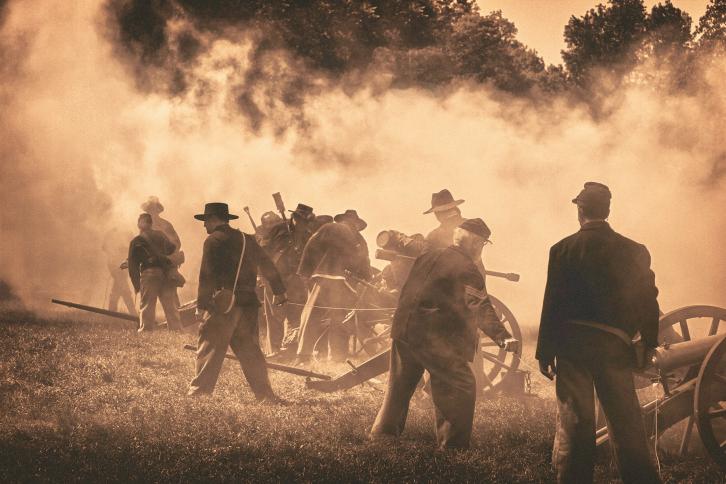
On the 12th of April 1861, America plunged into a bloody four-year-long contest of opposing ideologies between the Confederate South and the Union North of America. The flashpoint for hostilities commenced in earnest when Confederate forces attacked Fort Sumter in South Carolina, signalling the dire circumstances that faced fellow Americans with opposing aims. The Union, under President Abraham Lincoln, were focused on maintaining the sanctity of the Union with a centralised federal control over America.1 The Confederate States, under newly appointed President Jefferson Davis, were staunch believers in states’ rights. They were philosophically intent on managing their affairs, most notably slavery, to support the South’s chosen way of life away from Washington's influence.2
This essay will use the American Civil War as a vehicle to draw out three key lessons for strategic leaders. These lessons will illustrate the importance of clearly defined and robustly pursued strategic objectives, the necessity of integrating and balancing instruments of national power, and the importance of adaptability when faced with an evolving strategic environment. Through these lessons, the essay will contend that the Union’s victory was tied to a coherent grand strategy based on President Lincoln’s primary objective of reunification. To be clear, reunification dictated the terms for the North to go to war against the secessionist states of the South.3 Lidell Hart’s view on grand strategy’s role to ‘coordinate and direct all the resources of a nation towards the attainment of the political object of the war’ will be the definition through which the Union grand strategy will be explored.4
On paper, a Union victory would appear inevitable - they had superior resources, a larger population, greater access to technology, and diplomatic legitimacy. Yet, despite these advantages, a decisive victory eluded them. Exploring key Union decisions will further demonstrate how a coherent strategy sustained a war of attrition and ultimately secured victory.5 Ultimately it was the integration of all elements of national power that provided the foundations of good strategy.5
Strategic Lesson 1: Establish clear and concise objectives to support grand strategy.
A fundamental lesson for strategists is the importance of establishing and continually reinforcing a well-defined strategic objective. Strategist Lukas Milevski contends that the “very choice to pursue grand strategy and exercise the full breadth of instrumental power is implicitly a judgement that the war will be attritional…”.6 Fundamentally, Lincoln’s decision to go to war with the Confederates was to reunify the nation, emphasising it as the basis for the Union's grand strategy. Milevski continues, that operational design for military actions must also fit within a larger concept for success. Lincoln had several opportunities to deescalate tensions with the secessionist states, yet he viewed any compromise as legitimising their cause and undermining his primary objective of reunification. His unwavering commitment to this objective highlights a fundamental strategic lesson – clear and consistent objectives in pursuit of grand strategy.7
President Lincoln’s application of diplomacy in both domestic and international settings played a critical role in signalling his strategic objectives. Lincoln regarded the Federal Union as the only legitimate party involved in hostilities, ensuring that he linked his diplomatic efforts to supporting this key strategic objective. This would inform his engagement with foreign powers, where he was focused on preventing their recognition of the Confederacy to isolate them from potential diplomatic and resource support.8 The Confederate attack on Fort Sumter demonstrated a glimpse into the type of President Lincoln would be. He was resolute in his actions, often to the disagreement of those within his own government if it meant staying the course to support the Union’s strategy.9 Historian James M. McPherson supports this view when he argues that Lincoln understood that war fought without a clear focus on the political objects was destined for failure.10 Lincoln’s refusal to compromise on reunification at any cost ensured the Union’s grand strategy remained active. To meet his strategic objective, Lincoln was willing to make unfavourable decisions that risked escalating tensions with the South because he understood the bigger picture for the Union after hostilities.12
President Lincoln made strategic, long-term decisions to reinforce his economic advantages at the start of the war. He desired a quick military response to deal with secessionists but was prepared to fight an attritional war in pursuit of his grand strategy. The Union held a decisive economic advantage over the Confederacy and was better equipped to sustain an attritional war. At its core, the Civil War was a contest between the industrialised Union economy and the agrarian Confederate states of the South.1112 Mobilisation at the scale required later in the war would not come cheaply, so in the first year of the war, Lincoln imposed the nation’s first income tax of three per cent on annual income over $800 to generate a fiscal platform to sustain the war.14 By contrast, the Confederate government lacked the infrastructure to levy or collect taxes, a problem further exacerbated by the citizens of the South, who either lacked the means to pay a tax or the willingness to comply.13 Lincoln’s ability to mobilise the Union's economic settings gave the Union significant advantages in sustaining the war.14 Establishing a sustainable economic footing in wartime was essential to Lincoln’s preparedness to fight an attritional war that was capable of supporting the Union’s grand strategy.
The Union suffered several early humiliating tactical defeats on the battlefield yet maintained power economically and diplomatically to isolate tactical actions on the battlefield from derailing the Union strategy. Former Australian Defence Force General, John Frewen posited that “elements of national power can be prioritised differently depending on the circumstances”. In this case, Lincoln’s grand strategy was better serviced by his focus on establishing economic and diplomatic power to offset his military weakness until he could fully mobilise. The Union Army would eventually become a powerful national symbol and unifying institution at a time of great angst for the American people.15 For Lincoln’s grand strategy to be successful, he needed to maintain a clear focus on his strategic objectives and how national power could be best applied during the war.16
Strategic Lesson 2: Integrating Instruments of National Power is critical to the foundations of a grand strategic approach to war.
While a clear strategic objective helps with direction, its success depends on the competent integration of national power. Lincoln’s grand strategy was not just reliant on military success, it required timely integration with his economic, diplomatic, and political acumen. Integrating instruments of national power recognises the relative advantage of several avenues to deliver power over an adversary appropriate to the strategic situation. Academic, Robert Dahl refers to this as Power Comparability, which if viewed in relative terms, accepts that specific power at a moment in time can directly degrade an opposing force.17 Analysing two key examples of exploiting a national power advantage in pursuit of the Union's grand strategy will highlight this relationship. First, the multifaceted targeting of a fledgling Confederate economy enabled the Union to suffocate the Confederate’s limited ability to sustain a war of attrition. Second, the Union’s naval blockade on the South further isolated the Confederates from receiving foreign aid and vital trade to sustain their war efforts. Coordinating both efforts would eventually degrade the Confederate morale and will to fight.
Reinforcing the Union’s economic advantage through military means was pivotal in breaking the will of the Confederacy. Declaring a naval blockade was a risky strategy because its implementation could be considered a weapon or act of war.18 As an act of war, the target state has a right to be declared a belligerent, thus giving the Confederacy the potential right to engage in international markets for loans and supplies from neutral nations to support their cause.19 Despite this risk, the blockade was critical to reinforcing other instruments of power that Lincoln had targeted against the Confederates. He would eventually coordinate several iterations of the naval blockade during the war. To ensure the blockade was not simply a military manoeuvre, Lincoln raised the ‘Blockade Board’ as one of the only dedicated institutions to thoroughly study a singular objective and provide advice to the government.20
It ensured the blockade would become a calculated economic strategy to further isolate the Confederacy. This highlighted a dedicated focus on the integration of national power to support the overall strategy. The Union’s grand strategy was a multifaceted, coordinated approach, where different instruments of power work in concert to reinforce each other to produce compounding strategic effects on the target.
For similar reasons, Confederate President, Jefferson Davis campaigned hard to open the conflict to the international powers of the time. Davis’s trump card was “King Cotton”, a common phrase used by politicians, journalists and economists to underscore the sense of economic invincibility that the cotton trade provided the South.21 The Confederates hoped the South’s overwhelming market share and the reliance of the British and French textile industry would force them to intervene to secure cotton.22 Lincoln’s opposition didn’t have a fully functioning cabinet to effectively coordinate the Confederacy’s limited diplomatic engagements. Moreover, the Confederate Congress lacked the statecraft and domestic control to coordinate their diplomatic engagements.23 This resulted in some Southern States engaging independently to pursue their diplomatic interests with foreign powers. In doing so, some secessionist states sought an unofficial trade embargo on cotton exports to Europe.24 Their illinformed assessment was that this would apply pressure on European powers by suffocating the supply of cotton into Europe to force their intervention to secure access to the valuable textile commodity.27 Unfortunately for the Confederates, a blend of shrewd British diplomacy, reluctance to engage on another front, and an excess of cotton diminished the significance of withheld American cotton to elicit a response.25 Notably, this failed approach to draw in Britain and France did succeed in their declaration as neutral States.26 Neutrality was a blow to Lincoln’s primary diplomatic objective and had the potential to open the war to a wider international conflict, his focus remained on keeping this a domestic affair.30
A robust economy and powerful allies were essential for the implementation of strategic aims for both sides. Unfortunately for the Confederates, they were not able to integrate either to the extent required. This was a significant vulnerability that would underpin supporting elements of Lincoln’s strategy; keep foreign powers out of the war and starve the South’s economy.27 To sustain the war financially, Lincoln had a well-integrated combination of loans, notes and taxes to service a wartime economy.28 Indeed, the diverse nature of the Union economy strengthened their already superior industrial capacity and enabled Lincoln to sustain his strategic objectives. On the other hand, the Confederates were severely constrained by their fiscal policies linked to agriculture and cotton, which led them to rely heavily on inflationary financing when they were denied access to their primary economic leavers to support their war effort.29 Put simply, the ‘means’ did not meet the requirement of the desired ‘ends’ for the Confederates.
Strategic Lesson 3: Grand strategies must set the conditions for the security of a nation. A long-term approach to achieving war aims needs to allow for strategic flexibility to meet overarching political aims.
The American Civil War underscores the significance of strategic flexibility and a willingness to adapt objectives in response to changing circumstances. Strategist Tami Biddle contends that to develop a cohesive strategy, one must enable political leaders with options, possibilities and flexibility.30 As the war became increasingly protracted, President Lincoln was presented with an increasing array of options to reinforce his diplomatic, economic and military advantages. To highlight where adaptability and flexibility are crucial to strategy, this section will focus on two examples where Lincoln effectively realigned military objectives to support the Union's grand strategy. Firstly, the Battle of Antietam was instrumental in enabling Lincoln’s Emancipation Proclamation. Secondly, General William T. Sherman’s ‘March to the Sea’ demonstrated a significant change from a ‘limited war’ to an all-out ‘total war’. These two distinct applications of national power will demonstrate Lincoln’s willingness to adapt his military and diplomatic objectives to set the conditions for the security of the Union.
The coordinated application of military power led to an attritional war and reinforced Lincoln’s grand strategy. As the only U.S. President to serve entirely in wartime, Lincoln demonstrated a willingness to learn and adapt to military strategy in pursuit of his broader war aims. Over the course of the war, Lincoln played an increasingly active role with his four General-in-Chiefs, gaining confidence from their diverse range of approaches to support his overall strategy.31 The effective integration of military power at key points in the Civil War gave Lincoln a significant advantage over his Confederate adversary. In September 1862, the battle of Antietam became one of the bloodiest days of the entire war, with no tactical advantage achieved by either side. The Union had suffered several comprehensive defeats leading up to the battle, making it increasingly difficult for the Union to keep foreign powers from stepping in to force a peace deal.36 Lincoln, astutely aware of the strategic impacts that foreign intervention would have on his reunification objective, used the ambiguity of what could only be described as a tactical draw at Antietam to press home a critical step-change in his war aims.32
Lincoln’s Emancipation Proclamation marked a strategic pivot, redefining the war’s purpose and accelerating the Confederacy's decline. While his grand strategy remained centred on reunification, he was able to seize the moment and adopt emancipation objectives to leverage moral and diplomatic dimensions to legitimise the Union’s war effort.33 Some historians argue that the Emancipation Proclamation was more symbolic than strategically decisive because it did not free slaves immediately and only applied to the Confederate States.34 It was, however, the timing of Lincoln’s proclamation that demonstrated significant strategic awareness and an undeniable psychological impact on both States for two reasons. First, by framing the war as a struggle against slavery, Lincoln aimed to deter foreign intervention from Britain and France, both of whom had recently abolished slavery. Second, declaring an anti-slavery objective reinforced the Union’s moral position and aligned with key political and social values held by Britain and France. The proclamation redefined the Union’s war aims, broadening the war from solely a reunification focus into a battle for liberty.35 Lincoln aimed to further legitimise his cause and negate potential foreign support for the Confederates. Lincoln’s strategic awareness allowed him to integrate national power at critical moments to achieve his strategic objective.
The Emancipation Proclamation following the battle of Antietam adjusted his war aims and accelerated the cessation of hostilities with the South. After the early years of suffering major tactical defeats, the Union slowly regained the initiative by increasing the attritional impacts of a sustained war with the South. By the summer of 1862, the Union were fully established to wage an attritional war. Lincoln had to coordinate multiple theatres of the war and considered what would be left of the South at the war's end. The Union’s Major General Sherman’s infamous ‘March to the Sea’ would demonstrate another application of military power not yet experienced before in the War. Sherman’s March to the Sea was a thirty-sevenday campaign from Atlanta, Georgia to the Savannah coast where he let loose his army to target and destroy civilian infrastructure, crops, homes and ultimately, the will of the Confederacy.36 Lincoln needed a long-term focus on the outcomes of military actions and General Sherman’s campaign provided him with options.
This was total war, the type of war that deviates from the traditional focus of hostilities limited to military-against-military to one of utter devastation, targeting the will of citizens to endure death and destruction brought to their doorstep.37 In the case of the Civil War, this was the defenceless families of Confederate soldiers fighting wars far away in the North. Sherman’s March to the Sea tore through the state of Georgia in such a blaze that its impact was felt by Confederate soldiers fighting a campaign far away. It had such a psychological impact on the Confederacy that they began to question their very reason for maintaining the fight.38 This new and harsh way of bringing the war home to the Confederates had served its purpose, accelerating the cessation of hostilities and the eventual surrender of Confederate forces from April to June 1865. The Union continually adapted supporting military objectives to align with broader strategic goals. President Lincoln demonstrated the power of a flexible and coordinated approach to meet grand strategy—one that not only secured Union victory but also reshaped the very nature of modern warfare. The strategic environment is often dynamic and unpredictable, and these examples highlight the need for strategists to consider regular reassessment of aims and methods to remain effective during war.
Conclusion
In a war at the scale and duration of the American Civil War, military power applied in isolation would not have provided the necessary effects to meet the objectives of the war. For Lincoln, reunification was as much an ideological stance as it was a fight for territory and military power. In concert with Lincoln’s application of diplomacy, economics and political astuteness he demonstrated the resolve to service the Union's grand strategy and was willing to pay a high price for the sanctity of the Union.
On the pure numbers alone, the Confederacy should not have stood a chance. However, despite Confederate superiority on the battlefield in the early years of the war, the South were unable to link their military success with a coherent strategy. The Union’s victory in the American Civil War revealed the importance of clear objectives, integration of the instruments of national power and the need to seek space for strategic adaptability. The Union Naval blockade, the Emancipation Proclamation and Sherman’s March to the Sea all demonstrate how the Union’s strategy evolved in response to the realities of war. The lessons from the American Civil War remain relevant for modern strategists; have a well-defined and consistent end objective, understand the cost to support it, and maintain an ability to change course to adapt to the uncertainties of war.
This paper was edited for grammar using Grammarly and for feedback against the key elements of the assessment, Rubric using NotebookLM. I have critically assessed and validated any generated feedback given. The final version of this paper is my own creation.
Bailey, Anne J. “Sherman’s March to the Sea: Home Front Becomes Battlefront.” in The Oxford Handbook of the American Civil War:, October 21, 2021. https://doi.org/10.1093/oxfordhb/9780190903053.013.35.
Biddle, Tami Davis. “STRATEGY AND GRAND STRATEGY:” Strategic Studies Institute, US Army War College, 2015. JSTOR. http://www.jstor.org.ezproxyb.deakin.edu.au/stable/resrep11726.
Boritt, Gabor S. Why the Confederacy Lost. Oxford University Press, 1993.
Dahl, Robert A. “The Concept of Power.” Behavioral Science 2, no. 3, 1957: 201–15.
Edna Greene Medford. Lincoln and Emancipation. Concise Lincoln Library. Carbondale: Southern Illinois University Press, 2015.
Erath, John. “Union Success in the Civil War and Lessons for Strategic Leaders.” Joint Force Quarterly: National Defense University Press, 2015.
Frewen, John J. “A Bias for Action? The Military as an Element of National Power.” New Directions in Strategic Thinking 2.0, 2018, 37.
Gallagher, Gary W. “The Union War / Gary W. Gallagher.,” January 1, 2011. https://research.ebsco.com/linkprocessor/plink?id=31e8cc2f-77a3-3fb9-a03ffec94ddddf07.
Gene Dattel. Cotton and Race in the Making of America : The Human Costs of Economic Power. Chicago: Ivan R. Dee, 2009.
Hart, Basil Henry Liddell. The Decisive Wars of History: A Study in Strategy. London, Bell, 1929.
Jones, Howard. Blue and Gray Diplomacy : "A History of Union and Confederate Foreign Relations". 1st ed. The Littlefield History of the Civil War Era. Chapel Hill: The University of North Carolina Press, 2010.
Joseph McKenna. British Blockade Runners in the American Civil War. Jefferson, North Carolina: McFarland, 2019.
McPherson, James. Drawn with the Sword : Reflections on the American Civil War. Oxford, UNITED STATES: Oxford University Press, Incorporated, 1996. http://ebookcentral.proquest.com/lib/deakin/detail.action?docID=271336.
McPherson, James. Tried by War: Abraham Lincoln as Commander in Chief. Penguin, 2008.
McPherson, James., author. “Battle Cry of Freedom : The Civil War Era / James M. McPherson.” Oxford History of the United States no:6. (January 1, 1988). https://research.ebsco.com/linkprocessor/plink?id=3babb007-76c7-3add-8affcb6ba11122e2.
Milevski, Lukas. The Evolution of Modern Grand Strategic Thought. Oxford University Press, 2016.
Miller, Randall M. Lincoln and Leadership: Military, Political, and Religious Decision Making. Fordham Univ Press, 2012.
Razaghian, Rose. “Financing the Civil War: The Confederacy’s Financial Strategy.” Available at SSRN 621761, 2004.
Rovner, Joshua. “History Is Written by the Losers: Strategy and Grand Strategy in the Aftermath of War.” Journal of Strategic Studies 48, no. 1 (2025): 5–35.
Stoker, Donald. Purpose and Power : US Grand Strategy from the Revolutionary Era to the Present. Cambridge, UNITED KINGDOM: Cambridge University Press, 2024. http://ebookcentral.proquest.com/lib/deakin/detail.action?docID=31034210.
Stoker, Donald. The Grand Design : Strategy and the U. S. Civil War. Oxford, UNITED STATES: Oxford University Press, Incorporated, 2010. http://ebookcentral.proquest.com/lib/deakin/detail.action?docID=544494.
Tagg, Larry. “The Battles That Made Abraham Lincoln : How Lincoln Mastered His Enemies to Win the Civil War, Free the Slaves, and Preserve the Union / Larry Tagg.,” January 1, 2012. https://research.ebsco.com/linkprocessor/plink?id=ac822c30-0a59-3fbe-b89d88c1beaedb9a.
Varon, Elizabeth R., 1963-. “Disunion! : The Coming of the American Civil War, 1789-1859 / Elizabeth R. Varon.,” January 1, 2008. https://research.ebsco.com/linkprocessor/plink?id=e71a796d-0f4d-39b8-bff4205f71a04a64.
1Howard Jones, Blue and Gray Diplomacy : A History of Union and Confederate Foreign Relations, 1st ed, The Littlefield History of the Civil War Era (Chapel Hill: The University of North Carolina Press, 2010). Pg. 20.
2Elizabeth R. Varon 1963-, “Disunion! : The Coming of the American Civil War, 1789-1859 / Elizabeth R. Varon.,” January 1, 2008, Accessed 12 Mar 2025. Pg 210.
3Joshua Rovner, “History Is Written by the Losers: Strategy and Grand Strategy in the Aftermath of War,” Journal of Strategic Studies 48, no. 1 (2025): 5–35.
4Basil Henry Liddell Hart, The Decisive Wars of History: A Study in Strategy (London, Bell, 1929). Pg 150. 5 Larry Tagg, The Battles That Made Abraham Lincoln : How Lincoln Mastered His Enemies to Win the Civil War, Free the Slaves, and Preserve the Union. New York: Savas Beatie, 2012. Accessed March 18, 2025. ProQuest Ebook Central.
5John J Frewen, “A Bias for Action? The Military as an Element of National Power,” New Directions in Strategic Thinking 2.0, 2018, 37.
6Lukas Milevski, The Evolution of Modern Grand Strategic Thought (Oxford University Press, 2016).
Accessed online – JSTOR 10 Mar 25. Pg, 3.
7Gary W. Gallagher, “The Union War / Gary W. Gallagher.,” January 1, 2011, Pg 34.
8John Erath, “Union Success in the Civil War and Lessons for Strategic Leaders,” Joint Force Quarterly:
National Defense University Press, 2015.
9Randall M Miller, Lincoln and Leadership: Military, Political, and Religious Decision Making (Fordham Univ Press, 2012). Pg 11.
10James McPherson, Tried by War: Abraham Lincoln as Commander in Chief (Penguin, 2008). Pg 151. 12Larry Tagg, “The Battles That Made Abraham Lincoln : How Lincoln Mastered His Enemies to Win the Civil War, Free the Slaves, and Preserve the Union.” Pg. 191.
11Rose Razaghian, “Financing the Civil War: The Confederacy’s Financial Strategy,” Available at SSRN 621761, 2004.
12-1865 The Civil War.” Tax History Project -- The Civil War, www.taxhistory.org/www/website.nsf/Web/THM1861?OpenDocument. Accessed 6 Mar 2025
13James M. McPherson author., “Battle Cry of Freedom: The Civil War Era / James M. McPherson.,” Oxford History of the United States no:6. (January 1, 1988), Pg 438.
14James M. McPherson author., “Battle Cry of Freedom: The Civil War Era / James M. McPherson.,” Oxford History of the United States no:6. (January 1, 1988), Pg. 324.
15Gallagher, “The Union War.”, Pg 3
16Joshua Rovner, Strategy and Grand Strategy (Oxford, UNITED KINGDOM: Taylor & Francis Group, 2025), http://ebookcentral.proquest.com/lib/deakin/detail.action?docID=31875286. Pg 11.
17Robert A Dahl, “The Concept of Power,” Behavioral Science 2, no. 3 (1957): 201–15. Accessed online 28 Jan 25.
18Joseph McKenna, British Blockade Runners in the American Civil War (Jefferson, North Carolina:
McFarland, 2019). Pg 4.
19Joseph McKenna. Pg 4.
20Donald Stoker, The Grand Design : Strategy and the U. S. Civil War (Oxford, UNITED STATES: Oxford
University Press, Incorporated, 2010), http://ebookcentral.proquest.com/lib/deakin/detail.action?docID=544494. Pg 69.
21James M. McPherson, Drawn with the Sword : Reflections on the American Civil War (Oxford, UNITED
STATES: Oxford University Press, Incorporated, 1996), http://ebookcentral.proquest.com/lib/deakin/detail.action?docID=271336. Pg 48.
22Gene Dattel, Cotton and Race in the Making of America : The Human Costs of Economic Power (Chicago: Ivan R. Dee, 2009). Pg 98.
23Gene Dattel. Pg 97.
24McPherson, “Battle Cry of Freedom : The Civil War Era / James M. McPherson.” Pg 382-385 27 Donald Stoker, Purpose and Power : US Grand Strategy from the Revolutionary Era to the Present (Cambridge, UNITED KINGDOM: Cambridge University Press, 2024), Pg 127.
25McPherson, “Battle Cry of Freedom : The Civil War Era / James M. McPherson.” Pg 384.
26Howard Jones, Blue and Gray Diplomacy : A History of Union and Confederate Foreign Relations. Pg 47 30 Howard Jones., Pg. 216.
27Donald Stoker, Purpose and Power : US Grand Strategy from the Revolutionary Era to the Present (Cambridge, UNITED KINGDOM: Cambridge University Press, 2024), Pg, 127.
28Razaghian, “Financing the Civil War: The Confederacy’s Financial Strategy.”
29Stoker, Purpose and Power : US Grand Strategy from the Revolutionary Era to the Present. Pg, 128.
30Tami Davis Biddle, “STRATEGY AND GRAND STRATEGY:” (Strategic Studies Institute, US Army War College, 2015), JSTOR, http://www.jstor.org.ezproxy-b.deakin.edu.au/stable/resrep11726. accessed online 14 Mar 25, pg. 7.
31Erath, “Union Success in the Civil War and Lessons for Strategic Leaders.” 36 Gabor S Boritt, Why the Confederacy Lost (Oxford University Press, 1993). Pg, 55.
32Edna Greene Medford, Lincoln and Emancipation, Concise Lincoln Library (Carbondale: Southern Illinois University Press, 2015). Pg. 61.
33Edna Greene Medford. Pg 40.
34Miller, Lincoln and Leadership: Military, Political, and Religious Decision Making. Pg 14.
35Edna Greene Medford, Lincoln and Emancipation. Pg 53.
36Anne J. Bailey, “Sherman’s March to the Sea: Home Front Becomes Battlefront,” The Oxford Handbook of the American Civil War:, October 21, 2021, pg. 535
37McPherson, Drawn with the Sword : Reflections on the American Civil War. Pg 70.
38Bailey, “Sherman’s March to the Sea: Home Front Becomes Battlefront.” Pg 535.
Defence Mastery
Social Mastery

The American Civil War and the Lessons for Students of Strategy Introduction © 2025 by . This work is licensed under CC BY-NC-ND



Please let us know if you have discovered an issue with the content on this page.
Comments
Start the conversation by sharing your thoughts! Please login to comment. If you don't yet have an account registration is quick and easy.