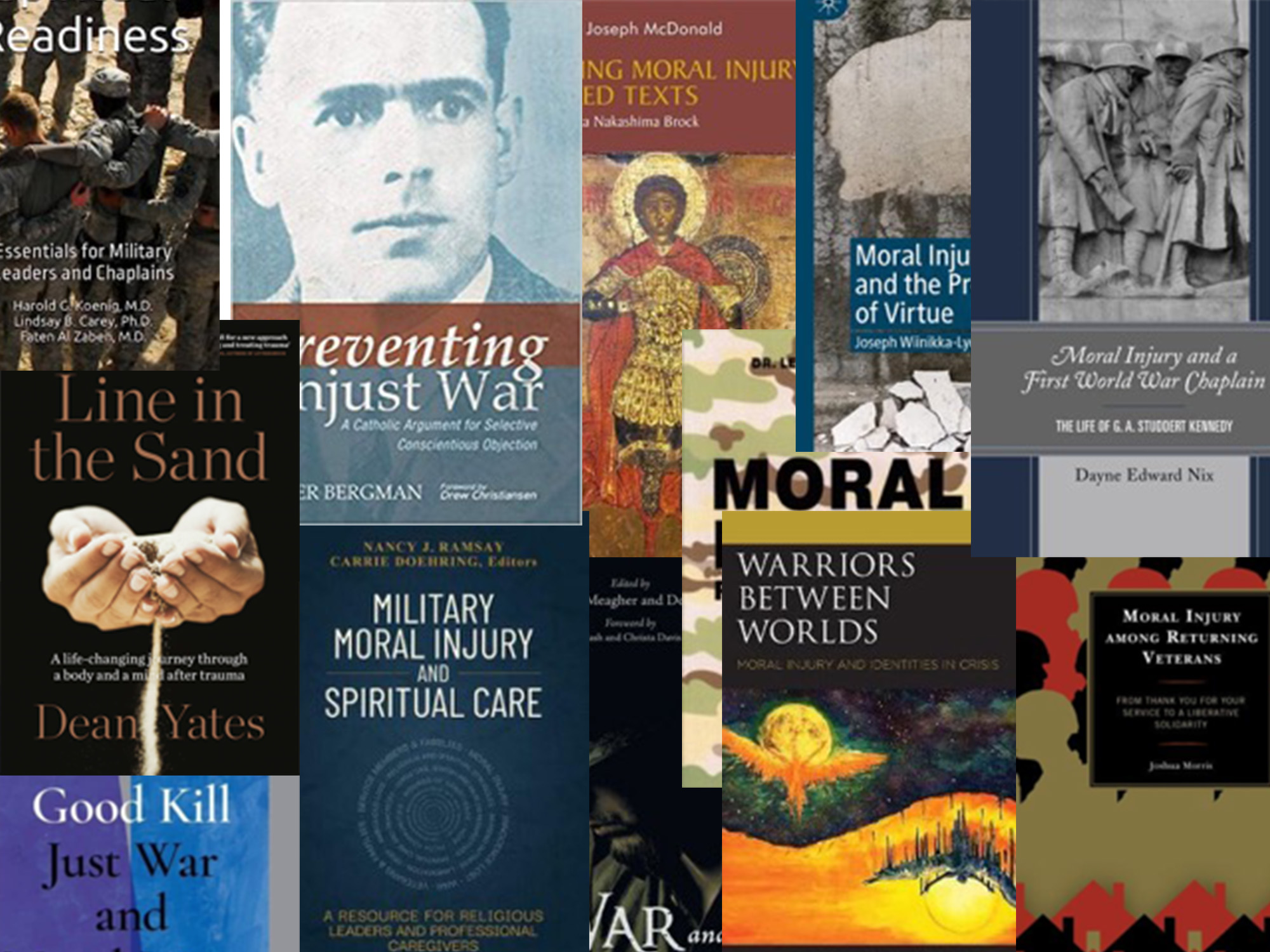
Content warning: These reviews delve into mental health and moral injury issues which may be distressing to some people1.
Moral injury is referred to as the “signature wound” of contemporary and especially post-9/11 military conflict. But what is moral injury? How can we prevent or heal its effects? How can we better prepare ourselves, our loved ones, and those in training for the moral dilemmas they may face?
If you are unsure of what book(s) to read on understanding the prevention or treatment of moral injury, consider one or more of these 14 books.
These are summaries of longer book reviews on the topic of moral injury. You can link to a more involved review of each book by clicking on the link at each summary. Significantly, the reviews highlight the need to understand the healing power of community, forgiveness and other spiritual practices alongside therapy. Even those who are not religious can see the need of forgiveness and regaining faith in ourself and others.
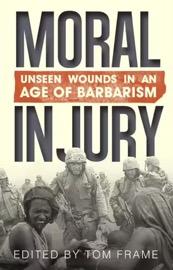
Moral Injury: Unseen Wounds in an Age of Barbarism, edited by Tom Frame
(Sydney: UNSW Press, 2015, xv+278pp)
Physical wounds are visible and can usually be treated. Other ‘unseen wounds’ impact the psyche and soul. They can be more difficult to identify and their treatment is often more complex and longer-term. Soldiers throughout history faced actions that are inconsistent with their moral values.
This is a uniquely Australian contribution by and about moral injury of Australian military members and those who support them. Among its insightful stories, Chaplain Rob Sutherland discusses his response to the soldier who said, 'Padre, I’m seeing my psychiatrist and psychologist and doctor, I’m taking all the pills they give me and I’m doing their programs, why do I still want to kill myself?' (p.191) This book argues that the best response is multi-disciplinary and models this by drawing on contributions and case studies from 18 military officers, historians, ethicists, chaplains and psychologists.
This draws on a longer review published in THE COVE (4/12/2020).
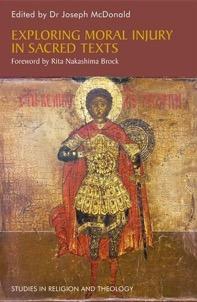
Exploring Moral injury in Sacred Texts, edited by Joseph McDonald.
(London: Jessica Kingsley, 2017, 214pp)
What can religions and their Scriptures offer for the journey of moral repair? Jews, Buddhists, Muslims, Christians and others glean insights from their religious texts about war, murder, rape, slavery, toxic leadership and betrayal. For example, King David and his abusive use of power and sex with Bathsheba has implications for understanding suicidal ideation but also soul repair. Joseph and his brothers in the Hebrew Bible, Muhammad’s life in the Qu’ran, Buddhism’s story of Aṅgulimāla the murderous outlaw, and Peter’s denial and Judas’ betrayal in the gospels all have lessons for pointing beyond violence and vengeance to forgiveness and to peace.
Whether the agency of any moral injury is from a betrayal of “what’s right” by an authority (as Shay defines Moral Injury) or from a personal violation of one’s moral code (following Litz and colleagues), the writers of Exploring Moral injury in Sacred Texts maintain that Scriptures can be allies in healing.
This draws on a longer review published in Pacific Journal of Theological Research 16:2 (November 2021).
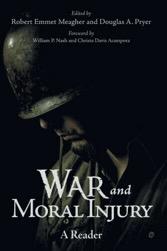
War and Moral Injury: A Reader, edited by Robert Emmet Meagher and Douglas A. Pryer
(Eugene, Oregon: Cascade Books, 2018, xxvi+360 pp)
. This wide-ranging resource weaves together insights from more than forty contributors, bringing perspectives as varied as the sciences of mind, the humanities, the law, and the lived experience of the profession of arms. Yet its most valuable insights are from soldiers narrating their experiences, veterans describing recovery, chaplains sharing reflections, and therapists reflecting on conversations. It points to implications for training including the imperative of values and beliefs around human dignity and respect, and for recovery including the potency of rituals and purification ceremonies. “Those with soul wounds need rituals as much as medication, spiritual practices as much as intellectual explanations, exercise as much as therapy, priests as much as therapists, peers as much as professionals.2”
Soldiers all too often have done and seen things they wish they had not and which the rest of us cannot imagine. War buries too many bodies, and also too many souls, sometimes with genocidal war crimes but sometimes through simple dehumanization. Marine officer Tyler Boudreau critiqued an amorous laughing marine “hug” of a young Iraqi man as an atrocity, because the hug could not be refused (p.57). Poetry also invites empathy, such as this poem by the Vietnam Vet who died in 2005 from exposure to Agent Orange:
From a History Lesson, by Steve Mason (p.18)
Since Vietnam,
three things
hold my universe together
gravity, centrifugal force
and guilt.
It is so strange, therefore,
that the war is over for me
just like it’s over for you.
Over.
And
over
again …
This draws on a longer review published in Grounded Curiosity (Sep 2, 2021).
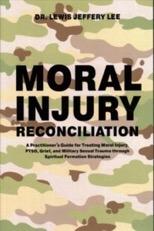
Moral Injury Reconciliation: Practitioner’s Guide for Treating Moral Injury, PTSD, Grief, and Military Sexual Trauma through Spiritual Formation Strategies, by Dr Lewis Jeffery Lee
(London: Jessica Kingsley, 2018, 223pp)
Lee offers a comprehensive treatment process that draws on psychological therapy, peer support and religious practices (such as lament, confession and forgiveness). He begins with a person’s story and frames the healing journey around reconciliation and spiritual transformation. Along the way, he draws on accessible spiritual practices—such as spiritual awareness, humility, lament, confession, and forgiveness—to help uncover past trauma. Through these practices a door is opened to freedom, community, altruism, and service. He also points to the potency of reading sacred literature in meaning-making, and the basics of sleep, nutrition and recreation.
The book is a practitioner’s guide including stories, sample therapist dialogues, exercises and homework. It integrates psychological and theological disciplines and resources, not to offer or pretend a miraculous cure is available, but to suggest that proven ancient practices complement other therapies to help move soldiers and veterans up and out of moral injury.
This draws on a longer review published in Journal of Military & Veterans’ Health 29:4 (October 2022), 52-53.
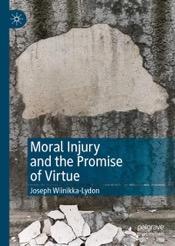
 Moral Injury and the Promise of Virtue, by Joseph Wiinikka-Lydon
(Cham, Switzerland: Palgrave-Macmillan, 2019, xiv+203pp)
How do people experience extreme violence and trauma, and what are the effects? How can character and virtues help people avoid related moral injury, or at least work through it with resilience to a new place of post-traumatic wholeness? Wiinikka-Lydon explores this through the lived experience of besieged Sarajevans during the war in Bosnia-Herzegovina (1992–95). She focuses less on the moral injury of soldiers and more on the victims of political violence—how they endured siege, starvation, abuse, and atrocities—and how such experiences can shatter faith in human goodness. Virtues of compassion, availability of forgiveness and the possibility of justice are what sustain a community. But in the vulnerability and betrayals of Sarajevo, civility turned to suspicion, ethnic tolerance defaulted to vengeance, and morality was undermined by surviving. Trauma and war brought moral injury to a whole community, and the result seemed to be a ‘void’ of goodness. While moral injury demands clinical treatment at the individual level, it can also take root in the very structures of a society, calling for reflection and reform of its culture and institutions, including the military.
This draws on a longer review published in Studies in Christian Ethics 35:2 (May 2022), 427-429, and at Warrior Welcome Home reviews page.

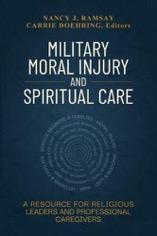
Military Moral Injury and Spiritual Care, edited by Nancy J. Ramsay & Carrie Doehring
(Saint Louis, Missouri: Chalice Press, 2019, viii+168pp)
The Soul Repair Center at Brite Divinity School in Texas has brought together a “think tank” of researchers to explore how communities can support moral repair through spiritual practices drawn from Jewish, Muslim, and Christian traditions. The authors stress that understanding moral injury begins with listening—patiently and without judgment—to the deep pain of soldiers who feel compromised or betrayed. Treatment, they suggest, is best supported through a rich mix of spiritual and creative practices: from liturgy, music, and poetry, to shared circles, mindful reflection, movement, and connection with the natural world. Participation in faith communities, engagement in healing rituals, and immersion in sacred texts on power, lament, and returning from war, all serve to foster recovery. These approaches, they note, can strengthen the resilience of recruits as well as help seasoned soldiers seeking soul repair.
Even in secular or post-secular contexts, they argue, identifying and applying the best of spiritual resources and pastoral theology is vital for holistic care—avoiding the tendency to medicalize moral injury as a purely clinical issue.
This draws on a longer review published in Journal of Pastoral Care & Counselling 75:4 (Dec 2021), 303-304

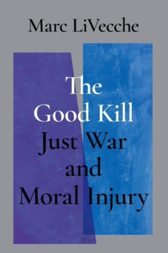
The Good Kill: Just War and Moral Injury, by Marc LiVecche
(Oxford, Maryland, Oxford University Press, 2021, xvii+235pp)
Coalition forces acknowledge that character and ethical decision-making are among the most important components of training for soldiers. There are foundational laws to learn around rules of engagement and legitimate targets. But the ethical dilemmas soldiers can face means that a simple outline of rules is not sufficient. Many nations have been embarrassed by ethical failures. Moreover, soldiers themselves can then carry the wounds of “moral injury” when they have done or witnessed things that transgress their moral fibre or felt betrayed by commanders. This underlines the importance of equipping soldiers, of all ranks, with moral courage and ethical foundations including just war theory, exercising the respect for dignity of “the golden rule”, and to view oneself as a mournful warrior who kills with regret.
It also underlines the need for preparation in moral courage before, during and after deployment.
“…before jumping on a crocodile’s back you need a plan for getting off”
LiVecche raises critical just war frameworks that add moral Kevlar for the soul in preparation for military engagement, but also points towards the kind of understanding community and reconciliation space for homecoming and posttraumatic growth.
This draws on a longer review published in Journal of Moral Theology 11:22 (2022), 178-179.

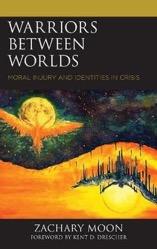
Warriors Between Worlds: Moral Injury and Identities in Crisis, by Zachary Moon
(Lanham, Maryland: Lexington Books, 2019, xiv+116pp)
Military service and deployments often include experiences of intense stress and trauma that lead to feelings of guilt and shame (towards self), and disgust and contempt (to others). Moon identifies three other periods of stress and possible trauma. Firstly, soldiers bring a life before military service, and this can have much to do with how they respond and recover from moral trauma or add to trauma they are escaping from. Secondly, Moon focuses on recruit training and how recruits need a new “moral orienting system” that moves them beyond a civilian self-centeredness and pleasure satisfaction, to something that builds resilience to avoid or better recover from Moral Injury. Thirdly, Moon urges “boots to shoes” training that helps veterans navigate back to civilian worlds with professional support, sustaining camaraderie, community service, and rescripting for non-battle-ready contexts. Communities need education for this too.
This draws on a longer review published in Journal of Military and Veterans Health 31:3 (July 2023), 50-51.

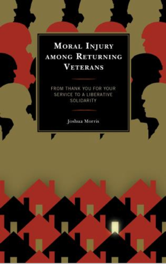
Moral Injury Among Returning Veterans: From Thank You for your Service to Liberative Solidarity, by Joshua Morris
(Lanham, Maryland, Lexington Books, 2021, viii+171pp)
Morris wrote this book in conversation with the best psychologists and practical theologians on the topic, but also four interviewed veterans. In Afghanistan, for example, CPL Lisa Fisher witnessed a child with a suicidal vest being shot and helped care for children with mutilated bodies, and was a victim of sexual harassment and assault. Her reintegration experience illustrates the need for friends, family and religious communities who will listen to their stories, and not presume they are either a hero or a head case.
Morris maintains:
“The chaplain’s role through liturgy, spiritual care and counselling, or solidarity through accomplishment is to continue to show up; to continue to represent a God of strength through God’s weakness. In other words, change and healing are slow processes, and through the long unravelling of time the chaplain and the community’s role are to sustain those individuals on that journey.” (141-42)
Religious resources are not welcome by everyone, but neither should they be marginalised when it is matters of the soul and morality that have been wounded.
This draws on a longer review published in Journal of Military Ethics, 20(3-4), (2021), 293–294.

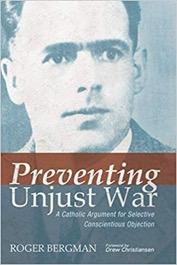
Preventing Unjust War: A Catholic Argument for Selective Conscientious Objection, by Roger Bergman
(Eugene, OR: Cascade Books, 2020, 216pp)
Roger Bergman argues for the place of selective conscientious objection (SCO) – the right and responsibility of soldiers to refuse to engage in unjust conflict. His Preventing Unjust Wars is thought-provoking in three main ways: examples of heroes of selective conscientious objection especially Austrian farmer Franz Jägerstätter refusing service for Nazi Germany; concerns around moral injury when soldiers engage in unjust action including obliteration bombing in WWII, military sexual trauma in Vietnam, enhanced interrogation in Iraq, graphic violence that drone pilots view, and lack of respect for local citizens; and principles for teaching conscience and moral identity including self-reflection, peer interaction, principled reasoning, perspective-taking, virtue ethics, empathy for the dignity of all, and the principled thinking underlying the Universal Declaration of Human Rights.
This draws on a longer review published in Grounded Curiosity (Sep 20, 2021).

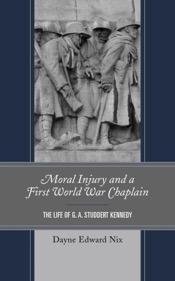
Moral Injury and a First World War Chaplain: The Life of G. A. Studdert Kennedy, by Dayne Edward Nix
(Lanham, Maryland: Lexington, 2022, viii+214pp)
The story of Reverend Chaplain Geoffrey Anketell (G.A.) Studdert Kennedy is an inspiring example of selfless chaplaincy in fostering faith and hope and building morale through pastoral presence and cheerfulness but also a sobering account of the healer carrying their own wounded memories.
Seeing the suffering but also futility of trench warfare led him to question his political leaders but also his view of God. He adopted a combat inspired theology of the Suffering God:
God suffers in every man [sic.] that suffers. God, the God we love and worship, is no far off God of Power, but the comrade God of love: He is on no heavenly throne, He is up in the trenches, under the guns: for every wound a man receives there is pain in the heart of God, and every cry of agony finds echo in God’s soul
This view of a suffering God and also has potential to speak to a world which has experienced 9/11 and COVID-19, and indeed may be of comfort to the morally injured. Kennedy’s experience also underlines the importance of caregivers recognising their own wounds as wounded healers.
This draws on a longer review published in Journal of the Royal Army Chaplains' Department (Feb 2022), and at Warrior Welcome Home reviews page.

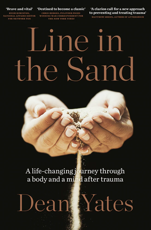
Line in the Sand: A life-changing journey through a body and a mind after trauma, by Dean Yates
(Sydney: Pan Macmillan, 2023)
Dean Yates was a warzone and disaster journalist working through his traumas. He transparently describes the trauma of the Bali bombings, Boxing Day Tsunami and Iraq, including when two of his local staff were gunned down by an American helicopter. He spiralled into PTSD and moral injury, navigated self-medication and employer support (or lack thereof). But then found a journey towards healing in therapy and medication, Melbourne’s Ward 17 psych unit, mindfulness and breathing exercises, and ultimately in reconnecting with his family and becoming an advocate for organisations focusing on mental health. Interspersed in his narrative is a thorough overview of the best literature on trauma, moral injury and treatment options.
Yates’ therapeutic journey towards healing resonates with ADF’s Pastoral Narrative Disclosure process, where Chaplains work 1-on-1 with individuals and the Warrior Welcome Home group retreat program. As a guidebook to best practice in understanding and treating PTSD and moral injury, Line in the Sand is a helpful literature review. But it is much more as a first-hand account of the damaging consequences of PTSD and moral injury, and hopeful potential for healing. It is a gift for those who have faced similar challenges, and the families and professionals who care for them.
This draws on a longer review published in Grounded Curiosity (April 2, 2014)

Spiritual Readiness: Essentials for Military Leaders and Chaplains
(Independently published, 2022, pp.290). E-book available for only AU$1.45.
Military members can derive help and inspiration for facing these challenges, through non-religious sources, albeit spiritual in the broader sense. The call to sacrifice, working for the greater good, fostering good character, mindfulness and meditation practices, and having a sense of horizontal transcendence in fighting for your mates, are aspects of spiritual readiness that many people of any religion or none can draw on.
Moreover, for followers of a religion there is utility in identifying the resources of their faith. As well as detailing the beliefs and practices of different religions, as they undergird spiritual readiness, the text offers an evaluation of religion-specific therapy manuals and interventions for anxiety, depression, moral injury and PTSD.
Spiritual resources—adapted to each individual and their faith tradition—can play an important role in addressing these challenges. They have been shown to reduce depression, suicide, substance abuse, and destructive anger or aggression. Just as importantly, cultivating spiritual readiness can prepare military members to endure combat and return home with their mental and spiritual wellbeing intact.
“History has demonstrated that providing warriors with the most powerful munitions platforms, weapon systems, and technology is often not enough to win wars. They must also have the strength of spirit (and will power) to accomplish their duties with honor, which will help them not only succeed in these military endeavors but also avoid the devastating inner conflicts that might otherwise result.
This draws on a longer review published in Journal of Military and Veterans’ Health 31:4 (Aug 2023), 27-28.

Moral Injury: A Handbook for Military Chaplains
(Independently published, 2023, pp.351). E-book available for only AU$1.45.
Moral Injury is a constellation of agonizing feelings resulting from transgressing one’s moral and ethical boundaries. It can affect perpetrators, victims and observers. Moral Injury has often been a consequence of warfare throughout history but more recently it is a diagnosable and treatable condition. Due to its connection with moral and sometimes religious frameworks, as well as the capacity of religious traditions to help bring healing, military chaplains are well placed to provide support with prevention, identification and rehabilitation strategies to address Moral Injury.
The book is a generously resourced handbook offering a thorough overview of Moral Injury and its symptoms and mental health consequences. Four chapters offer detailed accounts of Moral Injury treatments: six psychological interventions; Spiritually Integrated Cognitive Processing Therapy (SICPT); Building Spiritual Strengths (BSS); and ADF’s Pastoral Narrative Disclosure (PND). A further four chapters unpack resources for Structured Chaplain Pastoral Care (SCP) for members from Christian, Jewish, Muslim, Hindu and Buddhist backgrounds.
This draws on a longer review published in Health and Social Care Chaplaincy 11:2 (2023), 245-48, https://doi.org/10.1558/hscc.26322.
Moral injury is not PTSD or traumatic brain injury though it may have overlapping symptoms. It is something deeper affecting one’s moral fibre and ethical space. It is the unseen wounds to someone’s moral life caused by their actions, orders or what they witness. The importance of understanding and treating moral injury is underlined by attention to the effects of veteran suicide, reports of unethical conduct, and news of the Taliban in Afghanistan. These books offer narratives and models of helpful and holistic responses to moral injury. They are highly recommended for military members, veterans and their families, commanders and anyone preparing, sustaining and caring for soldiers and veterans.
Notes:
For Darren’s broader interest in research into moral injury in collaboration with Chaplain Cameron West see Warrior Welcome Home research project.
1If you found any of this content distressing and would like to talk to someone, support is available through Lifeline 13 11 14; or for Defence members through your Chain of Command; Open Arms 1800 011 046; ADF Chaplaincy Services 1300 467 425; your on base Health Centre or Mental Health Professionals; or ADF Health and Wellbeing Portal.
2Meagher, Robert Emmet, and Douglas A. Pryer, editors. War and Moral Injury: A Reader. Routledge, 2018. The quote “Those with soul wounds need rituals as much as medication, spiritual practices as much as intellectual explanations, exercise as much as therapy, priests as much as therapists, peers as much as professionals” represents the collective perspectives on holistic healing approaches to moral injury and spiritual wounding in the veteran community, as presented in this volume.




Comments
Start the conversation by sharing your thoughts! Please login to comment. If you don't yet have an account registration is quick and easy.